Historic District in St. Augustine in St. Johns County, Florida — The American South (South Atlantic)
Juan de Ribera
⎯⎯⎯
Juan de Rivera
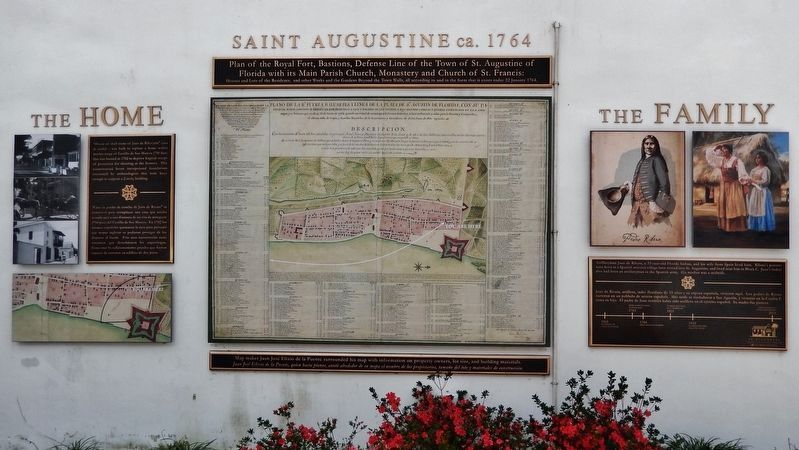
Saint Augustine ca. 1764
| — | The Home • The Family | — |
Photographed by Cosmos Mariner, December 19, 2022
1. Juan de Ribera / Juan de Rivera Marker
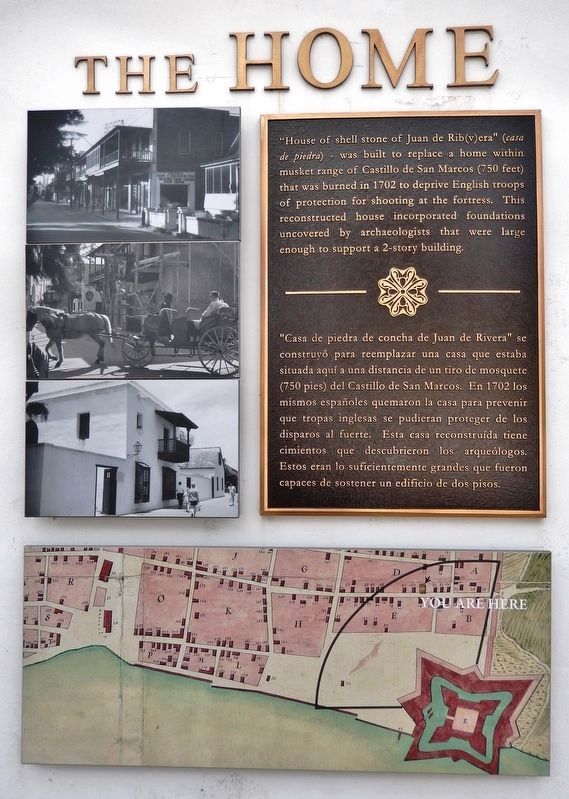
The Home
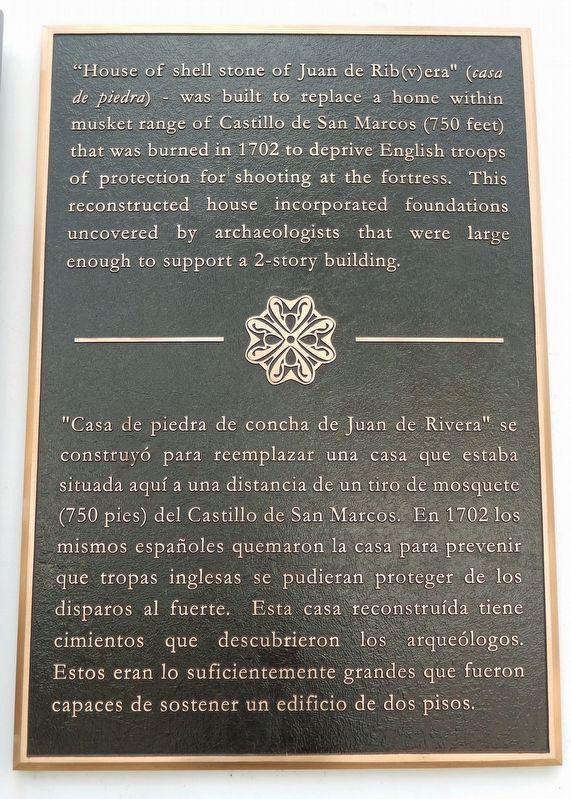
"House of shell stone of Juan de Rib(v)era" (casa de piedra) - was built to replace a home within musket range of Castillo de San Marcos (750 feet) that was burned in 1702 to deprive English troops of protection for shooting at the fortress. This reconstructed house incorporated foundations uncovered by archaeologists that were large enough to support a 2-story building.
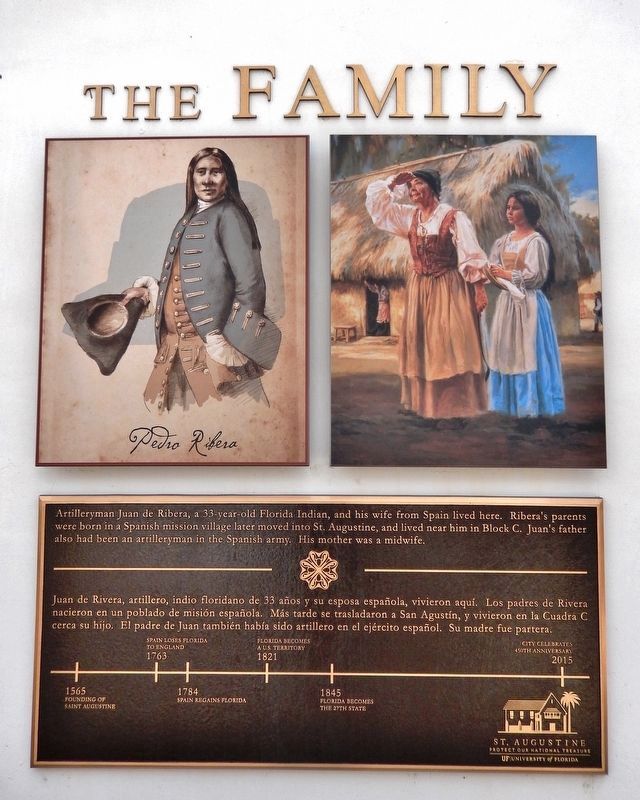
The Family
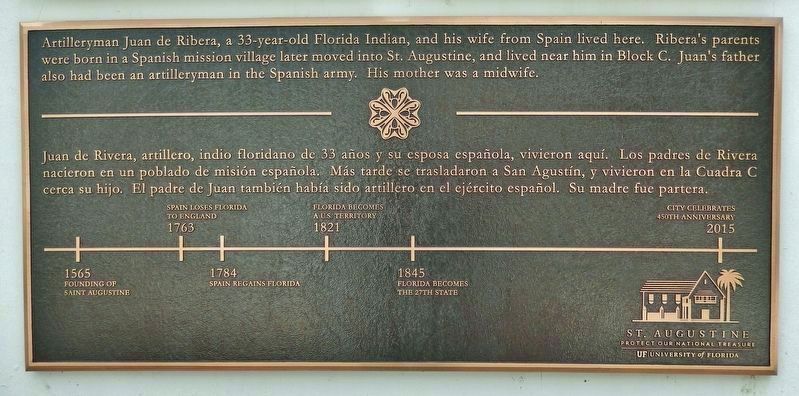
Artilleryman Juan de Ribera, a 33-year-old Florida Indian, and his wife from Spain lived here. Ribera's parents were born in a Spanish mission village later moved into St. Augustine, and lived near him in Block C. Juan's father also had been an artilleryman in
this page online
1763 • Spain Loses Florida to England
1784 • Spain Regains Florida
1821 • Florida Becomes a U.S. Territory
1845 • Florida Becomes the 27th State
2015 • City Celebrates 450th Anniversary
Erected by City of St. Augustine; and University of Florida.
Topics. This historical marker is listed in these topic lists: Anthropology & Archaeology • Architecture • Colonial Era • Settlements & Settlers. A significant historical year for this entry is 1764.
Location. 29° 53.818′ N, 81° 18.808′ W. Marker is in St. Augustine, Florida, in St. Johns County. It is in the Historic District. It is on Saint George Street just south of Fort Alley, on the right when traveling south. Marker is mounted well above eye-level on the north
Photographed by Cosmos Mariner, December 19, 2022
2. Marker detail: The Home

Regionally, this marker is in First Coast and in Greater Jacksonville. It is also in the American South and on the Eastern Seaboard. Globally, it is in the North Atlantic Region, North America, a Gulf of Mexico state, the Western Hemisphere, the Western World, and the Anglosphere. Historically, it finds itself in what was once New Spain, the territory of the Mississippian Culture, one of the Confederate States of America, and the Antebellum South.
Other nearby markers. At least 8 other markers are within walking distance of this marker: Gallegos House (a few steps from this marker); Ribera House (a few steps from this marker); Gomez House (a few steps from this marker); Triay House (within shouting distance of this marker); Florencia House (within shouting distance of this marker); Every Drop Counts (within shouting distance of this marker); British Colonial Hygiene (within shouting
Photographed by Cosmos Mariner, December 19, 2022
3. Marker detail: The Family
Photographed by Cosmos Mariner, December 19, 2022
4. Marker detail: The Home
Photographed by Cosmos Mariner, December 19, 2022
5. Marker detail: The Family
Photographed by Cosmos Mariner, December 19, 2022
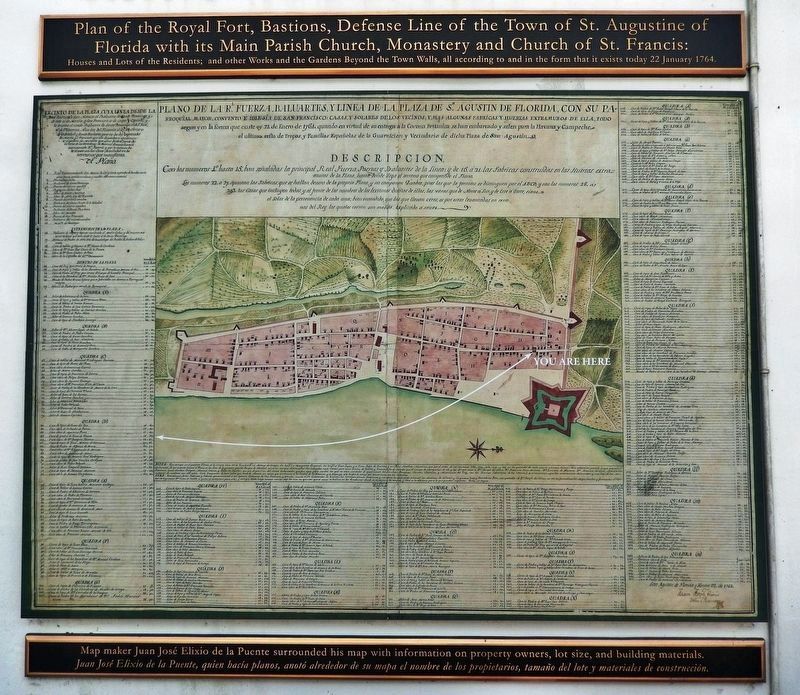
6. Marker detail: Saint Augustine ca. 1764
Plan of the Royal Fort, Bastions, Defense Line of the Town of St. Augustine of Florida with its Main Parish Church, Monastery and Church of St. Francis:
Houses and Lots of the Residents; and other Works and the Gardens Beyond the Town Walls, all according to and in the form that it exists today 22 January 1764————— Map maker Juan José Elixio de la Puente surrounded his map with information on property owners, lot size, and building materials.————— Juan José Elixio de la Puente, quien bacía planos, anotó alrededor de su mapa el nombre de los propietarios, tamaño del lote y materiales de construcción.
Houses and Lots of the Residents; and other Works and the Gardens Beyond the Town Walls, all according to and in the form that it exists today 22 January 1764
Photographed by Cosmos Mariner, December 19, 2022
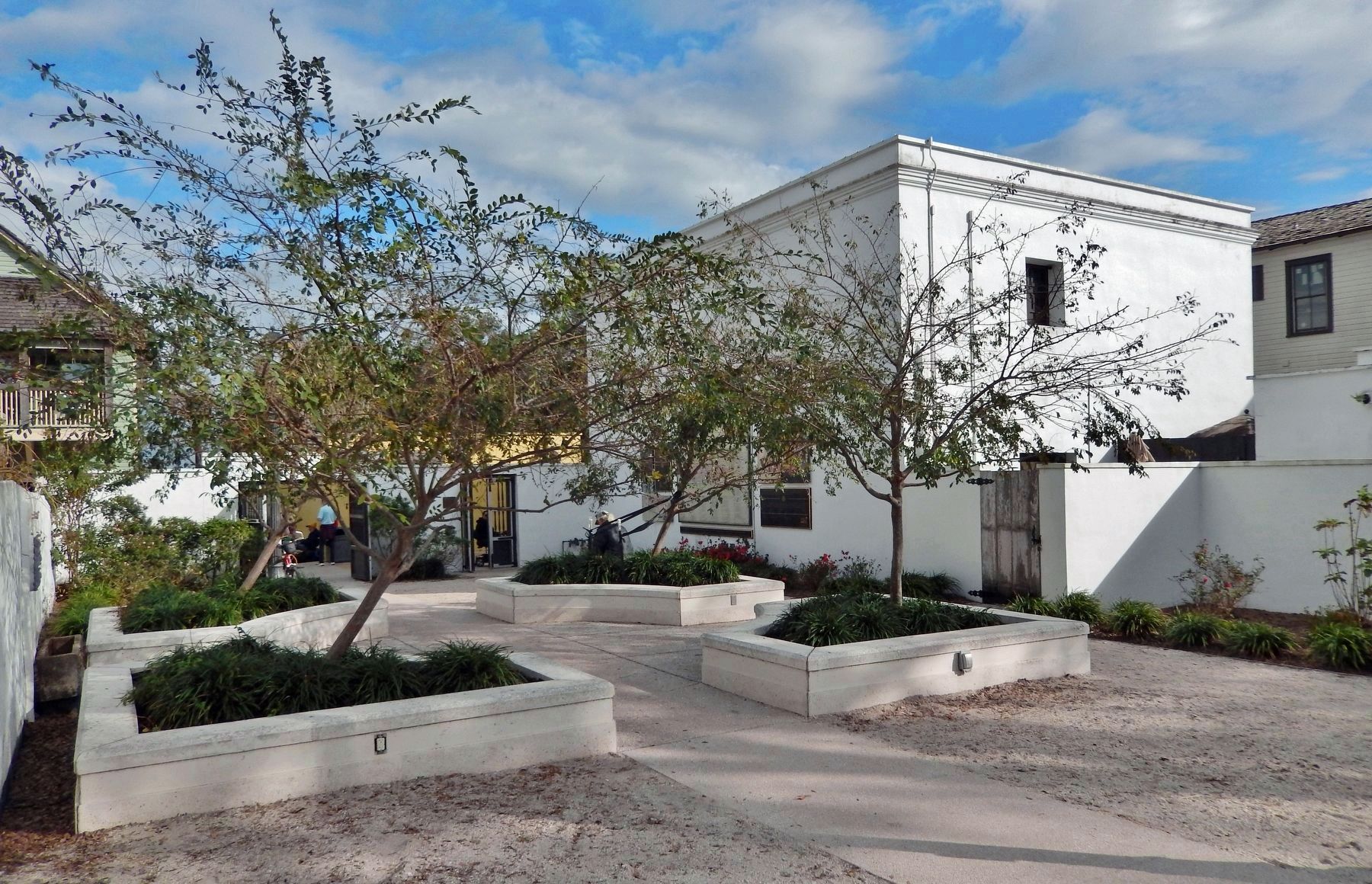
7. Ribera / Rivera Garden & House
Photographed by Cosmos Mariner, December 19, 2022
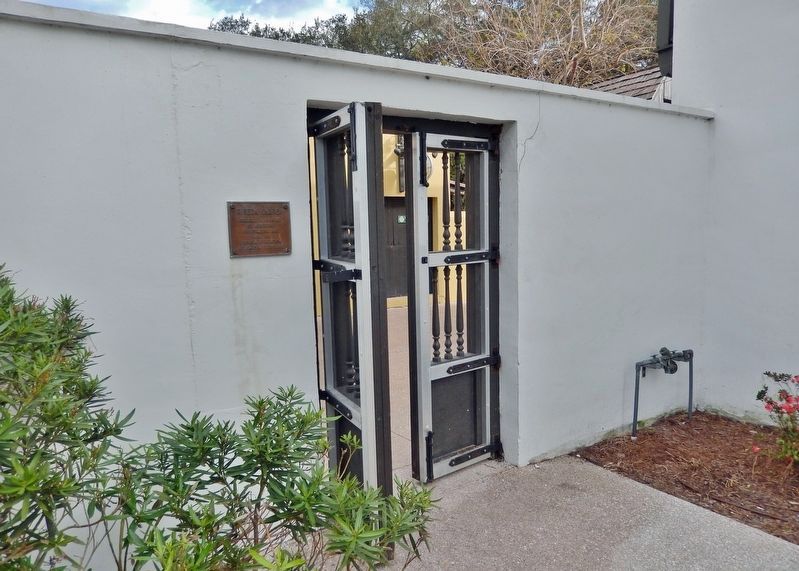
8. Ribera / Rivera Garden Wall
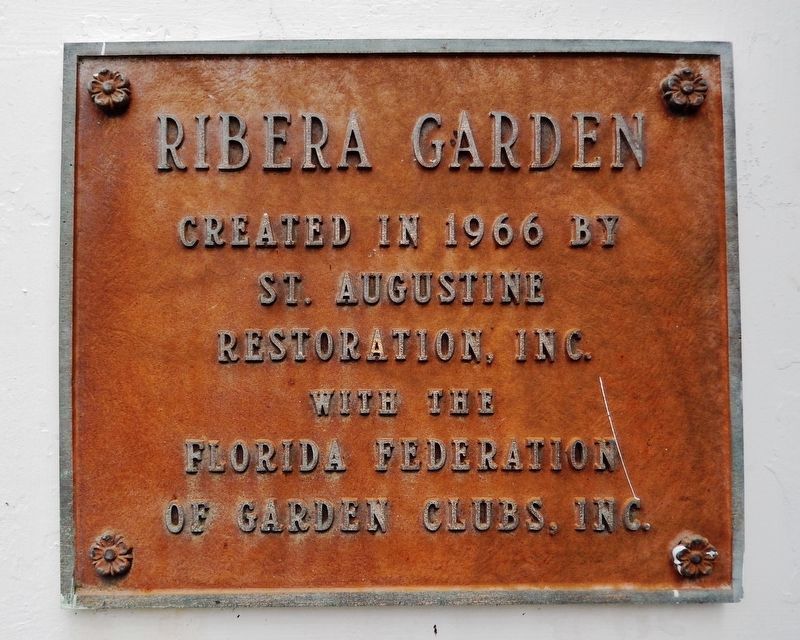
Photographed by Cosmos Mariner, December 19, 2022
9. Ribera / Rivera Garden Marker
Created in 1966 by
St. Augustine
Restoration, Inc.
with the
Florida Federation
of Garden Clubs, Inc.
Credits. This page was last revised on December 19, 2022. It was originally submitted on December 19, 2022, by Cosmos Mariner of Cape Canaveral, Florida. This page has been viewed 695 times since then and 51 times this year. Photos: 1, 2, 3, 4, 5, 6, 7, 8, 9. submitted on December 19, 2022, by Cosmos Mariner of Cape Canaveral, Florida.
