
Hermitage in Davidson County, Tennessee — The American South (East South Central)
Civil War at The Hermitage
A President's Home in Wartime
Photographed by Sandra Hughes, September 25, 2010
1. Civil War at The Hermitage Marker
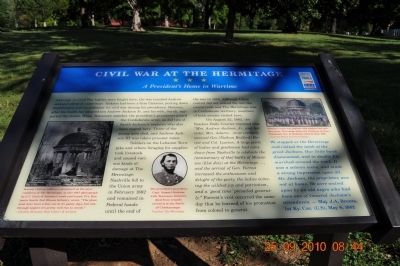
Soldiers on the Lebanon Turnpike and others foraging for supplies took livestock and caused various kinds of damages at The Hermitage. Nashville fell to the Union army in February 1862 and remained in Federal hands until the end of the war in 1865. Although Union control did not extend far into the countryside and The Hermitage was in Confederate territory, members of both armies visited here. On August 22, 1862 the Natchez Daily Courier reported that "Mrs. Andrew Jackson, Jr., and her sister, Mrs. Adams... most cordially received Gen. [Nathan Bedford] Forrest and Col. Lawton. A large party
this page online
We stopped at the Hermitage and visited the tomb of the great Jackson. Our little band dismounted, and in double file marched around the tomb. It was a solemn scene, and made a strong impression upon all. Mr. Jackson, the proprietor, was not at home. We were waited upon by an old Negro, who had been one of General Jackson’s attendants.
Maj. J. A. Brents, 1st KY, Cav. (U.S.), May 8, 1862
Topics and series. This historical marker is listed in this topic list: War, US Civil. In addition, it is included in the Former U.S. Presidents: #07 Andrew Jackson series list. A significant historical month for this entry is February 1862.
Location. Marker has been reported permanently removed. It was located near 36° 12.834′ N, 86° 36.8′ W. Marker
Photographed by Sandra Hughes, September 25, 2010
2. Civil War at The Hermitage Marker
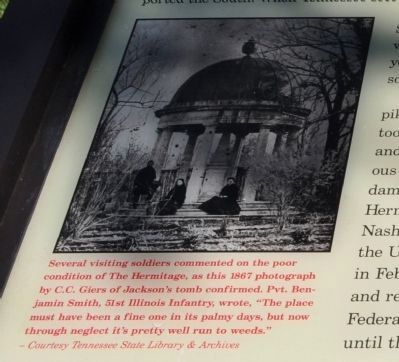
Several visiting soldiers commented on the poor condition of The Hermitage, as this 1867 photograph by C.C. Giers of Jackson's tomb confirmed. Pvt. Benjamin Smith 51st Illinois Infantry, wrote, "The place must have been a fine one in its palmy days, but now through neglect it's pretty well run to weeds."
Courtesy Tennessee State Library and Archives.
We have been informed that this marker is no longer there and will not be replaced. This page is an archival view of what was.
Regionally, this marker was in Middle Tennessee and in Greater Nashville. It was also in the American South and specifically in the Upper South. Globally, it was in North America, the Western Hemisphere, the Western World, and the Anglosphere. Historically, it found itself in what was once the territory of the Mississippian Culture, one of the Confederate States of America, and the Antebellum South.

Other nearby markers. At least 8 other markers are within walking distance of this location: The Hermitage Landscape (a few steps from this marker); The Hermitage Mansion (within shouting distance of this marker); The Architectural Evolution Of The Hermitage (about 300 feet away, measured in
Photographed by Sandra Hughes, September 25, 2010
3. Civil War at The Hermitage Marker
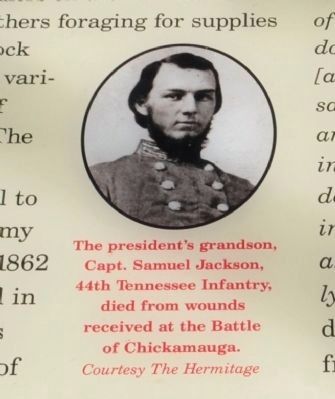
The president's grandson, Capt. Samuel Jackson, 44th Tennessee Infantry, died from wounds received at the Battle of Chickamauga. Courtesy of The Hermitage
Another marker is no longer nearby. The War Road (was here, next to this marker but has been permanently removed).
Photographed by Sandra Hughes, September 25, 2010
4. Civil War at The Hermitage Marker
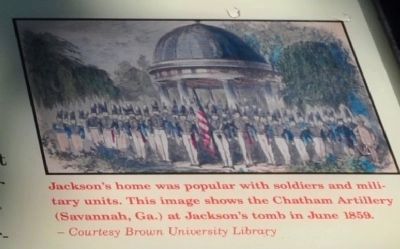
Jackson's home was popular with soldiers and military units. This image shows the Chatham Artillery (Savannah, Ga) all Jackson's tombs in June 1859.
Courtesy Brown University Library
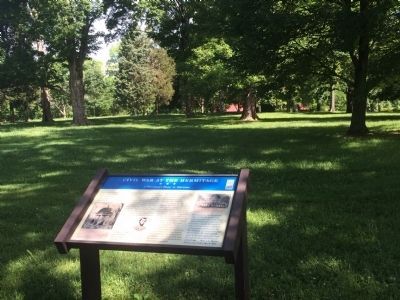
Photographed by J. Makali Bruton, June 14, 2015
5. Wide view of the Civil War at The Hermitage Marker
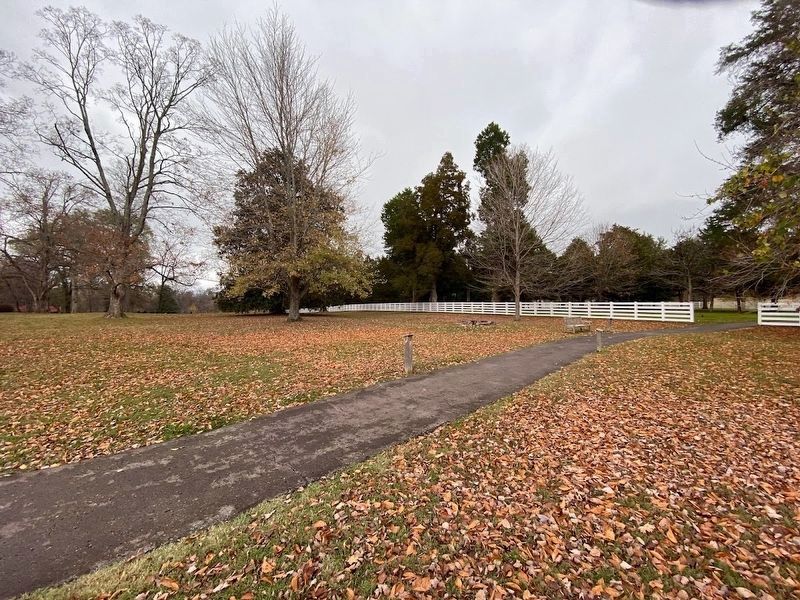
Photographed by Darren Jefferson Clay, November 12, 2022
6. Civil War at The Hermitage Marker
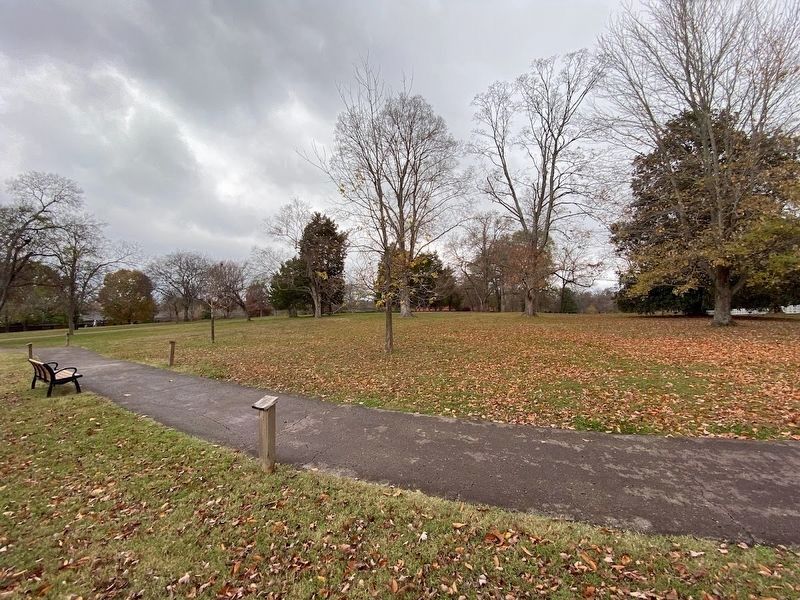
Photographed by Darren Jefferson Clay, November 12, 2022
7. Civil War at The Hermitage Marker
Credits. This page was last revised on February 7, 2023. It was originally submitted on February 7, 2012, by Sandra Hughes Tidwell of Killen, Alabama, USA. This page has been viewed 1,691 times since then and 46 times this year. Last updated on January 23, 2023, by Darren Jefferson Clay of Duluth, Georgia. Photos: 1, 2, 3, 4. submitted on February 7, 2012, by Sandra Hughes Tidwell of Killen, Alabama, USA. 5. submitted on July 12, 2015, by J. Makali Bruton of Washington, District of Columbia. 6, 7. submitted on January 23, 2023, by Darren Jefferson Clay of Duluth, Georgia. • Bill Pfingsten was the editor who published this page.
