Trappe in Montgomery County, Pennsylvania — The American Northeast (Mid-Atlantic)
Frederick A. C. Muhlenberg
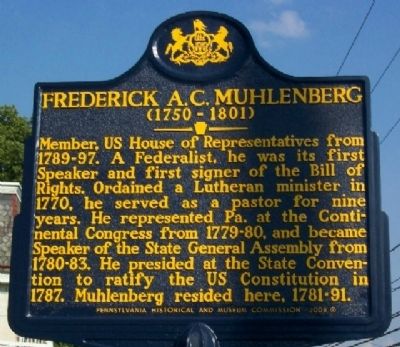
Photographed by William Fischer, Jr., July 2, 2009
1. Frederick A. C. Muhlenberg Marker
Erected 2008 by Pennsylvania Historical and Museum Commission.
Topics and series. This historical marker is listed in these topic lists: Colonial Era • Patriots & Patriotism • Religion & Religious Structures • War, US Revolutionary. In addition, it is included in the Pennsylvania Historical and Museum Commission (PHMC) series list. A significant historical year for this entry is 1770.
Location. 40° 11.738′ N, 75° 28.096′ W. Marker is in Trappe, Pennsylvania, in Montgomery County. It is on Main Street/Ridge Pike (Old U.S. 422), on the right when traveling west. House is opposite entrance to the Trappe Center shopping center. Touch for map. Marker is at or near this postal
this page online

Regionally, this marker is in Southeast Pennsylvania and in Greater Philadelphia. It is also in the American Northeast and in the Mid-Atlantic. Globally, it is in North America, the Western Hemisphere, the Western World, and the Anglosphere. Historically, it finds itself in what was once the Haudenosaunee (Iroquois) Confederacy and also one of the original Thirteen Colonies.
Other nearby markers. At least 8 other markers are within 5 miles of this marker, measured as the crow flies: Keystone Grange #2 Old Lodge Hall (about 500 feet away, measured in a direct line); Muhlenberg House (about 500 feet away); Reformed Church at Providence / Site of Stone Church 1835-1874 (approx. 0.2 miles away); Augustus Lutheran Church (approx. 0.8 miles away); Washington's Headquarters (approx. 3.9 miles away); Pennypacker's Mill and Mansion (approx. 4 miles away); IndenHofen Farmstead (approx. 4.6 miles away); Port Providence Trailhead (approx. 4.7 miles away). Touch for a list and map of all markers in Trappe.
Another marker is no
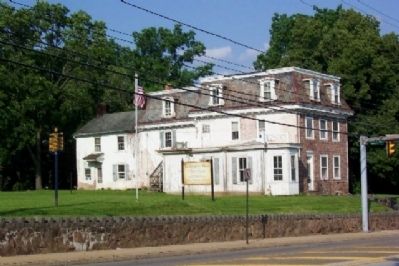
Photographed by William Fischer, Jr., July 2, 2009
2. Frederick A. C. Muhlenberg House and Marker
Related marker. Click here for another marker that is related to this marker.
Also see . . .
1. Biography of Frederick A.C. Muhleberg. From the Biographical Directory of the United States Congress. (Submitted on August 21, 2009.)
2. Frederick Augustus Conrad Muhlenberg (1750-1801). From the University of Pennsylvania Archives. (Submitted on August 21, 2009.)
3. The Millbrook Society. Information on The House, marker dedication and Frederick Muhlenberg. (Submitted on August 21, 2009.)
4. Frederick Augustus Conrad Muhlenberg at FindAGrave.com. (Submitted on July 20, 2011, by Mike Wintermantel of Pittsburgh, Pennsylvania.)
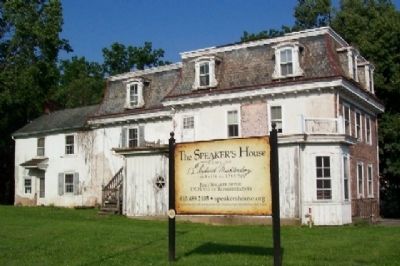
Photographed by William Fischer, Jr., July 2, 2009
3. Frederick A. C. Muhlenberg House
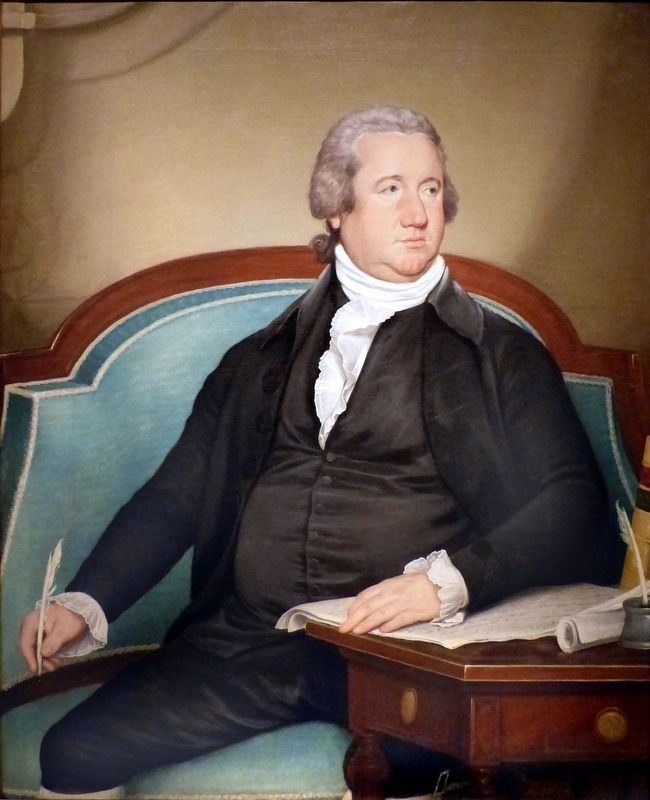
Photographed by Allen C. Browne, March 12, 2016
4. Frederick Augustus Conrad Muhlenberg
1750-1801
1750-1801
This 1790 portrait of Frederick Augustus Conrad Muhlenberg (1750-1801) by Joseph Wright hangs in the National Portrait Gallery in Washington, DC.
“Frederick Muhlenberg of Pennsylvania, a former Lutheran minister and a member of the most prominent German family in America, was elected the first Speaker of the United States House of Representatives. A jolly fellow famous for his oyster suppers, Muhlenberg had considerable experience as a presiding officer; he had served a stint as president of the Continental Congress and had presided over the state convention called to ratify the Constitution in 1787. With President George Washington coming from the South and Vice President John Adams hailing from New England, Muhlenburg's selection provided a nice geographic balance for the new government's start.
Muhlenberg is pictured in the act of signing House Bill 65, "An Act to regulate Trade and Intercourse with the Indian Tribes," which he did on July 20, 1790.” – National Portrait Gallery
“Frederick Muhlenberg of Pennsylvania, a former Lutheran minister and a member of the most prominent German family in America, was elected the first Speaker of the United States House of Representatives. A jolly fellow famous for his oyster suppers, Muhlenberg had considerable experience as a presiding officer; he had served a stint as president of the Continental Congress and had presided over the state convention called to ratify the Constitution in 1787. With President George Washington coming from the South and Vice President John Adams hailing from New England, Muhlenburg's selection provided a nice geographic balance for the new government's start.
Muhlenberg is pictured in the act of signing House Bill 65, "An Act to regulate Trade and Intercourse with the Indian Tribes," which he did on July 20, 1790.” – National Portrait Gallery
Credits. This page was last revised on January 26, 2018. It was originally submitted on August 9, 2009, by William Fischer, Jr. of Reynoldsburg, Ohio. This page has been viewed 1,446 times since then and 35 times this year. Photos: 1, 2, 3. submitted on August 9, 2009, by William Fischer, Jr. of Reynoldsburg, Ohio. 4. submitted on January 16, 2018, by Allen C. Browne of Silver Spring, Maryland. • Syd Whittle was the editor who published this page.
