Westshore in Tampa in Hillsborough County, Florida — The American South (South Atlantic)
Tampa Confederate Salt Works
Photographed by Tim Fillmon, April 30, 2017
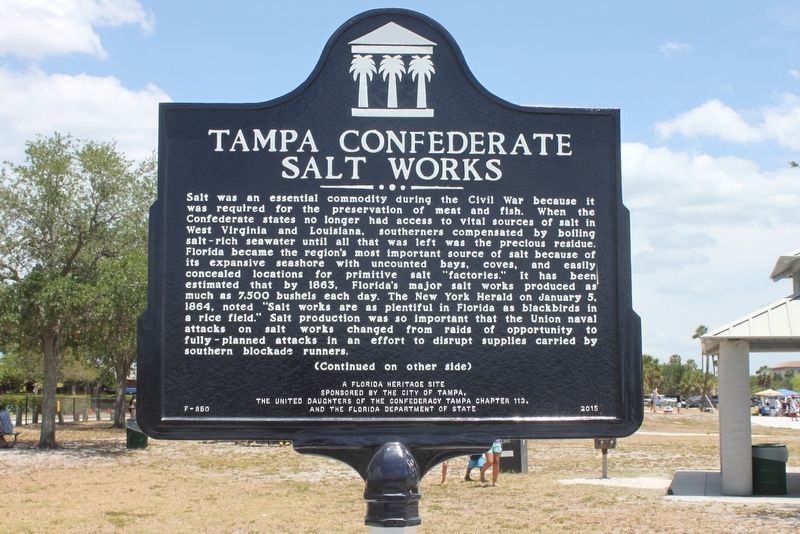
1. Tampa Confederate Salt Works Marker Side 1
Salt was an essential commodity during the Civil War because it was required for the preservation of meat and fish. When the Confederate states no longer had access to vital sources of salt in West Virginia and Louisiana, southerners compensated by boiling salt-rich seawater until all that was left was the precious residue. Florida became the region’s most important source of salt because of its expansive seashore with uncounted bays, coves, and easily concealed locations for primitive salt "factories." It has been estimated that by 1863, Florida's major salt works produced as much as 7,500 bushels each day. The New York Herald on January 5, 1864, noted "Salt works are as plentiful in Florida as blackbirds in a rice field." Salt production was so important that the Union naval attacks on salt works changed from raids of opportunity to fully-planned attacks in an effort to disrupt supplies carried by southern blockade runners.
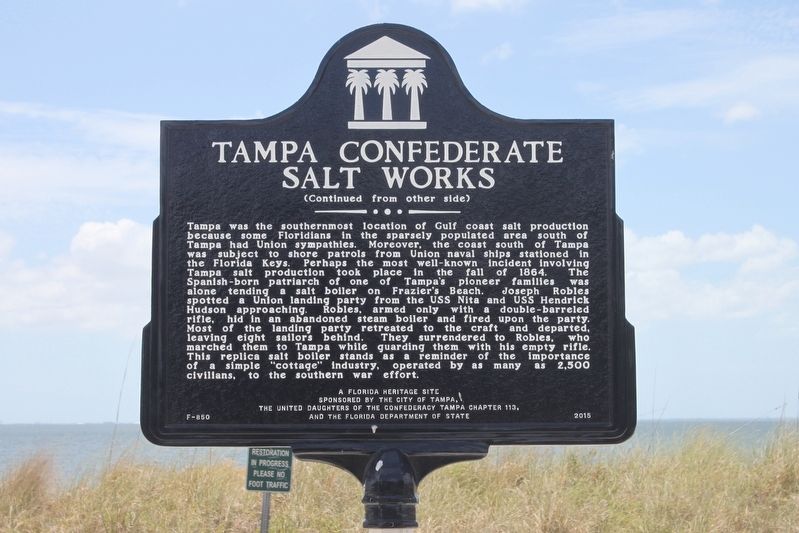
Tampa was the southernmost location of Gulf coast salt production because some Floridians in the sparsely populated area south of Tampa had Union sympathies. Moreover, the coast south of Tampa
this page online
Erected 2015 by The City of Tampa, The United Daughters of the Confederacy Tampa Chapter 113, and the Florida Department of State. (Marker Number F-850.)
Topics. This historical marker is listed in these topic lists: Animals • Industry & Commerce • Natural Resources •
Photographed by Tim Fillmon, April 30, 2017
2. Tampa Confederate Salt Works Marker Side 2
Location. 27° 57.055′ N, 82° 32.763′ W. Marker is in Tampa, Florida, in Hillsborough County. It is in Westshore. It can be reached from West Cypress Street half a mile west of North Reo Street, on the left when traveling west. Marker is located in Cypress Point Park near the beach. Touch for map. Marker is at or near this postal address: 5620 West Cypress Street, Tampa FL 33607, United States of America. Touch for directions.

Regionally, this marker is on Tampa Bay. It is also in the American South and on the Gulf Coast. Globally, it is in the North Atlantic Region, North America, a Gulf of Mexico state, the Western Hemisphere, the Western World, and the Anglosphere. Historically, it finds itself in what was once New Spain, the territory of the Mississippian Culture, one of the Confederate States of America, and the Antebellum South.
Other nearby markers. At least 8 other markers are within 3 miles of this marker, measured as the crow flies: Cypress Point Park Historic Salt Works Display (here, next to this marker); Hillsborough County World War I War Dead Memorial
Photographed by Tim Fillmon, April 30, 2017
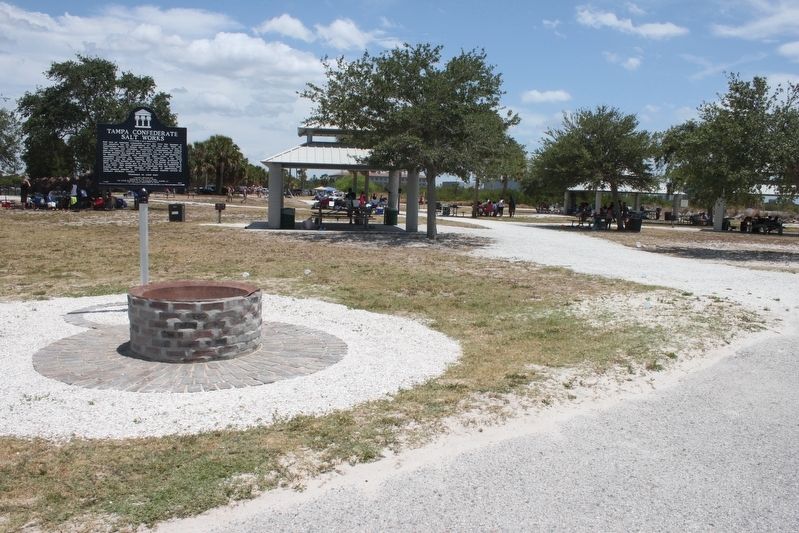
3. Tampa Confederate Salt Works Marker looking east from beach.
Photographed by Tim Fillmon, April 30, 2017
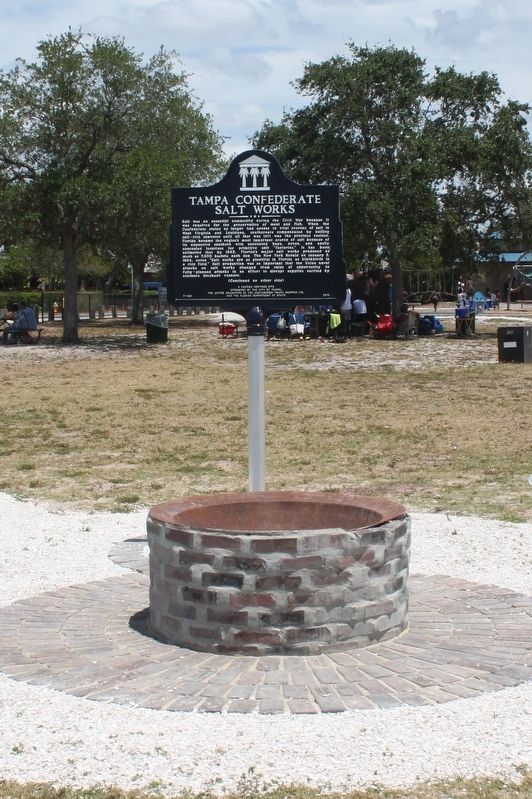
4. Tampa Confederate Salt Works Marker and boiler.
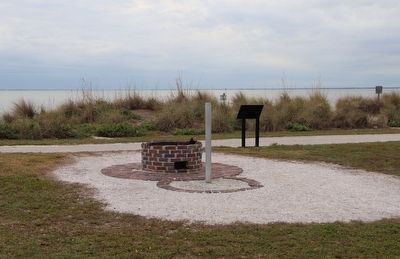
Photographed by Dave W, January 28, 2023
5. Tampa Confederate Salt Works Marker
Marker Missing, only pole and brick fire pit remain.
Credits. This page was last revised on August 3, 2026. It was originally submitted on May 3, 2017, by Tim Fillmon of Webster, Florida. This page has been viewed 2,091 times since then and 150 times this year. Last updated on January 29, 2023, by Dave W of Co, Colorado. Photos: 1, 2, 3, 4. submitted on May 3, 2017, by Tim Fillmon of Webster, Florida. 5. submitted on January 29, 2023, by Dave W of Co, Colorado. • Bernard Fisher was the editor who published this page.
