Brandywine Park in Wilmington in New Castle County, Delaware — The American Northeast (Mid-Atlantic)
Snowy Egret
Egretta thula
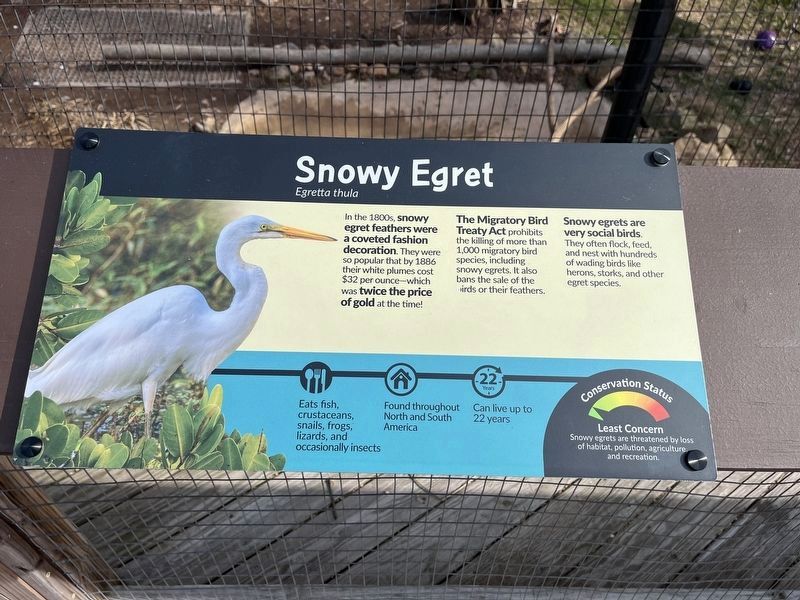
In the 1800s, snowy egret feathers were a coveted fashion decoration. They were so popular that by 1886 their white plumes cost $32 per ounce—which was twice the price of gold at the time!
The Migratory Bird Treaty Act prohibits the killing of more than 1,000 migratory bird species, including snowy egrets. It also bans the sale of the birds or their feathers.
Snowy egrets are very social birds. They often flock, feed, and nest with hundreds of wading birds like herons, storks, and other egret species.
🍴 Eats fish, crustaceans, snails, frogs, lizards, and occasionally insects.
🏠 Found throughout North and South America.
⏲️ Can live for up to 22 years.
Conservation Status: Least Concern
Snowy egrets are threatened by loss of habitat, pollution, agriculture, and recreation.
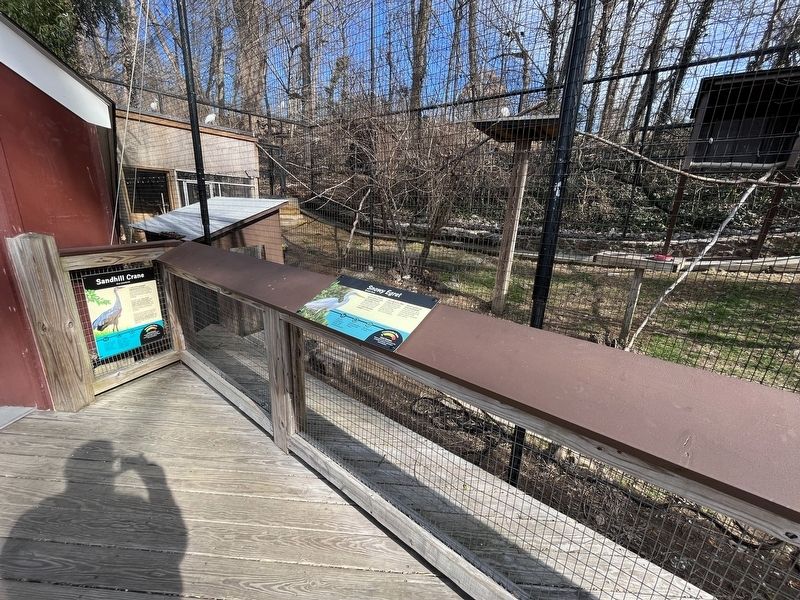
Erected by Brandywine Zoo; Delaware State Parks.
Topics and series. This historical marker is listed in these topic lists: Animals • Environment • Industry & Commerce. In addition, it is included in the Delaware State Parks series list. A significant historical year for this entry is 1886.
Location. 39° 45.3′ N,
this page online

Regionally, this marker is in Greater Philadelphia. It is also in the American Mid-Atlantic, on the Delmarva Peninsula, and on the Eastern Seaboard. Globally, it is in the North Atlantic Region, North America, the Western Hemisphere, the Western World, and the Anglosphere. Historically, it finds itself in what was once New Netherland and also one of the original Thirteen Colonies.
Other nearby markers. At least 8 other markers are within walking distance of this marker: Nigerian Dwarf (a few steps from this marker); San Clemente (a few steps from this marker); Domestication Origins (a few steps from this marker); Delaware Blue Hen (a few steps from this marker); Barred Rock (a few steps from this marker); Ameraucana (a few steps from this marker); Angora (a
Credits. This page was last revised on February 11, 2023. It was originally submitted on February 11, 2023, by Devry Becker Jones of Washington, District of Columbia. This page has been viewed 207 times since then and 17 times this year. Photos: 1, 2. submitted on February 11, 2023, by Devry Becker Jones of Washington, District of Columbia.
