Central Park West Historic District in Manhattan in New York County, New York — The American Northeast (Mid-Atlantic)
Andrew Williams
Seneca Village Community
Photographed by Larry Gertner, June 17, 2020
1. Andrew Williams Marker
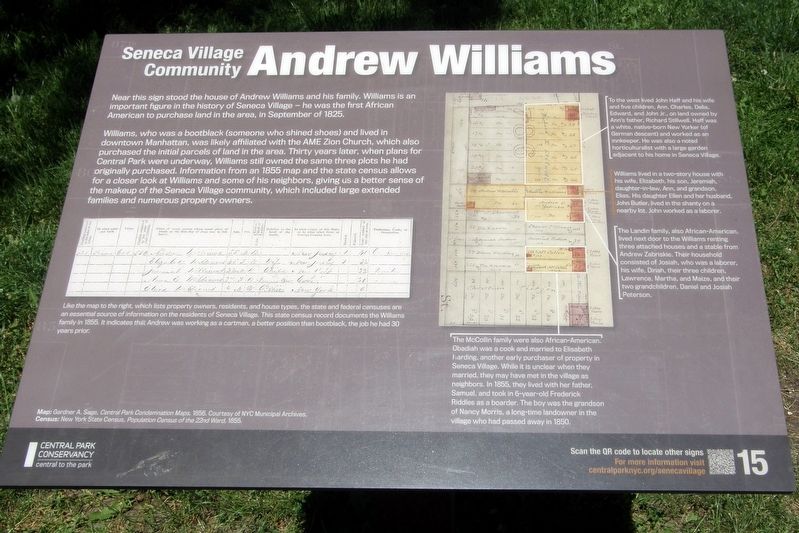
Near this sign stood the house of Andrew Williams and his family. Williams is an important figure in the history of Seneca Village – he was the First African American to purchase land in the area, in September of 1825.
Williams, who was a bootblack (someone who shines shoes) lived in downtown Manhattan, was likely affiliated with the AME Zion Church, which also purchased the initial parcels of land in the area. Thirty years later, when plans for Central Park were underway, Williams still owned the same three plots he has originally purchased. Information from an 1855 map and the state census allows for a closer look at Williams and some of his neighbors, giving us a better sense of the makeup of the Seneca Village community, which included large extended families and numerous property owners.
Erected 2020 by Central Park Conservancy.
Topics. This historical marker is listed in these topic lists: African Americans • Parks & Recreational Areas • Settlements & Settlers. A significant historical month for this entry is September 1825.
Location. 40° 47.063′ N, 73° 58.047′ W. Marker is in Manhattan, New York, in New York County.
this page online

Regionally, this marker is in New York City. It is also in the American Northeast, in the Mid-Atlantic, and on the Eastern Seaboard. Globally, it is in the North Atlantic Region, North America, the Western Hemisphere, the Western World, and the Anglosphere. Historically, it finds itself in what was once New Netherland and also one of the original Thirteen Colonies.
Other nearby markers. At least 8 other markers are within walking distance of this marker: Downtown Connections (within shouting distance of this marker); Reservoir Keepers (within shouting distance of this marker); Gardens (within shouting distance of this marker); Seneca Village (within shouting distance of this marker); AME Zion Church (within shouting distance of this marker); African Union Church (within shouting distance of this marker); Seneca Village Landscape (about 300 feet away, measured in a direct
Photographed by Larry Gertner, June 17, 2020
2. Andrew Williams Marker
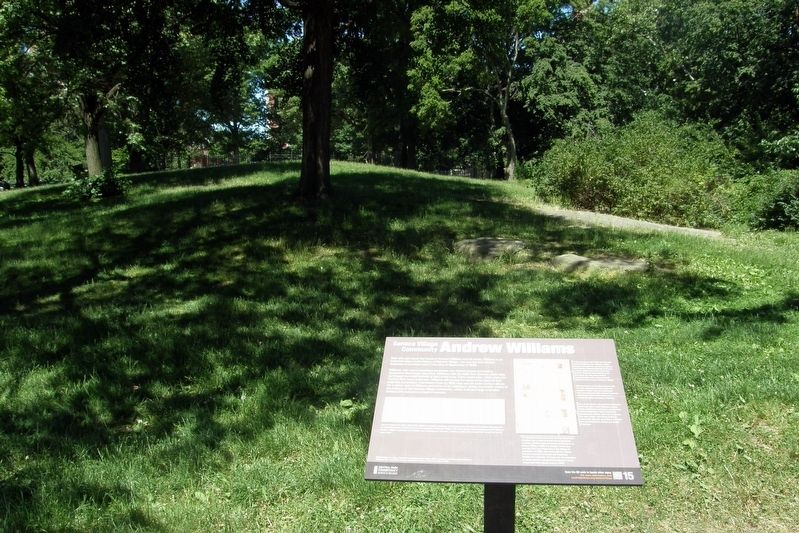
Regarding Andrew Williams. Like most Seneca Village sites, there are no physical remains or representations to be had.
Also see . . .
1. Seneca Village. Wikipedia entry (Submitted on June 9, 2021, by Larry Gertner of New York, New York.)
2. Seneca Village Site. Central Park Conservancy website entry:
Links to several related sub-topics (Submitted on June 9, 2021, by Larry Gertner of New York, New York.)
3. Seneca Village, New York City. National Park Service entry (Submitted on June 9, 2021, by Larry Gertner of New York, New York.)
Photographed by Larry Gertner, June 17, 2020
3. Inset
Top:
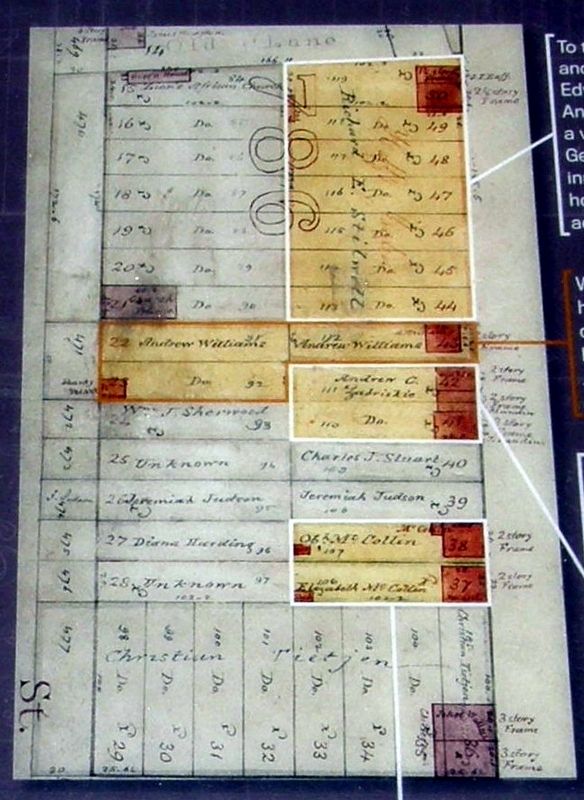
To the west lived John Haff and his wife and five children, Ann, Charles, Delia, Edward, and John Jr., on land owned by Ann’s father, Richard Stillwell. Haff was a white, native-born New Yorker (of German Descent) and worked as an innkeeper. He was also a note horticulturalist with a large garden adjacent to his home in Seneca Village.
Middle:
Williams lived in a two-story house with his wife, Elizabeth, his son, Jeremiah, daughter-in-law, Ann, and grandson, Elias. His daughter Ellen and her husband, John Butler, lived in the shanty on a nearby lot. John worked as a laborer.
The Landin family, also African-American, lived next door to the Williams renting three attached houses and a stable from Andrew Zabriskie. Their household consisted of Josiah, who was a laborer, his wife, Dinah, their three children, Lawrence, Martha, and Maize. and two grandchildren, Daniel and Josiah Peterson.
Bottom:
The McCollin family were also African-American. Obadiah was a cook and married to Elisabeth Harding, another early purchaser of property in Seneca Village. While it is unclear when they married, they may have met in the village as neighbors. In 1855, they lived with their father, Samuel, and took in 6-year-old Frederick Riddles as a border. The boy was the grandson of Nancy Morris, a long-time landowner in the village who passed away in 1850.
To the west lived John Haff and his wife and five children, Ann, Charles, Delia, Edward, and John Jr., on land owned by Ann’s father, Richard Stillwell. Haff was a white, native-born New Yorker (of German Descent) and worked as an innkeeper. He was also a note horticulturalist with a large garden adjacent to his home in Seneca Village.
Middle:
Williams lived in a two-story house with his wife, Elizabeth, his son, Jeremiah, daughter-in-law, Ann, and grandson, Elias. His daughter Ellen and her husband, John Butler, lived in the shanty on a nearby lot. John worked as a laborer.
The Landin family, also African-American, lived next door to the Williams renting three attached houses and a stable from Andrew Zabriskie. Their household consisted of Josiah, who was a laborer, his wife, Dinah, their three children, Lawrence, Martha, and Maize. and two grandchildren, Daniel and Josiah Peterson.
Bottom:
The McCollin family were also African-American. Obadiah was a cook and married to Elisabeth Harding, another early purchaser of property in Seneca Village. While it is unclear when they married, they may have met in the village as neighbors. In 1855, they lived with their father, Samuel, and took in 6-year-old Frederick Riddles as a border. The boy was the grandson of Nancy Morris, a long-time landowner in the village who passed away in 1850.
Photographed by Larry Gertner, June 17, 2020
4. Inset
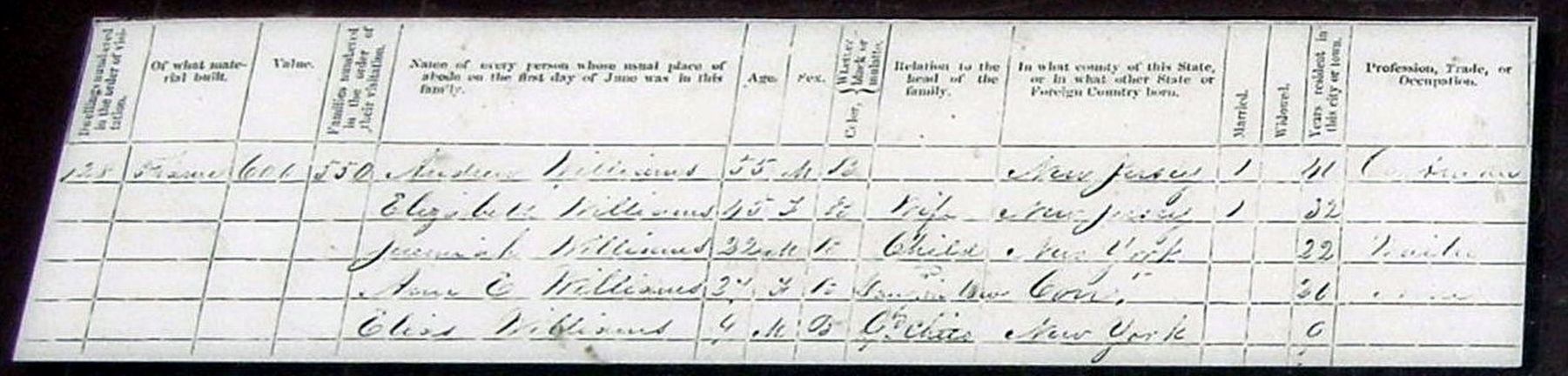
Like the map to the right, which lists property owners, residents, and house types, the state and federal censuses are an essential source of information on the residents of Seneca Village. This state census record documents the Williams family in 1855. It indicates that Andrew was working as a cartman, a better position than bootblack, the job he had 30 years prior.
Credits. This page was last revised on November 5, 2024. It was originally submitted on June 9, 2021, by Larry Gertner of New York, New York. This page has been viewed 3,239 times since then and 220 times this year. Last updated on February 24, 2023, by Mareia M Williams of Odenton, Maryland. Photos: 1, 2, 3, 4. submitted on June 9, 2021, by Larry Gertner of New York, New York. • J. Makali Bruton was the editor who published this page.
