Jimerson in Salamanca in Cattaraugus County, New York — The American Northeast (Mid-Atlantic)
Seneca Nation of Indians
Keeper of the Western Door
Photographed by Paige Miller, February 26, 2023
1. Seneca Nation of Indians Marker
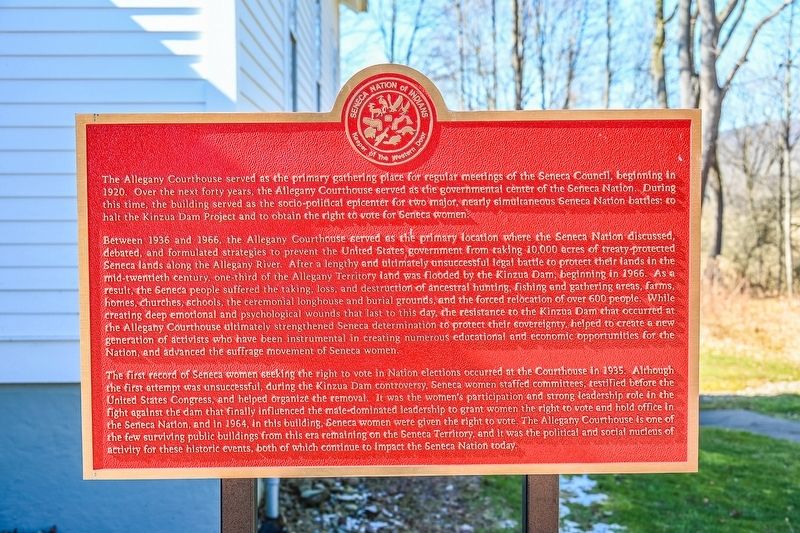
Between 1936 and 1966, the Allegany Courthouse served as the primary location where the Seneca Nation discussed debated, and formulated strategies to prevent the United States government from taking 10,000 acres of treaty protected Seneca lands along the Allegany River. After a lengthy and ultimately unsuccessful legal battle to protect their lands in the mid-twentieth century, one-third of the Allegany Territory land was flooded by the Kinzua Dam, beginning in 1966. As a result, the Seneca people suffered the taking loss, and destruction of ancestral hunting, fishing and gathering areas, farms, homes, churches, schools, the ceremonial longhouse and burial grounds, and the forced relocation
this page online
The first record of Seneca women seeking the right to vote in Nation elections occurred at the Courthouse in 1935. Although the first attempt was unsuccessful, during the Kinzua Dam controversy, Seneca women staffed committees, testified before the United States Congress, and helped organize the removal. It was the women's participation and strong leadership role in the fight against the dam that finally influenced the male-dominated leadership to grant women the right to vote and hold office. In the Seneca Nation, and in 1964, in this building, Seneca women were given the right to vote. The Allegany Courthouse is one of the few surviving public buildings from this era remaining on the Seneca
Photographed by Paige Miller, February 26, 2023
2. Seneca Nation of Indians Marker
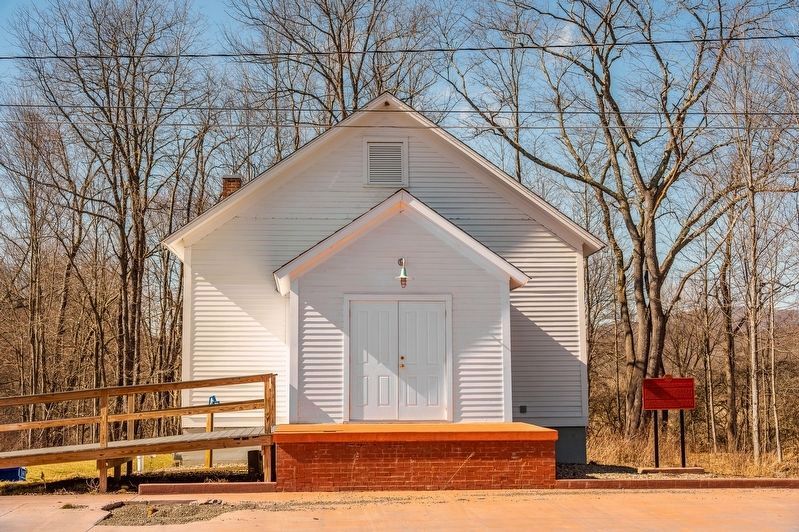
This is the Seneca Nation Allegany Courthouse building, with historic marker at the right
Topics. This historical marker is listed in these topic lists: Civil Rights • Indigenous Peoples and Communities. A significant historical year for this entry is 1920.
Location. 42° 9.067′ N, 78° 46.421′ W. Marker is in Salamanca, New York, in Cattaraugus County. It is in Jimerson. It is on Old Route 17 0.4 miles north of Center Street, on the right when traveling south. Google Maps lists the street name as Red House Road, but the National Register of Historic Places lists the street name as Old Rte 17. My GPS could not find the location on Old Rte 17, but was able to find it on Red House Road. Touch for map. Marker is at or near this postal address: 8156 Old Rte 17, Salamanca NY 14779, United States of America. Touch for directions.

Regionally, this marker is in Upstate New York, specifically in Western New York, and in the Southern Tier. It is also in the American Northeast, in the Mid-Atlantic, in Appalachia, and specifically in Northern Appalachia. Globally, it is in North America, the Western Hemisphere, the Western World, and the Anglosphere. Historically, it finds itself in what was once the Haudenosaunee (Iroquois) Confederacy, New Netherland, and one of the original Thirteen Colonies.
Other nearby markers. At least 8 other markers are within 4 miles of this marker, measured as the crow flies: From the Mountains of Afghanistan (approx. 2.1 miles away); These Gates Erected by Salamanca (approx. 2.1 miles away); Dedicated to Those from the Salamanca Area (approx. 2.1 miles away); Stone Tower (approx. 3.1 miles away); Sweet Water Spring (approx. 3.2 miles away); Ski Jumping (approx. 3.4 miles away); Civilian Conservation Corps (approx. 3.7 miles away); Outdoor Museum (approx. 3.7 miles away). Touch for a list and map of all markers in Salamanca.
Credits. This page was last revised on March 5, 2023. It was originally submitted on March 3, 2023, by Paige Miller of Getzville, New York. This page has been viewed 449 times since then and 35 times this year. Photos: 1, 2. submitted on March 3, 2023, by Paige Miller of Getzville, New York. • Bill Pfingsten was the editor who published this page.
