
Eutawville in Orangeburg County, South Carolina — The American South (South Atlantic)
Santee Limestone
⎯⎯⎯
Limestone and Marl Formations
Photographed by Mike Stroud, August 15, 2009
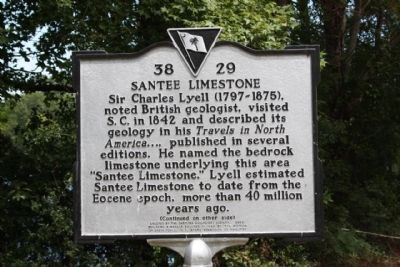
1. Santee Limestone Marker
Santee Limestone. Sir Charles Lyell (1797-1875), noted British geologist, visited S.C. in 1842 and described its geology in his Travels in North America..., published in several editions. He named the bedrock limestone underlying this area "Santee Limestone." Lyell estimated Santee Limestone to date from the Eocene epoch, more than 40 million years ago.
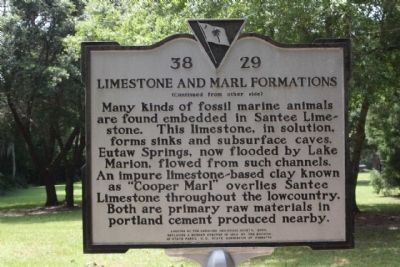
Limestone and Marl Formations. Many kinds of fossil marine animals are found embedded in Santee Limestone. This limestone, in solution, forms sinks and subsurface caves. Eutaw Springs, now flooded by Lake Marion, flowed from such channels. An impure limestone-bases clay known as "Cooper Marl" overlies Santee Limestone throughout the lowcountry. Both are primary raw materials in portland cement produced nearby.
Erected 2004 by the Carolina Geological Society, replacing marker 38-6 erected in 1964 by the Division of State Parks, S.C. Commission of Forestry. (Marker Number 38-29.)
Topics. This historical marker is listed in these topic lists: Industry & Commerce • Natural Features. A significant historical year for this entry is 1842.
Location. 33° 24.485′ N, 80° 17.901′ W.
this page online

Regionally, this marker is in the Lowcountry and in Santee Cooper Country. It is also in the American South and specifically in the Deep South. Globally, it is in North America, the Western Hemisphere, the Western World, and the Anglosphere. Historically, it finds itself in what was once the territory of the Mississippian Culture, one of the original Thirteen Colonies, one of the Confederate States of America, and the Antebellum South.
Other nearby markers. At least 8 other markers are within walking distance of this marker: The Quest for Freedom (within shouting distance of this marker); Grave of Major Majoribanks / Northampton (within shouting distance of this marker); Marjoribanks Makes a Stand (within shouting distance of this marker);
Photographed by Mike Stroud, August 15, 2009
2. Limestone and Marl Formations Marker
Other markers no longer nearby. A Determined Defense by a Brave Commander (was within shouting distance of this marker but has been replaced with another marker now near it); Battle of Eutaw Springs (was within shouting distance of this marker but has been replaced with another marker now near it); Victory in Defeat / A Close and Deadly Clash of Veteran Troops (was about 300 feet away, measured in a direct line but has been replaced with another marker now near it).
More about this marker. This marker replaced the 1964 marker numbered 38-6. This new marker has the same titles and text as the previous.
Also see . . . Sir Charles Lyell, Wikipedia entry. He was the foremost geologist of his day, and an influence on the young Charles Darwin. (Submitted on August 28, 2009, by Mike Stroud of Bluffton, South Carolina.)
Photographed by Mike Stroud, August 15, 2009
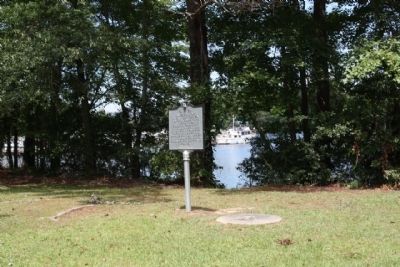
3. Santee Limestone / Limestone and Marl Formations Marker, Lake Marion seen in background
Photographed by Mike Stroud, August 15, 2009
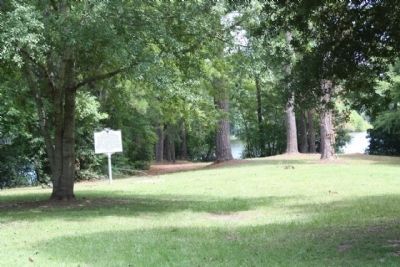
4. Santee Limestone / Limestone and Marl Formations Marker along Lake Marion shoreline
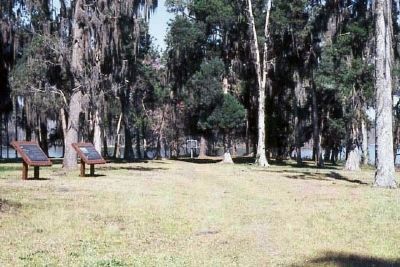
South Carolina Department of Archives and History, circa 1970
5. At center, Previous Santee Limestone / Limestone and Marl Formations Marker
1964 by the Division of State Parks, S.C. Commission of Forestry
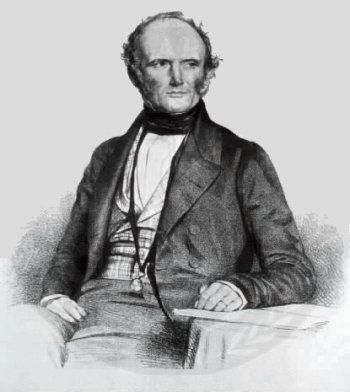
Photographed by Wikipedia
6. Sir Charles Lyell (1797-1875), noted British geologist, as mentioned on marker
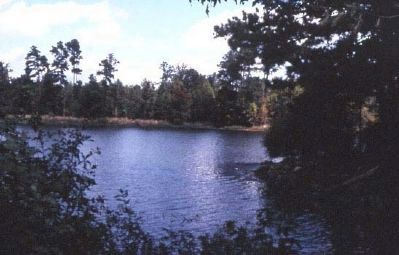
South Carolina Department of Archives and History,, circa 1970
7. Santee River / Lake Marion, view from marker
Credits. This page was last revised on June 1, 2026. It was originally submitted on August 28, 2009, by Mike Stroud of Bluffton, South Carolina. This page has been viewed 4,016 times since then and 105 times this year. Photos: 1, 2, 3, 4. submitted on August 28, 2009, by Mike Stroud of Bluffton, South Carolina. 5. submitted on August 29, 2009, by Mike Stroud of Bluffton, South Carolina. 6. submitted on August 28, 2009, by Mike Stroud of Bluffton, South Carolina. 7. submitted on August 29, 2009, by Mike Stroud of Bluffton, South Carolina. • Craig Swain was the editor who published this page.
