
Porta Volta in Milano in Città Metropolitana di Milano, Lombardy, Italy — Southern and Western Europe (Mediterranean)
Cimitero Monumentale
⎯⎯⎯
Monumental Cemetery
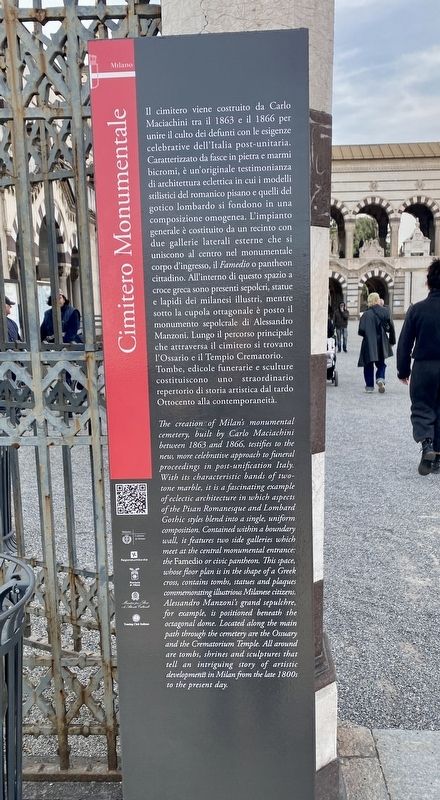
Photographed by Andrew Ruppenstein, March 17, 2023
1. Cimitero Monumentale / Monumental Cemetery Marker

this page online
Topics and series. This historical marker is listed in these topic lists: Arts, Letters, Music • Cemeteries & Burial Sites. In addition, it is included in the Milan Red-Gray Stelae series list. A significant historical year for this entry is 1863.
Location. 45° 29.1′ N, 9° 10.746′ E. Marker is in Milano, Lombardia (Lombardy), in Città Metropolitana di Milano. It is in Porta Volta. It can be reached from Piazzale Cimitero Monumentale. Touch for map. Marker is at or near this postal address: Piazzale Cimitero Monumentale, Milano, Lombardia 20154, Italy. Touch for directions.

Regionally, it is in Europe, the European Union, the Schengen Area, a coastal Mediterranean country, and the Western World. Historically, it finds itself in what was once the Roman Empire and specifically also the Holy Roman Empire.
Other nearby markers. At least 8 other markers are within walking distance of this marker:
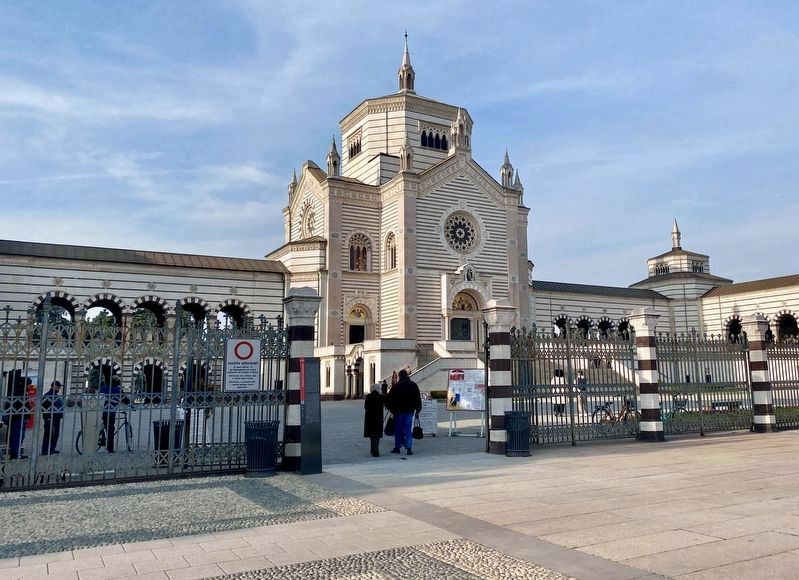
Photographed by Andrew Ruppenstein, March 17, 2023
2. Cimitero Monumentale / Monumental Cemetery Marker - wide view
Also see . . .
1. Cimitero Monumentale (Comune di Milano). The cemetery’s homepage. The site is in Italian, but in the upper left of the homepage there is a drop-down language menu, which will translate the site’s pages into the selected language. (Submitted on April 7, 2023.)
2. Cimitero Monumentale di Milano (Wikipedia).
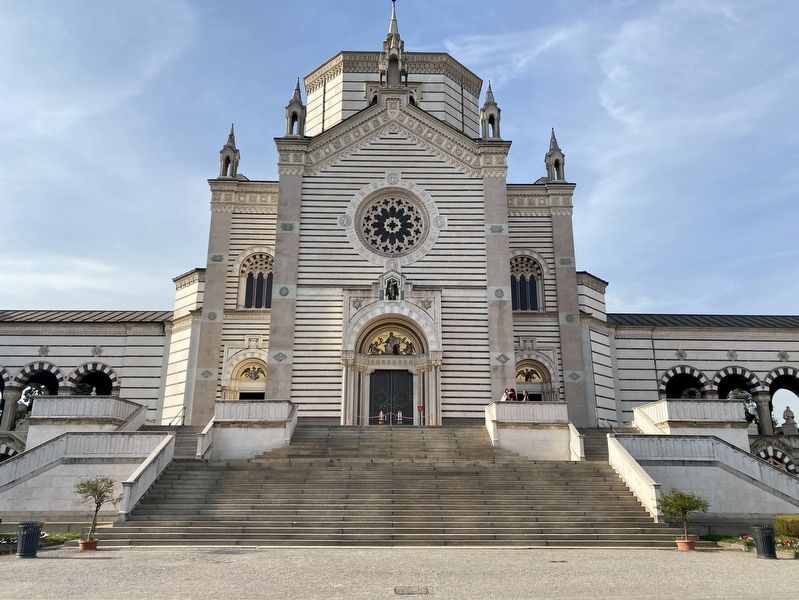
Overview: The Cimitero Monumentale ("Monumental Cemetery") is one of the two largest cemeteries in Milan, Italy, the other one being the Cimitero Maggiore. It is noted for the abundance of artistic tombs and monuments.(Submitted on April 7, 2023.)
Designed by the architect Carlo Maciachini (1818–1899), it was planned to consolidate a number of small cemeteries that usedto be scattered around the city into a single location.Photographed by Andrew Ruppenstein, March 17, 20233. Cimitero Monumentale / Monumental Cemetery - main building
Officially opened in 1866, it has since then been filled with a wide range of contemporary and classical Italian sculptures as well as Greek temples, elaborate obelisks, and other original works such as a scaled-down version of the Trajan's Column. Many of the tombs belong to noted industrialist dynasties, and were designed by artists such as Adolfo Wildt, Giò Ponti, Arturo Martini, Agenore Fabbri, Lucio Fontana, Medardo Rosso, Giacomo Manzù, Floriano Bodini, and Giò Pomodoro.
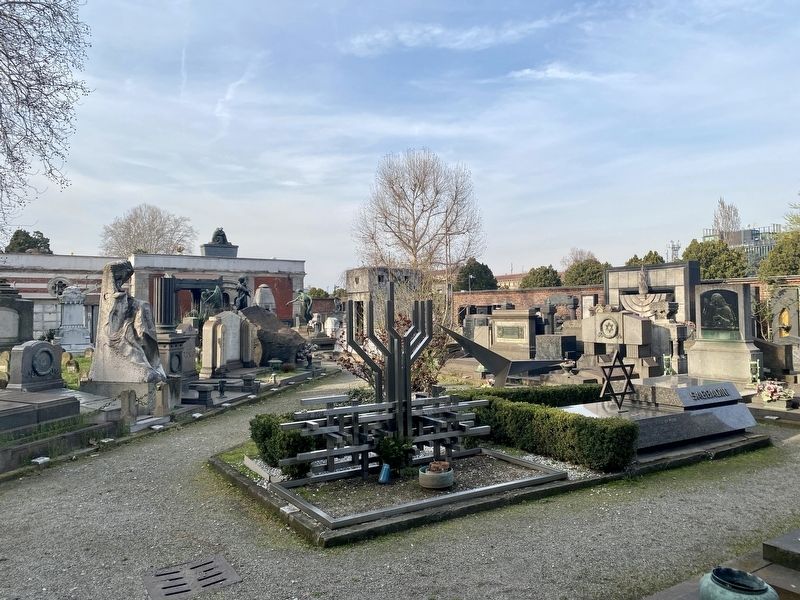
Photographed by Andrew Ruppenstein, March 17, 2023
4. Cimitero Monumentale / Monumental Cemetery - Jewish section
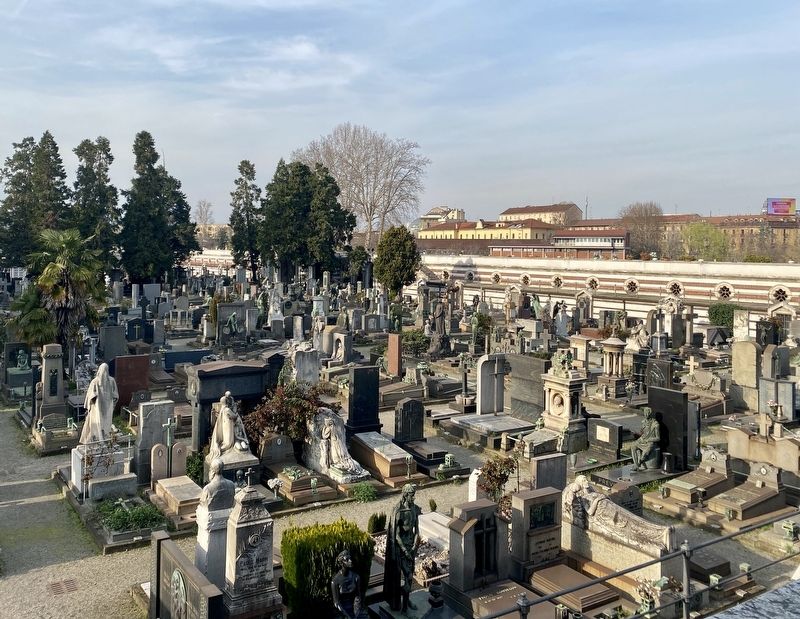
Photographed by Andrew Ruppenstein, March 17, 2023
5. Cimitero Monumentale / Monumental Cemetery - eastern area
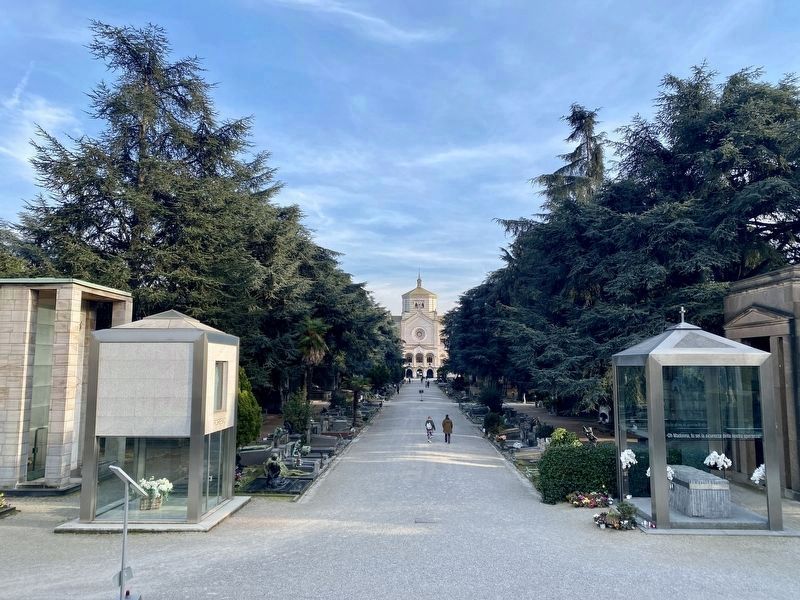
Photographed by Andrew Ruppenstein, March 17, 2023
6. Cimitero Monumentale / Monumental Cemetery
Photographed from the steps of the Ossario, looking at the main building.
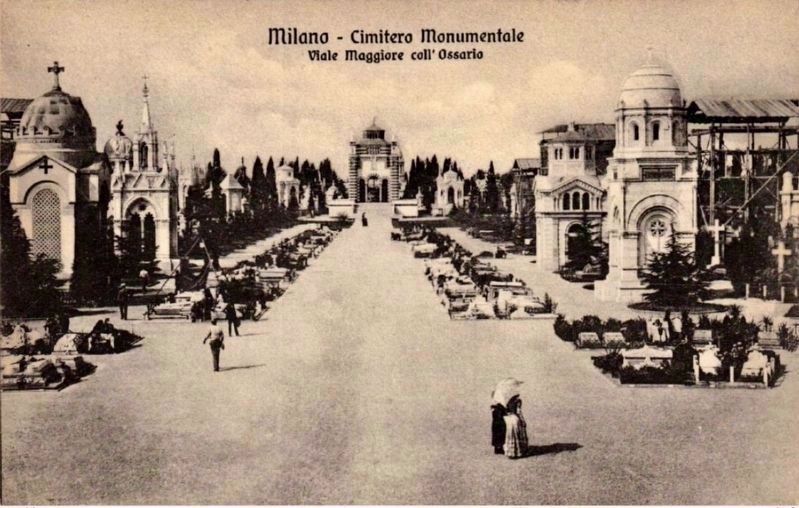
circa 1905
7. Cimitero Monumentale - Viale Maggiore coll’ Ossario
Photographed from the steps at the rear of the main building, looking towards the Ossario.
Credits. This page was last revised on April 8, 2023. It was originally submitted on April 6, 2023, by Andrew Ruppenstein of Lamorinda, California. This page has been viewed 115 times since then and 12 times this year. Photos: 1, 2, 3, 4, 5. submitted on April 6, 2023, by Andrew Ruppenstein of Lamorinda, California. 6. submitted on April 7, 2023, by Andrew Ruppenstein of Lamorinda, California. 7. submitted on April 6, 2023, by Andrew Ruppenstein of Lamorinda, California.
