Near Seneca in Montgomery County, Maryland — The American Northeast (Mid-Atlantic)
Watering the Canal
Chesapeake and Ohio Canal National Historical Park
| — | National Park Service, U.S. Department of the Interior | — |
Photographed by Craig Swain, August 15, 2009
1. Watering the Canal Marker
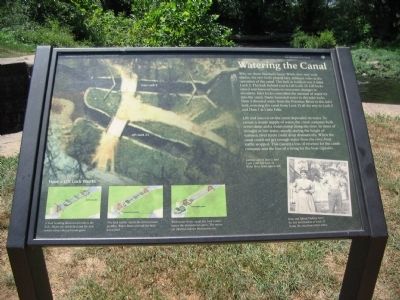
Life and success on the canal depended on water. To ensure a steady supply of water, the canal company built seven dams and a stream pump along the river. In times of drought or low water, usually during the height of summer, river levels could drop dramatically. When the canal could not get enough water from the river, boat traffic stopped. This caused a loss of revenue for the canal company and the loss of a living for the boat captains.
Erected by National Park Service, U.S. Department of the Interior.
Topics and series. This historical marker is listed in this topic list: Waterways & Vessels.
this page online
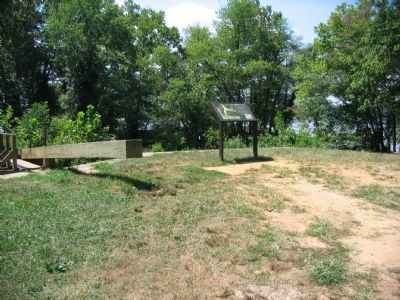
Location. Marker is missing. It was located near 39° 4.018′ N, 77° 19.728′ W. Marker was near Seneca, Maryland, in Montgomery County. It could be reached from Violette's Lock Road, on the right when traveling south. Located at the Rowser's Ford/Violette's Lock section (mile 22) of the Chesapeake & Ohio Canal Towpath. Touch for map. Marker was in this post office area: Germantown MD 20874, United States of America. Touch for directions.

Regionally, this marker was in the Washington Metropolitan Area. It was also in the American Mid-Atlantic. Globally, it was in North America, the Western Hemisphere, the Western World, and the Anglosphere. Historically, it found itself in what was once one of the original Thirteen Colonies and also the Antebellum South.
Other nearby markers. At least 8 other markers are within one mile of this location, measured as the crow flies: Rowser’s Ford (approx. 0.6 miles away); Seneca (approx. 0.7 miles away); a different marker also named Rowser’s Ford (approx. 0.7 miles
Photographed by Craig Swain, August 15, 2009
2. Watering the Canal Marker
Another marker is no longer nearby. The Seneca Aqueduct (was approx. 0.7 miles away but has been confirmed missing).
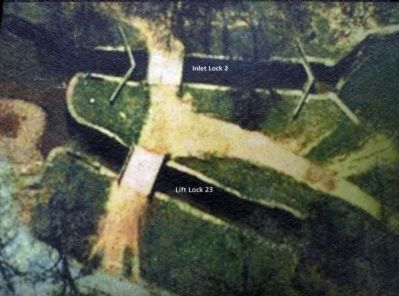
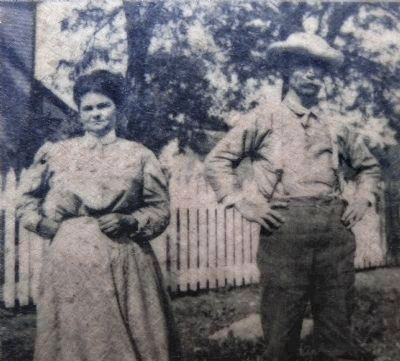
More about this marker. The background of the marker is a Satellite view of Dam 2, Inlet Lock 2 and Lift Lock 23. Water flows from right to left. To the lower right is a photo of Kate and Alfred Violette who were the last locktenders at Lock 23. Today the area bears their name. On the lower left is a set of illustrations that show how the locks worked to aid the passage of canal boats.
Also see . . . Chesapeake & Ohio Canal. National Park Service site. (Submitted on August 30, 2009, by Craig Swain of Leesburg, Virginia.)
Photographed by Craig Swain, August 15, 2009
3. Lock #23
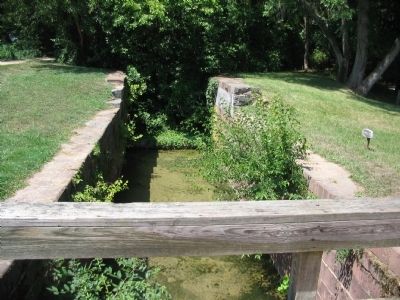
Looking to the upstream end of the lock.
Photographed by Craig Swain, August 15, 2009
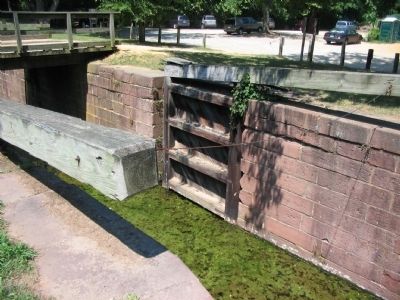
4. Downstream Entrance to the Lock
Looking from the towpath at the lock gate. The lock stands several feet taller than the downstream towpath, highlighting the change in elevation at this point.
Photographed by Craig Swain, August 15, 2009
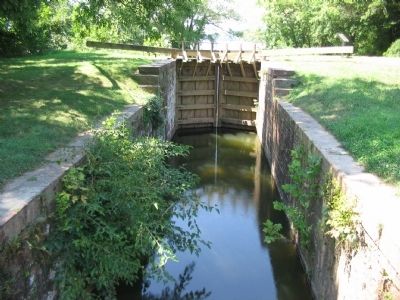
5. Lockgates on Lock #23
Photographed by Craig Swain, August 15, 2009
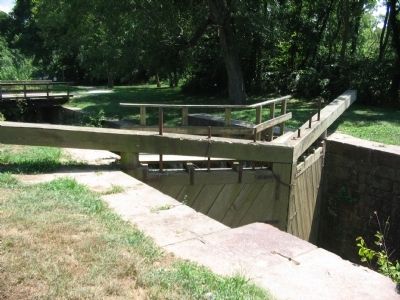
6. Inlet Lock #2
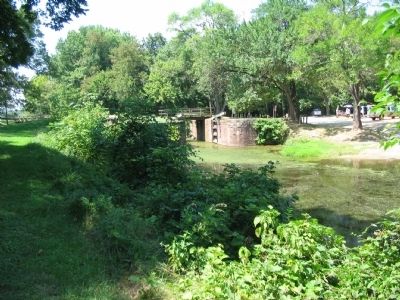
Looking at the basin of the Inlet Lock, note the closed lock gates.
Photographed by Craig Swain, August 15, 2009
7. Inlet Lock #2 Gates
Photographed by Allen C. Browne, May 15, 2013
8. Satellite Photo
Close-up of photo on the marker
Photographed by Allen C. Browne, May 15, 2013
9. The Violettes
Kate and Alfred Violette were the last locktenders at Lock 23. Today the area bears their name.
Close-up of photo on the marker
Photographed by Allen C. Browne, May 15, 2013
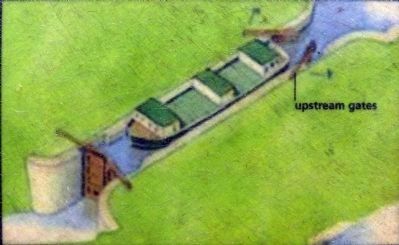
10. How a Lift Lock Works -- 1
A boat heading downstream enters the lock. Mules are unhitched and the lock tender closes the upstream gates.
Close-up of picutre on marker
Photographed by Allen C. Browne, May 15, 2013
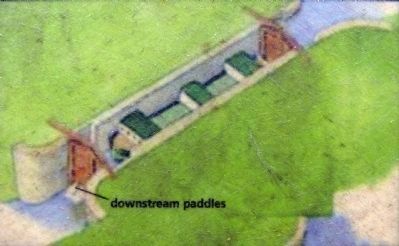
11. How a Lift Lock Works -- 2
The lock tender opens the downstream paddles. Water flows out and the boat is lowered.
close-up of picture on marker
Photographed by Allen C. Browne, May 15, 2013
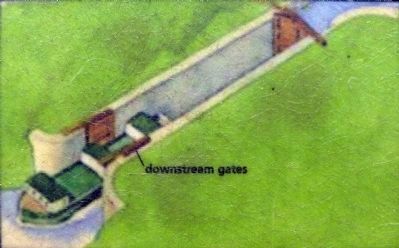
12. How a Lift Lock Works -- 3
With water levels equal, the lock tender opens the downstream gates. The mules are hitched and the boat moves on.
Close-up of picture on marker
Photographed by Allen C. Browne, May 15, 2013
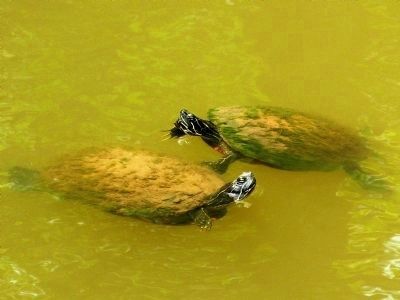
13. Two Turtles in the Lock
Credits. This page was last revised on March 20, 2026. It was originally submitted on August 30, 2009, by Craig Swain of Leesburg, Virginia. This page has been viewed 1,508 times since then and 19 times this year. Photos: 1, 2, 3, 4, 5, 6, 7. submitted on August 30, 2009, by Craig Swain of Leesburg, Virginia. 8, 9, 10, 11, 12, 13. submitted on May 15, 2013, by Allen C. Browne of Silver Spring, Maryland.
