Nashville in Nash County, North Carolina — The American South (South Atlantic)
Harold D. Cooley
1897 - 1974
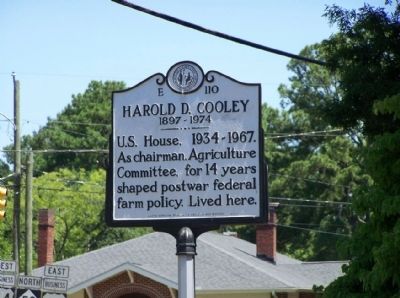
Photographed by Mike Stroud, 2011
1. Harold D. Colley Marker
Erected 2004 by North Carolina Office of Archives and History. (Marker Number E-110.)
Topics and series. This historical marker is listed in this topic list: Agriculture. In addition, it is included in the North Carolina Division of Archives and History series list.
Location. 35° 58.378′ N, 77° 57.671′ W. Marker is in Nashville, North Carolina, in Nash County. It is at the intersection of South 1st Street (North Carolina Route 58) and East Center Street, on the right when traveling north on South 1st Street. Touch for map. Marker is at or near this postal address: 105 S 1st St, Nashville NC 27856, United States of America. Touch for directions.

Regionally, this marker is in North Carolina’s Piedmont. It is also in the American South and specifically in the Upper South. Globally, it is in North America, the Western Hemisphere, the Western World, and the Anglosphere. Historically, it finds itself in what was once the territory of
this page online
Other nearby markers. At least 8 other markers are within 9 miles of this marker, measured as the crow flies: Francis Nash Monument (approx. 0.4 miles away); 1917-1918 (approx. 0.4 miles away); Korean War (approx. 0.4 miles away); Vietnam War (approx. 0.4 miles away); World War II Memorial (approx. 0.4 miles away); Grateful Remembrance of Nash County Boys (approx. 0.4 miles away); The Charters of Freedom (approx. 0.4 miles away); Nash County Vietnam Veterans Memorial (approx. 8.2 miles away). Touch for a list and map of all markers in Nashville.
Regarding Harold D. Cooley. As longtime chairman of the U.S. House of Representatives Agriculture Committee, Harold Dunbar Cooley, native of Nashville, North Carolina, was a powerful spokesman for farmers from the New Deal to the Great Society. Educated at the University of North Carolina and at Yale law school, Democrat Cooley, by virtue of a special election in July 1934, filled the House seat in the North Carolina Fourth District vacated with the
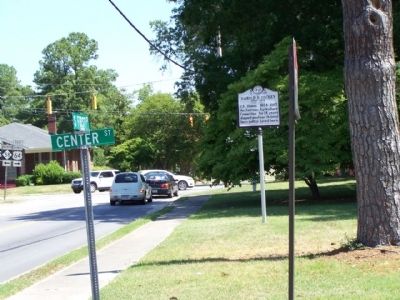
Photographed by Mike Stroud, July 18, 2011
2. Harold D. Colley Marker at South First and Center Streets
Cooley joined the Agriculture Committee during the height of the New Deal and was a driving force in the development of Roosevelt’s agricultural program. He backed several reforms including those that provided for allotments, price supports, rural electrification, and soil conservation. Cooley also sought to reach the world market with agricultural products, endorsing the “Food for Freedom” program as part of the Marshall Plan. He stated that “bread and butter rather than bullets and bayonets are the most powerful weapons in our arsenal.”
Cooley returned to North Carolina after losing his re-election
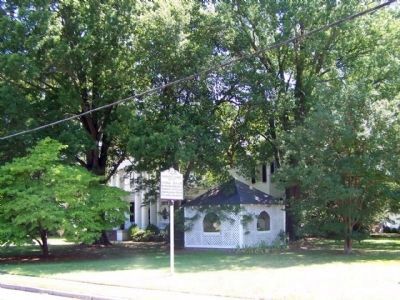
Photographed by Mike Stroud, July 18, 2011
3. Harold D. Colley House and Marker
(North Carolina Office of Archives and History)

Photographed by Mike Stroud, July 18, 2011
4. Harold D. Colley House
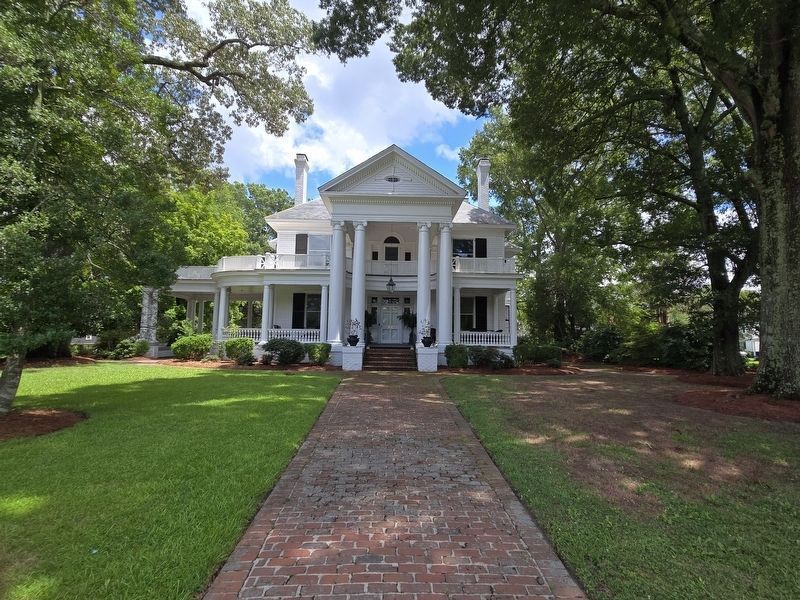
Photographed by Mark Parker, July 22, 2024
5. Harold D. Cooley House front view
Credits. This page was last revised on July 24, 2024. It was originally submitted on August 9, 2011, by Mike Stroud of Bluffton, South Carolina. This page has been viewed 1,050 times since then and 55 times this year. Last updated on April 29, 2023, by Michael Buckner of Durham, North Carolina. Photos: 1, 2, 3, 4. submitted on August 9, 2011, by Mike Stroud of Bluffton, South Carolina. 5. submitted on July 23, 2024, by Mark Parker of Hickory, North Carolina. • Bernard Fisher was the editor who published this page.
