Downtown in Dayton in Montgomery County, Ohio — The American Midwest (Great Lakes)
The Great Dayton Flood of 1913 ⎯⎯⎯ And The Rivers Flowed Through The City
Photographed by William Fischer, Jr., February 14, 2009
1. The Great Dayton Flood of 1913 Marker
Inscription.
The Great Dayton Flood of 1913, also, And The Rivers Flowed Through The City. .
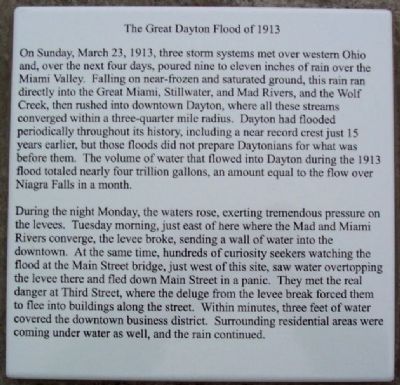
The Great Dayton Flood of 1913. On Sunday, March 23, 1913, three storm systems met over western Ohio and, over the next four days, poured nine to eleven inches of rain over the Miami Valley. Falling on near-frozen and saturated ground, this rain ran directly into the Great Miami, Stillwater, and Mad Rivers, and the Wolf Creek, then rushed into downtown Dayton, where all these streams converged within a three-quarter mile radius. Dayton had flooded periodically throughout its history, including a near record crest just 15 years earlier, but those floods did not prepare Daytonians for what was before them. The volume of water that flowed into Dayton during the 1913 flood totaled nearly four trillion gallons, an amount equal to the flow over Niagra [sic] Falls in a month., During the night Monday, the waters rose, exerting tremendous pressure on the levees. Tuesday morning, just east of here where the Mad and Miami Rivers converge, the levee broke, sending a wall of water into the downtown. At the same time, hundreds of curiosity seekers watching the flood at the Main Street bridge, just west of this site, saw water overtopping the levee there and fled down Main Street in a panic. They met the real danger at Third Street, where the deluge from the levee break forced them to flee into buildings along the street. Within minutes, three feet of water covered the downtown business district. Surrounding residential areas were coming under water as well, and the rain continued.,
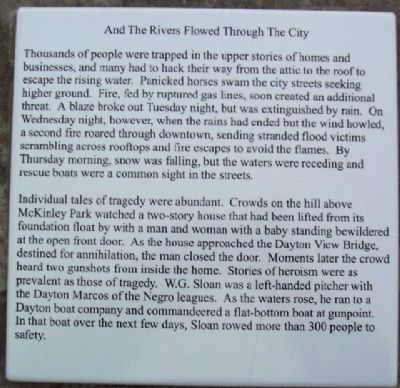
And The Rivers Flowed Through The City. Thousands of people were trapped in the upper stories of homes and businesses, and many had to hack their way from the attic to the roof to escape the rising water. Panicked horses swam the city streets seeking higher ground. Fire, fed by ruptured gas lines, soon created an additional threat. A blaze broke out Tuesday night, but was extinguished by rain. On Wednesday night, however, when the rains had ended but the winds howled, a second fire roared through downtown, sending stranded flood victims scrambling across rooftops and fire escapes to avoid the flames. By Thursday morning, snow was falling, but the waters were receding and rescue boats were a common sight in the streets., Individual tales of tragedy were abundant. Crowds on the hill above McKinley Park watched a two-story house that had been lifted from its foundation float by with a man and a woman with a baby standing bewildered at the open front door. As the house approached the Dayton View Bridge, destined for annihilation, the man closed the door. Moments later the crowd heard two gunshots from inside the home. Stories of heroism were as prevalent as those of tragedy. W.G. Sloan was a left-handed pitcher with the Dayton Marcos of the Negro leagues. As the waters rose, he ran to a Dayton boat company and commandeered a flat-bottomed boat at gunpoint. In that boat over the next few days, Sloan rowed more than 300 people to safety.
The Great Dayton Flood of 1913
On Sunday, March 23, 1913, three storm systems met over western Ohio and, over the next four days, poured nine to eleven inches of rain over the Miami Valley. Falling on near-frozen and saturated ground, this rain ran directly into the Great Miami, Stillwater, and Mad Rivers, and the Wolf Creek, then rushed into downtown Dayton, where all these streams converged within a three-quarter mile radius. Dayton had flooded periodically throughout its history, including a near record crest just 15 years earlier, but those floods did not prepare Daytonians for what was before them. The volume of water that flowed into Dayton during the 1913 flood totaled nearly four trillion gallons, an amount equal to the flow over Niagra [sic] Falls in a month.
During the night Monday, the waters rose, exerting tremendous pressure on the levees. Tuesday morning, just east of here where the Mad and Miami Rivers converge, the levee broke, sending a wall of water into the downtown. At the same time, hundreds of curiosity seekers watching the flood at the Main Street bridge, just west of this site, saw water overtopping the levee there and fled down Main Street in a panic. They met the real danger at Third Street, where the deluge from the levee break forced them to flee into buildings along the
Click or scan to see this page online
street. Within minutes, three feet of water covered the downtown business district. Surrounding residential areas were coming under water as well, and the rain continued.
And The Rivers Flowed Through The City
Thousands of people were trapped in the upper stories of homes and businesses, and many had to hack their way from the attic to the roof to escape the rising water. Panicked horses swam the city streets seeking higher ground. Fire, fed by ruptured gas lines, soon created an additional threat. A blaze broke out Tuesday night, but was extinguished by rain. On Wednesday night, however, when the rains had ended but the winds howled, a second fire roared through downtown, sending stranded flood victims scrambling across rooftops and fire escapes to avoid the flames. By Thursday morning, snow was falling, but the waters were receding and rescue boats were a common sight in the streets.
Individual tales of tragedy were abundant. Crowds on the hill above McKinley Park watched a two-story house that had been lifted from its foundation float by with a man and a woman with a baby standing bewildered at the open front door. As the house approached the Dayton View Bridge, destined for annihilation, the man closed the door. Moments later the crowd heard two gunshots from inside the home. Stories of heroism were as prevalent as those of tragedy.
Photographed by William Fischer, Jr., February 14, 2009
2. And The Rivers Flowed Through The City Marker
W.G. Sloan was a left-handed pitcher with the Dayton Marcos of the Negro leagues. As the waters rose, he ran to a Dayton boat company and commandeered a flat-bottomed boat at gunpoint. In that boat over the next few days, Sloan rowed more than 300 people to safety.
Erected by Montgomery County, City of Dayton, Five Rivers MetroParks, Miami Conservancy District, et al.
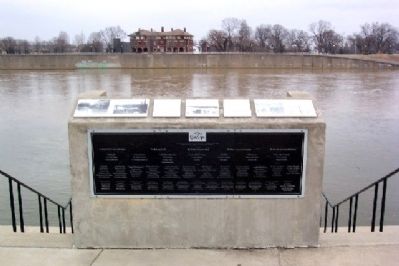
Location. 39° 45.866′ N, 84° 11.424′ W. Marker is in Dayton, Ohio, in Montgomery County. It is in Downtown. It can be reached from East Drive. Markers are on a concrete base along the Great Miami River at Van Cleve Park, part of RiverScape Metro Park. Touch for map. Marker is at or near this postal address: 111 E Monument Avenue, Dayton OH 45402, United States of America. Touch for directions.
Regionally, this marker is in Ohio’s Miami Valley. It is also in the American Midwest and in the Corn Belt. Globally, it is in North America, the Western Hemisphere, the Western World, and the Anglosphere. Historically, it finds itself in what was once the Haudenosaunee (Iroquois) Confederacy, the territory of the Mississippian Culture, and the Northwest Territory.
Photographed by William Fischer, Jr., February 14, 2009
4. The Great Dayton Flood of 1913 Marker Photo
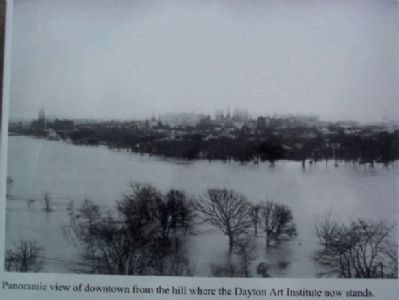
Panoramic view of downtown from the hill where the Dayton Art Institute now stands.
Photographed by William Fischer, Jr., February 14, 2009
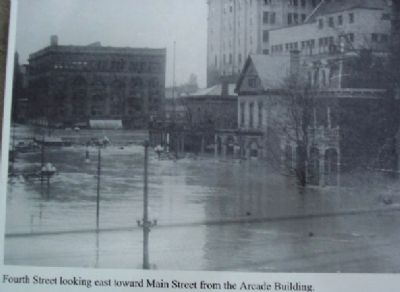
5. The Great Dayton Flood of 1913 Marker Photo
Fourth Street looking east toward Main Street from the Arcade Building.
Photographed by William Fischer, Jr., February 14, 2009
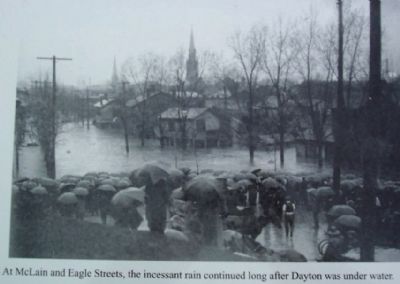
6. The Great Dayton Flood of 1913 Marker Photo
At McLain and Eagle Streets, the incessant rain continued long after Dayton was under water.
Photographed by William Fischer, Jr., February 14, 2009
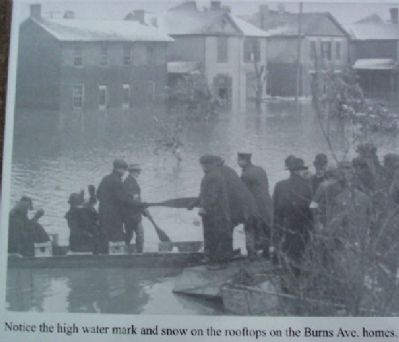
7. The Great Dayton Flood of 1913 Marker Photo
Notice the high water mark and snow on the rooftops on the Burns Ave. homes.
Credits. This page was last revised on February 14, 2026. It was originally submitted on September 6, 2009, by William Fischer, Jr. of Reynoldsburg, Ohio. This page has been viewed 8,791 times since then and 101 times this year. Photos:1, 2, 3, 4, 5, 6, 7. submitted on September 6, 2009, by William Fischer, Jr. of Reynoldsburg, Ohio.