Brownsville in Cameron County, Texas — The American South (West South Central)
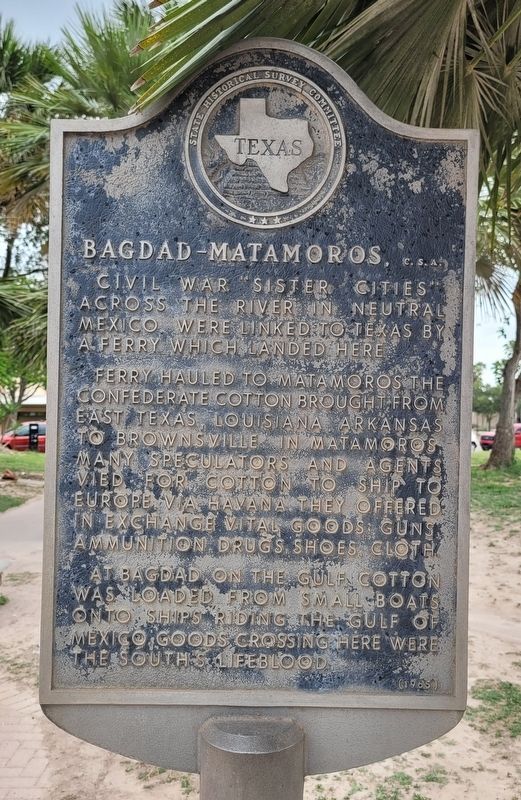
Bagdad-Matamoros, C.S.A.
Photographed by James Hulse, April 19, 2023
1. Bagdad-Matamoros, C.S.A. Marker
Ferry hauled to Matamoros the Confederate cotton brought from East Texas, Louisiana, Arkansas to Brownsville in Matamoros, many speculators and agents vied for cotton to ship to Europe via Havana. They offered in exchange vital goods: guns, ammunition, drugs, shoes, cloth.
At Bagdad, on the gulf, cotton was loaded from small boats onto ships riding the Gulf of Mexico, goods crossing here were the South's lifeblood.
Erected 1965 by State Historical Survey Committee. (Marker Number 275.)
Topics. This historical marker is listed in these topic lists: Industry & Commerce • War, US Civil • Waterways & Vessels.
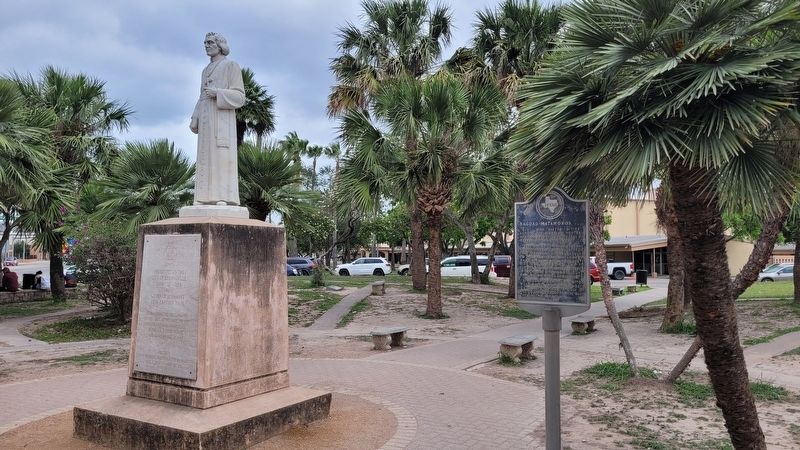
Location. 25° 53.947′ N, 97° 29.748′ W. Marker is in Brownsville, Texas, in Cameron County. It is at the intersection of West University Boulevard and International Blvd, on the left when traveling south on West University Boulevard. The marker is located in the northwest corner of the Xeriscape Park. Touch for map. Marker is at or near this postal address: 1401 West University Blvd, Brownsville TX 78520, United States of America. Touch for directions.

Regionally, this marker is in South Texas. It is also in the American Borderlands, in the South, and on the Gulf Coast. Globally, it is in North America, a Gulf of Mexico state, the Western Hemisphere, the Western World, and the Anglosphere. Historically, it finds itself in what was once New Spain, the Republic of Texas, and one of the Confederate States of America.
Other nearby markers. At least 8 other markers are within walking distance of this marker: Fort Brown (about 400 feet away, measured in a direct line); Fort Brown Memorial Center (about 500 feet away);
this page online
Also see . . . Wartime Cotton Trade. Texas State Historical Association (TSHA)
At the onset of the Civil War, it was the policy of the newly-created Confederate States of America to withhold cotton from European markets in the hopes of inducing either foreign intervention or, at the very least, encouraging recognition of the fledgling Confederacy. It was believed that cotton was “king” and that foreign markets required the South’s most valuable staple crop in order to support European economies. As a result, Confederate President Jefferson Davis and his cabinet adopted a policy that came to be known as King Cotton Diplomacy. This policy hinged on the farce that early in the war the Union blockade denied Confederate shipment of cotton to Europe and aimed at provoking European(Submitted on May 14, 2023, by James Hulse of Medina, Texas.)(most notably the British) intervention.Photographed by James Hulse, April 19, 20232. The Bagdad-Matamoros, C.S.A. Marker next to the Landing of the First Missionaries monument
Photographed by James Hulse, April 19, 2023
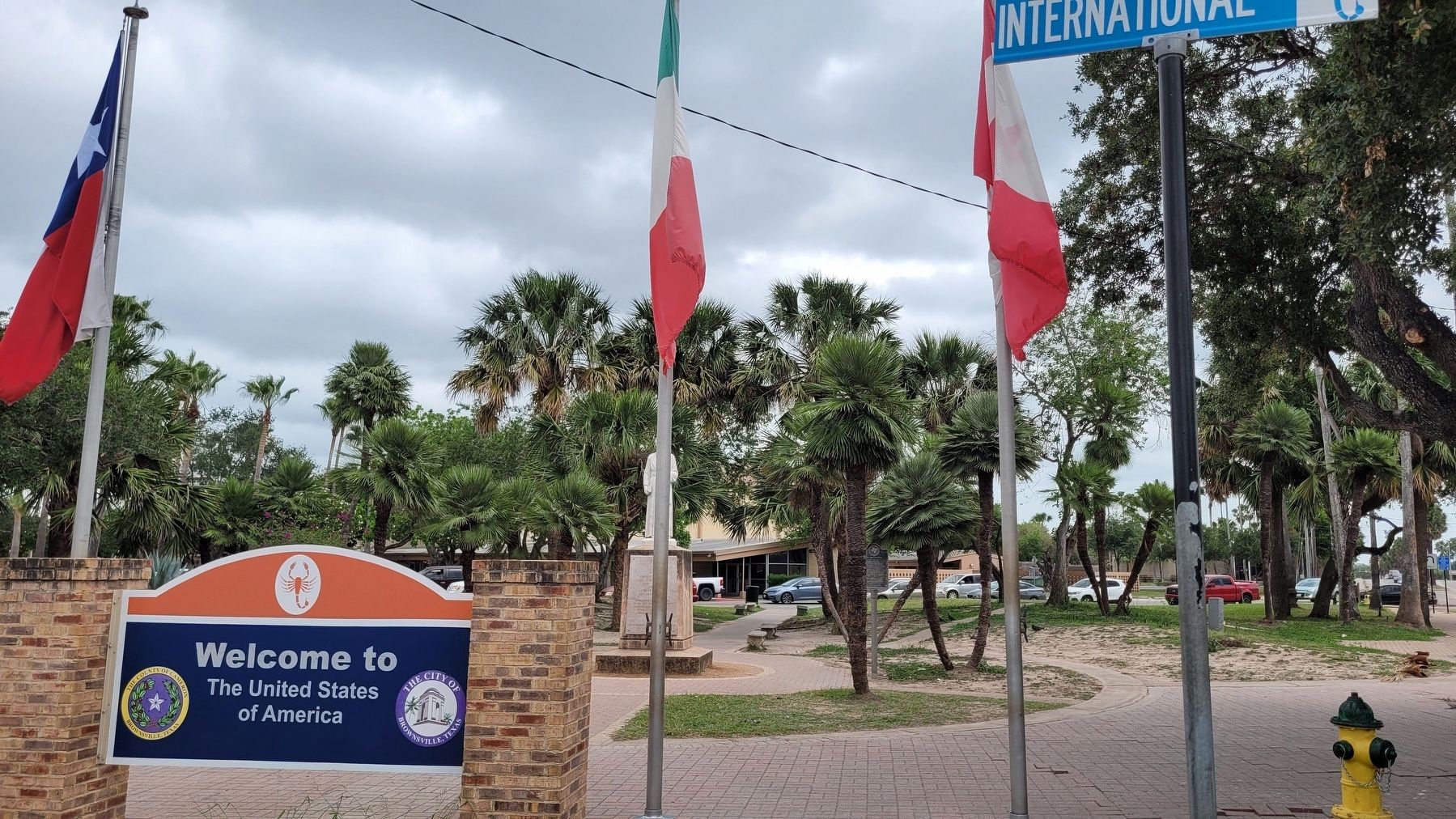
3. The Welcome to the USA sign next to the border crossing to Matamoros, Mexico
The marker is located next to the palm tree.
Credits. This page was last revised on May 14, 2023. It was originally submitted on May 14, 2023, by James Hulse of Medina, Texas. This page has been viewed 593 times since then and 64 times this year. Photos: 1, 2, 3. submitted on May 14, 2023, by James Hulse of Medina, Texas.
