Wales Garden in Columbia in Richland County, South Carolina — The American South (South Atlantic)
Maxcy Gregg Park
Photographed by Anna Inbody, April 29, 2012
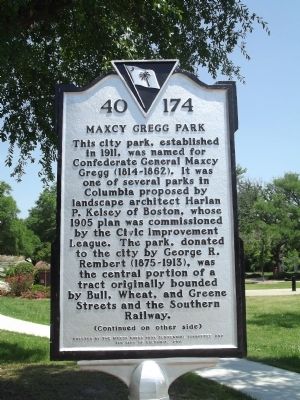
1. Maxcy Gregg Park Marker
This city park, established in 1911, was named for Confederate General Maxcy Gregg (1814-1862). It was one of several parks in Columbia proposed by landscape architect Harlan P. Kelsey of Boston, whose 1905 plan was commissioned by the Civic Improvement League. The park, donated to the city by George R. Rembert (1875-1913), was the central portion of a tract originally bounded by Bull, Wheat, and Greene Streets and the Southern Railway.
(Reverse)
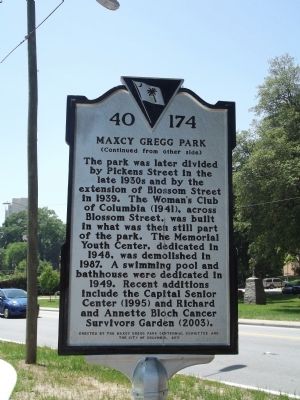
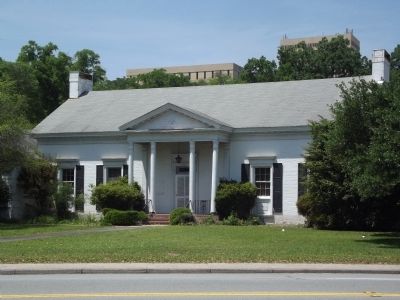
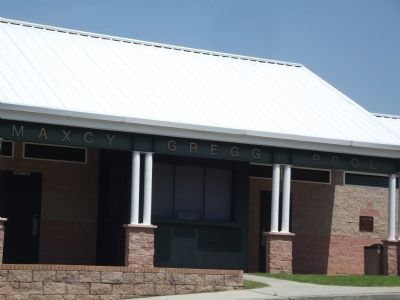
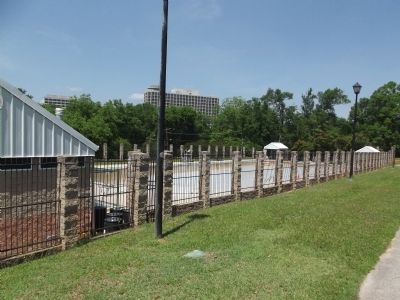
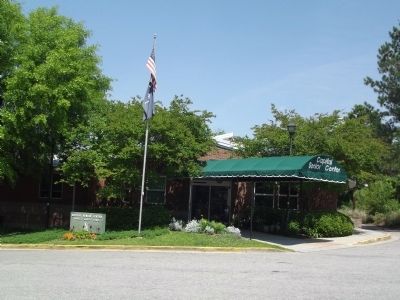
The park was later divided by Pickens Street in the late 1930s and by the extension of Blossom Street in 1939. The Woman's Club of Columbia (1941), across Blossom Street, was built in what was then still part of the park. The Memorial Youth Center, dedicated in 1948, was demolished in 1987. A swimming pool and bathhouse were dedicated in 1949. Recent additions include the Capital Senior Center (1995) and Richard and Annette Bloch Cancer Survivors Garden (2003).
Erected 2012 by The Maxcy Gregg Park Centennial Committee and the City of Columbia. (Marker Number 40-174.)
Topics. This historical marker is listed in these topic lists: Charity & Public Work •
this page online
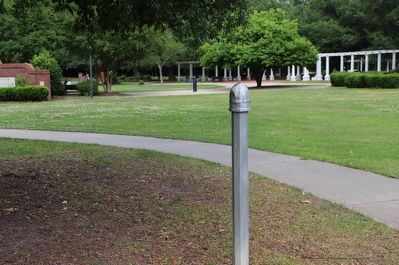
Location. Marker has been reported missing. It was located near 33° 59.853′ N, 81° 1.245′ W. Marker was in Columbia, South Carolina, in Richland County. It was in Wales Garden. It was on Blossom Street, on the right when traveling east. Touch for map. Marker was in this post office area: Columbia SC 29201, United States of America. Touch for directions.

Regionally, this marker was in the Midlands. It was also in the American South and specifically in the Deep South. Globally, it was in North America, the Western Hemisphere, the Western World, and the Anglosphere. Historically, it found itself in what was once the territory of the Mississippian Culture, one of the original Thirteen Colonies, one of the Confederate States of America, and the Antebellum South.
Other nearby markers. At least 8 other markers are within walking distance of this location: The Statue of Liberty Division (within shouting distance of this marker); Memorial Youth Center (within shouting distance of this marker); The Boys of Richland County (approx. 0.2 miles away); Woman's Club of Columbia
Photographed by Anna Inbody, April 29, 2012
2. Maxcy Gregg Park Marker Reverse
Another marker is no longer nearby. Remembering Dr. King (was approx. 0.3 miles away but has been confirmed missing).
Photographed by Dave W, May 13, 2023
3. Maxcy Gregg Park Marker Missing
Photographed by Anna Inbody, April 29, 2012
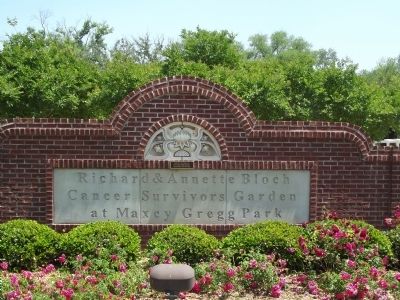
4. Richard & Annette Bloch Cancer Survivors Garden
As mentioned on the marker
Photographed by Anna Inbody, April 29, 2012
5. The Woman's Club of Columbia (1941)
As mentioned on the marker.
Photographed by Anna Inbody, April 29, 2012
6. The Pool House
As mentioned on the marker.
Photographed by Anna Inbody, April 29, 2012
7. Maxcy Gregg Pool
As mentioned on the marker.
Photographed by Anna Inbody, April 29, 2012
8. Capital Senior Center
As mentioned on the marker.
Photographed by Anna Inbody, April 29, 2012
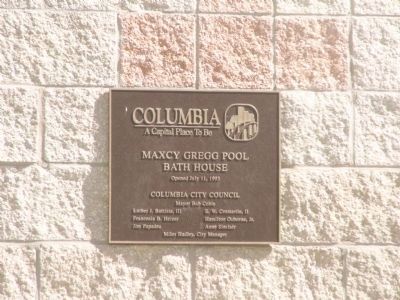
9. Maxcy Gregg Pool Bath House
Opened July 11, 1993
Columbia City Council: Mayor Bob Coble; Luther J. Battiste, III; E.W. Cromartie, II; Francenia B. Heizer; Hamilton Osborne, Jr.; Jim Papadea; Anne Sinclair; Miles Hadley, City Manager
Columbia City Council: Mayor Bob Coble; Luther J. Battiste, III; E.W. Cromartie, II; Francenia B. Heizer; Hamilton Osborne, Jr.; Jim Papadea; Anne Sinclair; Miles Hadley, City Manager
Photographed by Anna Inbody, April 29, 2012
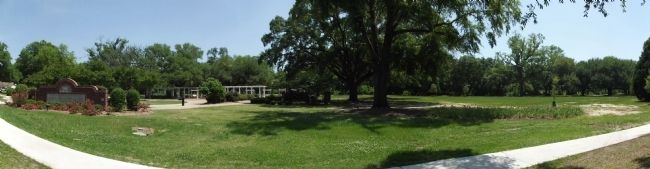
10. Maxcy Gregg Park
Photographed by Anna Inbody, April 29, 2012
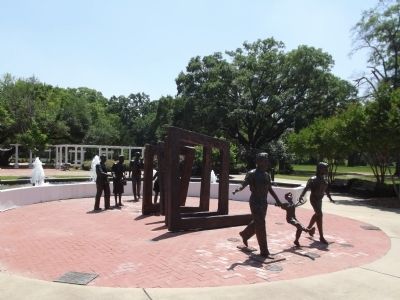
11. "Cancer ... There's Hope"
Sculpture in the Richard & Annette Bloch Cancer Survivors Park by Victor Salmonfs
Photographed by Anna Inbody, April 29, 2012
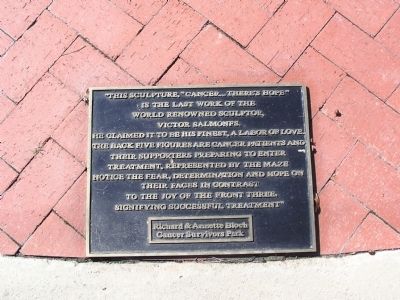
12. Plaque for the Sculpture in the park
"This sculpture, "Cancer ... There's Hope", is the last work of the world renowned sculptor, Victor Salmonfs. He claimed it to be his finest, a labor of love. The back five figures are cancer patients and their supporters preparing to enter treatment, represented by the maze notice the fear, determination and hope on their faces in contrast to the joy of the front three, signifying successful treatment"
Photographed by Anna Inbody, August 21, 2011
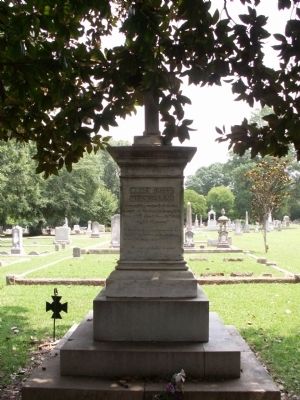
13. Maxcy Gregg Tombstone
Maxcy Gregg Brig. Gen. C.S.A. mortally wounded at the battle of Fredericksburgh, Va. Dec. 13th died Dec. 13th 1862, aged 47 years. "If I am to die now, I give my life cheerfully for the independence of South Carolina."
"He rests in hope to rise."
"He rests in hope to rise."
Photographed by Anna Inbody, April 29, 2012
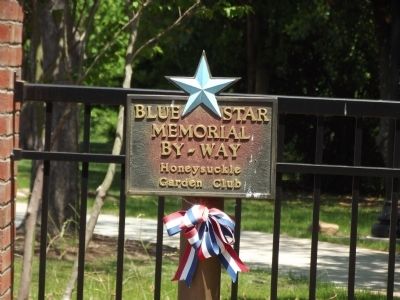
14. Blue Star Marker
at Maxcy Gregg Park
Credits. This page was last revised on May 20, 2023. It was originally submitted on April 29, 2012, by Anna Inbody of Columbia, South Carolina. This page has been viewed 2,867 times since then and 118 times this year. Last updated on May 14, 2023, by Dave W of Co, Colorado. Photos: 1, 2. submitted on April 29, 2012, by Anna Inbody of Columbia, South Carolina. 3. submitted on May 14, 2023, by Dave W of Co, Colorado. 4, 5, 6, 7, 8, 9, 10, 11, 12, 13, 14. submitted on April 29, 2012, by Anna Inbody of Columbia, South Carolina. • Bill Pfingsten was the editor who published this page.
