Foot Hills in Provo in Utah County, Utah — The American Mountains (Southwest)
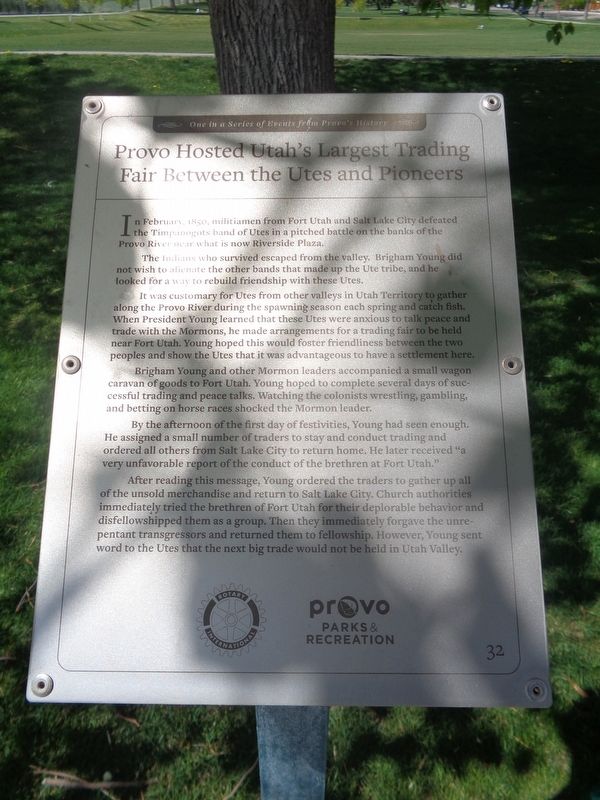
Provo Hosted Utah’s Largest Trading Fair Between the Utes and Pioneers
One in a Series of Events from Provo's History
Photographed by Jason Voigt, May 9, 2023
1. Provo Hosted Utah’s Largest Trading Fair Between the Utes and Pioneers Marker
The Indians who survived escaped from the valley. Brigham Young did not wish to alienate the other bands that made up the Ute tribe, and he looked for a way to rebuild friendship with these Utes.
It was customary for Utes from other valleys in Utah Territory to gather along the Provo River during the spawning season each spring to catch fish. When President Young learned that these Utes were anxious to talk peace and trade with the Mormons, he made arrangements for a trading fair to he held near Fort Utah. Young hoped this would foster friendliness between the two peoples and show the Utes that it was advantageous to have a settlement here.
Brigham Young and other Mormon leaders accompanied a small wagon caravan of goods to Fort Utah. Young hoped to complete several days of successful trading and peace talks. Watching the colonists wrestling, gambling, and betting on horse races shocked the Mormon leader.
By the afternoon of
this page online
After reading this message, Young ordered the traders to gather up all of the unsold merchandise and return to Salt Lake City. Church authorities immediately tried the brethren for Fort Utah for their deplorable behavior and disfellowshipped them as a group. Then they immediately forgave the unrepentant transgressors and returned them to fellowship. However, Young sent word to the Utes that the next big trade would not be held in Utah Valley.
Erected by Rotary International and Provo Parks & Recreation. (Marker Number 32.)
Topics and series. This historical marker is listed in these topic lists: Forts and Castles • Indigenous Peoples and Communities • Industry & Commerce. In addition, it is included in the Rotary International series list. A significant historical month for this entry is February 1850.
Location. 40° 14.694′ N, 111° 38.415′ W. Marker is in Provo,
Photographed by Jason Voigt, May 9, 2023
2. Provo Hosted Utah’s Largest Trading Fair Between the Utes and Pioneers Marker
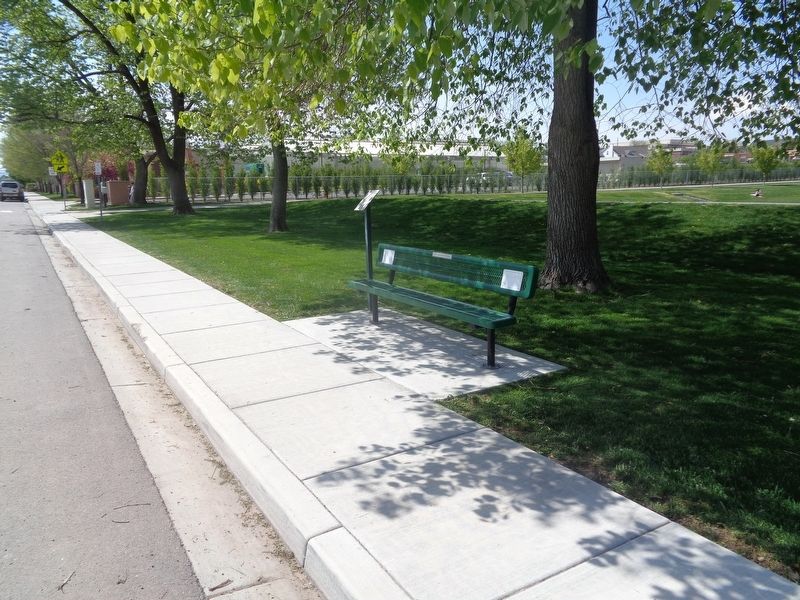
Marker is located at Kiwanis Park.

Regionally, this marker is in Utah’s Wasatch Front. It is also in the American Mountain West and on the Colorado Plateau. Globally, it is in North America, the Rocky Mountains, the Western Hemisphere, the Western World, and the Anglosphere. Historically, it finds itself in what was once New Spain and also Mexico’s Alta California.
Other nearby markers. At least 8 other markers are within walking distance of this marker: First Utah County Fair Held in Provo (about 500 feet away, measured in a direct line); Early Residents of Provo lacked Land Titles (approx. 0.7 miles away); The Y (approx. 0.7 miles away); Fire Destroys Brigham Young Academy Building (approx. 0.7 miles away); A Wheelbarrow Parade in 1888 Helped Bring Political Parties to Provo (approx. ¾ mile away); Superintendent's Residence - Utah State Hospital (approx. ¾ mile away); A Tragedy at the Site of the Provo Lime Kiln (approx. ¾ mile away); Utah Territorial Insane Asylum Came to Provo in 1885 (approx. ¾ mile away). Touch for a list and map of all markers in Provo.
Credits. This page was last revised on May 16, 2023. It was originally submitted on May 16, 2023, by Jason Voigt of Glen Carbon, Illinois. This page has been viewed 284 times since then and 24 times this year. Photos: 1, 2. submitted on May 16, 2023, by Jason Voigt of Glen Carbon, Illinois.
