Montgomery in Montgomery County, Alabama — The American South (East South Central)
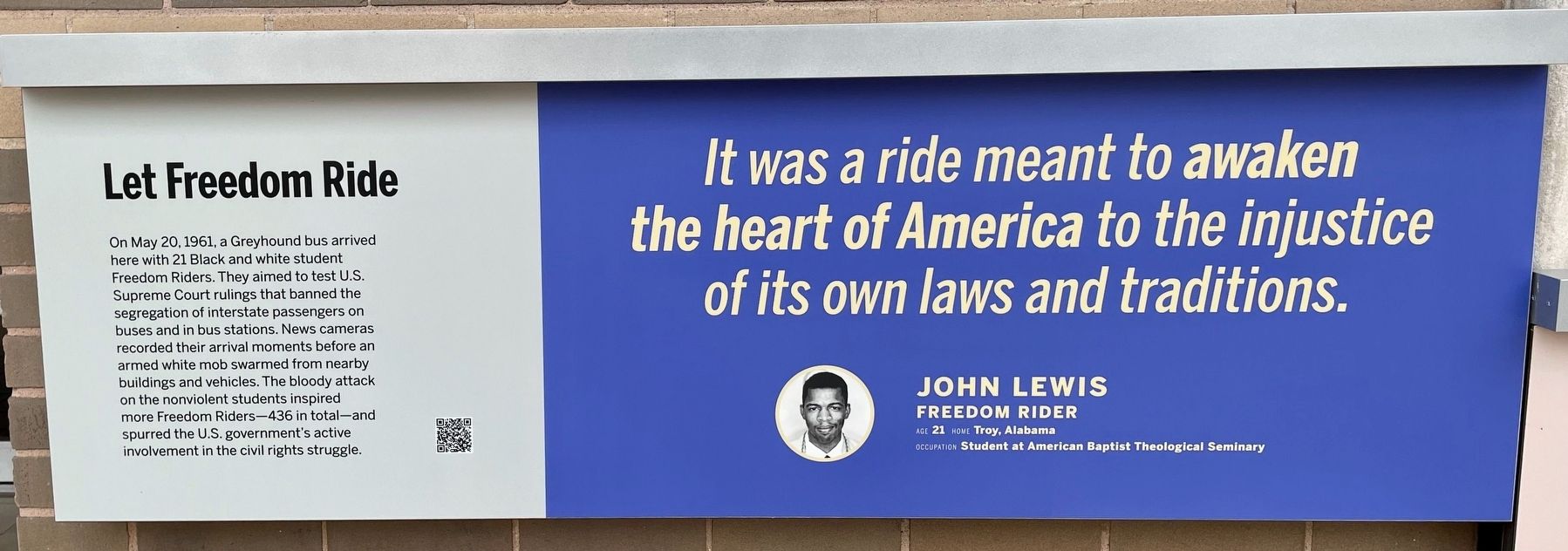
Let Freedom Ride
Photographed by Mark Hilton, October 15, 2023
1. Let Freedom Ride Marker
It was a ride meant to awaken the heart of America to the injustice of its own laws and traditions.
John Lewis
Freedom Rider
Age 21 Home Troy, Alabama
Occupation Student at American Baptist Theological Seminary
Erected by Alabama Historical Commission.
Topics and series. This historical marker is listed in these topic lists: African Americans • Civil Rights. In addition, it is included in the Alabama Historical Commission series list. A significant historical date for this entry is May 20, 1961.
Location. 32° 22.478′ N, 86° 18.542′ W. Marker is in Montgomery, Alabama, in Montgomery County. It is on South Court
this page online

Regionally, this marker is in Alabama’s Tri-Counties River Region. It is also in the American South, specifically in the Deep South, and in the Black Belt. Globally, it is in North America, a Gulf of Mexico state, the Western Hemisphere, the Western World, and the Anglosphere. Historically, it finds itself in what was once the territory of the Mississippian Culture, one of the Confederate States of America, and the Antebellum South.
Other nearby markers. At least 8 other markers are within walking distance of this marker: Civil Rights Freedom Riders (here, next to this marker); Lomax House, 1848 (within shouting distance of this marker); The Frank M. Johnson, Jr. Federal Building and US Courthouse (about 300 feet away, measured in a direct line); Ladies Memorial Association (about 300 feet away); Montgomery County World War II Monument (about 300 feet away); Korean War (about 400 feet away); First Baptist Church
Photographed by Mark Hilton, October 15, 2023
2. Traveling in Black and White marker
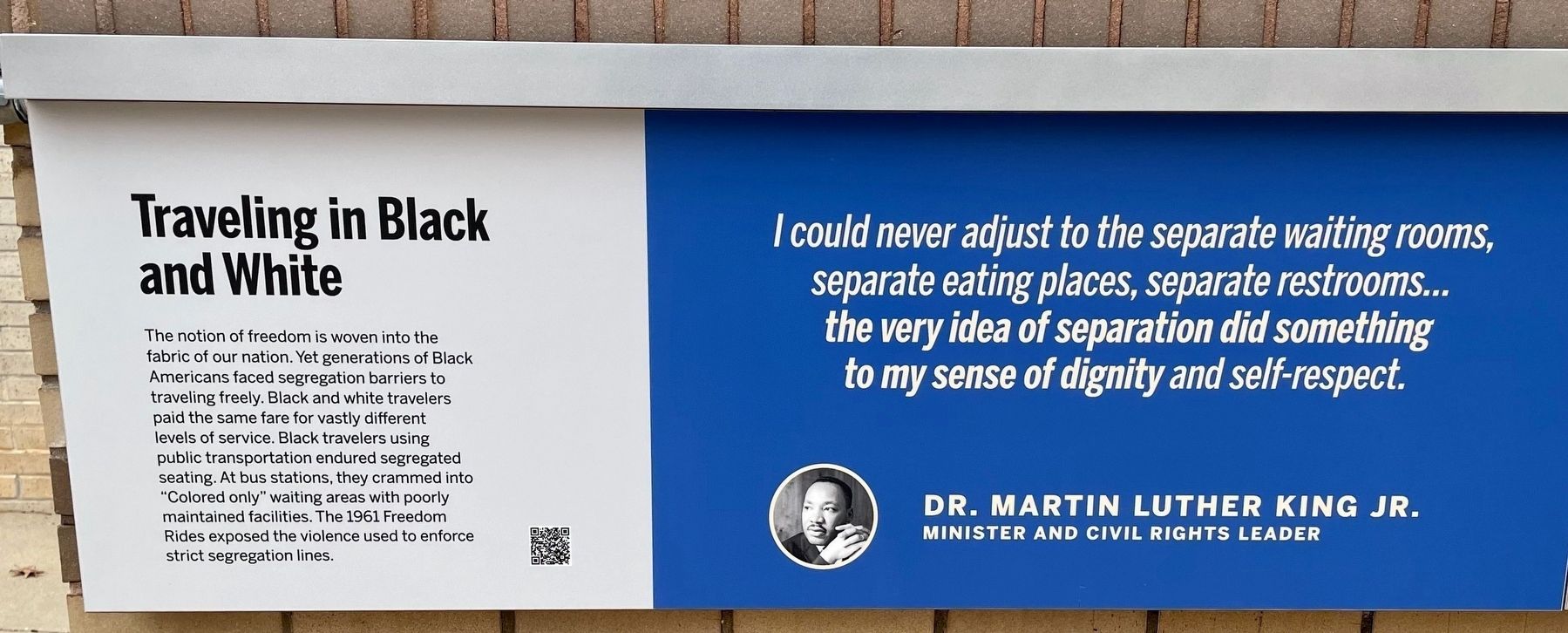
Traveling in Black and White
The notion of freedom is woven into the fabric of our nation. Yet generations of Black Americans faced segregation barriers to traveling freely. Black and white travelers paid the same fare for vastly different levels of service. Black travelers using public transportation endured segregated seating. At bus stations, they crammed into "Colored only" waiting areas with poorly maintained facilities. The 1961 Freedom Rides exposed the violence used to enforce strict segregation lines.
I could never adjust to the separate waiting rooms, separate seating places, separate restrooms...the very idea of separation did something to my sense of dignity and self-respect.
Dr. Martin Luther King, Jr.
Minister and Civil Rights Leader
The notion of freedom is woven into the fabric of our nation. Yet generations of Black Americans faced segregation barriers to traveling freely. Black and white travelers paid the same fare for vastly different levels of service. Black travelers using public transportation endured segregated seating. At bus stations, they crammed into "Colored only" waiting areas with poorly maintained facilities. The 1961 Freedom Rides exposed the violence used to enforce strict segregation lines.
I could never adjust to the separate waiting rooms, separate seating places, separate restrooms...the very idea of separation did something to my sense of dignity and self-respect.
Dr. Martin Luther King, Jr.
Minister and Civil Rights Leader
Other markers no longer nearby. The Reality (was here, next to this marker but has been replaced with another marker now near it); The Freedom Rides (was a few steps from this marker but has been replaced with another marker now near it).
More about this marker. These panels replaced the previous ones at this location on marker page #164163.
Related marker. Click here for another marker that is related to this marker.
Photographed by Mark Hilton, October 15, 2023
3. Carol Ruth Silver marker
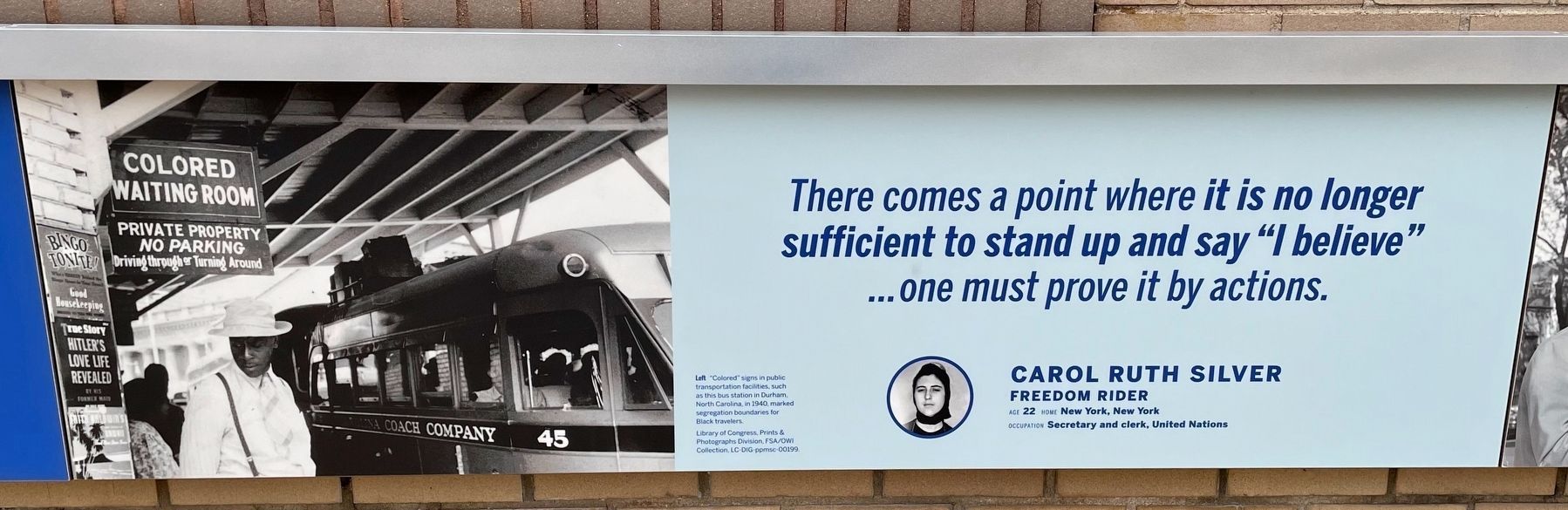
There comes a point where it is no longer sufficient to stand up and say "I believe"...one must prove it by actions.
Carol Ruth Silver
Freedom Rider
Age 22 Home New York, New York
Occupation Secretary and Clerk United Nations
Photo caption:
Left "Colored" signs in public transportation facilities, such as this bus station in Durham, North Carolina, in 1940, marked segregation boundaries for Black travelers.
Library of Congress, Prints & Photographs Division, FSA/OWI Collection, LC-DIG-ppmsc-00199.
Carol Ruth Silver
Freedom Rider
Age 22 Home New York, New York
Occupation Secretary and Clerk United Nations
Photo caption:
Left "Colored" signs in public transportation facilities, such as this bus station in Durham, North Carolina, in 1940, marked segregation boundaries for Black travelers.
Library of Congress, Prints & Photographs Division, FSA/OWI Collection, LC-DIG-ppmsc-00199.
Photographed by Mark Hilton, October 15, 2023
4. Social Progress marker
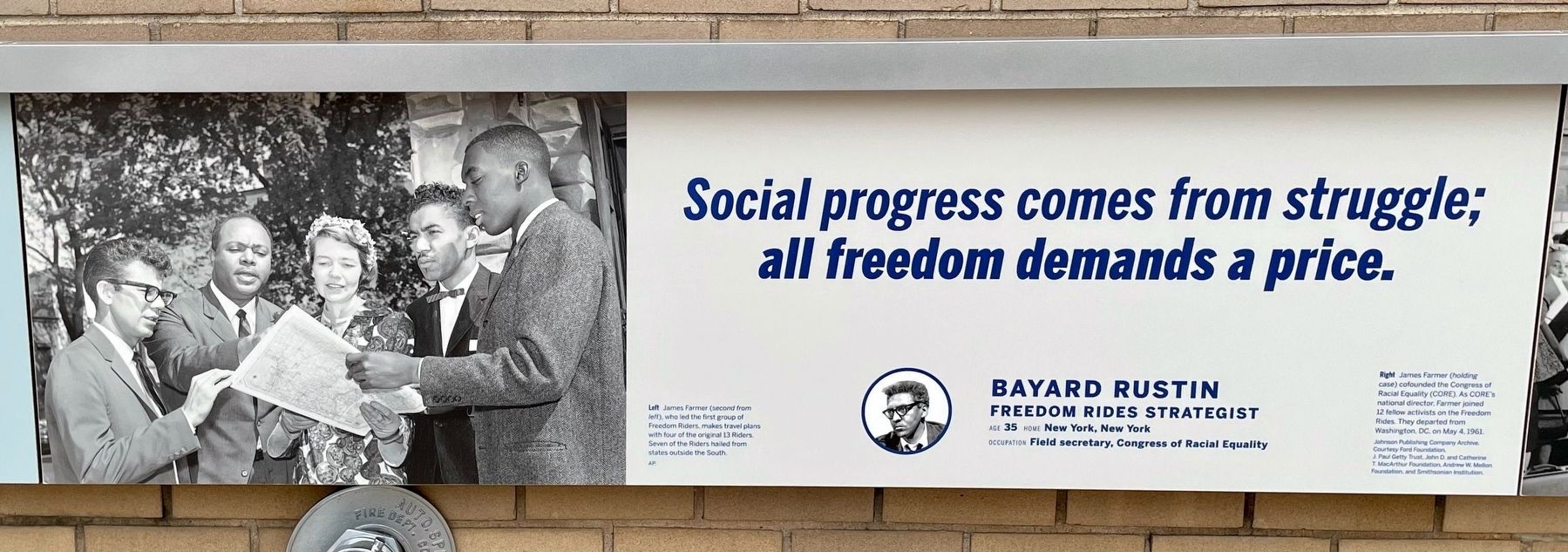
Social progress comes from struggle; all freedom demands a price.
Bayard Rustin
Freedom Rides Strategist
Age 35 Home New York, New York
Occupation Field Secretary, Congress of Racial Equality
Left James Farmer (second from left), who led the first group of Freedom Riders, makes travel plans with four of the original 13 Riders. Seven of the Riders hailed from states outside the South.
AP
Bayard Rustin
Freedom Rides Strategist
Age 35 Home New York, New York
Occupation Field Secretary, Congress of Racial Equality
Left James Farmer (second from left), who led the first group of Freedom Riders, makes travel plans with four of the original 13 Riders. Seven of the Riders hailed from states outside the South.
AP
Photographed by Mark Hilton, October 15, 2023
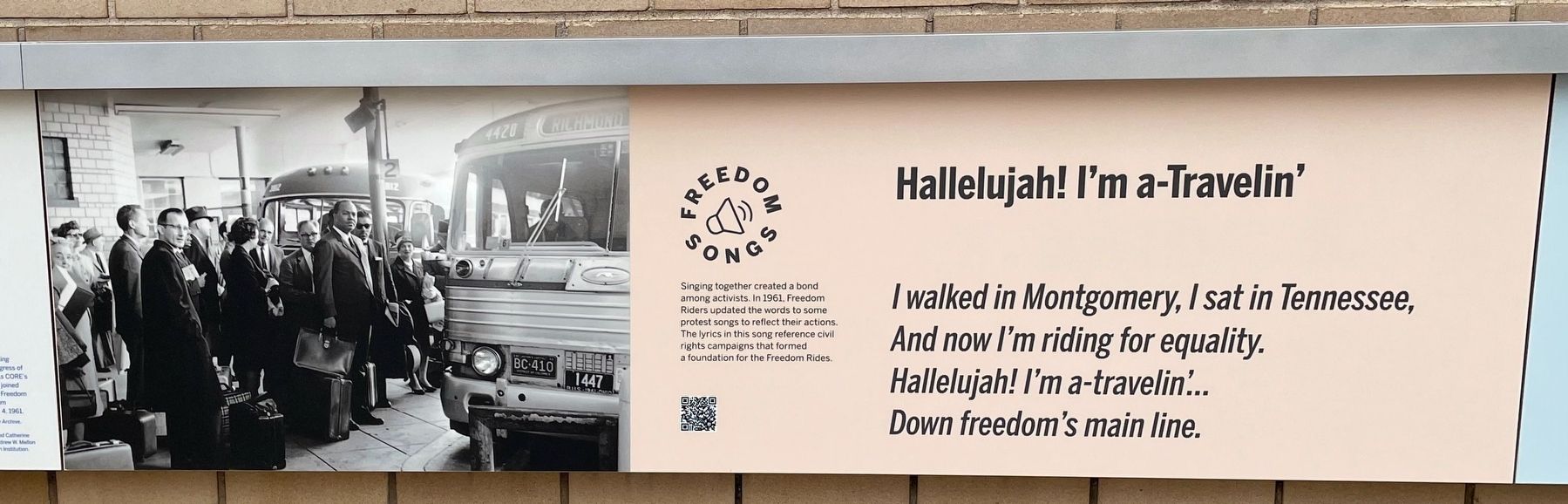
5. Hallelujah! I'm a-Travelin' marker
Hallelujah! I'm a-Travelin'
I walked in Montgomery,
I sat in Tennessee,
And now I'm riding for equality.
Hallelujah! I'm a-travelin'...
Down freedom's main line.
Freedom Songs
Singing together created a bond among activists. In 1961, Freedom Riders updated the words to some protest songs to reflect their actions. The lyrics in this song reference civil rights campaigns that formed a foundation for the Freedom Rides.
Photo: James Farmer (holding case) cofounded the Congress of Racial Equality (CORE). As CORE's national director, Farmer joined 12 fellow activists on the Freedom Rides. They departed from Washington, DC. on May 4, 1961.
Johnson Publishing Company Archive. Courtesy Ford Foundation. J. Paul Getty Trust. John D. and Catherine T. MacArthur Foundation. Andrew W. Mellon Foundation, and Smithsonian Institution.
I walked in Montgomery,
I sat in Tennessee,
And now I'm riding for equality.
Hallelujah! I'm a-travelin'...
Down freedom's main line.
Freedom Songs
Singing together created a bond among activists. In 1961, Freedom Riders updated the words to some protest songs to reflect their actions. The lyrics in this song reference civil rights campaigns that formed a foundation for the Freedom Rides.
Photo: James Farmer (holding case) cofounded the Congress of Racial Equality (CORE). As CORE's national director, Farmer joined 12 fellow activists on the Freedom Rides. They departed from Washington, DC. on May 4, 1961.
Johnson Publishing Company Archive. Courtesy Ford Foundation. J. Paul Getty Trust. John D. and Catherine T. MacArthur Foundation. Andrew W. Mellon Foundation, and Smithsonian Institution.
Photographed by Mark Hilton, October 15, 2023
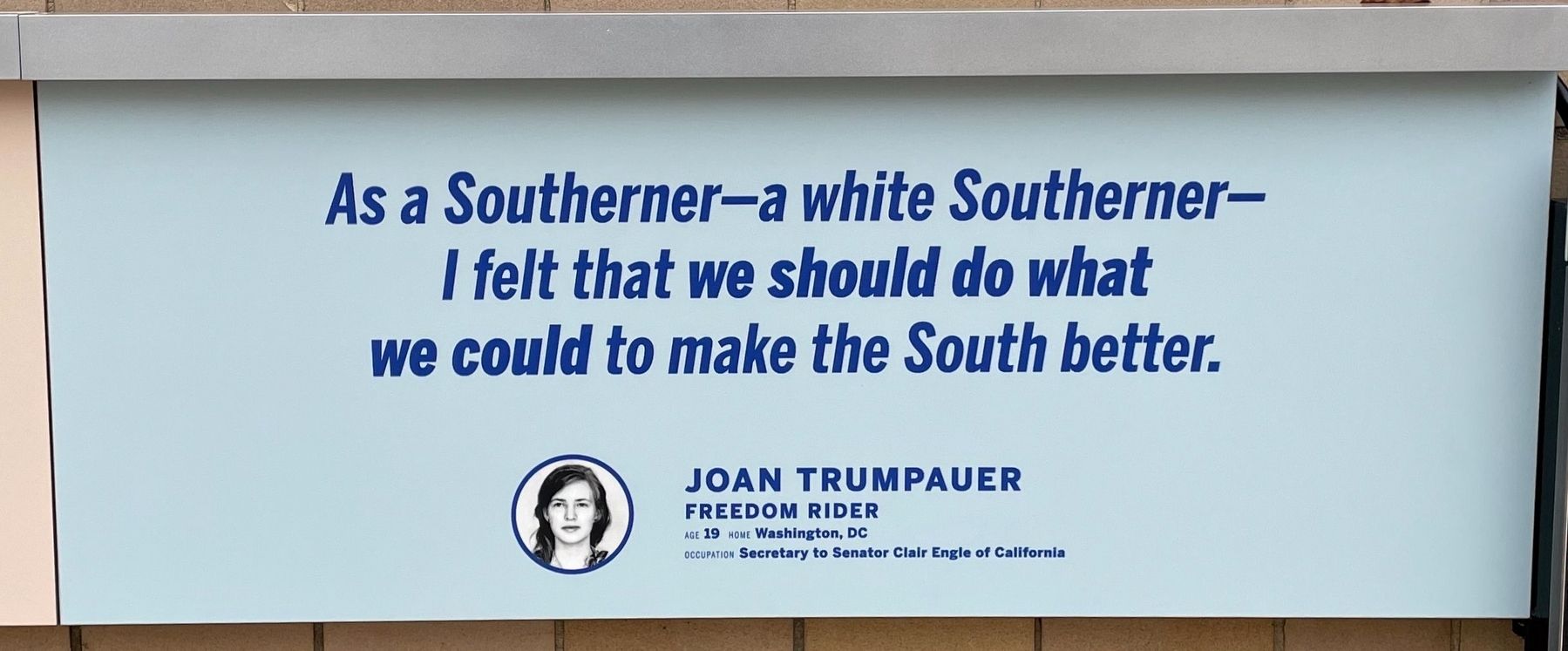
6. A Southerner marker
As a Southerner-a white Southerner-I felt that we should do what we could to make the South better.
Joan Trumpauer
Freedom Rider
Age 19 Home Washington, DC
Occupation Secretary to Senator Clair Engle of California
Joan Trumpauer
Freedom Rider
Age 19 Home Washington, DC
Occupation Secretary to Senator Clair Engle of California
Photographed by Mark Hilton, October 15, 2023
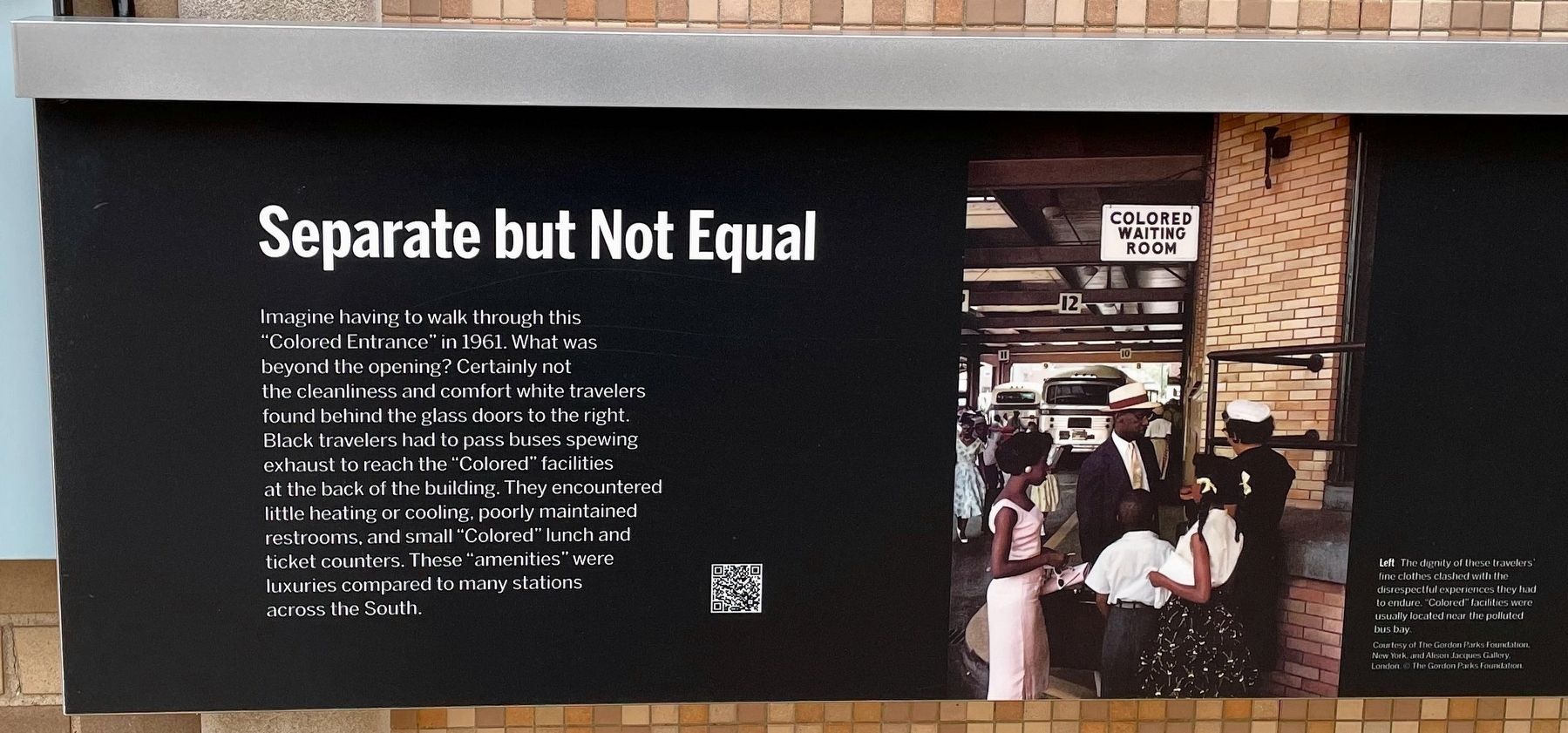
7. Separate but Not Equal marker
Separate but Not Equal
Imagine having to walk through this "Colored Entrance" in 1961. What was beyond the opening? Certainly not the cleanliness and comfort white travelers found behind the glass doors to the right. Black travelers had to pass buses spewing exhaust to reach the "Colored" facilities at the back of the building. They encountered little heating or cooling, poorly maintained restrooms, and small "Colored" lunch and ticket counters. These "amenities" were luxuries compared to many stations across the South.
Photo The dignity of these travelers' fine clothes clashed with the disrespectful experiences they had to endure. "Colored" facilities were usually located near the polluted bus bay.
Courtesy of The Gordon Parks Foundation, New York, and Alison Jacques Gallery. London The Gordon Parks Foundation
Imagine having to walk through this "Colored Entrance" in 1961. What was beyond the opening? Certainly not the cleanliness and comfort white travelers found behind the glass doors to the right. Black travelers had to pass buses spewing exhaust to reach the "Colored" facilities at the back of the building. They encountered little heating or cooling, poorly maintained restrooms, and small "Colored" lunch and ticket counters. These "amenities" were luxuries compared to many stations across the South.
Photo The dignity of these travelers' fine clothes clashed with the disrespectful experiences they had to endure. "Colored" facilities were usually located near the polluted bus bay.
Courtesy of The Gordon Parks Foundation, New York, and Alison Jacques Gallery. London The Gordon Parks Foundation
Photographed by Mark Hilton, October 15, 2023
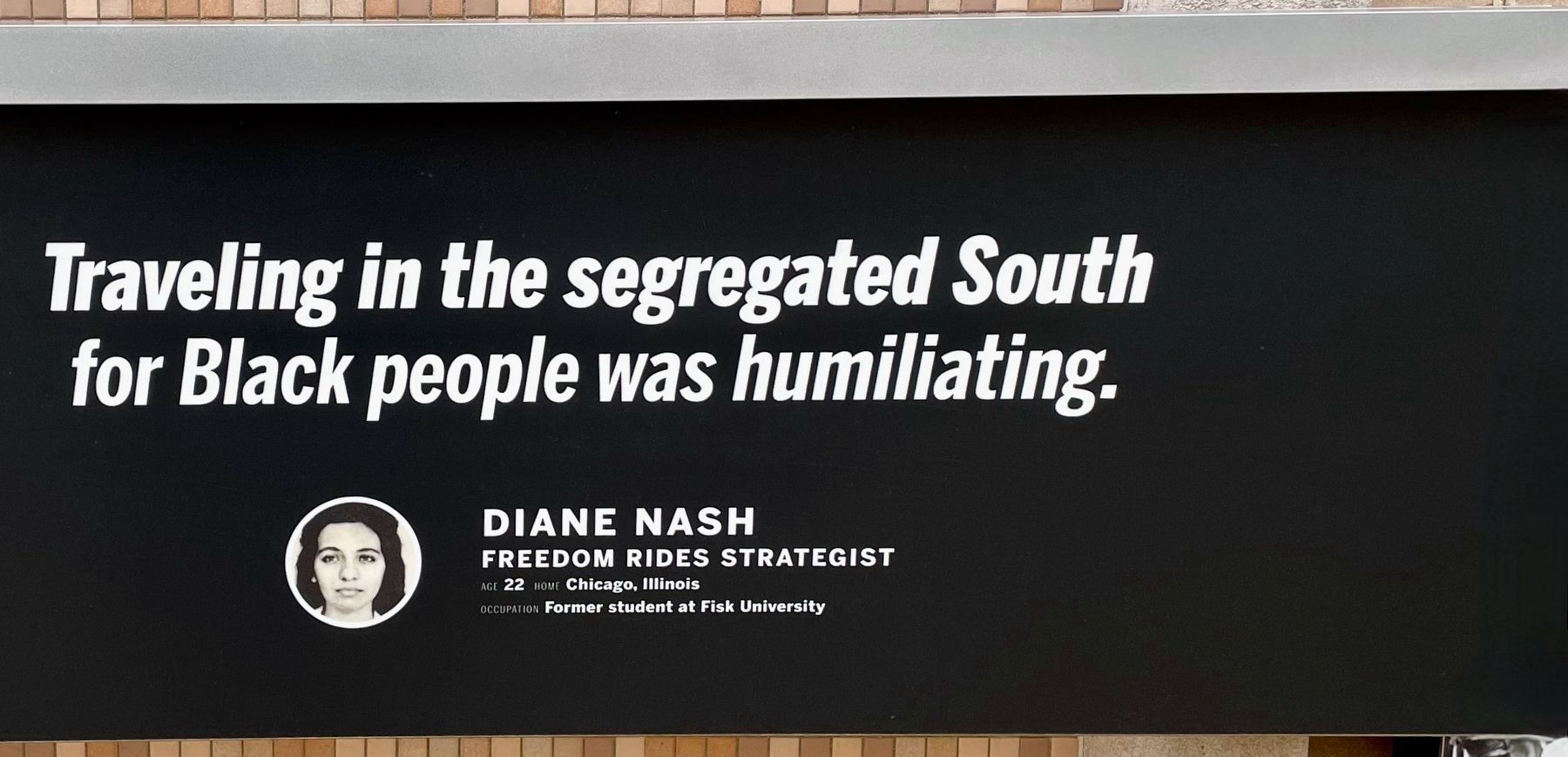
8. Traveling in the Segregated South marker
Traveling in the segregated South for Black people was humiliating.
Diane Nash
Freedom Rides Strategist
Age 22 Home Chicago, Illinois
Occupation Former student at Fisk University
Diane Nash
Freedom Rides Strategist
Age 22 Home Chicago, Illinois
Occupation Former student at Fisk University
Photographed by Mark Hilton, October 15, 2023
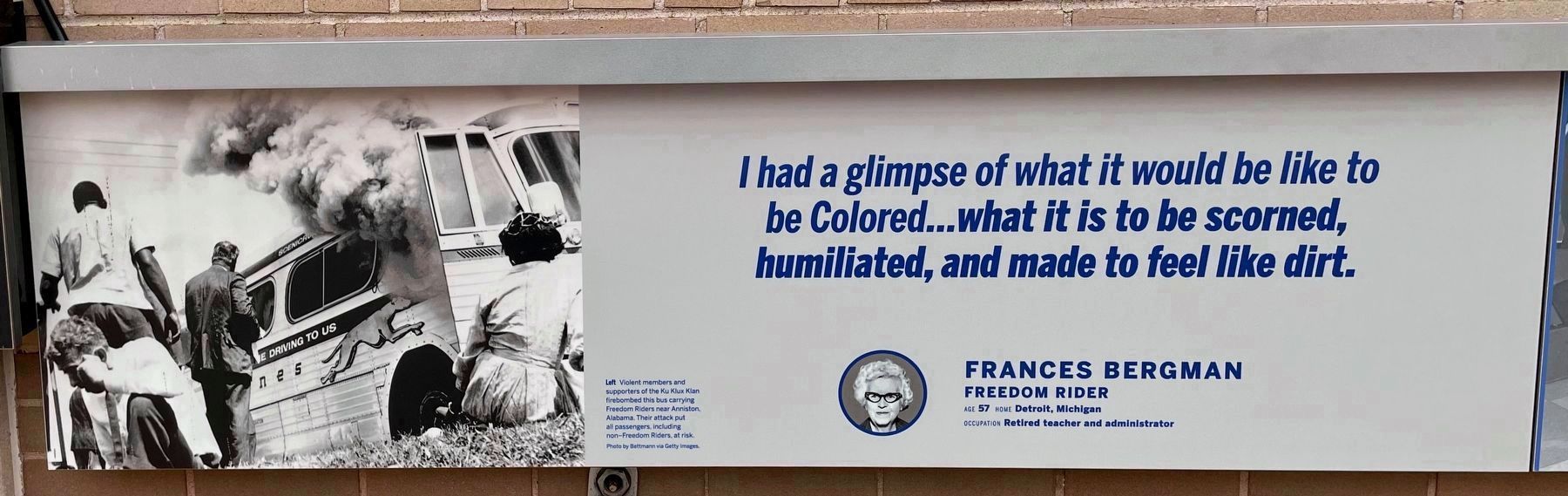
9. I had a glimpse of what it would be like to be Colored marker
I had a glimpse of what it would be like to be Colored...what it is to be scorned, humiliated, and made to feel like dirt.
Frances Bergman
Freedom Rider
Age 57 Home Detroit, Michigan
Occupation Retired teacher and administrator
Photo: Violent members and supporters of the Ku Klux Klan firebombed this bus carrying Freedom Riders near Anniston, Alabama. Their attack put all passengers, including non-Freedom Riders, at risk.
Photo by Bettmann via Getty Images.
Frances Bergman
Freedom Rider
Age 57 Home Detroit, Michigan
Occupation Retired teacher and administrator
Photo: Violent members and supporters of the Ku Klux Klan firebombed this bus carrying Freedom Riders near Anniston, Alabama. Their attack put all passengers, including non-Freedom Riders, at risk.
Photo by Bettmann via Getty Images.
Photographed by Mark Hilton, October 15, 2023
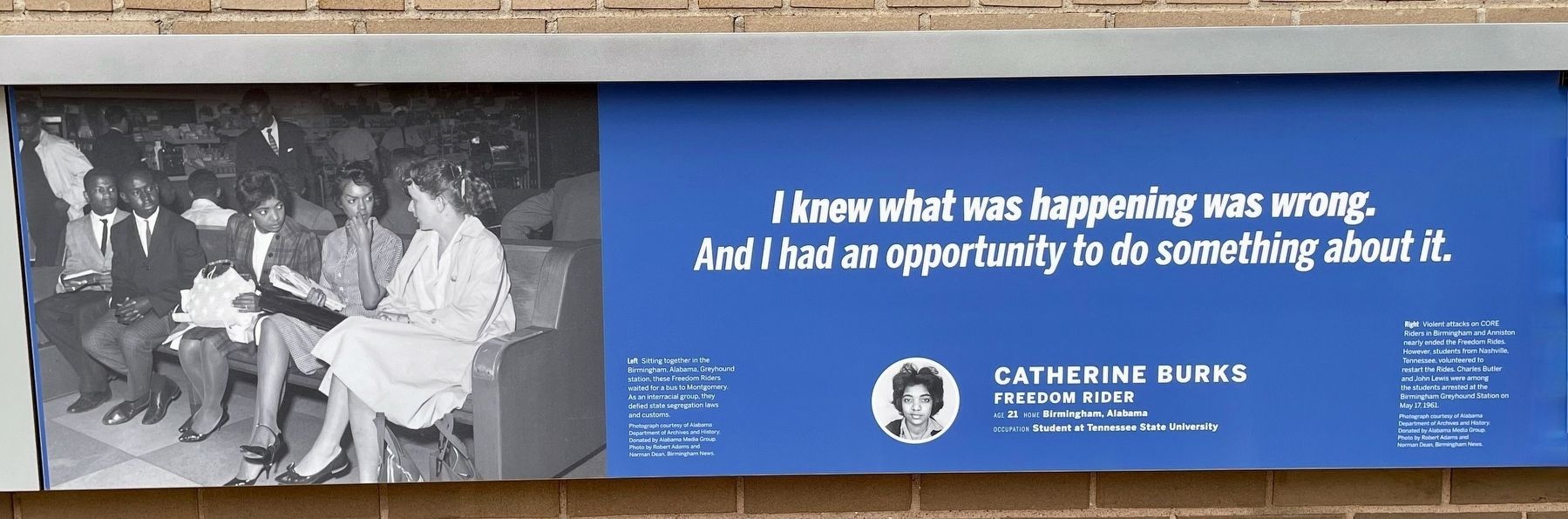
10. I knew what was happening was wrong marker
I knew what was happening was wrong. And I had an opportunity to do something about it.
Catherine Burks
Freedom Rider
Age 21 Home Birmingham, Alabama
Occupation Student at Tennessee State University
Photo: Violent members and supporters of the Ku Klux Klan firebombed this bus carrying Freedom Riders near Anniston, Alabama. Their attack put all passengers, including non-Freedom Riders, at risk.
Photo by Bettmann via Getty Images.
Catherine Burks
Freedom Rider
Age 21 Home Birmingham, Alabama
Occupation Student at Tennessee State University
Photo: Violent members and supporters of the Ku Klux Klan firebombed this bus carrying Freedom Riders near Anniston, Alabama. Their attack put all passengers, including non-Freedom Riders, at risk.
Photo by Bettmann via Getty Images.
Photographed by Mark Hilton, October 15, 2023
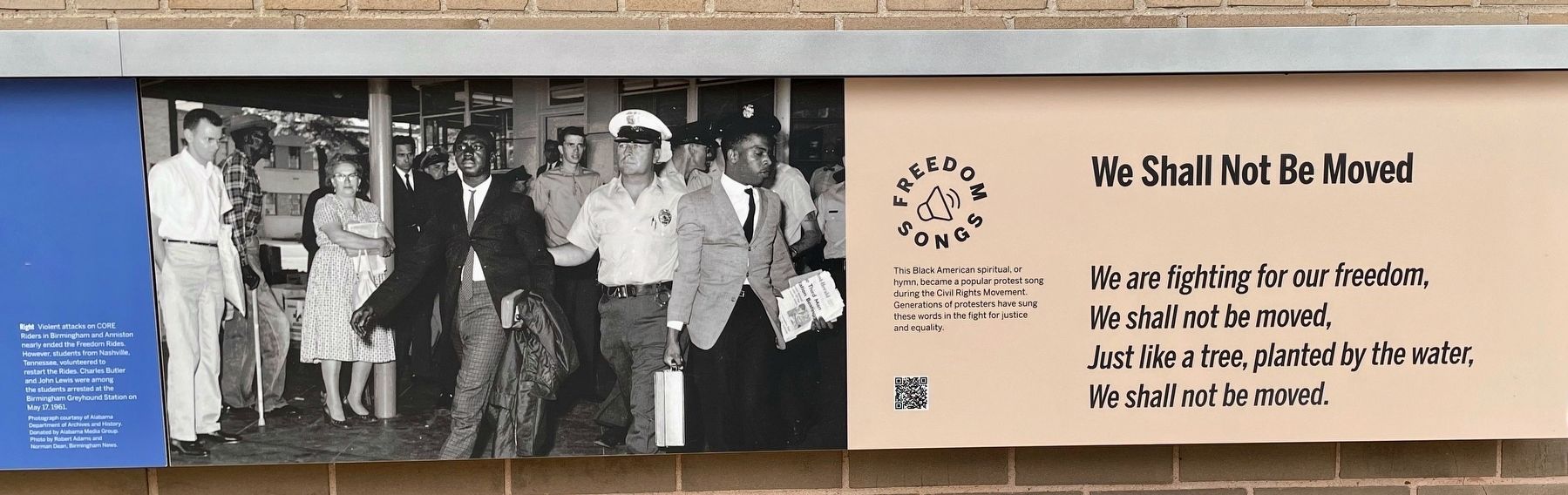
11. We Shall Not be Moved marker
We Shall Not Be Moved
We are fighting for our freedom, We shall not be moved, Just like a tree, planted by the water, We shall not be moved.
Freedom Songs
This Black American spiritual, or hymn, became a popular protest song during the Civil Rights Movement. Generations of protesters have sung these words in the fight for justice and equality.
Photo: Violent attacks on CORE Riders in Birmingham and Anniston nearly ended the Freedom Rides. However, students from Nashville, Tennessee, volunteered to restart the Rides. Charles Butler and John Lewis were among the students arrested at the Birmingham Greyhound Station on May 17, 1961.
Photograph courtesy of Alabama Department of Archives and History. Donated by Alabama Media Group. Photo by Robert Adams and Norman Dean, Birmingham News.
We are fighting for our freedom, We shall not be moved, Just like a tree, planted by the water, We shall not be moved.
Freedom Songs
This Black American spiritual, or hymn, became a popular protest song during the Civil Rights Movement. Generations of protesters have sung these words in the fight for justice and equality.
Photo: Violent attacks on CORE Riders in Birmingham and Anniston nearly ended the Freedom Rides. However, students from Nashville, Tennessee, volunteered to restart the Rides. Charles Butler and John Lewis were among the students arrested at the Birmingham Greyhound Station on May 17, 1961.
Photograph courtesy of Alabama Department of Archives and History. Donated by Alabama Media Group. Photo by Robert Adams and Norman Dean, Birmingham News.
Photographed by Mark Hilton, October 15, 2023
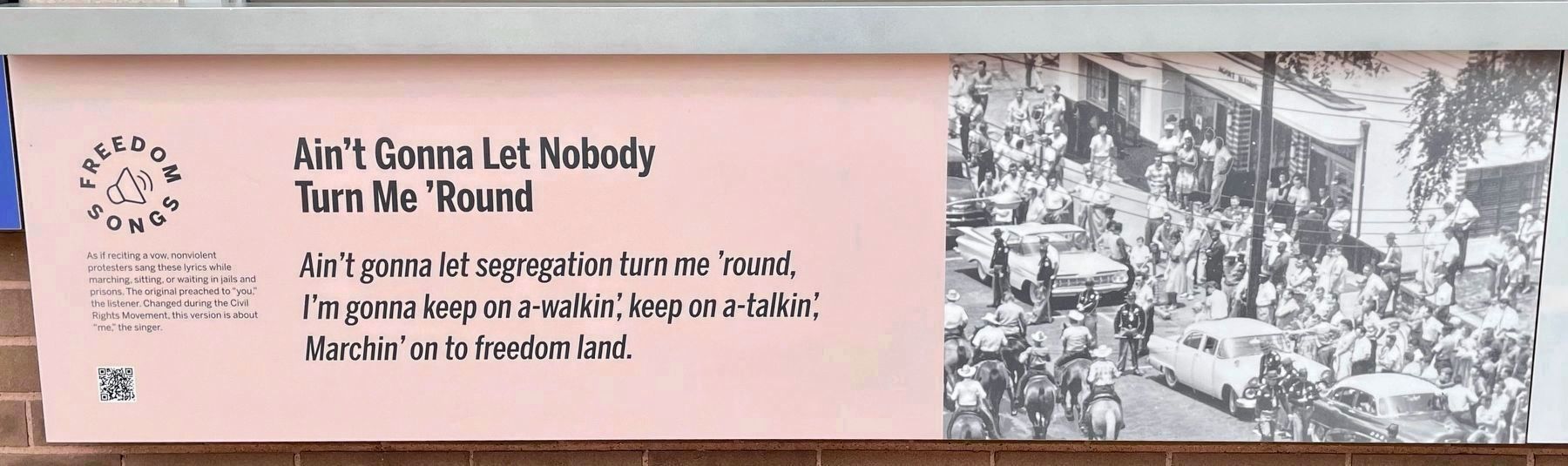
12. Ain't Gonna Let Nobody Turn Me 'Round marker
Ain't Gonna Let Nobody Turn Me 'Round
Ain't gonna let nobody turn me 'round, I'm gonna keep on a-walkin', keep on a-talkin', Marchin' on to freedom land.
Freedom Songs
As if reciting a vow, nonviolent protesters sang these lyrics while marching, sitting, or waiting in jails and prisons. The original preached to "you," the listener. Changed during the Civil Rights Movement, this version is about "me," the singer.
Photo: Law enforcement on foot and horseback arrived following the violent white mob attack on Freedom Riders at this bus station in 1961.
Photo by Afro American Newspapers/Gado via Getty Images.
Ain't gonna let nobody turn me 'round, I'm gonna keep on a-walkin', keep on a-talkin', Marchin' on to freedom land.
Freedom Songs
As if reciting a vow, nonviolent protesters sang these lyrics while marching, sitting, or waiting in jails and prisons. The original preached to "you," the listener. Changed during the Civil Rights Movement, this version is about "me," the singer.
Photo: Law enforcement on foot and horseback arrived following the violent white mob attack on Freedom Riders at this bus station in 1961.
Photo by Afro American Newspapers/Gado via Getty Images.
Photographed by Mark Hilton, October 15, 2023
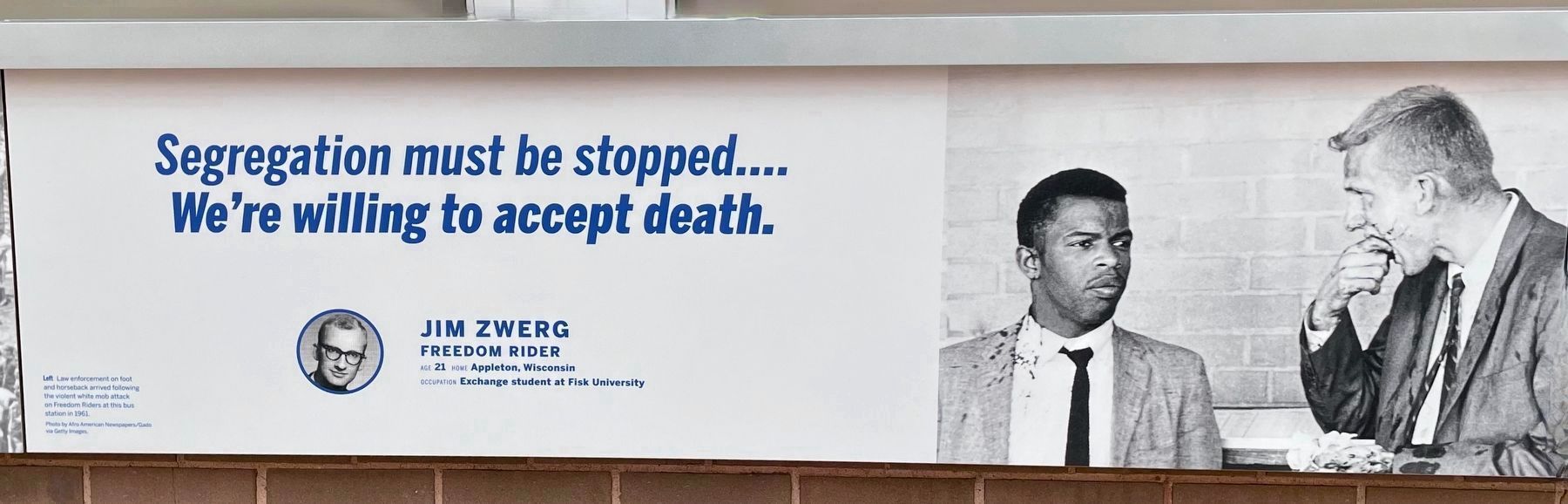
13. Segregation must be stopped marker
Segregation must be stopped...
We're willing to accept death.
Jim Zwerg
Freedom Rider
Age 23 Home Appleton, Wisconsin Occupation Exchange student at Fisk University
Photo: Student Freedom Riders John Lewis (left) and Jim Zwerg are still standing after violent beatings at this bus station on May 20, 1961.
Photo by Bettmann via Getty Images.
Jim Zwerg
Freedom Rider
Age 23 Home Appleton, Wisconsin Occupation Exchange student at Fisk University
Photo: Student Freedom Riders John Lewis (left) and Jim Zwerg are still standing after violent beatings at this bus station on May 20, 1961.
Photo by Bettmann via Getty Images.
Photographed by Mark Hilton, October 15, 2023
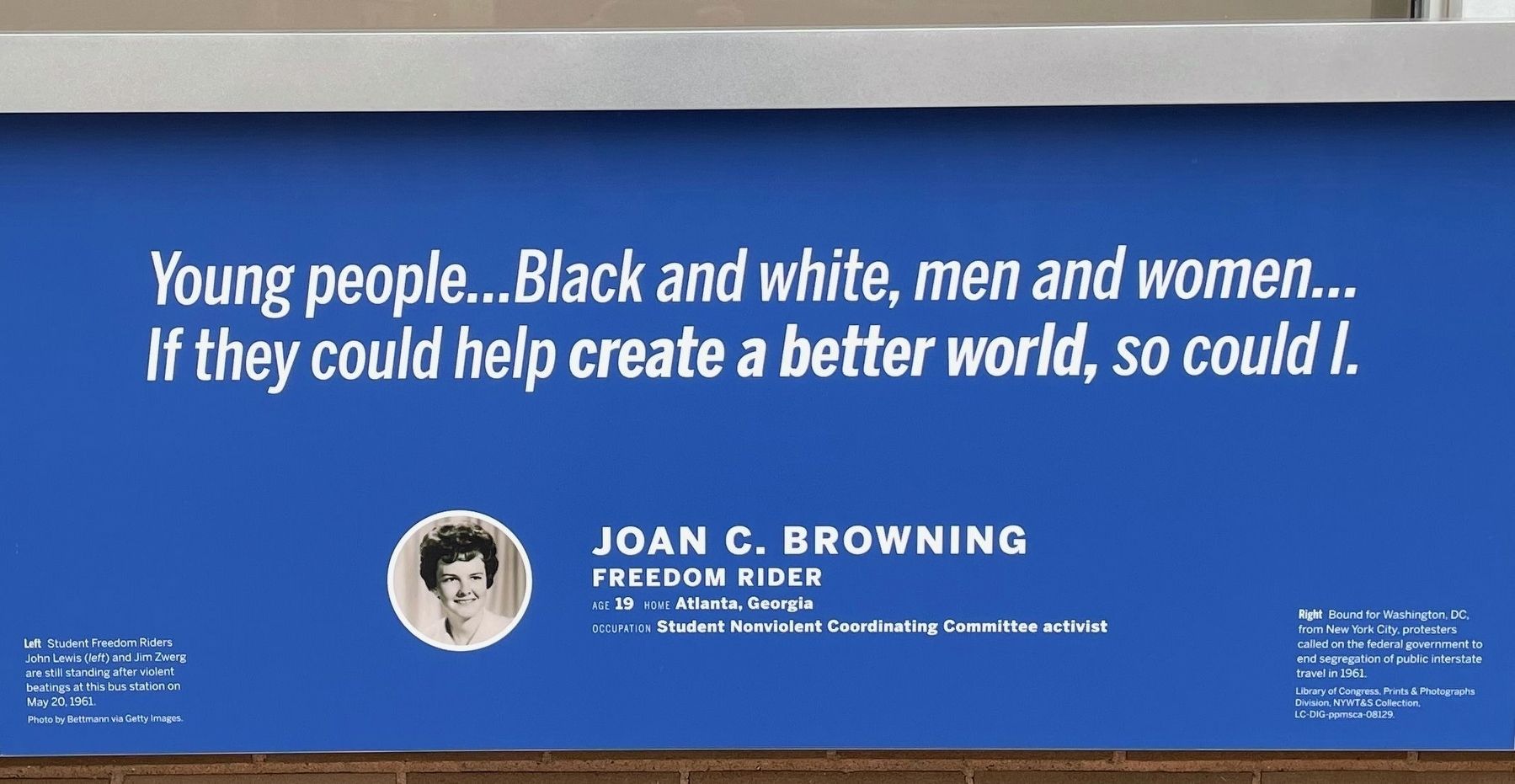
14. Could a Better World marker
Young people...Black and white, men and women...If they could help create a better world, so could I.
Joan C. Browning
Freedom Rider
Age 19 Home Atlanta, Georgia
Occupation Student Nonviolent Coordinating Committee activist
Joan C. Browning
Freedom Rider
Age 19 Home Atlanta, Georgia
Occupation Student Nonviolent Coordinating Committee activist
Photographed by Mark Hilton, October 15, 2023
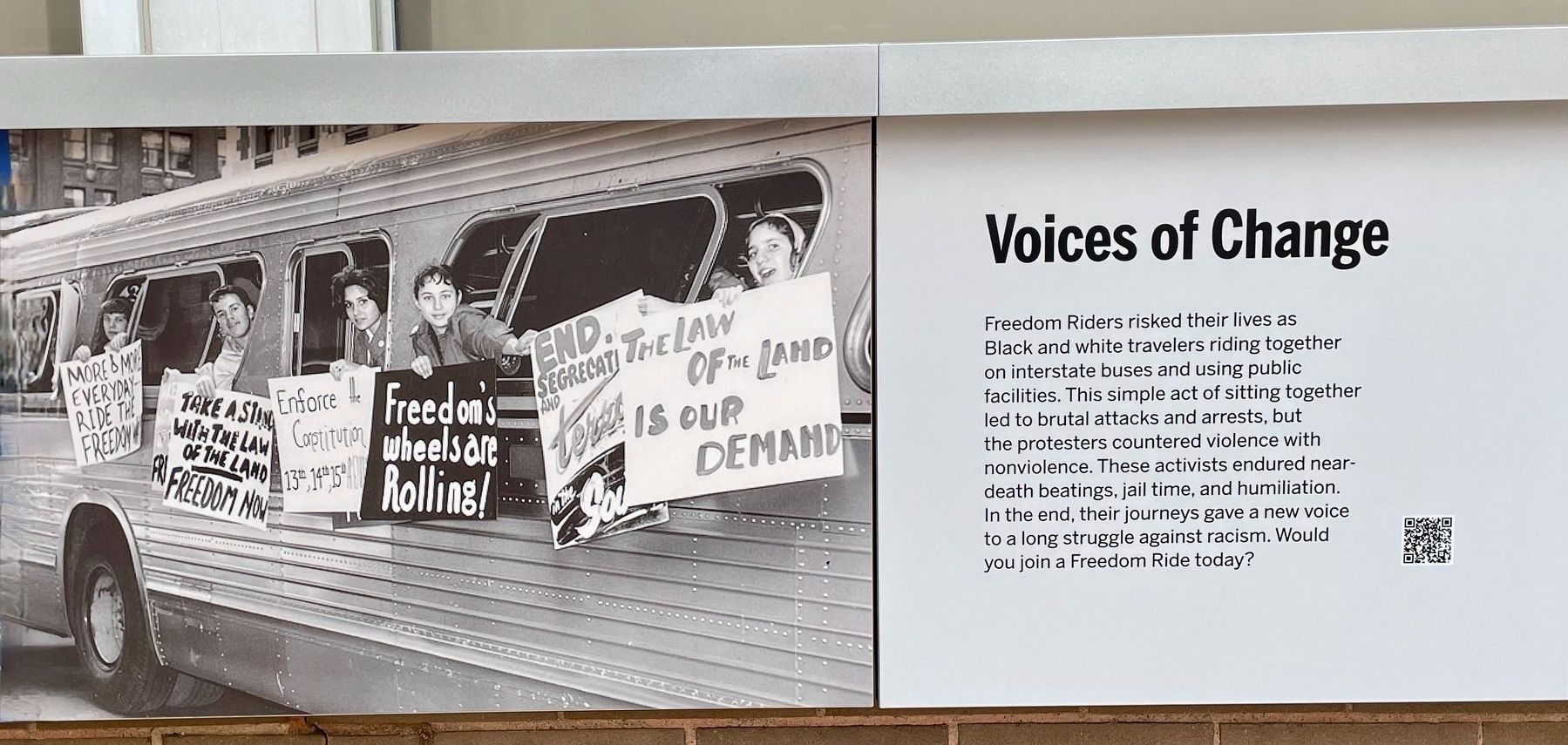
15. Voices of Change marker
Voices of Change
Freedom Riders risked their lives as Black and white travelers riding together on interstate buses and using public facilities. This simple act of sitting together led to brutal attacks and arrests, but the protesters countered violence with nonviolence. These activists endured near- death beatings, jail time, and humiliation. In the end, their journeys gave a new voice to a long struggle against racism. Would you join a Freedom Ride today?
Photo: Bound for Washington, DC. from New York City. protesters called on the federal government to end segregation of public interstate travel in 1961.
Library of Congress, Prints & Photographs Division, NYWT&S Collection, LC-DIG-ppmsca-08129.
Freedom Riders risked their lives as Black and white travelers riding together on interstate buses and using public facilities. This simple act of sitting together led to brutal attacks and arrests, but the protesters countered violence with nonviolence. These activists endured near- death beatings, jail time, and humiliation. In the end, their journeys gave a new voice to a long struggle against racism. Would you join a Freedom Ride today?
Photo: Bound for Washington, DC. from New York City. protesters called on the federal government to end segregation of public interstate travel in 1961.
Library of Congress, Prints & Photographs Division, NYWT&S Collection, LC-DIG-ppmsca-08129.
Photographed by Mark Hilton, October 15, 2023
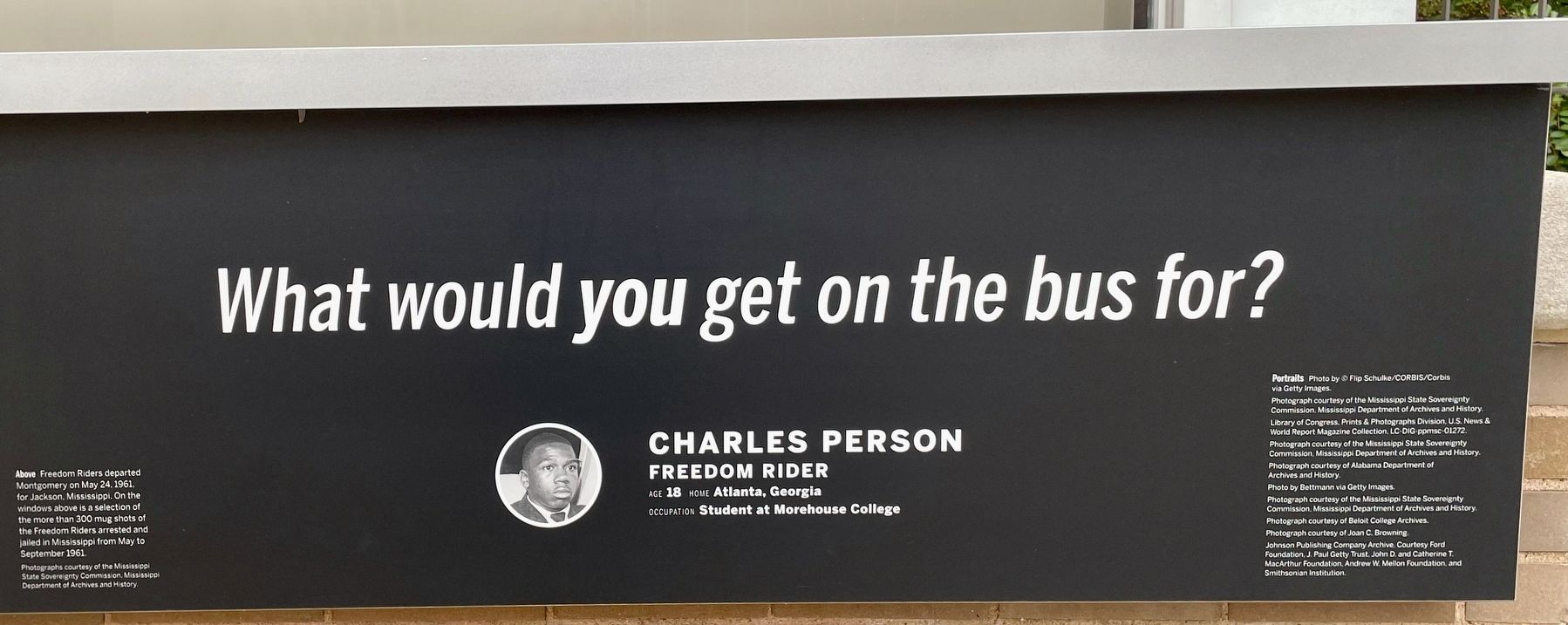
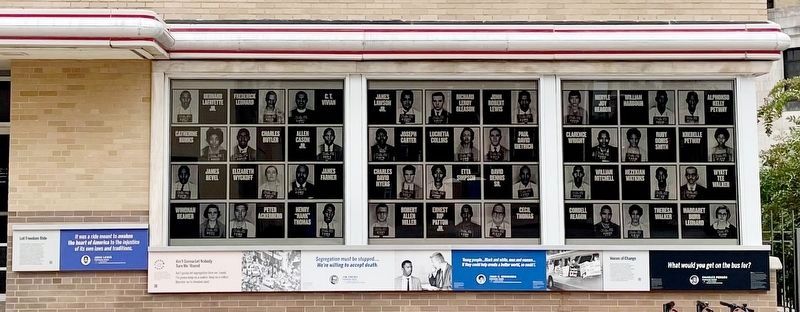
16. What would you get on the bus for? marker
What would you get on the bus for?
SEE PHOTO # 19 Photos on windows above markers:
Above Freedom Riders departed Montgomery on May 24, 1961. for Jackson, Mississippi. On the windows above is a selection of the more than 300 mug shots of the Freedom Riders arrested and jailed in Mississippi from May to September 1961.
Photographs courtesy of the Mississippi State Sovereignty Commission. Mississippi Department of Archives and History.
SEE PHOTO # 19 Photos on windows above markers:
Above Freedom Riders departed Montgomery on May 24, 1961. for Jackson, Mississippi. On the windows above is a selection of the more than 300 mug shots of the Freedom Riders arrested and jailed in Mississippi from May to September 1961.
Photographs courtesy of the Mississippi State Sovereignty Commission. Mississippi Department of Archives and History.
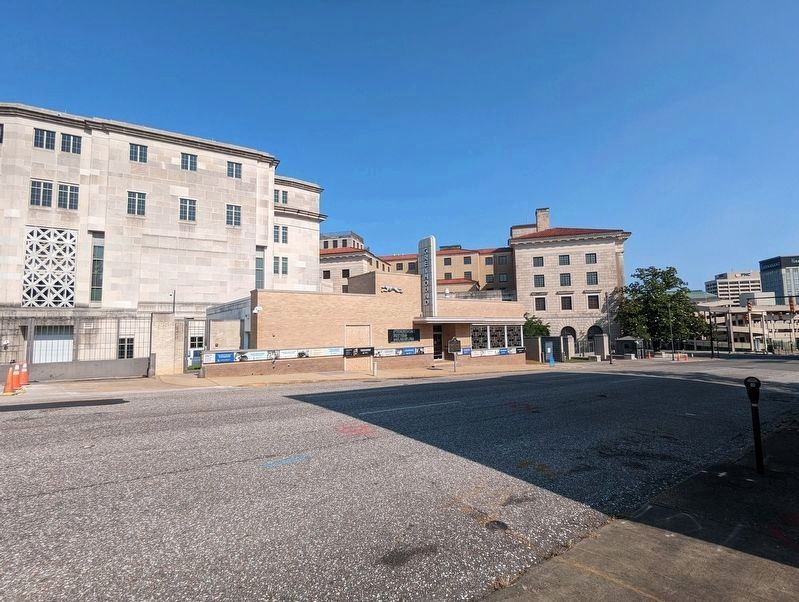
Photographed by Mike Wintermantel, May 27, 2023
17. Wide shot of former Greyhound Bus Station and new markers.
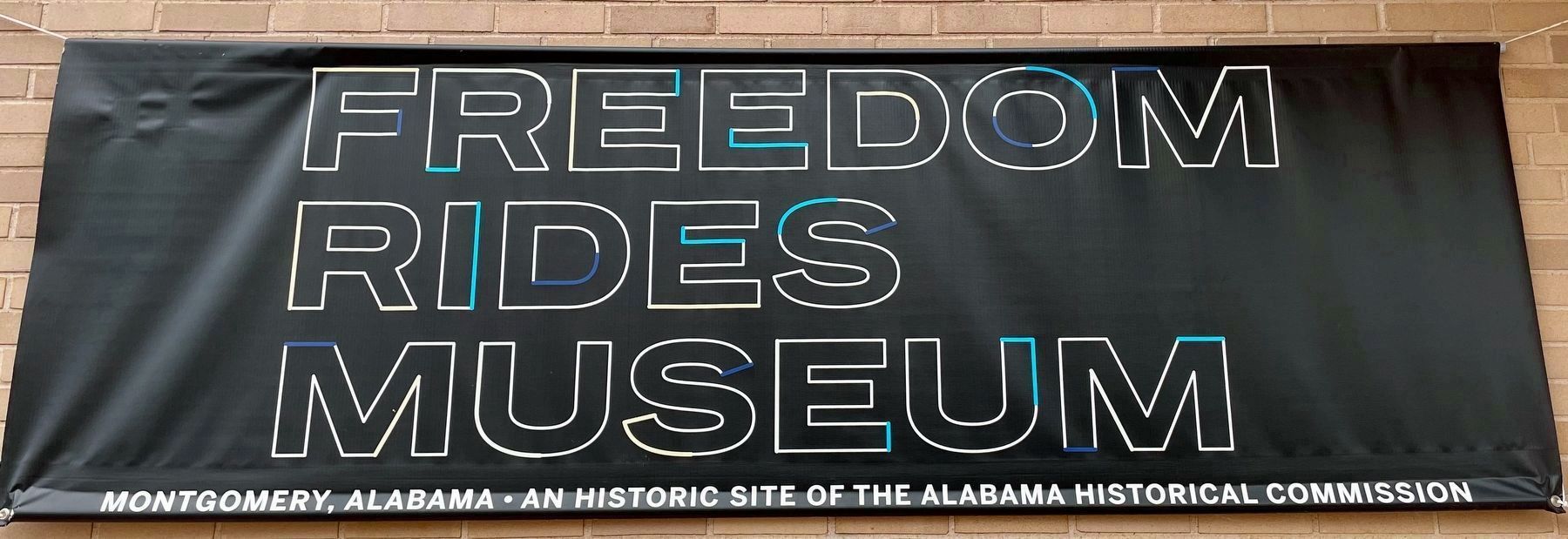
Photographed by Mark Hilton, October 15, 2023
18. Freedom Rides Museum sign on building with markers.
Montgomery, Alabama
An Historic Site of the Alabama Historical Commission
An Historic Site of the Alabama Historical Commission
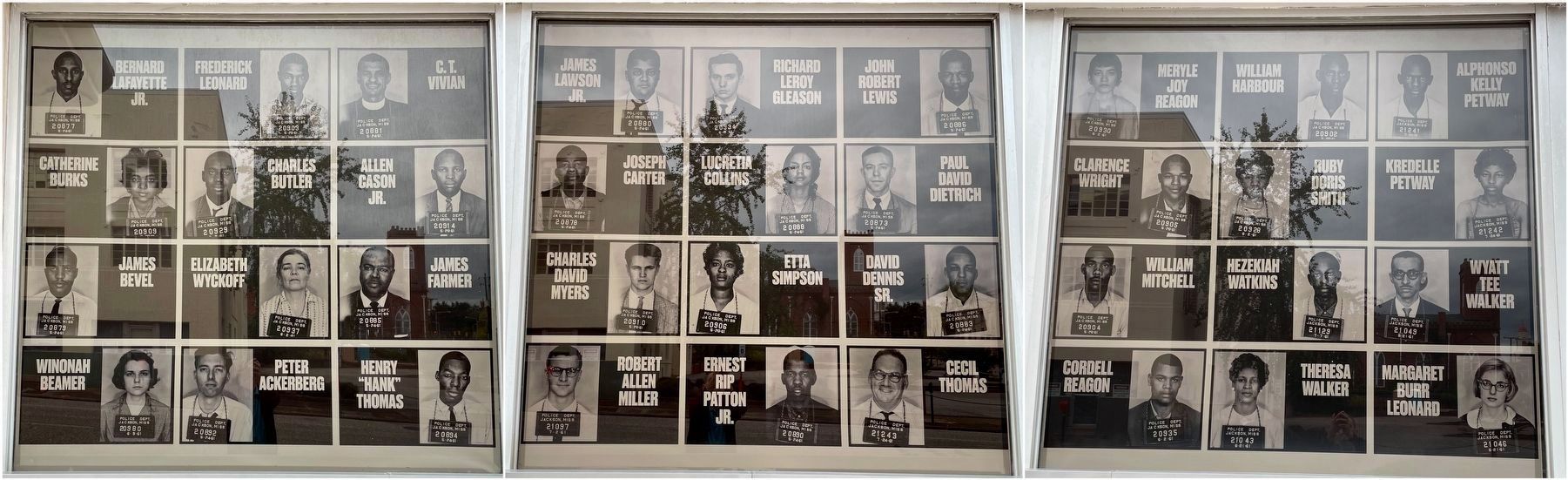
Photographed by Mark Hilton
19. Photos of Freedom Riders
Freedom Riders departed
Montgomery on May 24, 1961,
for Jackson, Mississippi. On the
windows above are a selection of
the more than 300 mug shots of
the Freedom Riders arrested and
jailed in Mississippi from May to
September 1961.
Photographs courtesy of the Mississippi State Sovereignty Commission, Mississippi Department of Archives and History.
Portraits Photo by Flip Schulke/CORBIS/Corbis
via Getty Images.
Photograph courtesy of the Mississippi State Sovereignty
Commission, Mississippi Department of Archives and History.
Library of Congress, Prints & Photographs Division, U.S. News &
World Report Magazine Collection, LC-DIG-ppmsc-01272.
Photograph courtesy of the Mississippi State Sovereignty
Commission, Mississippi Department of Archives and History.
Photograph courtesy of Alabama Department of
Archives and History.
Photo by Bettmann via Getty Images.
Photograph courtesy of the Mississippi State Sovereignty
Commission, Mississippi Department of Archives and History.
Photograph courtesy of Beloit College Archives.
Photograph courtesy of Joan C. Browning.
Johnson Publishing Company Archive. Courtesy Ford
Foundation, J. Paul Getty Trust. John D. and Catherine T.
MacArthur Foundation. Andrew W. Mellon Foundation, and
Smithsonian Institution.
Photographs courtesy of the Mississippi State Sovereignty Commission, Mississippi Department of Archives and History.
Portraits Photo by Flip Schulke/CORBIS/Corbis
via Getty Images.
Photograph courtesy of the Mississippi State Sovereignty
Commission, Mississippi Department of Archives and History.
Library of Congress, Prints & Photographs Division, U.S. News &
World Report Magazine Collection, LC-DIG-ppmsc-01272.
Photograph courtesy of the Mississippi State Sovereignty
Commission, Mississippi Department of Archives and History.
Photograph courtesy of Alabama Department of
Archives and History.
Photo by Bettmann via Getty Images.
Photograph courtesy of the Mississippi State Sovereignty
Commission, Mississippi Department of Archives and History.
Photograph courtesy of Beloit College Archives.
Photograph courtesy of Joan C. Browning.
Johnson Publishing Company Archive. Courtesy Ford
Foundation, J. Paul Getty Trust. John D. and Catherine T.
MacArthur Foundation. Andrew W. Mellon Foundation, and
Smithsonian Institution.
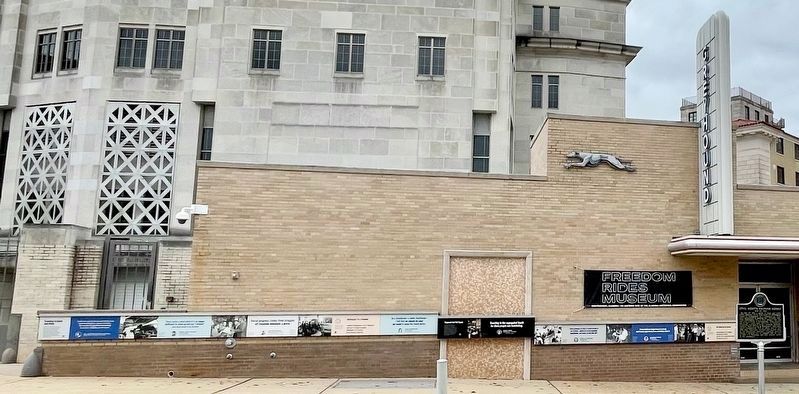
Photographed by Mark Hilton, October 15, 2023
20. Wide shot of former Greyhound Bus Station and new Freedom Rider markers.
Photographed by Mark Hilton, October 15, 2023
21. Wide shot of former Greyhound Bus Station and new Freedom Riders markers.
Credits. This page was last revised on November 25, 2023. It was originally submitted on June 1, 2023, by Mike Wintermantel of Pittsburgh, Pennsylvania. This page has been viewed 444 times since then and 41 times this year. Photos: 1, 2, 3, 4, 5, 6, 7, 8, 9, 10, 11, 12, 13, 14, 15, 16. submitted on October 15, 2023, by Mark Hilton of Montgomery, Alabama. 17. submitted on June 1, 2023, by Mike Wintermantel of Pittsburgh, Pennsylvania. 18, 19, 20, 21. submitted on October 15, 2023, by Mark Hilton of Montgomery, Alabama.
