Cabbagetown in Atlanta in Fulton County, Georgia — The American South (South Atlantic)
Jacob Elsas and the Fulton Bag & Cotton Mills
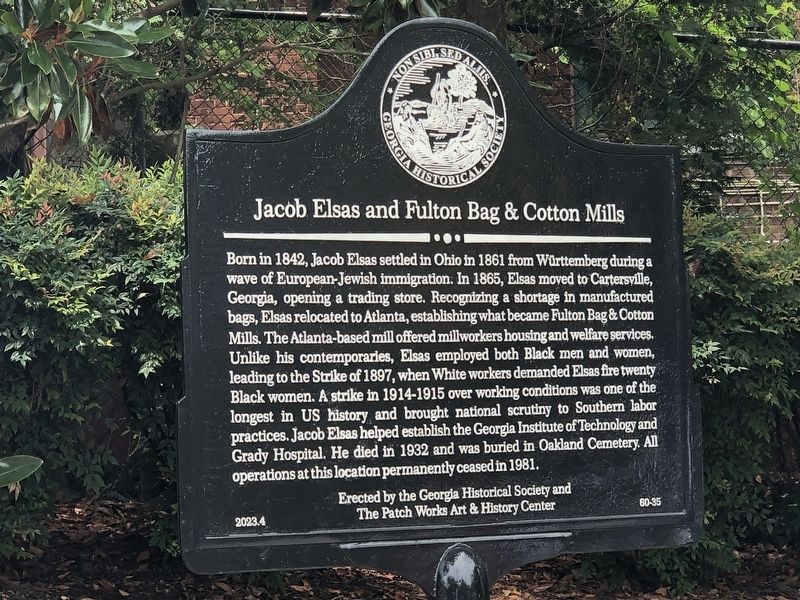
Photographed by Duane and Tracy Marsteller, June 11, 2023
1. Jacob Elsas and the Fulton Bag & Cotton Mills Marker
Erected 2023 by Georgia Historical Society • The Patch Works Art & History Center. (Marker Number 60-35.)
Topics and series. This historical marker is listed in these topic lists: Industry & Commerce • Labor Unions. In addition,
this page online
Location. 33° 45.02′ N, 84° 22.087′ W. Marker is in Atlanta, Georgia, in Fulton County. It is in Cabbagetown. It is on Carroll Street Southeast south of Tennelle Street Southeast, on the right when traveling south. Touch for map. Marker is at or near this postal address: 158 Carroll St SE, Atlanta GA 30312, United States of America. Touch for directions.

Regionally, this marker is in Georgia’s Piedmont. It is also in the American South and specifically in the Deep South. Globally, it is in North America, the Western Hemisphere, the Western World, and the Anglosphere. Historically, it finds itself in what was once the territory of the Mississippian Culture, one of the original Thirteen Colonies, one of the Confederate States of America, and the Antebellum South.
Other nearby markers. At least 8 other markers are within walking distance of this marker: The Geography of Race (approx. 0.2 miles away); The African American Burial Grounds (approx. ¼ mile away); The Hanging of Andrews' Raiders (approx. ¼ mile away);
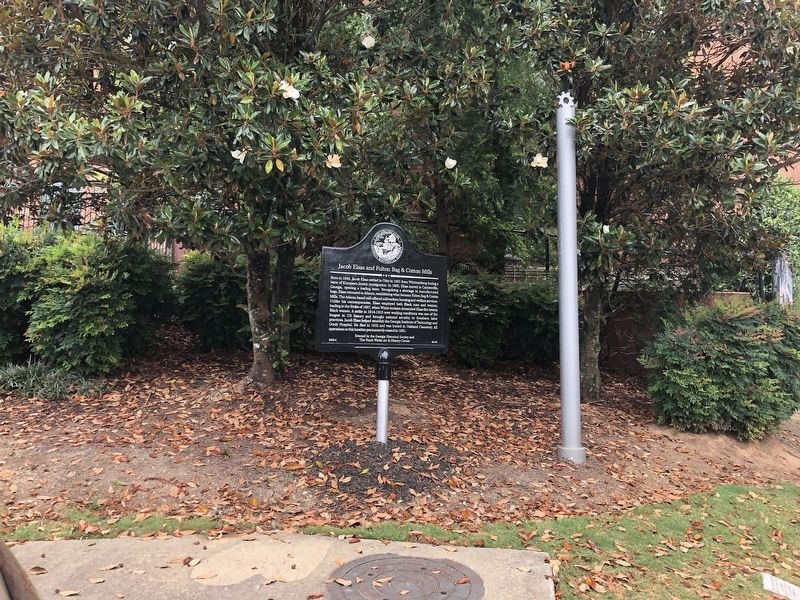
Photographed by Duane and Tracy Marsteller, June 11, 2023
2. Jacob Elsas and the Fulton Bag & Cotton Mills Marker
Also see . . .
1. Fulton Bag and Cotton Mills. Wikipedia entry on the mills gives a broad overview of their history. (Submitted on July 3, 2023, by Duane and Tracy Marsteller of Murfreesboro, Tennessee.)
2. A Tale of 3 Strikes. Long before workers at multinational companies such as Starbucks and Amazon began fighting to collectively bargain with their employers to address income inequality and improve working conditions, workers at Fulton Bag and Cotton Mills fought to unionize, creating a blueprint for those who would dare to belong to a union in the present-day. (Tiffany Harte, Atlanta History Center, posted May 2, 2022) (Submitted on July 3, 2023, by Duane and Tracy Marsteller of Murfreesboro, Tennessee.)
3. Fulton Bag and Cotton Mills Records. Many of the company's records — such as reports from

Lee Coursey via Wikimedia Commons (CC BY 2.0), January 25, 2015
3. The Former Fulton Bag & Cotton Mills
The complex has been redeveloped into a mix of apartments, condominiums, office space and film studios.
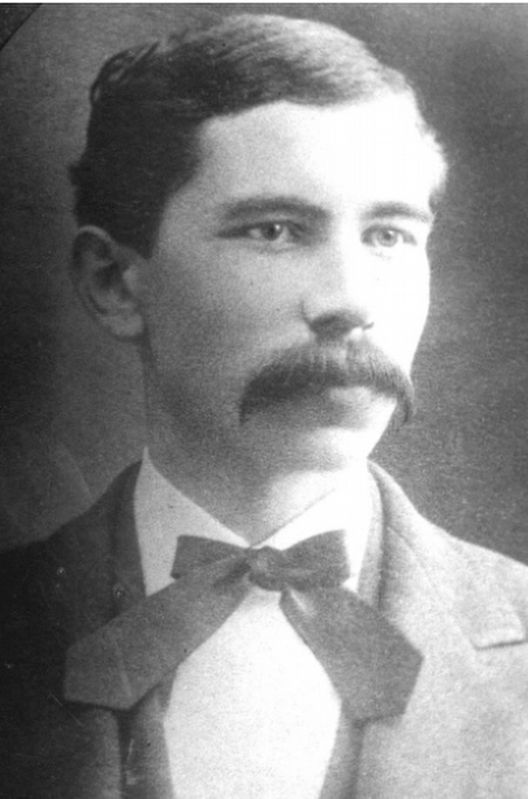
Unknown via Breman Museum (Public Domain)
4. Jacob Elsas
Credits. This page was last revised on July 3, 2023. It was originally submitted on July 3, 2023, by Duane and Tracy Marsteller of Murfreesboro, Tennessee. This page has been viewed 633 times since then and 69 times this year. Photos: 1, 2, 3, 4. submitted on July 3, 2023, by Duane and Tracy Marsteller of Murfreesboro, Tennessee.
