Chinatown in Los Angeles in Los Angeles County, California — The American West (Pacific Coastal)
Historic Brick Pavers
Photographed by Craig Baker, July 30, 2023
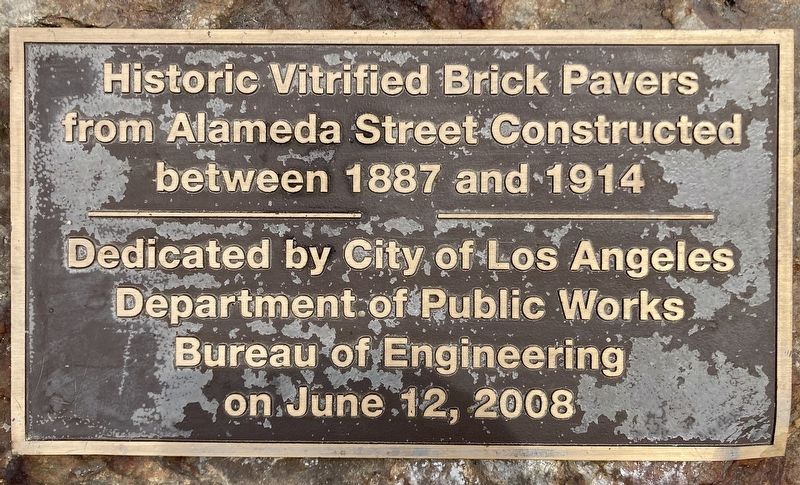
1. Historic Brick Pavers Marker
Historic Vitrified Brick Pavers from Alameda Street constructed between 1887 and 1914.
Dedicated by City of Los Angeles Department of Public Works Bureau of Engineering on June 12, 2008.
Erected 2008 by City of Los Angeles. (Marker Number 211.)
Topics and series. This historical marker is listed in these topic lists: Roads & Vehicles • Settlements & Settlers. In addition, it is included in the Los Angeles Historic-Cultural Monument series list. A significant historical year for this entry is 1887.
Location. 34° 3.616′ N, 118° 14.185′ W. Marker is in Los Angeles, California, in Los Angeles County. It is in Chinatown. It is at the intersection of Alameda Street and Alhambra Avenue, on the right when traveling north on Alameda Street. Touch for map. Marker is at or near this postal address: 1035 N Alameda St, Los Angeles CA 90012, United States of America. Touch for directions.

Regionally, this marker is in California’s Transverse Ranges. It is also on the American Pacific Coast. Globally, it is in North America, on the Ring of Fire, on the Pacific Rim, in the Western Hemisphere, in the Western World, and in the Anglosphere.
this page online
Other nearby markers. At least 8 other markers are within walking distance of this marker: Spring Street Chinatown (about 500 feet away, measured in a direct line); U.S. Post Office Terminal Annex (about 800 feet away); Lucky Deli (approx. 0.2 miles away); Far East Plaza (approx. 0.2 miles away); Sandstone Trough (approx. 0.2 miles away); Italian Hall (approx. 0.2 miles away); a different marker also named Italian Hall (approx. 0.2 miles away); Vignes Street Grade Separation (approx. 0.2 miles away). Touch for a list and map of all markers in Los Angeles.
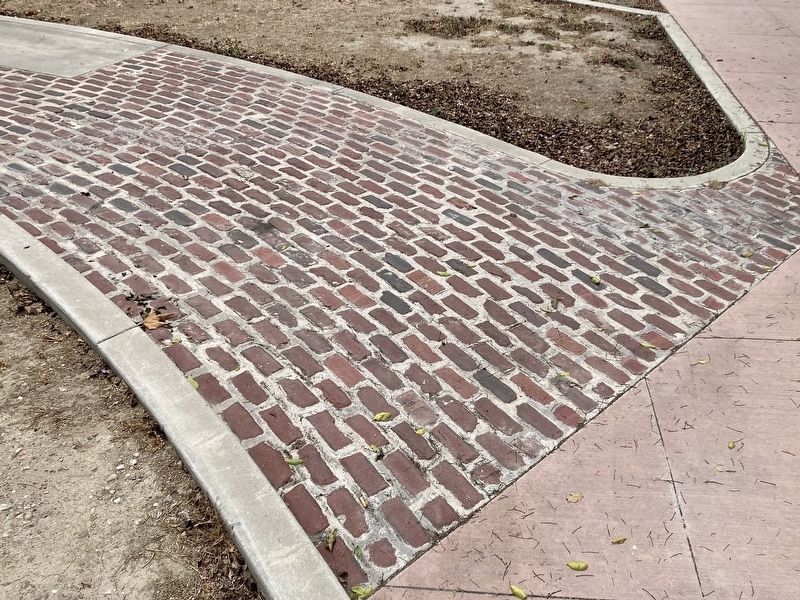
More about this marker. Vitrified bricks are clay bricks fired at higher temperatures and longer durations than conventional bricks. This intensive process melts silica into a glass-like liquid, cementing the structure. It results in a dense, extremely hard material that is highly resistant to water absorption, chemicals, and heavy traffic.
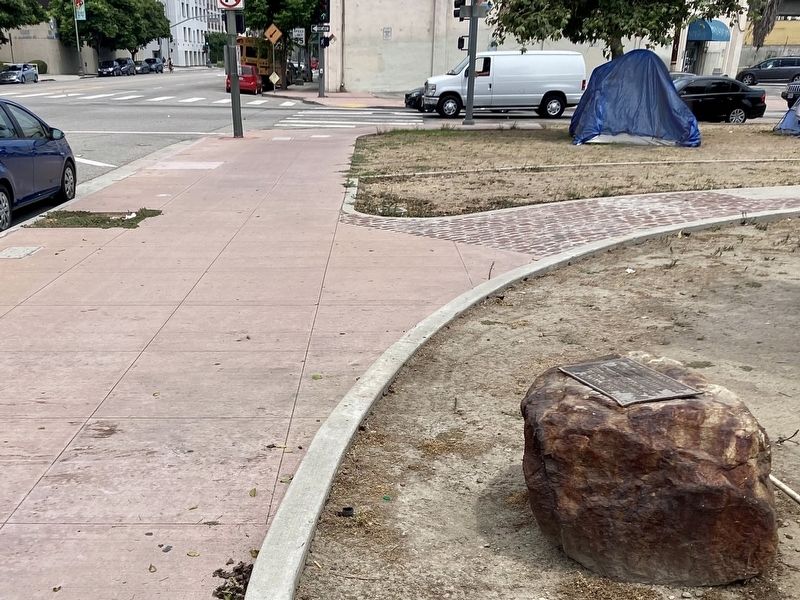
These historic brick pavers have been recycled and incorporated into a walkway in a small park called Alameda Triangle, now closed to prevent homeless encampments.
Three blocks north,
Photographed by Craig Baker, July 30, 2023
2. Historic Brick Pavers and Marker
Nearby Bruno Street still has original granite paving stones installed in 1913. They are designated Los Angeles Historic-Cultural Monument No. 211.
Photographed by Craig Baker, July 30, 2023
3. Historic Brick Pavers
Photographed by Craig Baker, April 1, 2023
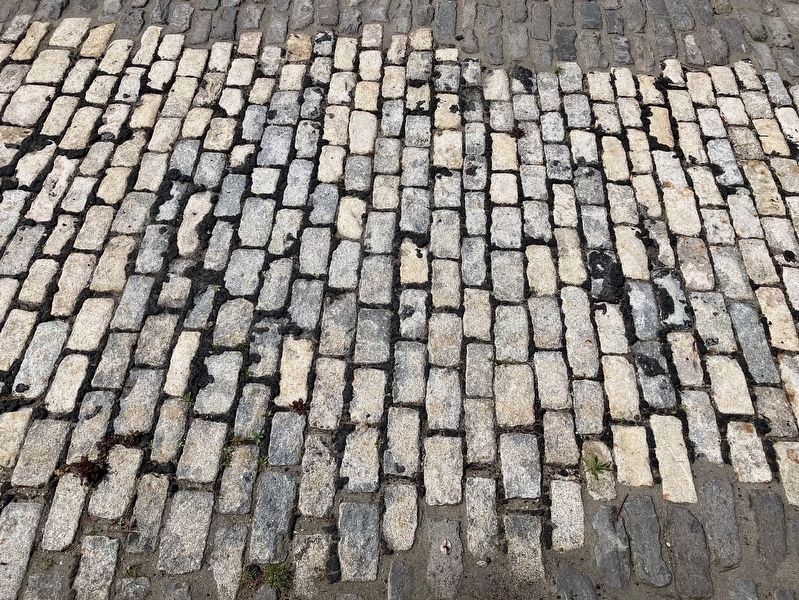
4. Historic Cobblestone Roadway
Located in nearby Los Angeles State Historic Park.
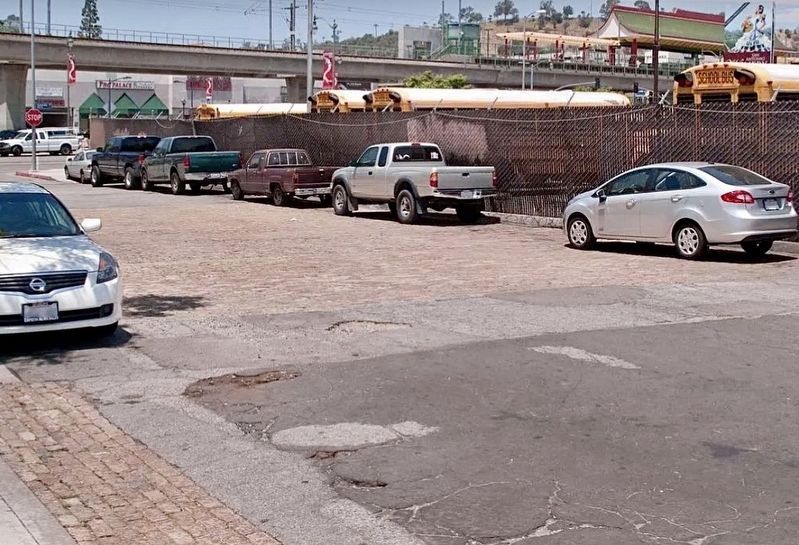
Photographed by Craig Baker
5. Historic Granite Pavers
Bruno Street east of Alameda Avenue.
Credits. This page was last revised on June 25, 2026. It was originally submitted on July 31, 2023, by Craig Baker of Sylmar, California. This page has been viewed 275 times since then and 33 times this year. Photos: 1, 2, 3. submitted on July 31, 2023, by Craig Baker of Sylmar, California. 4. submitted on April 3, 2023, by Craig Baker of Sylmar, California. 5. submitted on June 25, 2026, by Craig Baker of Sylmar, California.
