Spring Lake Township in Ottawa County, Michigan — The American Midwest (Great Lakes)
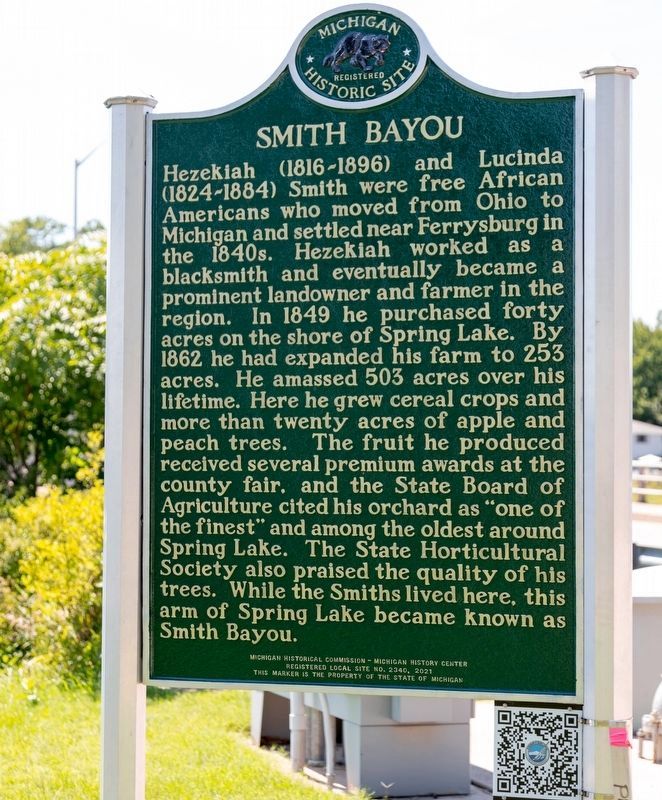
Smith Bayou
⎯⎯⎯
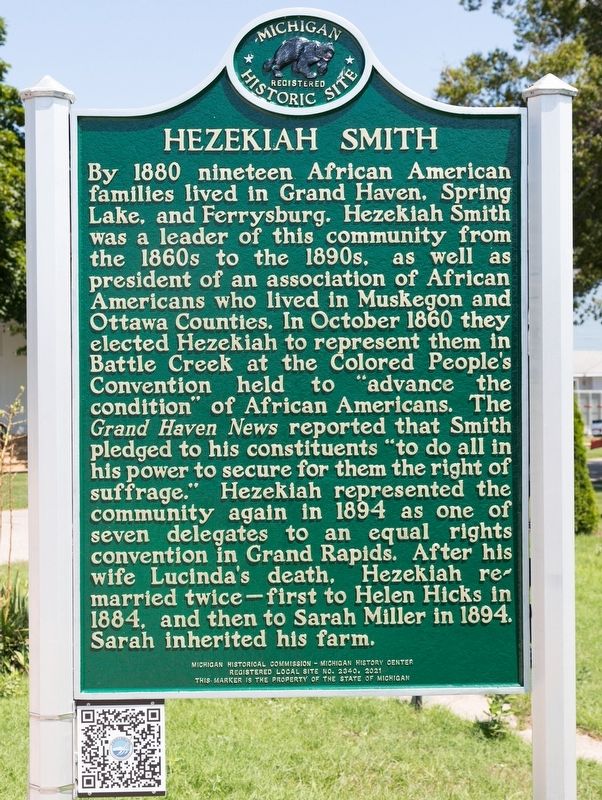
Hezekiah Smith
Photographed by J. J. Prats, July 29, 2023
1. Smith Bayou side of marker
Michigan Registered Local Historic Site No. 2340.
By 1880 nineteen African American families lived in Grand Haven, Spring Lake, and Ferrysburg. Hezekiah Smith was a leader of this community from the 1860s to the 1890s, as well as president of an association of African Americans who lived in Muskegon and Ottawa Counties. In October
this page online
Erected 2021 by Michigan Historical Commission – Michigan History Center. This marker is the property of the State of Michigan. (Marker Number 2340.)
Topics and series. This historical marker is listed in these topic lists: Abolition & Underground RR • African Americans • Civil Rights • Horticulture & Forestry. In addition, it is included in the Michigan Historical Commission series list. A significant historical month for this entry is October 1860.
Location. 43° 5.236′ N, 86° 12.321′ W. Marker is in Spring Lake, Michigan, in Ottawa County. It is in Spring Lake
Photographed by J. J. Prats, July 29, 2023
2. Hezekiah Smith side of marker

Regionally, this marker is in West Michigan, specifically in Greater Grand Rapids, and in one of the Lake Michigan Shore counties. It is also in the American Midwest. Globally, it is in North America, on the Great Lakes, in the Western Hemisphere, in the Western World, and in the Anglosphere. Historically, it finds itself in what was once the Northwest Territory.
Other nearby markers. At least 8 other markers are within 2 miles of this marker, measured as the crow flies: Aloys Bilz House (approx. 0.8 miles away); Winsor McCay (approx. 0.9 miles away); Grand Haven (approx. 1.2 miles away); DeWitt School (approx. 1.7 miles away); U.S. Coast Guard Boat Memorial (approx. 1.7 miles away); Grand Trunk Western, Wood Caboose No. 77915 (approx. 1.8 miles away); Pere Marquette Caboose No. A-986 (approx. 1.8 miles away); Pere Marquette Auto Box Car No 72222
Photographed by J. J. Prats, July 29, 2023
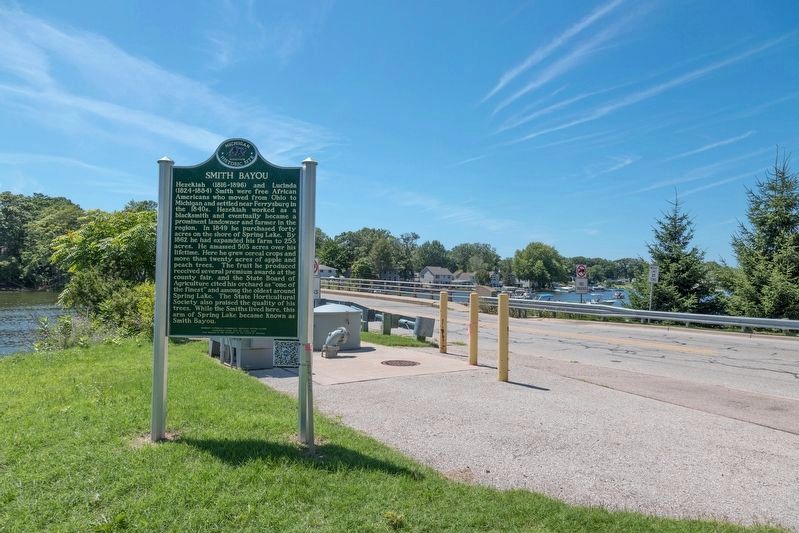
3. Smith Bayou / Hezekiah Smith Marker
The West Spring Lake Road bridge over Spring Lake is in the distance.
Also see . . .
1. City of Ferrysburg entry for this historical marker. Excerpt:
Along with farming, Hezekiah’s farm was a refuge for freed and escaped slaves traveling through the Underground Railroad on their way to Canada. Hezekiah Smith established himself as a strong, civic leader who representing the residents in both Muskegon and Ottawa Counties as president of the Colored People’s Convention. In 1860, he served as a delegate to the State Convention to fight for the right of suffrage. In 1894, he was a representative to the Equal Rights Convention in Grand Rapids, Michigan.(Submitted on August 3, 2023.)
2. Farmer who helped escaped slaves to be honored with historical marker in Ottawa County. 2021 article in MLive.com. Excerpt:
OTTAWA COUNTY, MI – A prominent farmer who helped freed and escaped slaves through the Underground Railroad will be officially recognized with a state historical marker on a bridge that bears his name.(Submitted on August 3, 2023.)
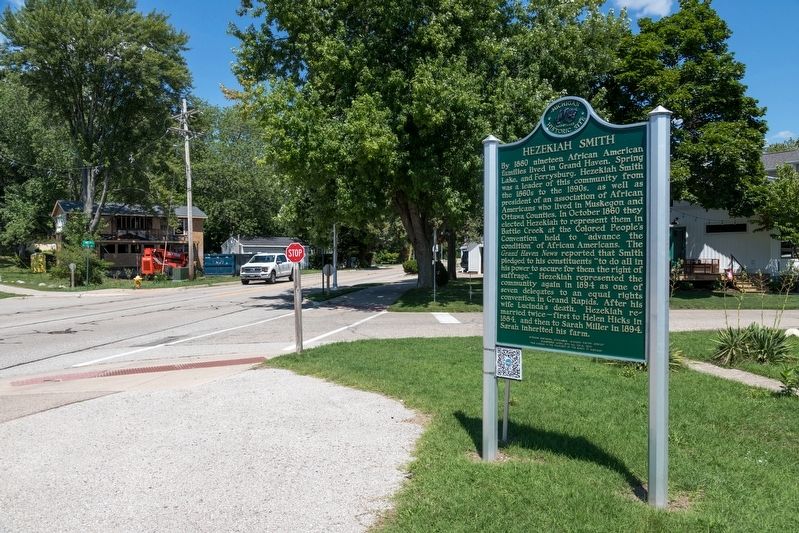
Hezekiah Smith will be honored with the city of Ferrysburg’s first Michigan Historical Marker.A dedication ceremony will be 2 p.m. Friday, Aug. 13, at the north end of Smith’s Bridge.Photographed by J. J. Prats, July 29, 20234. Smith Bayou / Hezekiah Smith MarkerThe intersection of West Spring Lake Road and Lakeview Street and 168th Avenue is on the left, with Lakeview Steet visible behind the marker. The Spring Lake Road bridge over the lake is behind the photographer.
Ferrysburg Mayor Rebecca Hopp told MLive she completed the research into Smith and application for the marker in July 2020.
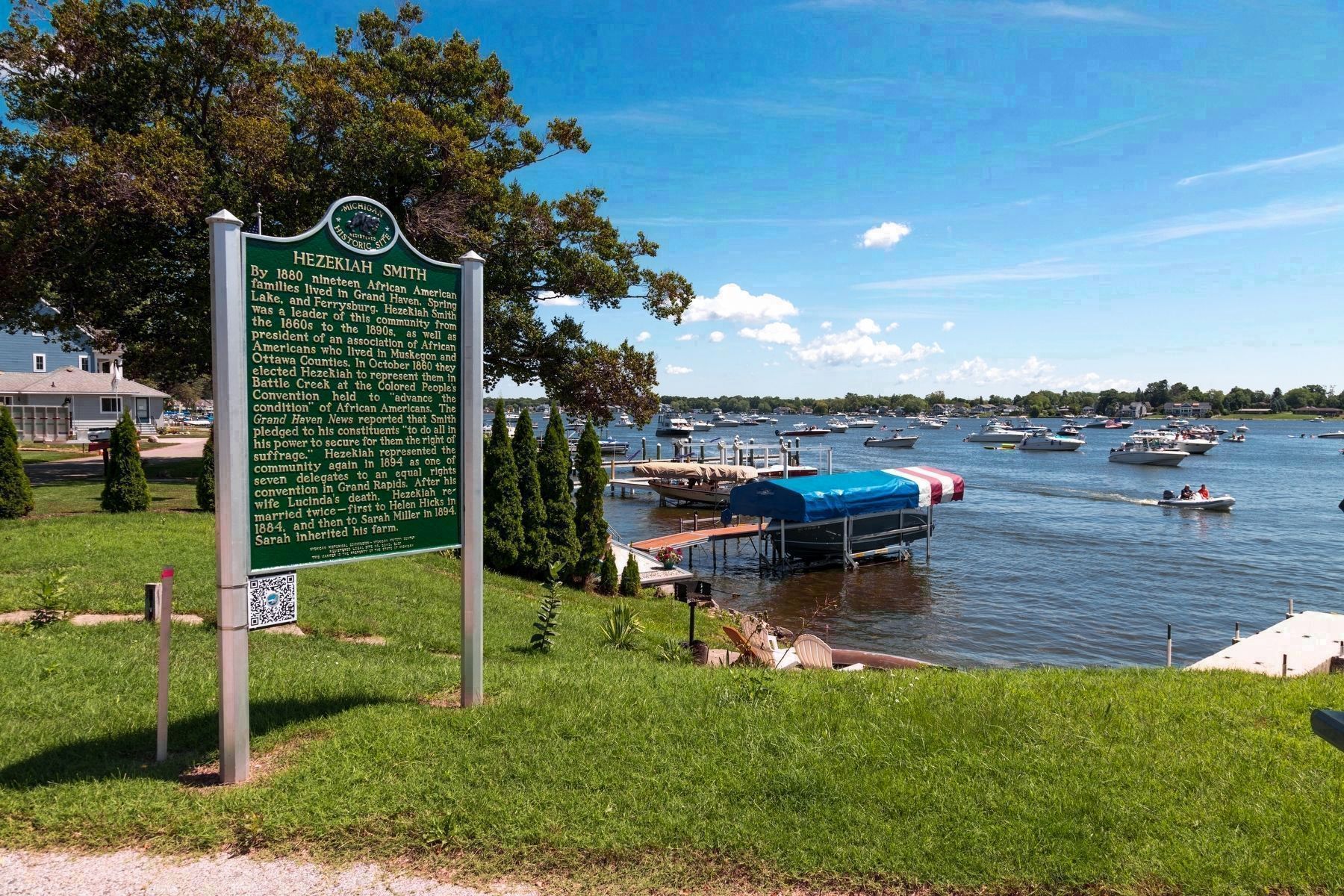
Photographed by J. J. Prats, July 29, 2023
5. Spring Lake’s Smith Bayou and Marker
Listening to a tribute band playing onshore from boats anchored on the lake on a Saturday afternoon in July.
Credits. This page was last revised on August 3, 2023. It was originally submitted on August 3, 2023, by J. J. Prats of Powell, Ohio. This page has been viewed 757 times since then and 135 times this year. Photos: 1, 2, 3, 4, 5. submitted on August 3, 2023, by J. J. Prats of Powell, Ohio.
