Rione X Campitelli in Roma in Città metropolitana di Roma Capitale, Latium, Rome, Italy — Central Italy (Tyrrhenian Coast)
Il restauro
⎯⎯⎯
The conservation project
Photographed by James Hulse, June 14, 2023
1. Il restauro / The conservation project Marker

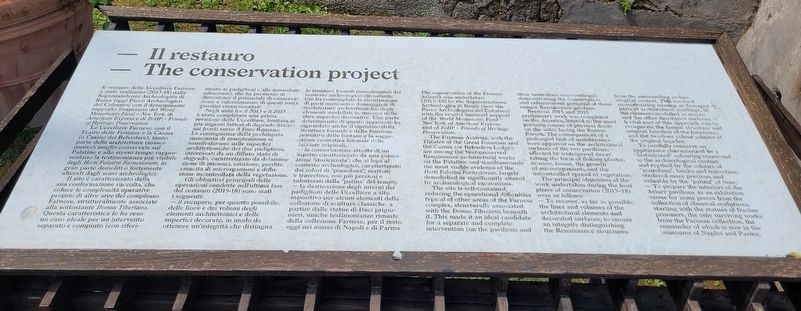
Le Uccelliere Farnese, con il Teatro delle Fontane e la Casina (o Casino del Belvedere), fanno parte delle architetture rinascimentali meglio conservate sul Palatino e allo stesso tempo rappresentano la testimonianza più visibile degli Horti Palatini Farnesiorum, in gran parte demoliti o fortemente alterati dagli scavi archeologici.
Il sito è caratterizzato dalla sua conformazione raccolta, che riduce le complessità operative proprie di altre aree del complesso Farnese, strutturalmente associate alla sottostante Domus Tiberiana. Questa caratteristica lo ha reso un caso ideale per un intervento separato e compiuto (con riferimento ai padiglioni e alle immediate adiacenze), che ha permesso di dimostrare il potenziale di conservazione e valorizzazione di questi unici giardini rinascimentali.
Negli anni fra il 2013 e il 2015
this page online
Gli obbiettivi principali delle operazioni condotte nell'ultima fase del restauro (2015-18) sono stati i seguenti:
- il recupero, per quanto possibile, delle linee e dei volumi degli elementi architettonici e delle superfici decorate, in modo da ottenere un'integrità che distingua le strutture formali rinascimentali dal contesto archeologico circostante. Ciò ha contemplato la ricostruzione di parti mancanti o danneggiate di modanature architettoniche, degli elementi modellati in stucco e delle altre superfici decorative. Una parte determinante di questo approccio ha riguardato anche il ripristino della struttura formale e della funzione primitiva delle fontane e la suggestione cromatica
Photographed by James Hulse, June 14, 2023
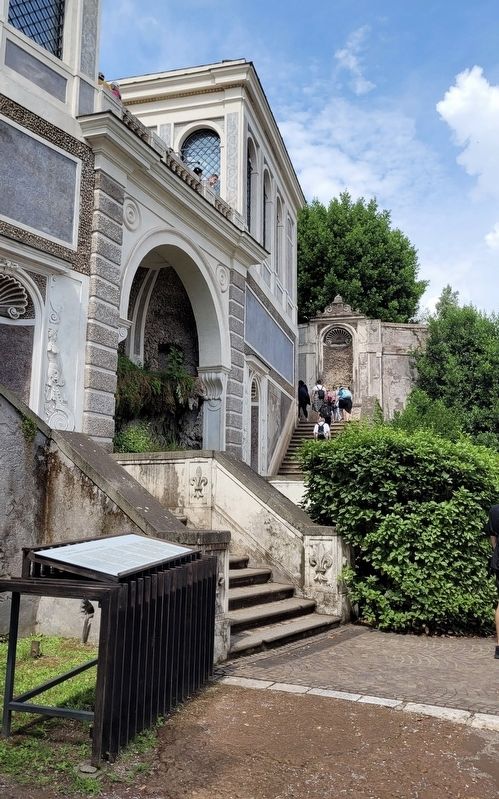
2. The conservation project Marker at the stairs
- la conservazione attenta di un aspetto caratterizzato da una colorazione "storicizzata", che si lega al contesto archeologico, caratterizzato dai colori di "pozzolana", mattoni e travertino, resi più preziosi e valorizzati dalla "patina" del tempo;
- la destinazione degli interni dei padiglioni delle Uccelliere a sito espositivo per alcuni elementi della collezione di sculture classiche, a partire dalle statue di Daci prigionieri, uniche testimonianze rimaste della collezione Farnese, per il resto oggi nei musei di Napoli e di Parma.
The conservation of the Farnese Aviaries was undertaken (2013-18) by the Soprintendenza Archeologica di Roma (now the Parco Archeologico del Colosseo) with the crucial financial support of the World Monuments Fund - New York, of American Express and of FoHP - Friends of Heritage Preservation.
The Farnese Aviaries, with the Theatre of the Great Fountain and the Casina (or Belvedere Lodge), are among the best-preserved Renaissance architectural works on the Palatine and simultaneously the most visible evidence of the Horti Palatini Farnesiorum, largely demolished
Photographed by James Hulse, June 14, 2023
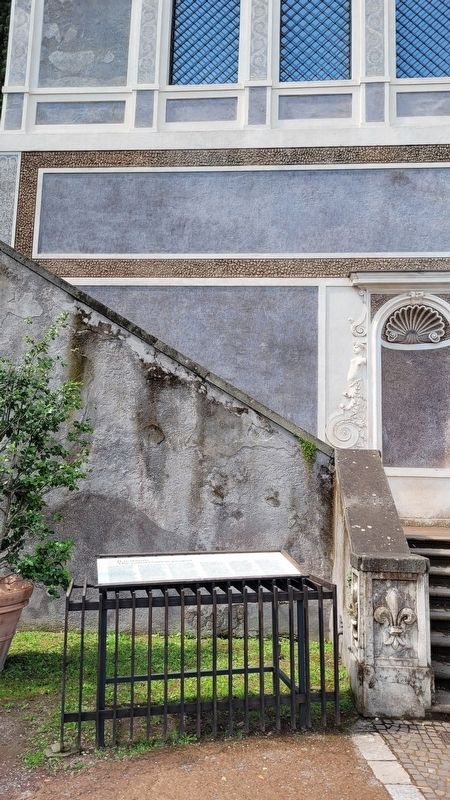
3. The conservation project Marker and the stairs
The site is self-contained, reducing the operational difficulties typical of other areas of the Farnese complex, structurally associated with the Domus Tiberiana beneath it. This made it an ideal candidate for a separate and complete intervention (on the pavilions and their immediate surroundings), demonstrating the conservation and enhancement potential of these unique Renaissance gardens.
Between 2013 and 2015 preliminary work was completed on the Aviaries, limited to the most pressing causes of physical decay on the sides facing the Roman Forum. The consequences of a prolonged lack of maintenance were apparent on the architectural surfaces of the two pavilions, affected by widespread decay taking the form of flaking plaster, erosion, losses, the growth of microorganisms and the uncontrolled spread of vegetation.
The principal objectives of the work undertaken during the final phase of conservation (2015-18) were as follows:
- To recover, as far as possible, the lines and volumes of the architectural elements and decorated surfaces, to ensure an integrity distinguishing
Photographed by James Hulse, June 14, 2023
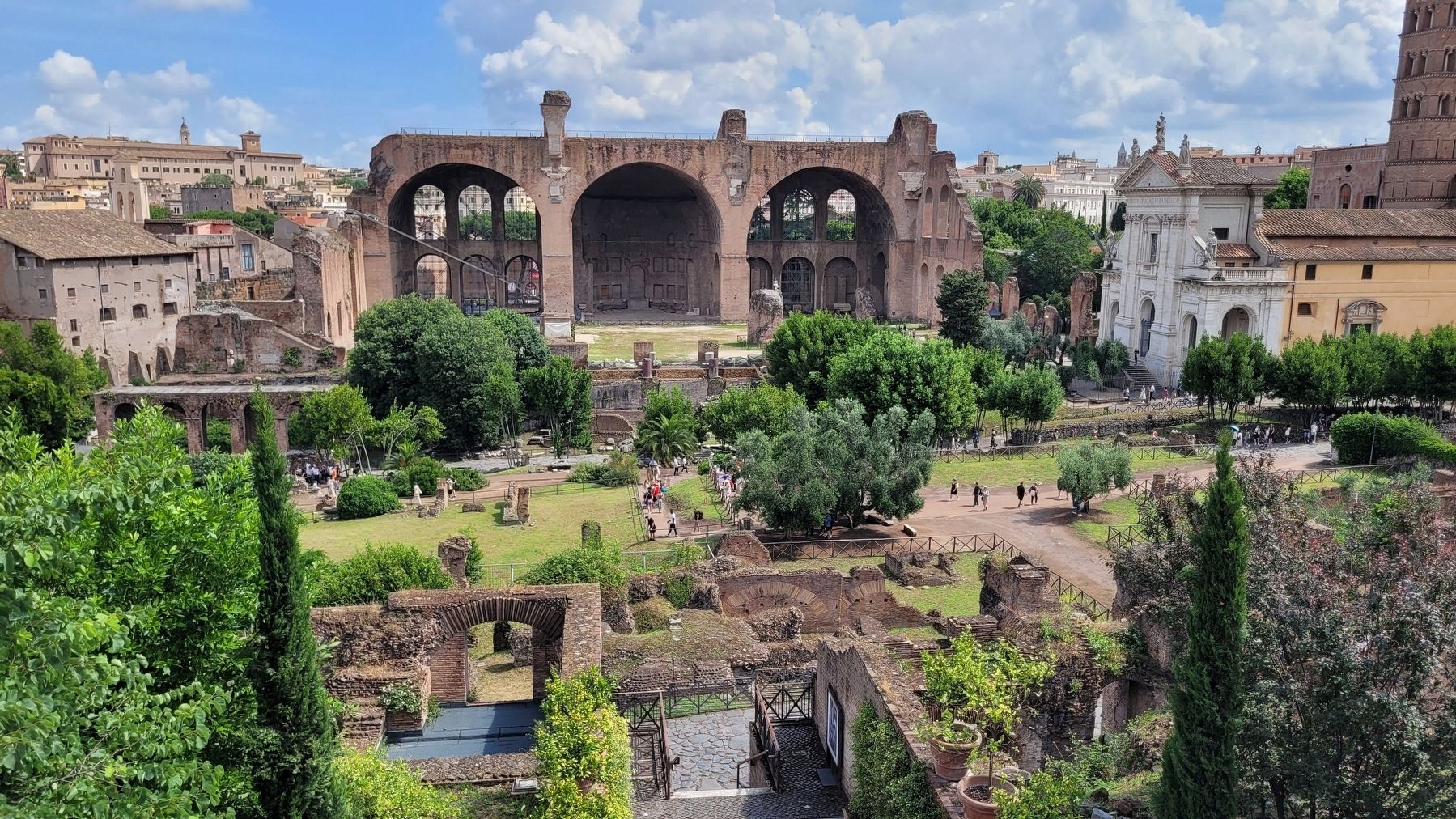
4. Looking at the Roman Forum near the marker
- To carefully conserve an appearance characterized by a "historicized" colouring connected to the archaeological context and typified by the colours of "pozzolana", bricks and travertine, rendered more precious and valuable by the "patina" of time;
- To prepare the interiors of the Aviary pavilions as an exhibition venue for some pieces from the collection of classical sculptures, starting with the statues of Dacian prisoners, the only surviving works from the Farnese collection, the remainder of which is now in the museums of Naples and Parma.
Topics. This historical marker is listed in this topic list: Anthropology & Archaeology. A significant historical year for this entry is 2013.
Location. 41° 53.426′ N, 12° 29.24′ E. Marker is in Roma, Lazio (Latium, Rome), in Città metropolitana di Roma Capitale. It is in Rione X Campitelli. It is at the intersection of Via Sacra and Via Nova on Via Sacra. The marker is located west of the Arch of Titus in the Roman Forum. Touch for map. Marker is in this post office area: Roma, Lazio 00186, Italy. Touch for directions.

Regionally, it is in Europe, the European Union, the Schengen Area, a coastal Mediterranean country, and the Western World. Historically, it finds itself in what was once the Roman Empire.
Other nearby markers. At least 8 other markers are within walking distance of this marker: Teatro del Fontanone / Fountain Theater (here, next to this marker); Uccelliere / Aviary (a few steps from this marker); Lontano da Roma: il declino degli Orti / Far from Rome: the decline of the Gardens (a few steps from this marker); Le ragioni dell'archeologia / The development of archaeology (a few steps from this marker); Con gli occhi di Goethe / With the eyes of Goethe (a few steps from this marker); Giacomo Boni sul Palatino / Giacomo Boni on the Palatine (a few steps from this marker); Dal collezionismo all'archeologia / From collecting to archaeology (a few steps from this marker); Sostruzioni del Palazzo e Clivo della Vittoria / Palace Substructures and the Clivus Victoriae (within shouting distance of this marker). Touch for a list and map of all markers in Roma.
More about this marker. The marker is located in the Parco Archeologico del Colosseo (Roman Forum Archaeological Park) and it does require an entry fee to visit.
Also see . . . Parco Archeologico del Colosseo. Roma Turismo (Submitted on August 5, 2023, by James Hulse of Medina, Texas.)
Credits. This page was last revised on August 8, 2023. It was originally submitted on August 5, 2023, by James Hulse of Medina, Texas. This page has been viewed 253 times since then and 15 times this year. Photos: 1, 2, 3, 4. submitted on August 6, 2023, by James Hulse of Medina, Texas.
