
Bolhão in Porto, Portugal — Southwestern Europe (Iberian Peninsula)
Dom Pedro II and Dona Teresa Cristina
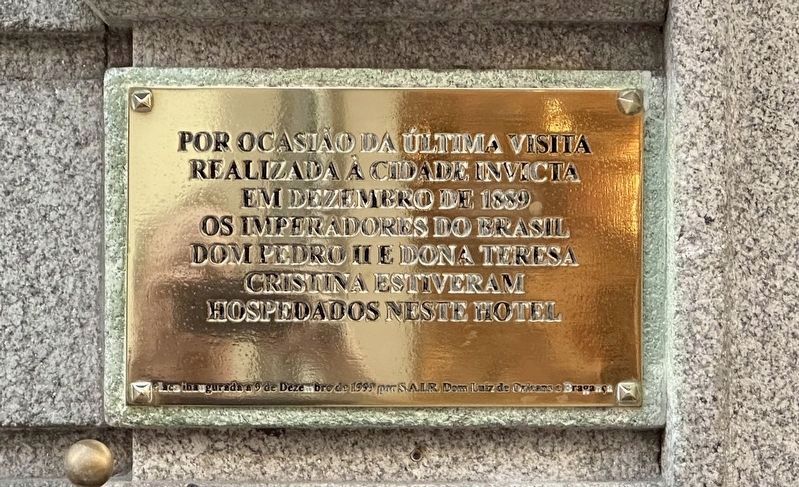
Photographed by Andrew Ruppenstein, August 30, 2023
1. Dom Pedro II and Dona Teresa Cristina Marker

On the occasion of the ultimate visit made to this invincible city in December 1889, the Emperor and Empress of Brazil, Dom Pedro II and Dona Teresa Cristina, stayed at this hotel.
Erected 1999 by S.A.I.R. Dom Luiz de Orleans e Bragança.
Topics. This historical marker is listed in this topic list: Notable Events. A significant historical date for this entry is December 28, 1889.
Location. 41° 8.877′ N, 8° 36.396′ W. Marker is in Porto. It is in Bolhão. It is on Rua de Santa Catarina, on the right when traveling south. Touch for map. Marker is at or near this postal address: Rua de Santa Catarina 197, Porto 4000, Portugal. Touch for directions.

Regionally, it is in the North Atlantic Region, in Europe, in the European Union, in Atlantic Europe, on the Iberian Peninsula, in the Schengen Area, and in the Western World. Historically, it finds itself in what was once the Byzantine Empire, Portuguese colonies, and the Roman Empire.
Other nearby markers. At least 8 other markers are within walking distance of this marker: Arnaldo Gama (a few steps from this marker); Igreja de Santo Ildefonso / Church of Saint Ildefonso (about 210 meters away, measured in a direct line); Capela das Almas de Santa Catarina
this page online
Also see . . .
1. Pedro II of Brazil (Wikipedia).
Excerpt: Dom Pedro II (2 December 1825 – 5 December 1891), nicknamed the Magnanimous (Portuguese: O Magnânimo), was the second and last monarch of the Empire of Brazil, reigning for over 58 years. He was born in Rio de Janeiro, the seventh child of Emperor Dom Pedro I of Brazil and Empress Dona Maria Leopoldina and thus a member of the Brazilian branch of the House of Braganza (Portuguese: Bragança)…(Submitted on August 31, 2023.)
Pedro II inherited an empire on the verge of disintegration, but he turned Brazil into an emerging power in the international arena. The nation grew to be distinguished from its Hispanic neighbors on account of its political stability, zealously guarded freedom of speech, respect for civil rights, vibrant economicgrowth, and form of government—a functional representative parliamentary monarchy. Brazil was also victorious in the Platine War, the Uruguayan War, and the Paraguayan War, as well as prevailing in several other international disputes and domestic tensions. Pedro II steadfastly pushed through the abolition of slavery despite opposition from powerful political and economic interests. A savant in his own right, the Emperor established a reputation as a vigorous sponsor of learning, culture, and the sciences…Photographed by Andrew Ruppenstein, August 30, 20232. Dom Pedro II and Dona Teresa Cristina Marker - wide viewThe marker is visible here just to the left of the entrance of the Grande Hotel do Porto.
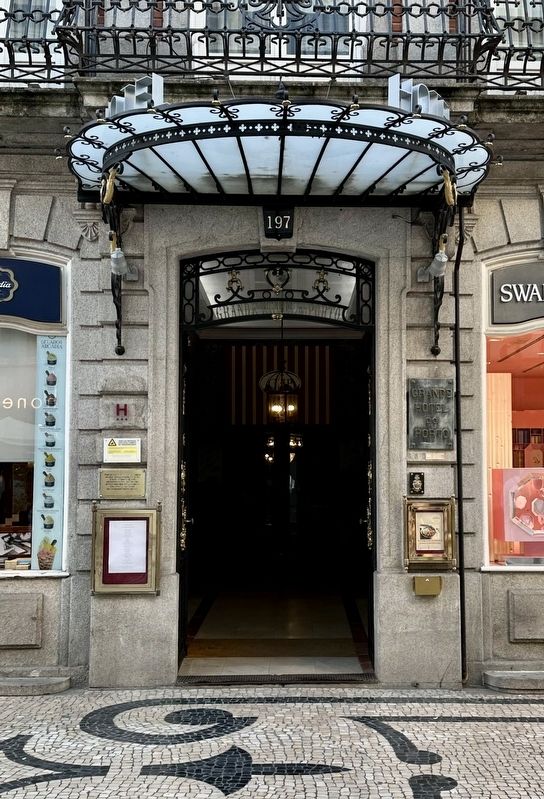
2. Teresa Cristina of the Two Sicilies (Wikipedia). The marker, being short, leaves out some important details. The couple had effectively been deposed and exiled from Brazil the preceding month. They arrived in Lisbon on December 7, 1889, and then proceeded to Porto. As noted below, the news of permanent exile devastated her, although it is unclear whether she died at the hotel.
Overview: Dona Teresa Cristina (14 March 1822 – 28 December 1889), nicknamed "the Mother of the Brazilians", was Empress of Brazil as the consort of Emperor Dom Pedro II from their marriage on 30 May 1843 until 15 November 1889, when the monarchy was abolished….(Submitted on August 31, 2023.)
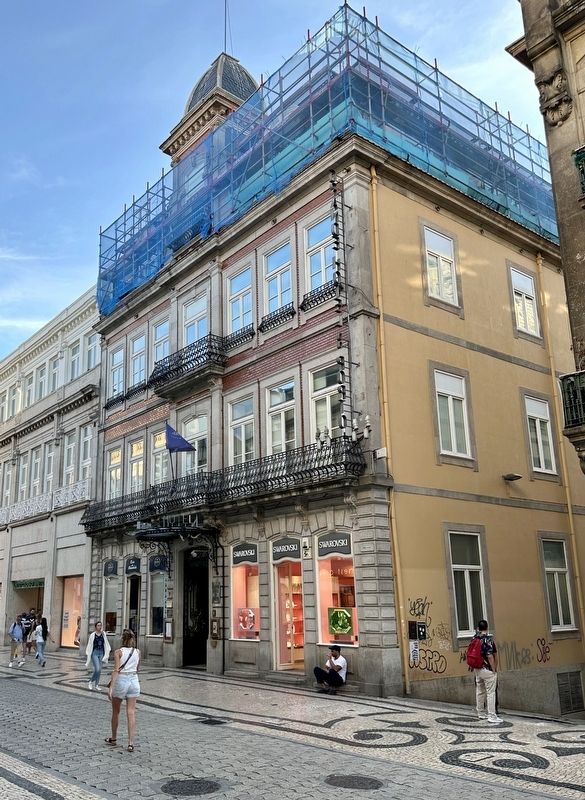
Death: On 24 December, the Imperial Family received official news that they had been banished forever from the country. Up until that point, they had only been requested to leave with no indicationas to how long they were to stay away. The "news broke D. Teresa Cristina's will to live." Pedro II wrote in his journal on 28 December 1889: "Hearing the Empress complain I went to see what it was. She is cold with a pain in her sides; but she does not have any fever." As the day passed, Teresa Cristina's breathing became increasingly labored, and the failure of her respiratory system led to cardiac arrest and death at 2:00 pm.Photographed by Andrew Ruppenstein, August 30, 20233. Dom Pedro II and Dona Teresa Cristina Marker - wider view
Library of Congress
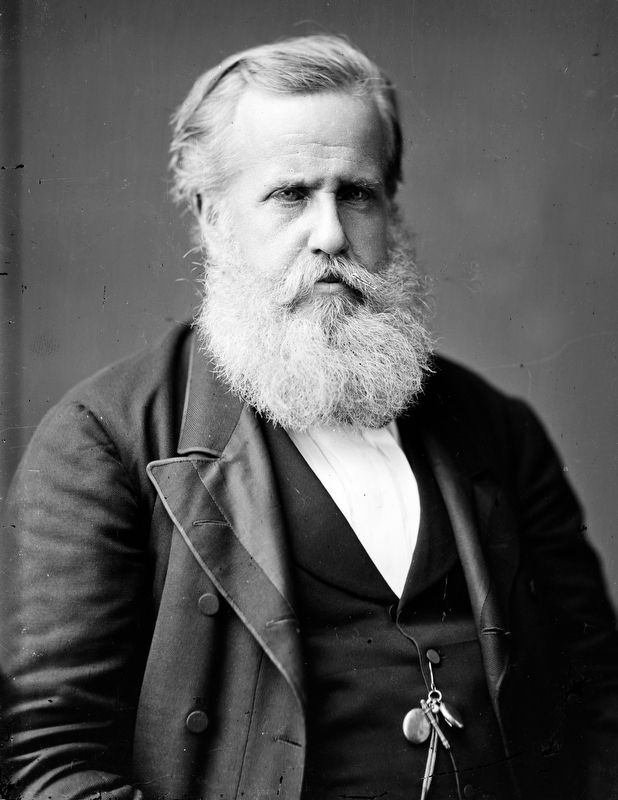
4. Dom Pedro II
Brady-Handy photograph collection, Library of Congress, Prints and Photographs
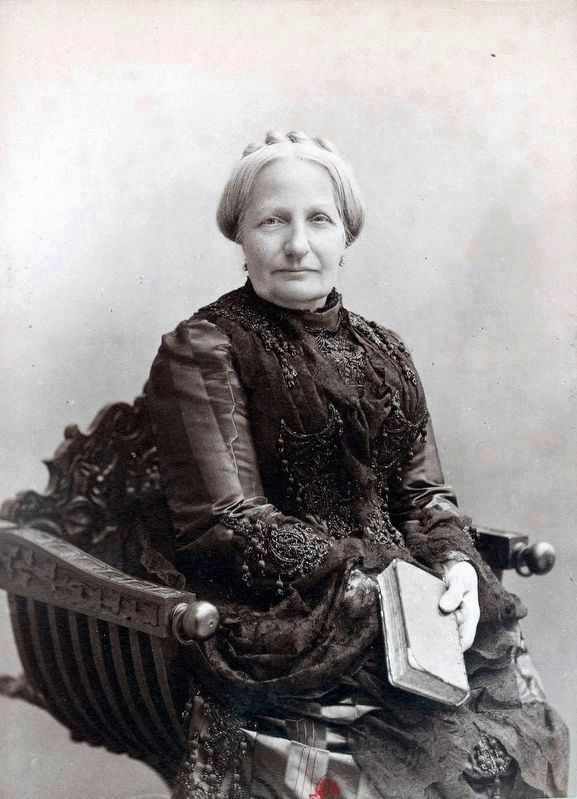
The French National Library
5. Her Majesty the Empress of the Brazil,
Dona Teresa Cristina
Dona Teresa Cristina
[photographie, tirage de démonstration] by Atelier Nadar from Album de référence de l'Atelier Nadar. Vol. 35.
Credits. This page was last revised on March 16, 2026. It was originally submitted on August 31, 2023, by Andrew Ruppenstein of Lamorinda, California. This page has been viewed 505 times since then and 123 times this year. Photos: 1, 2, 3. submitted on August 31, 2023, by Andrew Ruppenstein of Lamorinda, California. 4, 5. submitted on January 2, 2024, by Allen C. Browne of Silver Spring, Maryland.
