Québec in Capitale-Nationale, — Central Canada (French-Canadian)
Le Monastère des Ursulines/ The Ursuline Monastery
Photographed by Tim Boyd, October 14, 2023
1. Le Monastère des Ursulines/ The Ursuline Monastery Marker

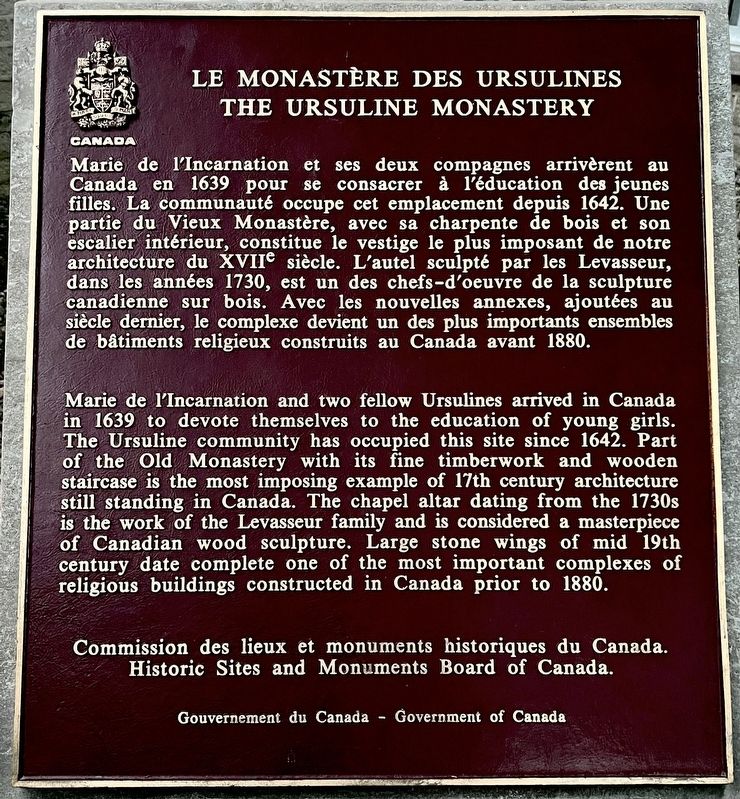
Le Monastère des Ursulines
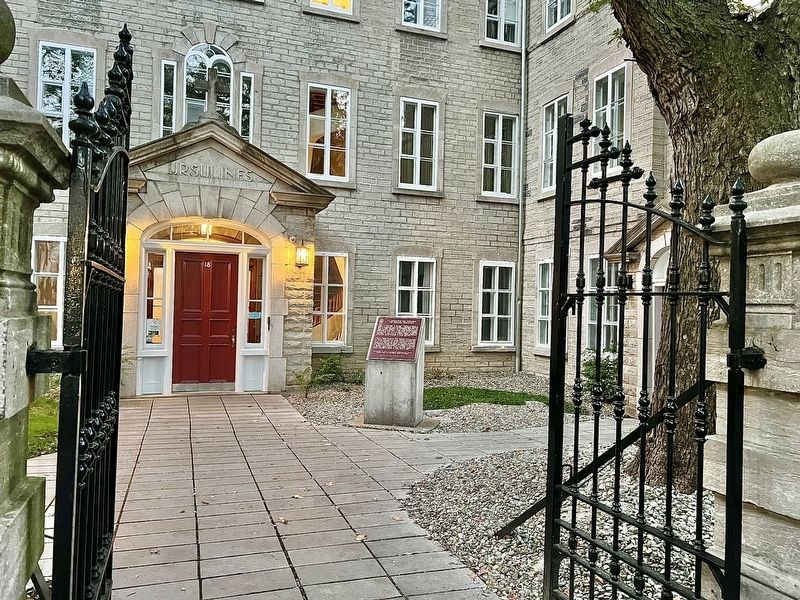
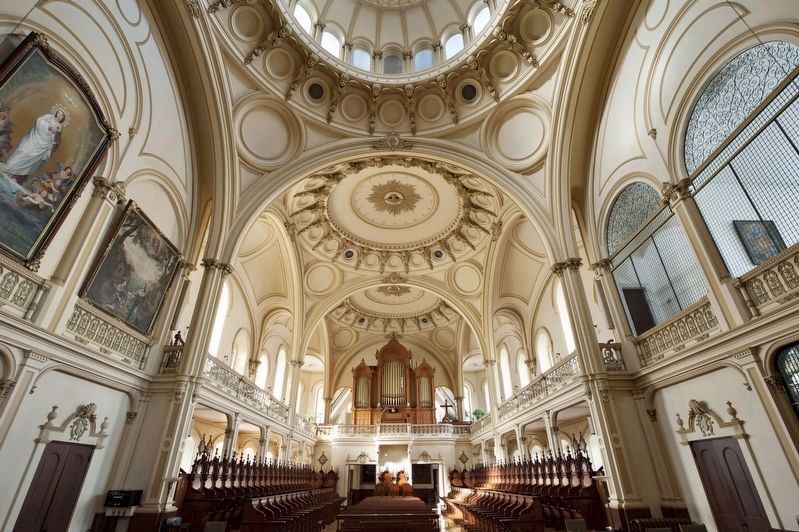
Marie de l'Incarnation et ses deux compagnes arrivèrent au Canada en 1639 pour se consacrer à l'éducation des jeunes filles. La communauté occupe cet emplacement depuis 1642. Une partie du Vieux Monastère, avec sa charpente de bois et son escalier intérieur, constitue le vestige le plus imposant de notre architecture du XVIIe siècle. L'autel sculpté par les Levasseur, dans les années 1730, est un des chefs-d'oeuvre de la sculpture canadienne sur bois. Avec les nouvelles annexes, ajoutées au siècle dernier, le complexe devient un des plus importants ensembles de bâtiments religieux construits au Canada avant 1880.
Marie de l'Incarnation and two fellow Ursulines arrived in Canada in 1639 to devote themselves to the education of young girls. The Ursuline community has occupied this site since 1642. Part of the Old Monastery with its fine timberwork and wooden staircase is the most imposing example of 17th century architecture still standing in Canada. The chapel altar dating from the 1730s is the work of the Levasseur family and is considered a masterpiece of
this page online
Commission des lieux et monuments historiques du Canada.
Historic Sites and Monuments Board of Canada.
Gouvernement du Canada - Government of Canada
Erected by Historic Sites and Monuments Board of Canada.
Topics and series. This historical marker is listed in these topic lists: Architecture • Colonial Era • Religion & Religious Structures • Women. In addition, it is included in the Canada, Historic Sites and Monuments Board series list. A significant historical year for this entry is 1642.
Location. 46° 48.718′ N, 71° 12.49′ W. Marker is in Québec, in Capitale-Nationale. It is at the intersection of Rue Donnacona and Rue du Parloir when traveling west on Rue Donnacona. Touch for map. Marker is at or near this postal address: Rue Donnacona, Québec, Canada. Touch for directions.

Regionally, this marker is in Central Canada. Globally, it is in North America, the Western Hemisphere, and the Western World. Historically, it finds itself
Photographed by Tim Boyd, October 14, 2023
2. Le Monastère des Ursulines/ The Ursuline Monastery Marker
Other nearby markers. At least 8 other markers are within walking distance of this marker: Joseph Bouchette (within shouting distance of this marker); The Jacquet House (within shouting distance of this marker); Louis-Joseph de Montcalm (within shouting distance of this marker); Kent House (about 120 meters away, measured in a direct line); Mise en lumière de l'édifice Price à Québec / Illumination of the Price Building in Quebec City (about 120 meters away); Édifice Price / Price Building (about 120 meters away); The Maillou House (about 120 meters away); La Cathédrale Épiscopale de la Sainte-Trinité/ Cathedral of the Holy Trinity (about 120 meters away). Touch for a list and map of all markers in Québec.
Also see . . . Ville de Québec - Monastery of the Ursulines of Québec.
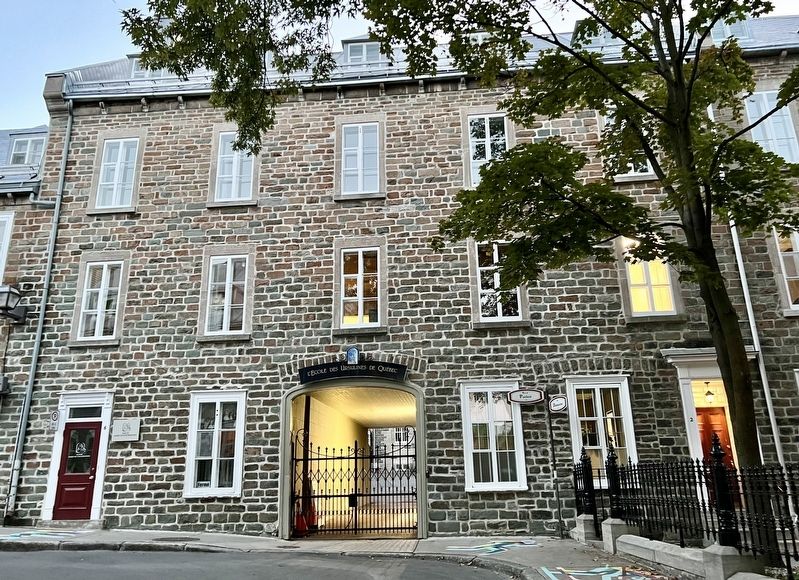
On August 1, 1639, three Ursuline nuns from France, including Marie de l’Incarnation, who spearheaded the missionary endeavour they had come to America to carry out, landed at Québec. Two years later a first monastery(Submitted on October 18, 2023, by Tim Boyd of Hamilton, Ontario.)was completed, and the Ursulines opened the colony’s first school for young girls—at first a few Aboriginal girls, then students of French origin.Photographed by Tim Boyd, October 14, 20233. L’école des Ursulines de Quebec
4. The Chapel of the Ursuline Monastery
Source: Digital Museums Canada
Credits. This page was last revised on March 16, 2026. It was originally submitted on October 18, 2023, by Tim Boyd of Hamilton, Ontario. This page has been viewed 323 times since then and 41 times this year. Photos: 1, 2, 3, 4. submitted on October 18, 2023, by Tim Boyd of Hamilton, Ontario. • Andrew Ruppenstein was the editor who published this page.
