Kinston in Lenoir County, North Carolina — The American South (South Atlantic)
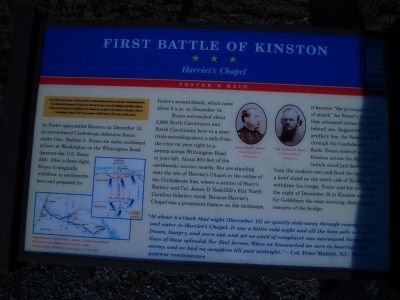
First Battle of Kinston
Harriet's Chapel
| — | Foster's Raid | — |
Photographed by Kevin W., October 20, 2009
1. Battle of Kinston Marker
Late in 1862, Union Gen. John G. Foster’s garrison was well entrenched in New Bern and made several incursions into the countryside. On December 11, Foster led a raid from New Bern to burn the Wilmington and Weldon Railroad Bridge over the Neuse River at Goldsboro and to demonstrate in support of Gen. Ambrose E. Burnside’s attack at Fredericksburg, Virginia. Foster’s force consisted of 10,000 infantry, 650 cavalry, and 40 cannons.
As Foster approached Kinston on December 13, he encountered Confederate defensive forces under Gen. Nathan G. Evans six miles southwest of here at Woodington on the Wilmington Road (present-day U.S. Route 258). After a fierce fight, Evans strategically withdrew to earthworks here and prepared for Foster’s second attack, which came about 9 a.m. on December 14.
Evans entrenched about 2,000 North Carolinians and South Carolinians here in a semi-circle extending about a mile from the river on your right to a swamp across Wilmington Road to your left. About 800 feet of the earthworks survive nearby. You are standing near the site of Harriet’s Chapel in the center of the Confederate line, where
this page online
“At about 8 o’clock that night [December 13] we quietly stole away through swamp, mud, and water to Harriet’s Chapel. It was a bitter cold night and all the boys were half frozen, hungry, and worn out, and yet no word of complaint was murmured through the lines of these splendid Tar Heel heroes. When we bivouacked we were in hearing of the enemy, and we had no campfires till past midnight.” – Col. Peter Mallett, N.C. Battalion, postwar reminiscence
Erected by North
Photographed by Kevin W., October 20, 2009
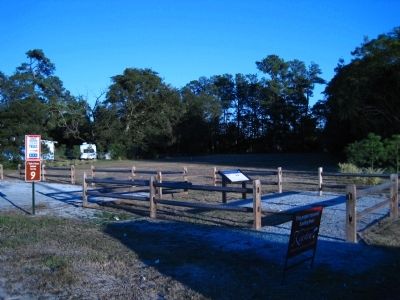
2. Battle of Kinston Marker
Topics and series. This historical marker is listed in this topic list: War, US Civil. In addition, it is included in the North Carolina Civil War Trails series list. A significant historical date for this entry is December 13, 1861.
Location. 35° 14.539′ N, 77° 35.275′ W. Marker is in Kinston, North Carolina, in Lenoir County. It is on Richlands Road (U.S. 258) 0.2 miles south of New Bern Road (U.S. 70), on the right when traveling north. Touch for map. Marker is in this post office area: Kinston NC 28504, United States of America. Touch for directions.

Regionally, this marker is in North Carolina’s Coastal Plain. It is also in the American South and specifically in the Upper South. Globally, it is in North America, the Western Hemisphere, the Western World, and the Anglosphere. Historically, it finds itself in what was once the territory of the Mississippian Culture, one of the original Thirteen Colonies, one of the Confederate States of America, and the Antebellum South.
Other nearby markers. At least 8 other markers are within walking distance of this marker: Kinston Battlefield Park (within shouting
Photographed by Craig Swain, May 7, 2010
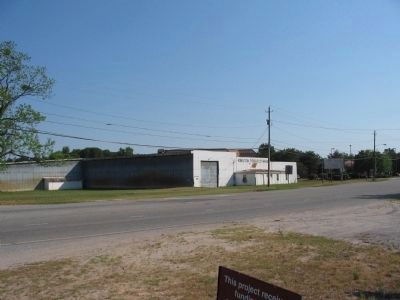
3. Confederate Right Flank
Looking from the marker location to the west. Much of the location occupied by the Confederate right flank is today part of an old tobacco warehouse.
More about this marker. This marker is Tour Stop 9 on the 1st Battle of Kinston Battlefield Trail.
The small print note at the lower right of the marker reads: Major funding for this project was provided by the North Carolina Department of Transportation, through the Transportation Enhancement Program of the Federal Transportation Efficiency Act for the 21st Century.
Photographed by Craig Swain, May 7, 2010
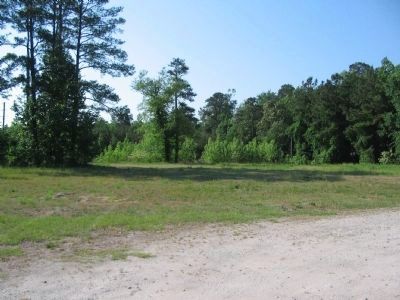
4. Confederate Center and Federal Approach
Portions of the Confederate center are still undeveloped. Plans are to turn this section into a battlefield park.
Photographed by Craig Swain, May 7, 2010
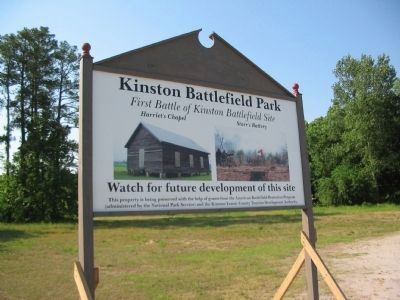
5. Kinston Battlefield Park
Local preservation groups are developing the site as a battlefield park.
Credits. This page was last revised on December 25, 2025. It was originally submitted on October 26, 2009, by Kevin W. of Stafford, Virginia. This page has been viewed 1,901 times since then and 56 times this year. Photos: 1, 2. submitted on October 26, 2009, by Kevin W. of Stafford, Virginia. 3, 4, 5. submitted on May 9, 2010, by Craig Swain of Leesburg, Virginia. • Craig Swain was the editor who published this page.
