Near Buckland in Prince William County, Virginia — The American South (Mid-Atlantic)
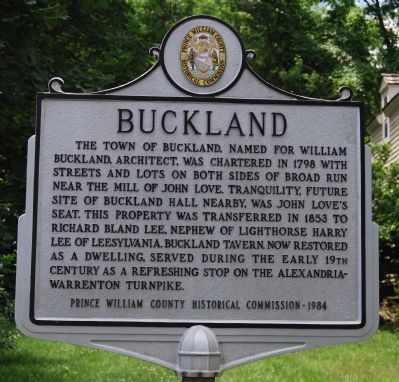
Buckland
Photographed by Dawn Bowen, June 5, 2007
1. Buckland Marker
Erected 1984 by Prince William County Historical Commission. (Marker Number 66.)
Topics and series. This historical marker is listed in these topic lists: Roads & Vehicles • Settlements & Settlers. In addition, it is included in the Virginia, Prince William County Historical Commission series list. A significant historical year for this entry is 1798.
Location. 38° 46.846′ N, 77° 40.458′ W. Marker is near Buckland, Virginia, in Prince William County. It is at the intersection of Lee Highway (U.S. 29) and Buckland Mill Road (County Route 684), on the right when traveling south on Lee Highway. Touch for map. Marker is in this post office area:
this page online

Regionally, this marker is in the Washington Metropolitan Area, in Northern Virginia, and in the Piedmont. It is also in the American South, specifically in the Upper South, in the Mid-Atlantic, and on the Eastern Seaboard. Globally, it is in the North Atlantic Region, North America, the Western Hemisphere, the Western World, and the Anglosphere. Historically, it finds itself in what was once the territory of the Mississippian Culture, one of the original Thirteen Colonies, one of the Confederate States of America, and the Antebellum South.
Other nearby markers. At least 8 other markers are within 3 miles of this marker, measured as the crow flies: The Buckland Plan (within shouting distance of this marker); Lafayette's Tour (within shouting distance of this marker); The Buckland Mill (about 400 feet away, measured in a direct line); Buckland Mills Battle (approx. half a mile away); Battle of Buckland Mills (approx. half a mile away); Aldo Leopold (approx. 2 miles away); On Hallowed Ground (approx. 2.1 miles away); Second Battle of Manassas (approx.
Photographed by Dawn Bowen, June 5, 2007
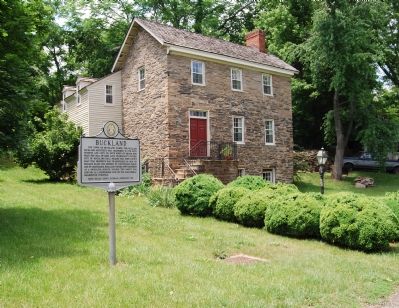
2. Buckland Tavern
More about this marker. The Alexandria-Warrenton Turnpike in this area is now known as U.S. Route 29. When route numbers were assigned in the 20th century, it was numbered U.S. Route 211 and north-south U.S. Route 29 borrowed its road surface from Warrenton to Washington D.C. Now Route 211’s eastern terminus is Warrenton.
Also see . . . Buckland Historic District National Register of Historic Places nomination form.
This form was prepared on July 14, 1987 by James C. Massey, Executive Vice President, and Shirley Maxwell, Associate, from the National Preservation Institute. A statement of historical significance can be found on page 9:
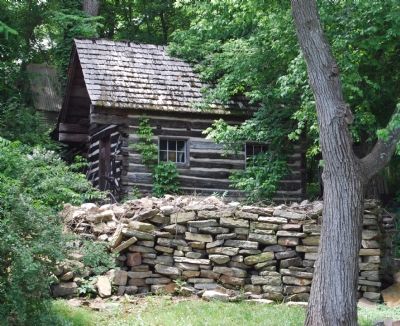
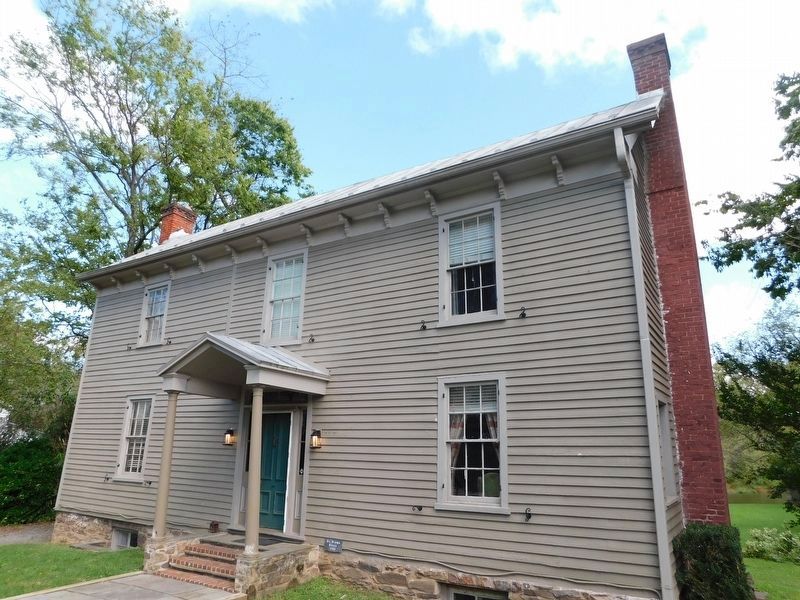
The Buckland Historic District is significant historically and architecturally as a representative of the small, mill-oriented communities that characterized much of the Virginia Piedmont from the late 18th through the 19th centuries. Chartered by the Virginia legislature in 1798, Buckland was the first inland town established in Prince William County. It was an important wagon stop on the main east-west road(Submitted on January 10, 2026, by Devry Becker Jones of Washington, District of Columbia.)between the port town of Alexandria and the territory beyond the Blue Ridge Mountains, and it was once called "the Lowell of Prince William County" because of its thriving water-powered woolen mill. The present turn-of-the-century grist mill is believed to be the third mill constructed on this site. In addition to the mill, the historic district contains a dozen small, vernacular buildings, dating from the early to the late 19th century. They have sustained relatively few unobtrusive modern alterations or additions. Although their present use is almost entirely residential, the houses were originally intended to serve a combination of residential and varied commercial purposes supporting the mill community. Noted since its inception for the beauty of its wooded location on Broad Run, within site of Bull Run Mountain, Buckland retains an exceptional degree of architectural and scenic integrity despite a nearby modern divided highway. Although there are two other extant mills with some associated buildings remaining in Prince William County, the mill and village at Buckland present an unusually complete suggestion of its original characterPhotographed by Dawn Bowen, June 5, 20073. Old log cabin in Bucklandand appearance.Photographed by Bradley Owen, October 13, 20184. Dr. Brown House (1793)Located just north of the marker on Buckland Mill Road.

Photographed by Devry Becker Jones (CC0), January 10, 2026
5. Buckland Historic District plaque
Listed in the National Register of Historic Places and The Virginia Landmarks Register
Credits. This page was last revised on January 10, 2026. It was originally submitted on June 5, 2007, by Dawn Bowen of Fredericksburg, Virginia. This page has been viewed 2,965 times since then and 67 times this year. Last updated on December 6, 2023, by N. Jozsa of Woodbridge, Virginia. Photos: 1, 2, 3. submitted on June 5, 2007, by Dawn Bowen of Fredericksburg, Virginia. 4. submitted on June 6, 2021, by Bradley Owen of Morgantown, West Virginia. 5. submitted on January 10, 2026, by Devry Becker Jones of Washington, District of Columbia. • Bernard Fisher was the editor who published this page.
