Centre in Maastricht, Limburg, Netherlands — Northwestern Europe
Sint Servaasbasiliek
⎯⎯⎯
Basilica of Saint Servatius
Photographed by Andrew Ruppenstein, October 26, 2023
1. Sint Servaasbasiliek / Basilica of Saint Servatius Marker

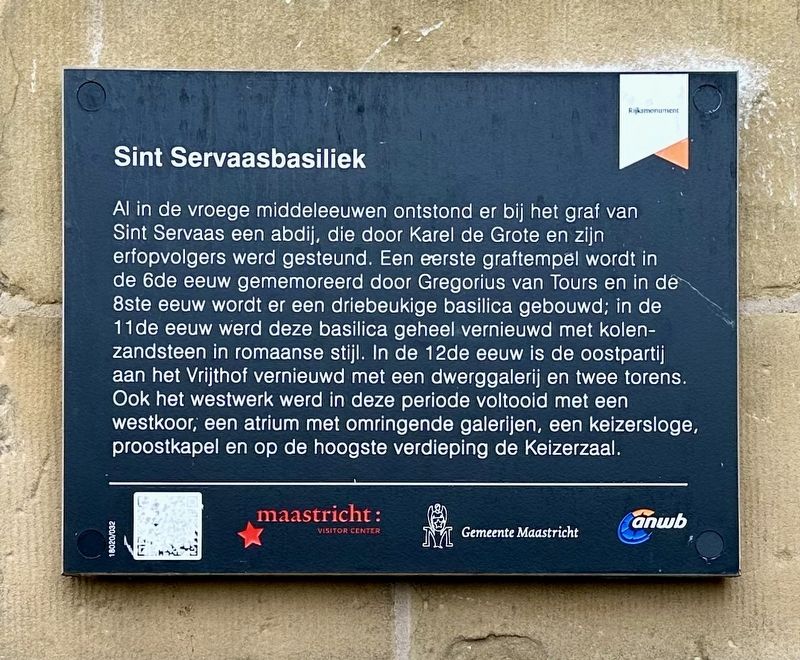
Al in de vroege middeleeuwen ontstond er bij het graf van Sint Servaas een abdij, die door Karel de Grote en zijn erfopvolgers werd gesteund. Een eerste graftempel wordt in de 6de eeuw gememoreerd door Gregorius van Tours en in de 8ste eeuw wordt er een driebeukige basilica gebouwd; in de 11de eeuw werd deze basilica geheel vernieuwd met kolenzandsteen in romaanse stijl. In de 12de eeuw is de oostpartij aan het Vrijthof vernieuwd met een dwerggalerij en twee torens. Ook het westwerk werd in deze periode voltooid met een westkoor, een atrium met omringende galerijen, een keizersloge, proostkapel en op de hoogste verdieping de Keizerzaal.
Already in the early Middle Ages, an abbey, supported by Charlemagne and his successors, had been built near the grave of Saint Servatius. A first funerary temple is mentioned in the 6th century by Gregory of Tours and in the 8th century a three-aisled basilica was built; In the 11th century, this basilica was completely renovated with coal sandstone in Romanesque style. In the 12th century, the east side of the Vrijthof (the town’s main square) was renovated with a “dwarf gallery” (a small open arcade) and two towers. The westwork was also completed during this period with a west choir, an atrium with surrounding galleries, an imperial lodge,
this page online
Erected by maastricht: Visitor Center, Gemeente Maastricht, ANWB.
Topics. This historical marker is listed in these topic lists: Architecture • Religion & Religious Structures.
Location. 50° 50.922′ N, 5° 41.261′ E. Marker is in Maastricht, Limburg. It is in Centre. It is on Vrijthof, on the left when traveling north. Touch for map. Marker is at or near this postal address: Vrijthof 100, Maastricht, Limburg 6211 TC, Netherlands. Touch for directions.

Regionally, it is in Europe, the European Union, Atlantic Europe, the Benelux Low Countries, the Schengen Area, Western Europe, and the Western World. Historically, it finds itself in what was once the Roman Empire and specifically also the Holy Roman Empire.
Other nearby markers. At least 8 other markers are within walking distance of this marker: Sint Janskerk / Saint Johns Church (within shouting distance of this marker); Bergportaal (within shouting distance of this marker); Westwerk St. Servaasbasiliek / Westwork of the Basilica of St. Servatius (within shouting distance of this marker); Spaans Gouvernement / Spanish Governate (about 90 meters away, measured in a direct line); Sint Servaasfontein / Fountain of Saint Servatius (about 120 meters away);
Photographed by Andrew Ruppenstein, October 26, 2023
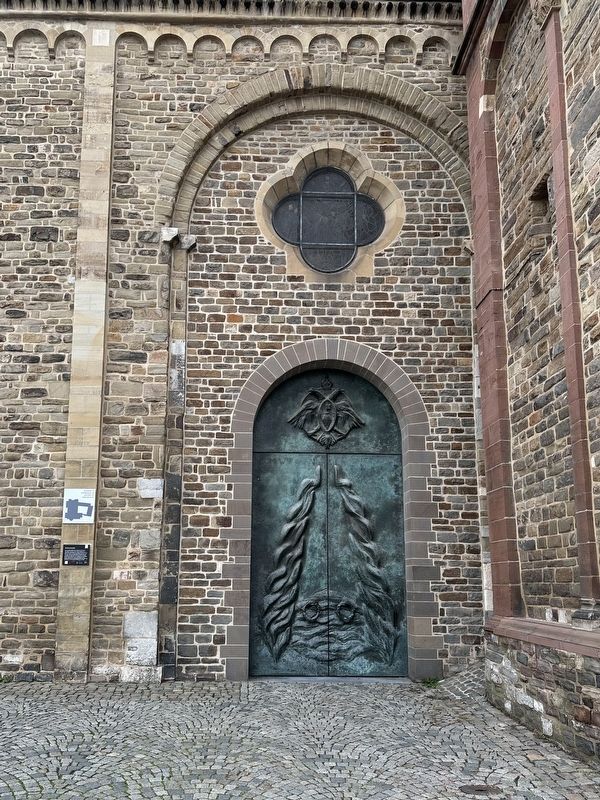
2. Sint Servaasbasiliek / Basilica of Saint Servatius Marker - wide view
The marker is visible to the left of this door, which is located on the east (Vrijthof) side of the church.
Also see . . . Basilica of Saint Servatius (Wikipedia).
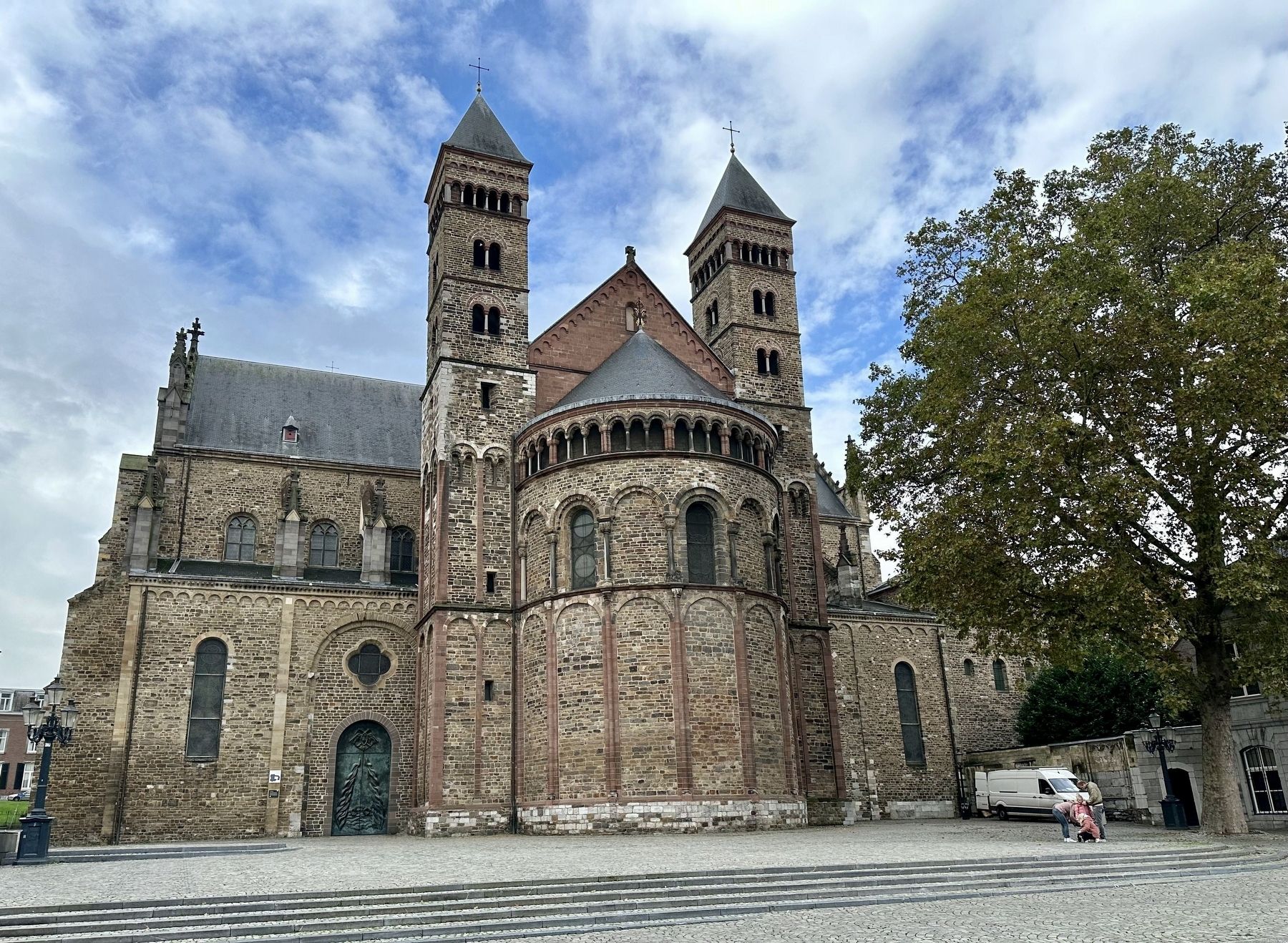
Overview and history: The Basilica of Saint Servatius is a Roman Catholic church dedicated to Saint Servatius, in the city of Maastricht, the Netherlands. The architecturally hybrid but mainly Romanesque church is situated next to the Gothic church of Saint John, backing onto the town's main square, Vrijthof.(Submitted on January 1, 2024.)
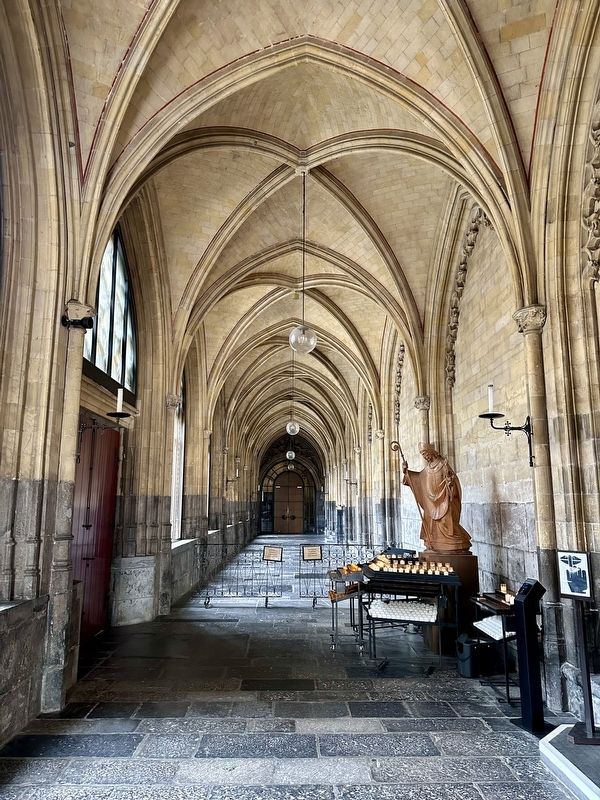
The present-day church is probably the fourth church that was built on the site of the grave of Saint Servatius, an Armenian missionary who was bishop of Tongeren and died allegedly in 384 in Maastricht. A small memorial chapel on the saint's grave was replaced by a large stone church built by bishop Monulph around 570. This church was replaced by a larger pilgrim church in the late 7th century, which was then replaced by the present-day structure, which was built in several stages over a period of more than 100 years. The nave was built in the first half of the 11th century, the transept in the second half of the century, and the choir and westwork in the 12th century. The Romanesque church was built during a period in which the chapter ofSaint Servatius kept close ties to the Holy Roman Emperors, which resulted in a building that has the characteristics of a German imperial church. The dedication of the church in 1039 was attended by the emperor Henry III and twelve bishops….Photographed by Andrew Ruppenstein, October 26, 20233. Basilica of Saint Servatius - interior (by the entrance to the treasury)
Photographed by Andrew Ruppenstein, October 26, 2023
4. Sint Servaasbasiliek / Basilica of Saint Servatius - east side
Credits. This page was last revised on January 1, 2024. It was originally submitted on January 1, 2024, by Andrew Ruppenstein of Lamorinda, California. This page has been viewed 446 times since then and 65 times this year. Photos: 1, 2, 3, 4. submitted on January 1, 2024, by Andrew Ruppenstein of Lamorinda, California.
