
Old Town in Alexandria, Virginia — The American South (Mid-Atlantic)
Zion Baptist Church
City of Alexandria, est. 1749
| — | Alexandria Heritage Trail | — |
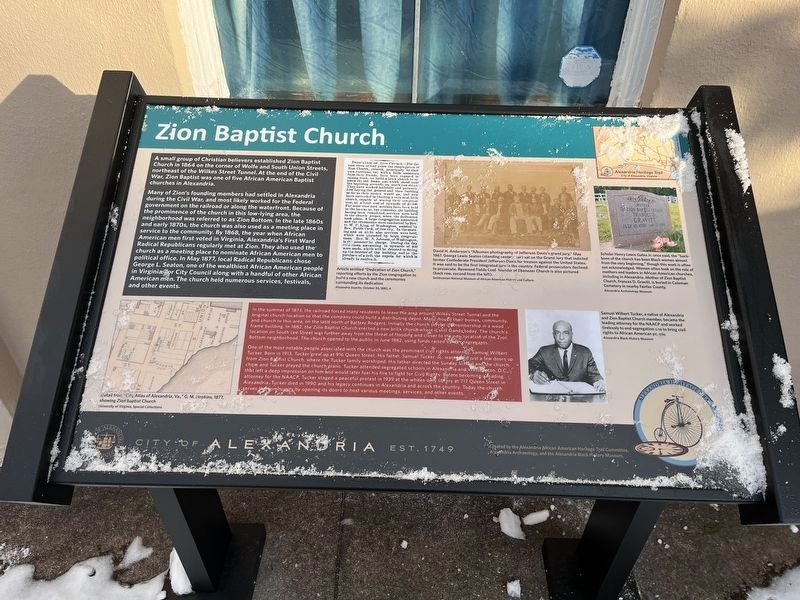
A small group of Christian believers established Zion Baptist Church in 1864 on the corner of Wolfe and South Union Streets, northeast of the Wilkes Street Tunnel. At the end of the Civil War, Zion Baptist was one of five African American Baptist churches in Alexandria.
Many of Zion's founding members had settled in Alexandria during the Civil War, and most likely worked for the Federal government on the railroad or along the waterfront. Because of the prominence of the church in this low-lying area, the neighborhood was referred to as Zion Bottom. In the late 1860s and early 1870s, the church was also used as a meeting place in service to the community. By 1868, the year when African American men first voted in Virginia, Alexandria's First Ward Radical Republicans regularly met at Zion. They also used the church as a meeting place to nominate African American men to political office. In May 1877, local Radical Republicans chose George L. Seaton, one of the wealthiest African american people in Virginia, for City Council along with a handful of other African American men. The church held numerous services, festivals,
this page online
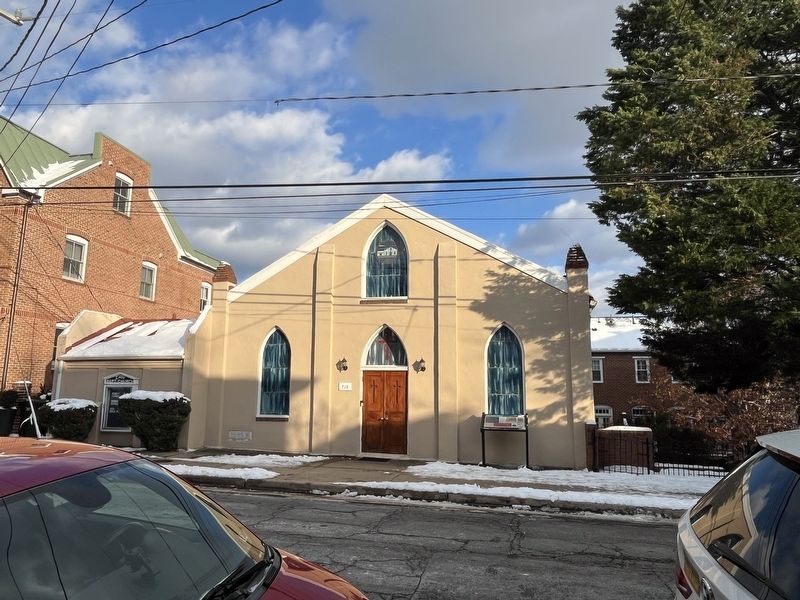
In the summer of 1873, the railroad forced many residents to leave the area around Wilkes Street Tunnel, and the original church location so that the company could build a distributing depot. Many moved their homes, community, and church to this area, on the land north of Battery Rodgers. Initially the church served its membership in a wood frame building. In 1882, the Zion Baptist Church erected a new brick church where it still stands today. The church's location on South Lee Street was further away from the threat of flooding and closer to the new location of the Zion Bottom neighborhood. The church opened to the public in June 1882, using funds raised by its congregants.
One of the most notable people associated with the church was the prominent civil rights attorney Samuel Wilbert Tucker. Born in 1913, Tucker grew up at 916 Queen Street. His father, Samuel Tucker, Jr. was based just a few doors from Zion Baptist Church, where the Tucker family worshiped. His father directed the Sunday School and the church choir and Tucker played the church piano. Tucker attended segregated schools in Alexandria and Washington,
[Captions:]
Detail from "City of Alexandria, Va.," G.M. Hopkins, 1877, showing Zion Baptist Church.
Article entitled "Dedication of Zion Church," reporting efforts by the Zion congregation to build a new church and the ceremonies surrounding its dedication.
Alexandria Gazette, October 30, 1882, 4
David H. Anderson's "Albumen photography of Jefferson Davis's grand jury," May 1867. George Lewis Seaton (standing center rear) sat on the Grand Jury that indicted former Confederate Jefferson Davis for treason against the United States. It was said to be the first integrated jury in the country. Federal prosecutors declined to prosecute. Reverend Fields Cook, founder of Ebenezer Church is also pictured (back row, second from the left).
Scholar Henry Lewis Gates Jr. once said, the "backbone of the church has been Black women almost from the very beginning," though this work is often not acknowledged. Women often took on the role of mothers and leaders in African American churches, including in Alexandria. Mother of Zion Baptist Church, Frances D. Gravitt, is buried in Coleman Cemetery in nearby Fairfax Couty.
Samuel Wilbert Tucker, a native of Alexandria and Zion Baptist Church member, became the leading attorney for the NAACP and worked tirelessly to end segregation and to bring civil rights to African American people.
Erected by City
Photographed by Devry Becker Jones (CC0), January 20, 2024
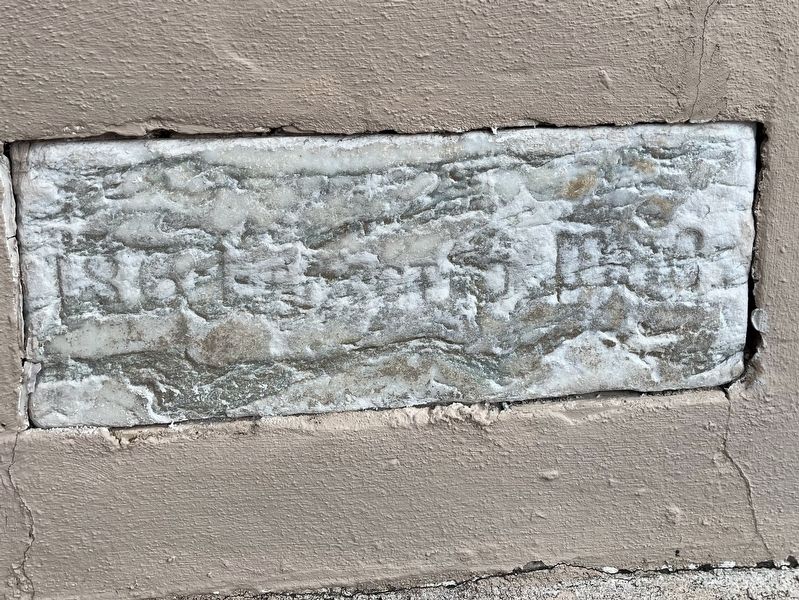
3. The cornerstone at Zion Baptist Church
Topics and series. This historical marker is listed in these topic lists: African Americans • Civil Rights • Government & Politics • Religion & Religious Structures • War, US Civil. In addition, it is included in the Virginia, The City of Alexandria series list. A significant historical month for this entry is May 1877.
Location. 38° 47.819′ N, 77° 2.58′ W. Marker is in Alexandria, Virginia. It is in Old Town. It is on South Lee Street south of Franklin Street, on the right when traveling north. Touch for map. Marker is at or near this postal address: 713 South Lee Street, Alexandria VA 22314, United States of America. Touch for directions.

Regionally, this marker is in the Washington Metropolitan Area and in Northern Virginia. It is also in the American South, specifically in the Upper South, in the Mid-Atlantic, and on the Eastern Seaboard. Globally, it is in the North Atlantic Region, North America, the Western Hemisphere, the Western World, and the Anglosphere. Historically, it finds itself in what was once the territory of the Mississippian Culture, one of the original Thirteen Colonies, one of the Confederate States of America, and the Antebellum South.
Other nearby markers. At least 8 other markers are within walking distance of this marker: Guarding the Potomac (about 400 feet away, measured in a direct line); Battery Rodgers (about 700 feet away); The Federal District and Alexandria (about 800 feet away); Early Alexandria and Keith's Wharf (about 800 feet away); The Civil War and Battery Rodgers (approx. 0.2 miles away); The Earliest Inhabitants (approx. 0.2 miles away); Battery Cove Filled: A New Shipyard (approx. 0.2 miles away); The Alexandria Marine Railway (approx. 0.2 miles away). Touch for a list and map of all markers in Alexandria.
Other markers no longer nearby. The Federal District and Alexandria (was about 800 feet away but has been replaced with another marker now near it); a different marker also named Early Alexandria and Keith's Wharf (was approx. 0.2 miles away but has been replaced with another marker now near it); a different marker also named The Earliest Inhabitants (was approx. 0.2 miles away but has been replaced with another marker now near it); a different marker also named The Civil War and Battery Rodgers (was approx. 0.2 miles away but has been replaced with another marker now near it).
Credits. This page was last revised on January 21, 2024. It was originally submitted on January 21, 2024, by Devry Becker Jones of Washington, District of Columbia. This page has been viewed 522 times since then and 76 times this year. Photos: 1, 2, 3. submitted on January 21, 2024, by Devry Becker Jones of Washington, District of Columbia.
