
Gambles Hill in Richmond, Virginia — The American South (Mid-Atlantic)
Horseshoe Shops
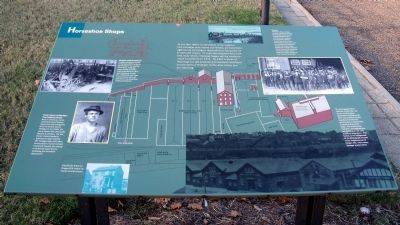
Photographed by Bernard Fisher, November 3, 2009
1. Horseshoe Shops Marker
Machine-made Horseshoes
Tredegar hired J.H. Snyder in the early 1870’s to develop machinery for making horseshoes. Tredegar began selling machine-made horseshoes in 1873, and employees Snyder, H.C. Osterbind, and Peter Greenwood all received patents for the horseshoe-making equipment.
From Laborer to Manager: The Osterbind Family
Born in Germany, Anton Osterbind joined African Americans and immigrants from the British Isles at Tredegar in the 1840s. He was a laborer who eventually became foreman. His son, Henry Carter Osterbind (pictured at right) entered the Tredegar spike mill when he was about 15 years old and eventually became the manager of several departments, including the horseshoe department.
Workers
Horseshoe Shop
this page online
Topics. This historical marker is listed in this topic list: Industry & Commerce. A significant historical year for this entry is 1873.
Location. 37° 32.089′ N, 77° 26.809′ W. Marker is in Richmond, Virginia. It is in Gambles Hill. It can be reached from Tredegar Street 0.1 miles west of South 5th Street. This marker is located outside the Civil War Visitor Center at Tredegar Iron Works. Touch for map. Marker is at or near this postal address: 470 Tredegar Street, Richmond VA 23219, United States of America. Touch for directions.

Regionally, this marker is in Central Virginia. It is also in the American South and specifically in the Upper South. Globally, it is in North America, the Western Hemisphere, the Western World, and the Anglosphere. Historically,
Photographed by Bernard Fisher, November 3, 2009
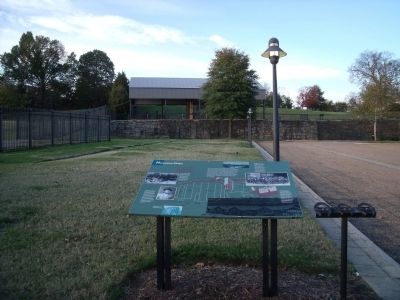
2. Site of the Horseshoe Department at Tredegar
Other nearby markers. At least 3 other markers are within walking distance of this marker: Tredegar in the Twentieth Century / Then and Now (a few steps from this marker); What’s That? (within shouting distance of this marker); Hurricane Agnes (about 300 feet away). Touch for a list and map of all markers in Richmond.
Other markers no longer nearby. Tredegar Rolling Mills (was within shouting distance of this marker but has been permanently removed); Making Machines at Tredegar (was within shouting distance of this marker but has been permanently removed); Belle Isle Prison (was within shouting distance of this marker but has been permanently removed); Belle Isle and Old Dominion Iron and Nail Works (was within shouting distance of this marker but has been permanently removed); Gateway to the Civil War (was within shouting distance of this marker but has been permanently removed); The Bulldozer Press (was about 300 feet away, measured in
Photographed by Bernard Fisher, November 3, 2009
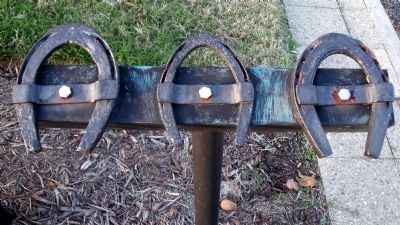
3. Horseshoes
Regarding Horseshoe Shops. On the upper left is a photograph of horseshoe-making equipment. On the lower left is a photo of Henry Carter Osterbind and a photo of the "Osterbind’s home in Oregon Hill, where he owned several houses."
In the center is a diagram of Tredegar's layout based on a 1951 map.
On the right is a photograph of Tredegar workers and a photograph of the horseshoe department with the caption, "The photograph below from the World War I era shows the horseshoe department looking north from your position, including
Photographed by Bernard Fisher, November 8, 2009
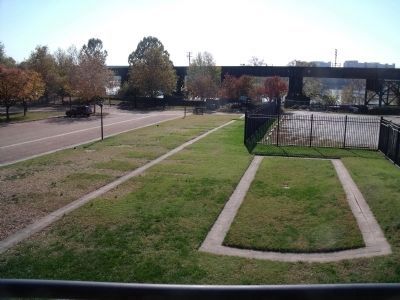
4. Lines in the parking lot represent the outlines of buildings
Credits. This page was last revised on February 1, 2023. It was originally submitted on November 6, 2009, by Bernard Fisher of Richmond, Virginia. This page has been viewed 993 times since then and 10 times this year. Photos: 1, 2, 3. submitted on November 6, 2009, by Bernard Fisher of Richmond, Virginia. 4. submitted on November 12, 2009, by Bernard Fisher of Richmond, Virginia.
