West Sahara in Las Vegas in Clark County, Nevada — The American Mountains (Southwest)
Native People Knew the Old Spanish Trail
Photographed by Jeremy Snow, February 16, 2024
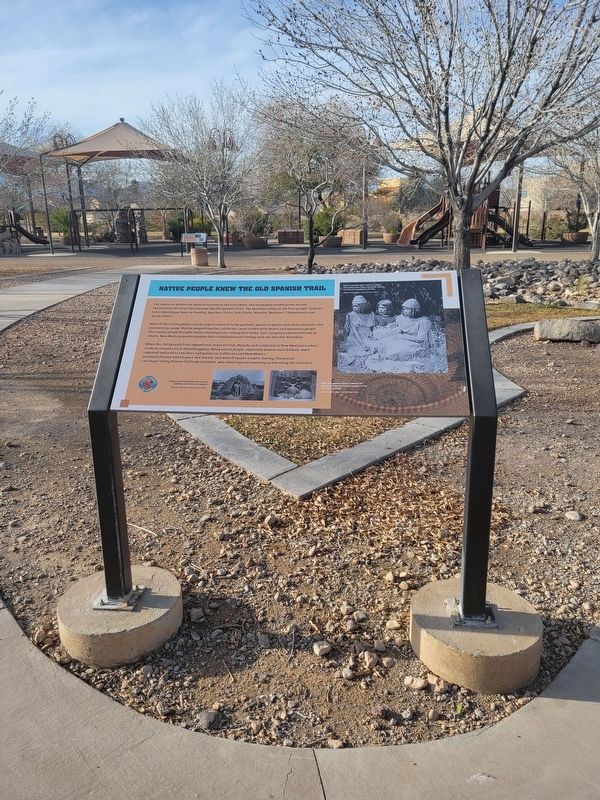
1. Native People Knew the Old Spanish Trail Marker
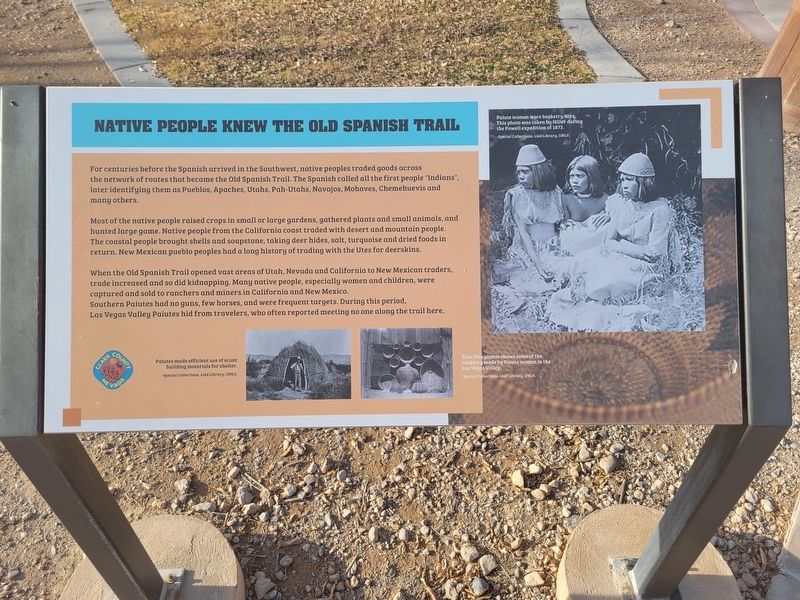
For centuries before the Spanish arrived in the Southwest, native peoples traded goods across the network of routes that became the Old Spanish Trail. The Spanish called all the first people "Indians", later identifying them as Pueblos, Apaches, Utahs, Pah-Utahs, Navajos, Mohaves, Chemehuevis and many others.
Most of the native people raised crops in small or large gardens, gathered plants and small animals, and hunted large game. Native people from the California coast traded with desert and mountain people. The coastal people brought shells and soapstone, taking deer hides, salt, turquoise and dried foods in return. New Mexican pueblo peoples had a long history of trading with the Utes for deerskins.
When the Old Spanish Trail opened vast areas of Utah, Nevada and California to New Mexican traders, trade increased and so did kidnapping. Many native people, especially women and children, were captured and sold to ranchers and miners in California and New Mexico. Southern Palutes had no guns, few horses, and were frequent targets. During this period, Las Vegas Valley Paiutes hid from travelers, who often reported
this page online
(caption:) Paiutes made efficient use of scant building materials for shelter. - Special Collections, Lied Library, UNLV
(caption:) Paiute women wore basketry hats. This photos was taken by Hiller during the Powell expedition of 1873. - Special Collections, Lied Library, UNLV
(caption:) This 1904 photos shows some of the basketery made by Paiute women the Las Vegas Valley. - Special Collections, Lied Library, UNLV
Erected by Clark County.
Topics and series. This historical marker is listed in these topic lists: Indigenous Peoples and Communities • Roads & Vehicles. In addition, it is included in the Old Spanish National Trail series list. A significant historical year for this entry is 1831.
Location. 36° 8.358′ N, 115° 16.117′ W. Marker is in Las Vegas, Nevada, in Clark County. It is in West Sahara. It can be reached from Tara Avenue. Marker located along walking path in the Old Spanish Trail Park. Touch for map. Marker is in this post office area: Las Vegas NV 89117, United States of America. Touch for directions.

Regionally, this marker is in Nevada’s Mojave Desert. It
Photographed by Jeremy Snow, February 16, 2024
2. Native People Knew the Old Spanish Trail Marker
Other nearby markers. At least 8 other markers are within walking distance of this marker: Las Vegas Ranches 1865-1905 (here, next to this marker); Children and the Old Spanish Trail (within shouting distance of this marker); The Mormon Battle & The Old Spanish Trail (within shouting distance of this marker); Old Spanish Trail Park (within shouting distance of this marker); The Old Spanish Trail Through Clark County (within shouting distance of this marker); Frémont and His Scouts (within shouting distance of this marker); From Old Spanish Trail to I-15 (within shouting distance of this marker); The Mohave Desert (about 300 feet away, measured in a direct line). Touch for a list and map of all markers in Las Vegas.
Credits. This page was last revised on August 9, 2025. It was originally submitted on February 24, 2024, by Jeremy Snow of Cedar City, Utah. This page has been viewed 413 times since then and 25 times this year. Photos: 1, 2. submitted on February 24, 2024, by Jeremy Snow of Cedar City, Utah. • Andrew Ruppenstein was the editor who published this page.
