Oakville in Halton Region, Ontario — Central Canada (North America)
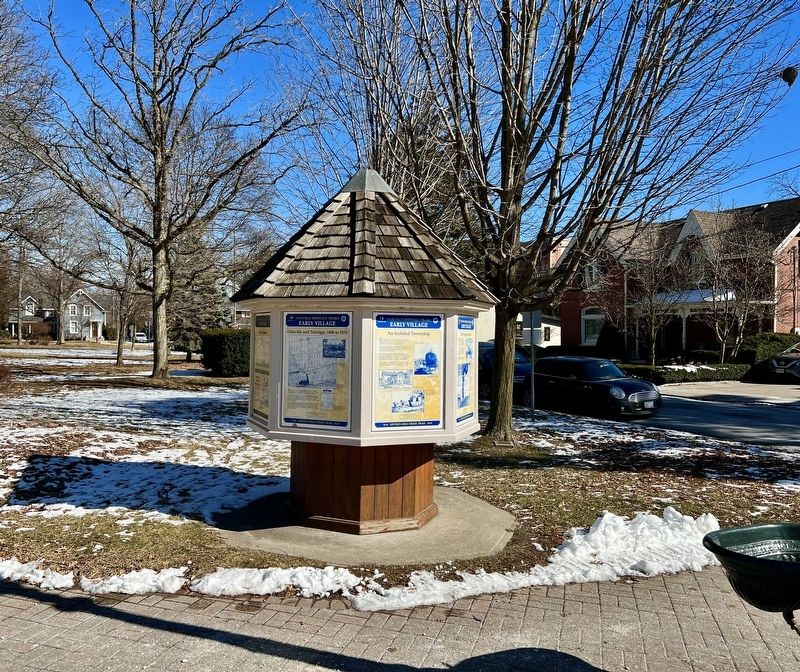
An Isolated Township
Early Village
| — | Sixteen Mile Creek Trail | — |

Photographed by Tim Boyd, February 20, 2024
1. An Isolated Township Marker
The first stage-coach service began along Dundas Street in the 1820s. By 1833 stage-coaches were also travelling along Lakeshore Road, and Oakville had regular steamship service to Hamilton and York.
Farmers north of Oakville needed a road to deliver their crops to Oakville's mills and harbour. In 1831 the House of Assembly provided funds for construction of the 7th Line, or Trafalgar Road. Fifteen years later this busy road was upgraded to a planked road, complete with toll gates.
With postal service beginning in 1822, and a newspaper (the Oakville Observer) starting up in 1836, Oakville and Trafalgar Township's early years of isolation came to an end.
Erected by Town of Oakville.
Topics. This historical marker is listed in these topic lists: Communications • Roads & Vehicles • Settlements & Settlers. A significant historical year for this entry is 1833.
Location. 43° 26.951′ N, 79° 40.155′ W. Marker is in Oakville, Ontario, in Halton Region. It is at the intersection of Trafalgar Road and Sumner Street, on the right when traveling north on Trafalgar Road. The marker is in George’s Square Park. Touch for map. Marker is at or near this postal address: 179 Trafalgar Road, Oakville ON L6J L6J, Canada. Touch for directions.

Regionally, this marker is in Greater Toronto, specifically on the Golden Horseshoe, in the Hamilton-Halton-Brant Area, and specifically in the Toronto Metropolitan Area. It is also in Central Canada. Globally, it is in North America, on the Great Lakes, in the Western Hemisphere, in the Western World, and in the Anglosphere. Historically, it finds
this page online
Other nearby markers. At least 8 other markers are within walking distance of this marker: The Prosperous Years (here, next to this marker); Oakville and Trafalgar, 1806-1870 (here, next to this marker); Town Drinking Fountain (here, next to this marker); Churches Schools and Taverns (here, next to this marker); Heritage Homes of Trafalgar Road and George's Square (here, next to this marker); The Underground Railroad (here, next to this marker); Oakville Cenotaph (within shouting distance of this marker); The Lorne Scots (about 90 meters away, measured in a direct line). Touch for a list and map of all markers in Oakville.
Also see . . . Sixteen - the Dundas Road.
The road was cut from the wilderness, with the work being done by an irregular force, the Queen’s York Rangers starting in 1793. Work began on a second branch that split off in the community of Dundas to head east towards the ultimate colonial capital of York in the early 19th century, which was quickly finished during the(Submitted on March 2, 2024, by Tim Boyd of Hamilton, Ontario.)first year of the Anglo-American War of 1812 to provide a military supply road to the Niagara frontier. This second branch would soon become a significant east-to-west road that assisted in the post-war movement of settlers across Upper Canada. And along this road, some of the earliest settlements would spring up, often centred around an Inn or Mill. Within the modern confines of Oakville, the road provided a base point for the surveys of the newly opened region. The biggest problem was the sixteen-mile creek valley; the steep walls presented a danger to travellers on foot, horseback or stagecoach. The 1830s bridged the creek itself, and the road was the scene of William Lyon MacKenzie’s escape in the aftermath of his failed uprising. An improved metal bridge was built in 1885.Photographed by Tim Boyd, February 20, 20242. An Isolated Township Marker
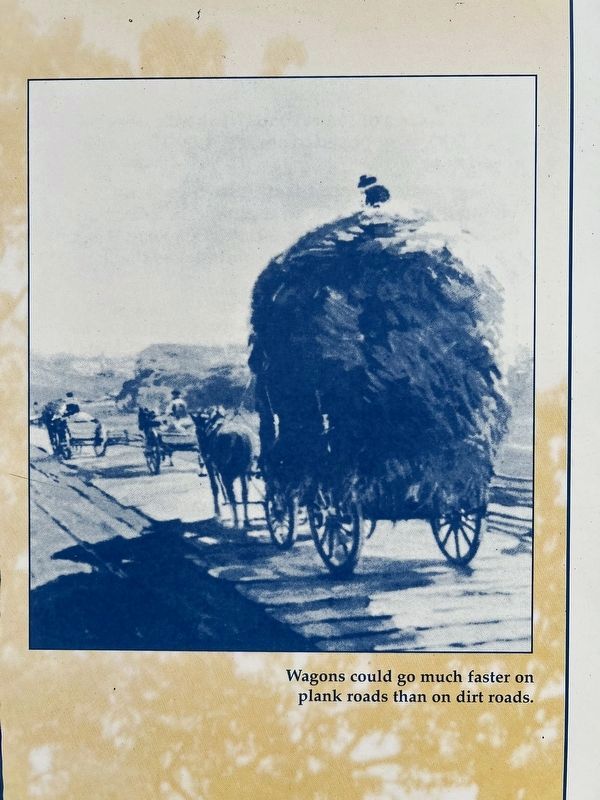
3. An Isolated Township marker detail
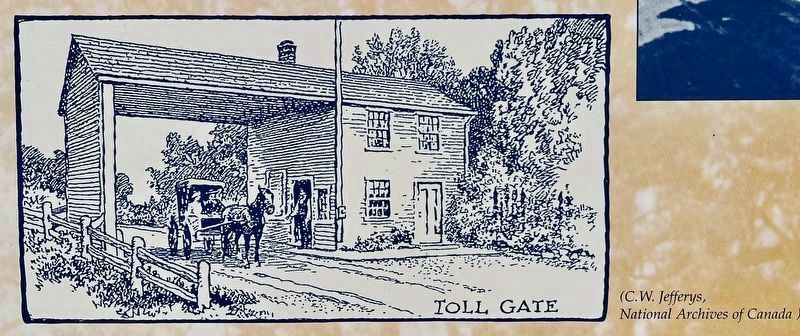
C.W. Jefferys (courtesy of the National Archives of Canada)
4. An Isolated Township marker detail

courtesy of National Archives of Canada
5. An Isolated Township marker detail
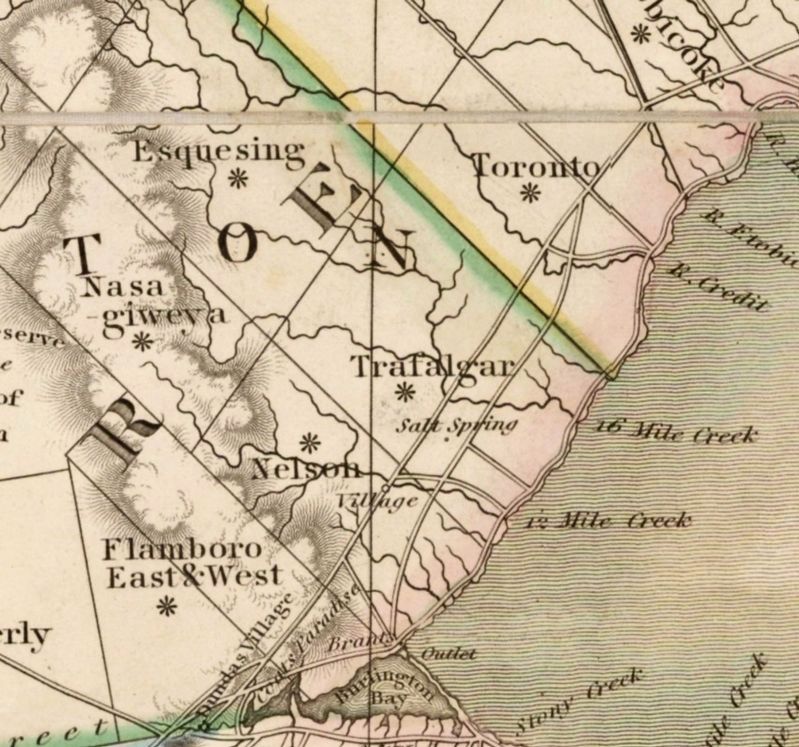
1825
6. Trafalgar Township, in Halton County, 1825
Credits. This page was last revised on March 4, 2024. It was originally submitted on March 2, 2024, by Tim Boyd of Hamilton, Ontario. This page has been viewed 176 times since then and 17 times this year. Photos: 1, 2, 3, 4, 5, 6. submitted on March 2, 2024, by Tim Boyd of Hamilton, Ontario. • Andrew Ruppenstein was the editor who published this page.
