Mitte in Nürnberg, Bavaria, Germany — Central Europe
Maria Sibylla Merian
Stationen ihres Lebens
⎯⎯⎯
Stations of their life
Photographed by James Hulse, February 22, 2024
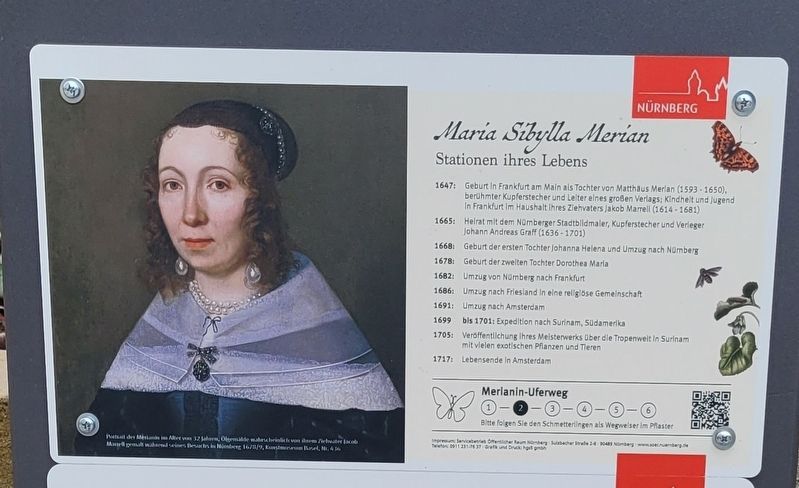
1. Maria Sibylla Merian Marker

1647: Geburt in Frankfurt am Main als Tochter von Matthäus Merlan (1593-1650), berühmter Kupferstecher und Leiter eines großen Verlags; Kindhelt und jugend in Frankfurt im Haushalt ihres Ziehvaters Jakob Marrell (1614-1681)
1665: Heirat mit dem Nürnberger Stadtbildmaler, Kupferstecher und Verleger Johann Andreas Graff (1636-1701)
1668: Geburt der ersten Tochter Johanna Helena und Umzug nach Nürnberg
1678: Geburt der zweiten Tochter Dorothea Maria
1682: Umzug von Nürnberg nach Frankfurt
1686: Umzug nach Friesland in eine religiöse Gemeinschaft
1691: Umzug nach Amsterdam
1699 bis 1701: Expedition nach Surinam, Südamerika
1705: Veröffentlichung ihres Meisterwerks über die Tropenwelt in Surinam mit vielen exotischen Pflanzen und Tieren
1717: Lebensende In Amsterdam
Bildunterschriften
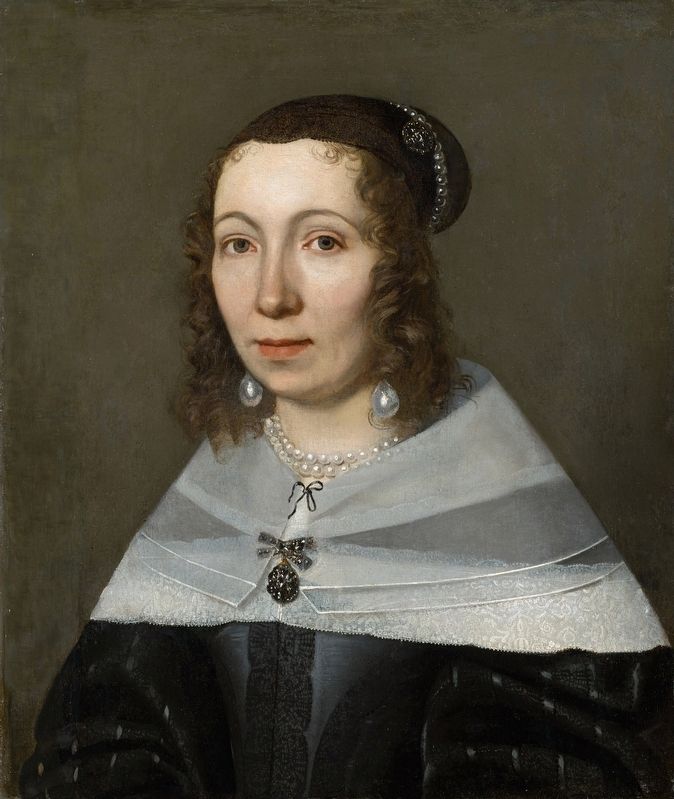
Portrait der Merianin im Alter von 32 Jahren, Ölgemälde wahrscheinlich von ihrem Ziehvater Jacob Marrell gemalt während seines Besuchs in Nürnberg 1678/9, Kunstmuseum Basel, Nr. 436
1647: Birth in Frankfurt on the Main river as the daughter of Matthäus Merlan (1593-1650), famous engraver
this page online
1665: Marriage to the Nuremberg cityscape painter, engraver and publisher Johann Andreas Graff (1636-1701)
1668: Birth of the first daughter Johanna Helena and move to Nuremberg
1678: Birth of the second daughter Dorothea Maria
1682: Move from Nuremberg to Frankfurt
1686: Move to Friesland into a religious community
1691: Move to Amsterdam
1699 to 1701: Expedition to Suriname, South America
1705: Publication of her masterpiece about the tropical world in Suriname with many exotic plants and animals
1717: End of life in Amsterdam
Captions
Portrait of Merian at the age of 32, oil painting probably painted by her foster father Jacob Marrell during his visit to Nuremberg in 1678/9, Kunstmuseum Basel, No. 436
Erected by Nürnberg.
Topics. This historical marker is listed in these topic lists: Arts, Letters, Music • Women. A significant historical year for this entry is 1647.
Location. 49° 27.274′ N, 11° 4.284′ E. Marker is in Nürnberg, Bayern (Bavaria). It is in
Photographed by James Hulse, February 22, 2024
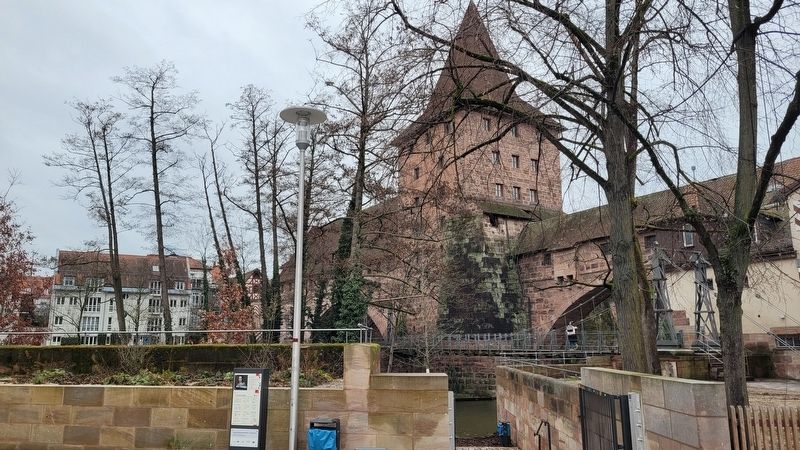
2. The Maria Sibylla Merian Marker along the river walkway

Regionally, it is in Europe, the European Union, Atlantic Europe, Central Europe, the Schengen Area, Western Europe, and the Western World. Historically, it finds itself in what was once the Holy Roman Empire.
Other nearby markers. At least 8 other markers are within walking distance of this marker: Grabenspaziergang / Trench Walk (within shouting distance of this marker); Maxbrücke / Max Bridge (about 150 meters away, measured in a direct line); Zinshaus der ehemaligen Dürrenmühle / Apartment building of the former Dürrenmühle (about 150 meters away); Kaspar Hauser (about 180 meters away); Henker Haus / Executioner's House (about 210 meters away); Leopold Einstein (about 210 meters away); Altestes Erhaltenes Profangebäude Nürnbergs / Oldest Preserved Secular Building in Nuremberg (about 240 meters away); Von Praunsches Stiftungshaus / From Praunsches Foundation House
Public Domain - Jacob Marrel - oil on canvas, circa 1679
3. Portrait of Maria Sibylla Merian
Also see . . .
1. Meeting Merian on a walk. Merianin in Nuremberg (Submitted on March 30, 2024, by James Hulse of Medina, Texas.)
2. Maria Sibylla Merian. Wikipedia
Merian received her artistic training from her stepfather, Jacob Marrel, a student of the still life painter Georg Flegel. Merian published her first book of natural illustrations in 1675. She had started to collect insects as an adolescent. At age 13, she raised silkworms. In 1679, Merian published the first volume of a two-volume series on caterpillars; the second volume followed in 1683. Each volume contained 50 plates that she engraved and etched. Merian documented evidence on the process of metamorphosis and the plant hosts of 186 European insect species. Along with the illustrations Merian included descriptions of their life cycles.(Submitted on March 31, 2024, by James Hulse of Medina, Texas.)
Credits. This page was last revised on March 31, 2024. It was originally submitted on March 29, 2024, by James Hulse of Medina, Texas. This page has been viewed 128 times since then and 10 times this year. Photos: 1, 2, 3. submitted on March 31, 2024, by James Hulse of Medina, Texas.
