Prestwick in Washington County, Alabama — The American South (East South Central)
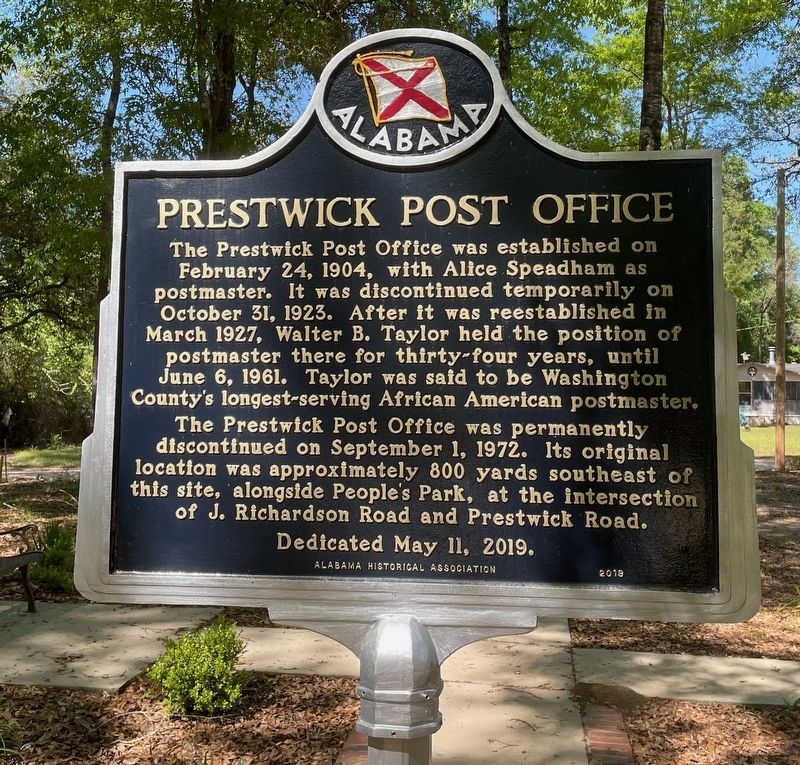
Prestwick Post Office
⎯⎯⎯
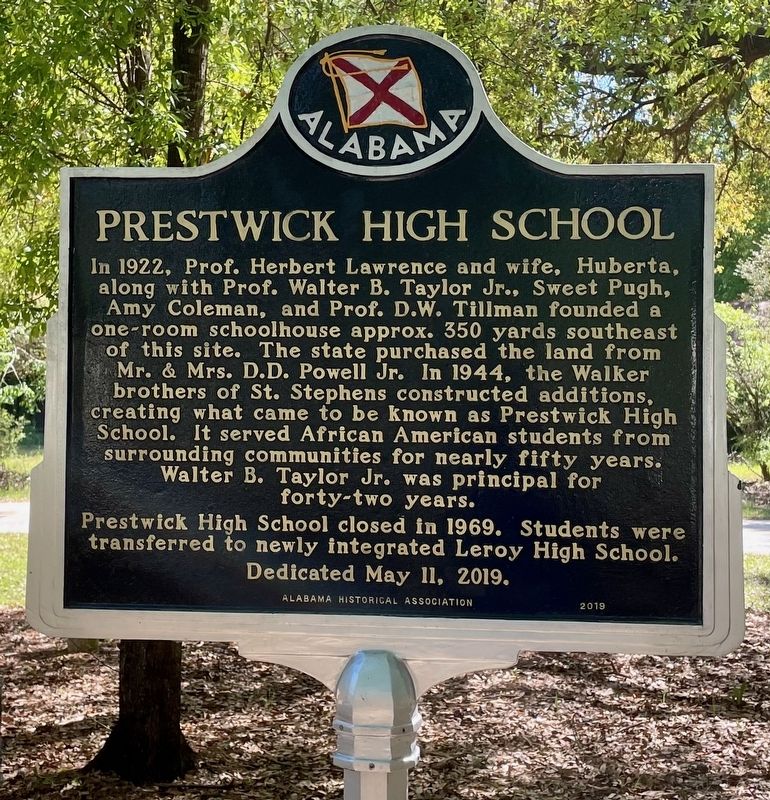
Prestwick High School
Photographed by Mark Hilton, April 13, 2024
1. Prestwick Post Office Marker
The Prestwick Post Office was permanently discontinued on September 1, 1972. Its original location was approximately 800 yards southeast of this site, alongside People's Park, at the intersection of J. Richardson Road and Prestwick Road.
this page online
Prestwick High School closed in 1969. Students were transferred to newly integrated Leroy High School.
Erected 2019 by Alabama Historical Association.
Topics. This historical marker is listed in these topic lists: African Americans • Education • Parks & Recreational Areas. A significant historical date for this entry is February 24, 1904.
Location. 31° 27.399′ N, 87° 58.419′ W. Marker is in Prestwick, Alabama, in Washington County. It is on Prestwick Road half a mile west of Johnson Road, on the right when traveling west. Located within Prestwick Preservation Park. Touch for map. Marker is at or near this postal address: 3023 Prestwick Rd, Leroy AL 36548, United States of America. Touch for directions.

Regionally, this marker is in the Mobile Bay area. It is also in the American South and specifically in the Deep South. Globally, it is in North America, a Gulf of Mexico state, the Western Hemisphere, the Western World, and the Anglosphere. Historically, it finds itself in what was once New Spain, the territory of the Mississippian
Photographed by Mark Hilton, April 13, 2024
2. Prestwick High School Marker
Other nearby markers. At least 8 other markers are within 6 miles of this marker, measured as the crow flies: Bassetts Creek (approx. 3½ miles away); The Taylor House (approx. 3.6 miles away); The Sullivan Cabin (approx. 4.2 miles away); The Clarke County War Memorial (approx. 5.7 miles away); Jackson (approx. 5.8 miles away); CSA Brooke Cannon S-96 (approx. 5.8 miles away); City of Jackson (approx. 5.8 miles away); Allman Brothers Band Arrested in Jackson (approx. 6 miles away).
Photographed by Mark Hilton, April 13, 2024
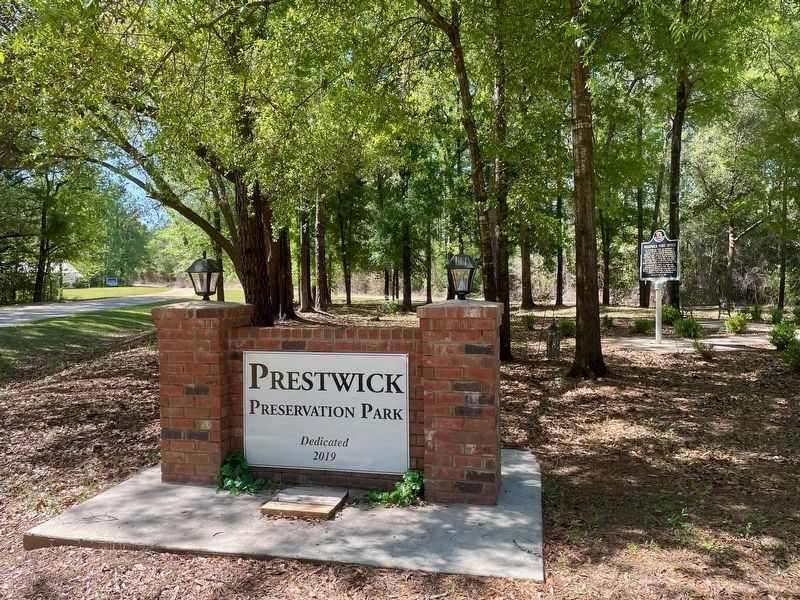
3. Marker (on right) within Prestwick Preservation Park.
Credits. This page was last revised on April 14, 2024. It was originally submitted on April 14, 2024, by Mark Hilton of Montgomery, Alabama. This page has been viewed 499 times since then and 57 times this year. Photos: 1, 2, 3. submitted on April 14, 2024, by Mark Hilton of Montgomery, Alabama.
