Near Wolf Creek in Lewis and Clark County, Montana — The American West (Mountains)
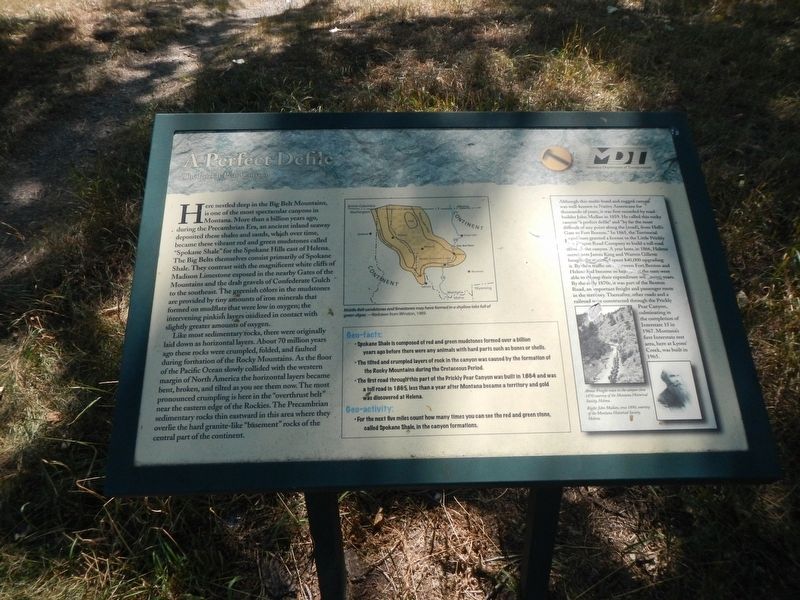
A Perfect Defile
The Prickly Pear Canyon
Photographed by Barry Swackhamer, August 15, 2022
1. A Perfect Defile Marker
Captions: (upper center. map) Middle Belt sandstones and limestones may have formed in a shallow lake full of green algae. (sidebar, upper) Freight train in the canyon circa 1870. (sidebar, lower) John Mullan, circa 1890.
Like most sedimentary rocks, there were originally laid down as horizontal layers. About 70 million years ago these rocks were crumpled, folded and faulted during formation of the Rocky Mountains. As the floor of the Pacific Ocean slowly collided with the western margin of North America the horizontal layers became bent, broken, and tilted
this page online
Geo-facts:
Spokane Shale is composed of red and green mudstones formed over a billion years ago before there were any animals with hard parts such as bones or shells.
The tilted and crumpled layers of rock in the canyon was caused by the formation of the Rocky Mountains during the Cretaceous Period.
The first road through this part of the Prickly Pear Canyon was built in 1884 and was a toll road in 1885, less than a year after Montana became a territory and gold was discovered in Helena.
Geo-actifity:
For the next five miles count how many times you can see the red and green stone, called Spokane Shale, in the canyon formations.
(Sidebar on the right)
Although this multi-hued and rugged canyon was well-known to Native Americans for thousands of years, it wad first recorded by road-builder John Mullan in 1859. He called this rocky
Photographed by Barry Swackhamer, August 15, 2022
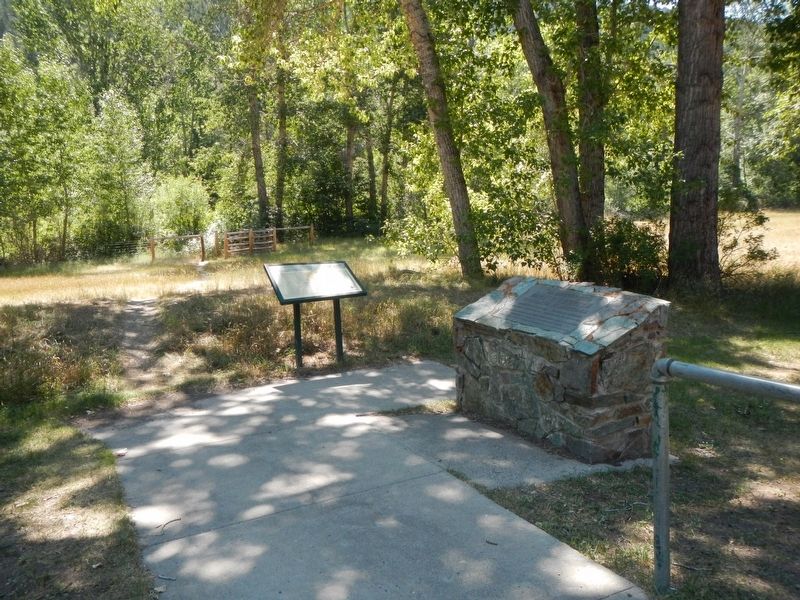
2. A Perfect Defile Marker
Erected by Montana Department of Transportation.
Topics. This historical marker is listed in these topic lists: Natural Features • Roads & Vehicles.
Location. 46° 57.183′ N, 112° 6.499′ W. Marker is near Wolf Creek, Montana, in Lewis
Photographed by Barry Swackhamer, August 15, 2022
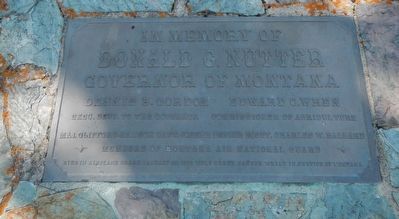
3. Plaque next to "A Perfect Defile" Marker
Donald G. Nutter
Governor of Montana
Dennis G. Gordon Edward C. Wren
Exec. Sect. to the Governor Commissioner of Agriculture
Maj. Clifford Hanson Capt. Joseph Devine M/Sgt. Charles W. Ballard
Members of the Montana Air National Guard
Died in Airplane Crash January 25, 1982 Wolf Creek Canyon while in service of Montana.

Regionally, this marker is in Central Montana, in Gold West Country and in Greater Helena. It is also in the American Mountain West and in the Lewis & Clark Corridor. Globally, it is in North America, the Rocky Mountains, the Western Hemisphere, the Western World, and the Anglosphere. Historically, it finds itself in what was once Rupert’s Land and also the Louisiana Purchase.
Other nearby markers. At least 8 other markers are within 16 miles of this marker, measured as the crow flies: The Montana Central Railroad (within shouting distance of this marker); Wolf Creek Hotel (approx. 4.1 miles away); Ordway Creek? (approx. 6½ miles away); Old U.S. Highway 91 (approx. 6.6 miles away); The Mann Gulch Fire (approx. 6.6 miles away); Remembering Governor Forrest H. Anderson (approx. 10.8 miles away); The Search (approx. 14.2 miles away); The Dearborn – Ancient Interstate Highway (approx. 15.3 miles away). Touch for a list and map of all markers in Wolf Creek.
Credits. This page was last revised on April 28, 2024. It was originally submitted on April 28, 2024, by Barry Swackhamer of Brentwood, California. This page has been viewed 358 times since then and 66 times this year. Photos: 1, 2, 3. submitted on April 28, 2024, by Barry Swackhamer of Brentwood, California.
