River Grove in Cook County, Illinois — The American Midwest (Great Lakes)
U.S. Grant G.A.R. Post No. 28 Memorial
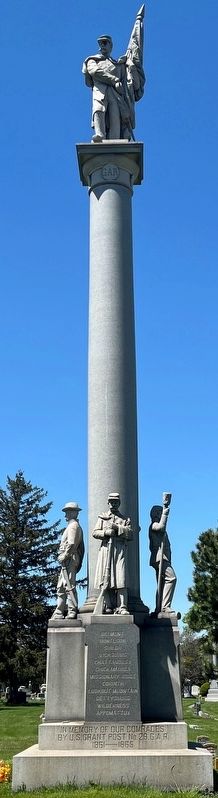
Photographed by Sean Flynn, April 30, 2024
1. U.S. Grant GAR Post No. 28 Memorial Marker
By U.S. Grant GAR Post 28
1861—1865
Belmont • Donelson • Shiloh • Vicksburg • Chattanooga • Chickamauga • Missionary Ridge • Corinth • Lookout Mountain • Gettysburg • Wilderness • Appomattox • Wilson's Creek • Antietam • Atlanta • Pea Ridge • Franklin • Fredericksburg • Cedar Creek • Stones River • Winchester • Petersburg • Murfreesboro • Monitor-Merrimac • Fort Wagner • Fort Fisher • Kearsarge-Alabama • Miliken's Bend • Roanoke • New Orleans • Mobile Bay • James River • Galveston • Red River • Cold Harbor • Five Forks • Kenesaw • Perryville • Sheridan's Raid • March-To-Sea • Nashville • Stoneman's Raid • Grierson's Raid • Kilpatrick's Raid • Averill's Raid • Rosseau's Raid
Erected 1903 by U.S. Grant GAR Post 28.
Topics and series. This memorial is listed in these topic lists: Cemeteries & Burial Sites • Fraternal or Sororal Organizations • War, US Civil. In addition, it is included in the Former U.S. Presidents: #18 Ulysses S. Grant, and the The Grand Army of the Republic series lists.
Location. 41° 55.904′ N, 87° 49.953′ W.
this page online

Regionally, this memorial is in Greater Chicago. It is also in the American Midwest. Globally, it is in North America, on the Great Lakes, in the Western Hemisphere, in the Western World, and in the Anglosphere. Historically, it finds itself in what was once the Viceroyalty of New France, the territory of the Mississippian Culture, and the Northwest Territory.
Other nearby markers. At least 8 other markers are within walking distance of this marker: Hellenic American Veterans Memorial (within shouting distance of this marker); Washington G.A.R. Post No. 573 Memorial (within shouting distance of this marker); Chicago Typographical Union World War I Memorial (within shouting distance of this marker); Memorial to the Union Soldiers' Widows (about 400 feet away, measured in a direct line); Assyrian American Veterans Memorial
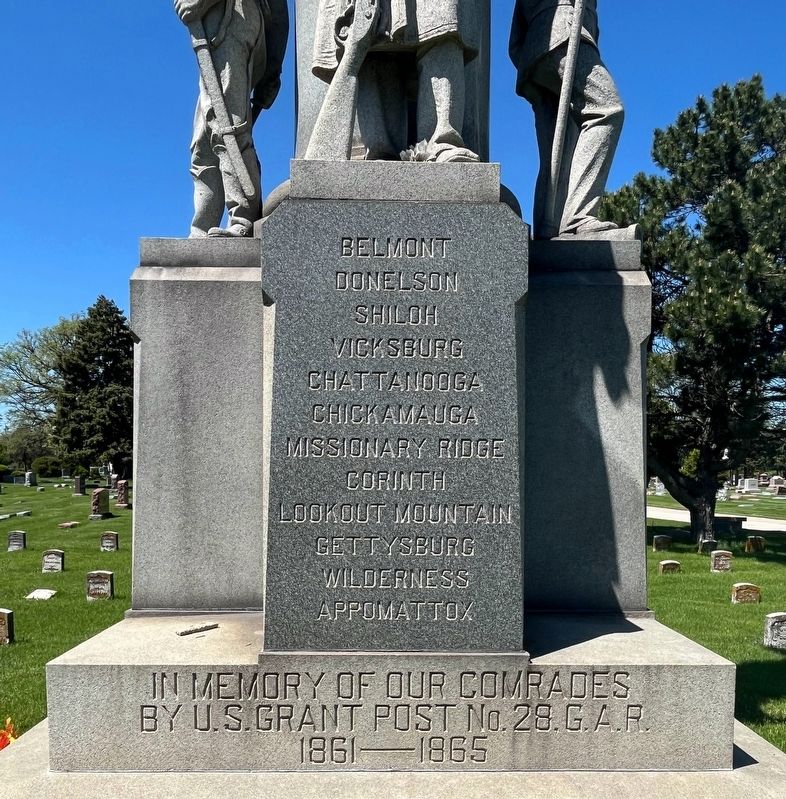
Photographed by Sean Flynn, April 30, 2024
2. U.S. Grant GAR Post No. 28 Memorial, east-facing side
More about this memorial. The memorial features a soldier at the top, holding a flag. Encircling the memorial shaft are statues of four soldiers, each representing four branches of the Civil War-era military: infantry, artillery, cavalry and navy. The four sides of the marker list 48 major battles of the Civil War; it's not exactly clear how those battles were chosen or why they have been placed in the order in which they're listed.
Regarding U.S. Grant G.A.R. Post No. 28 Memorial. The most prominent member of Chicago-based Grant G.A.R. Post 28 was John A. Logan, the politician and Union general from Illinois who is credited with formalizing Memorial Day (first called Decoration Day) as a national holiday in 1868. A multi-term U.S. Representative and Senator, Logan was James Blaine's vice-presidential nominee when Blaine lost to Grover Cleveland in the 1884 presidential election.
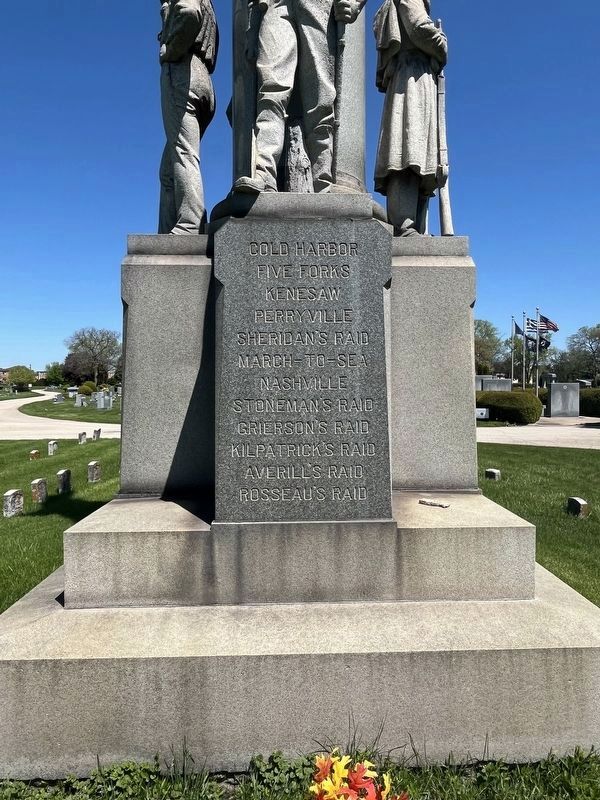
Photographed by Sean Flynn, April 30, 2024
3. U.S. Grant GAR Post No. 28 Memorial, south-facing side
The U.S. Grant Post was one of Chicago's last surviving posts, with one member surviving until 1939, and its final commander living into the 1940s. One of the two was Erastus ("E.L.") Graves, a veteran of the 8th Wisconsin Infantry, which was famous for its bald eagle mascot, Old Abe, whose image was later used as the insignia for the U.S. Army's 101st Airborne Division. According to a brief notice in the Chicago Tribune about his death in February 1939 (three days before his 94th birthday), Graves was a dentist after the war, working in that job until just months before his death. He is buried here at Elmwood Cemetery.
Charles O. Brown was its final commander and its final living member. Born in Battle Creek, Michigan, Brown joined the 3rd Ohio Volunteer Cavalry in 1861 at the age of 13 as a bugler, and served in that role throughout the war. According to a 1940 article in the Chicago Tribune about Chicago's 21 last living Civil War
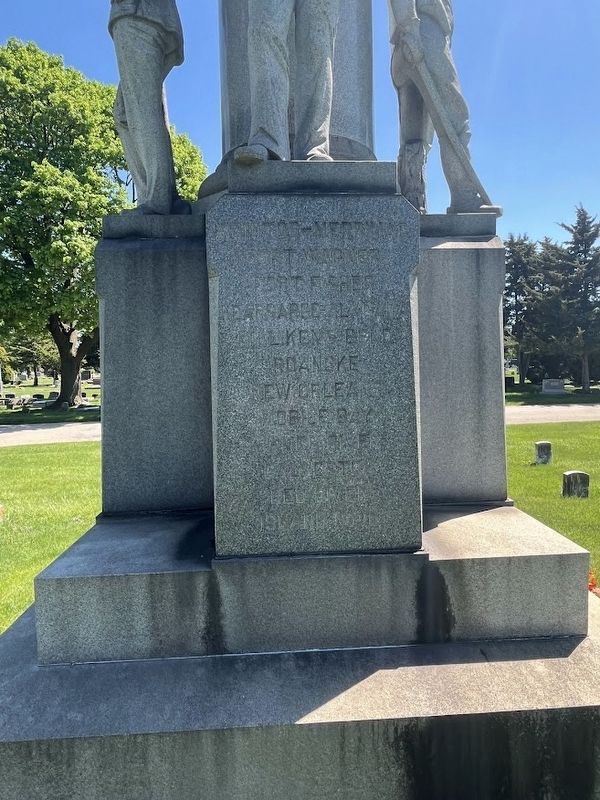
Photographed by Sean Flynn, April 30, 2024
4. U.S. Grant GAR Post No. 28 Memorial, west-facing side
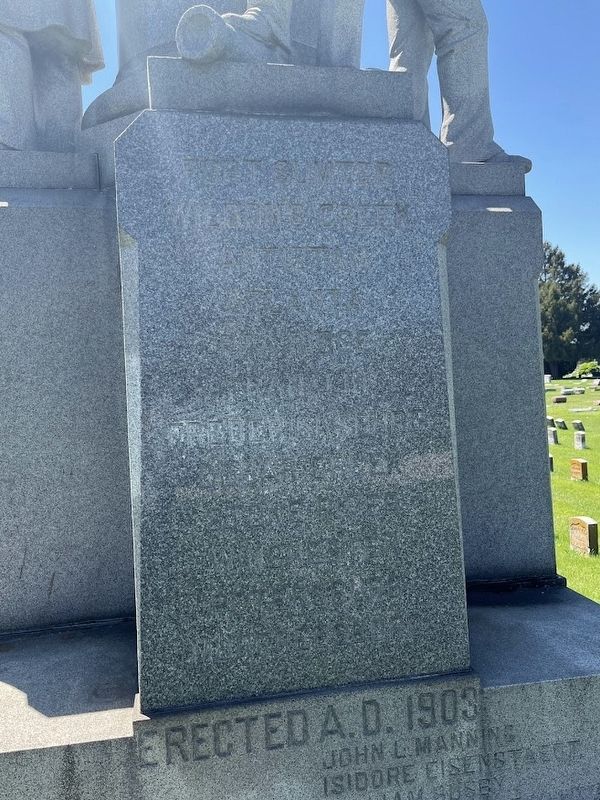
Photographed by Sean Flynn, April 30, 2024
5. U.S. Grant GAR Post No. 28 Memorial, north-facing side
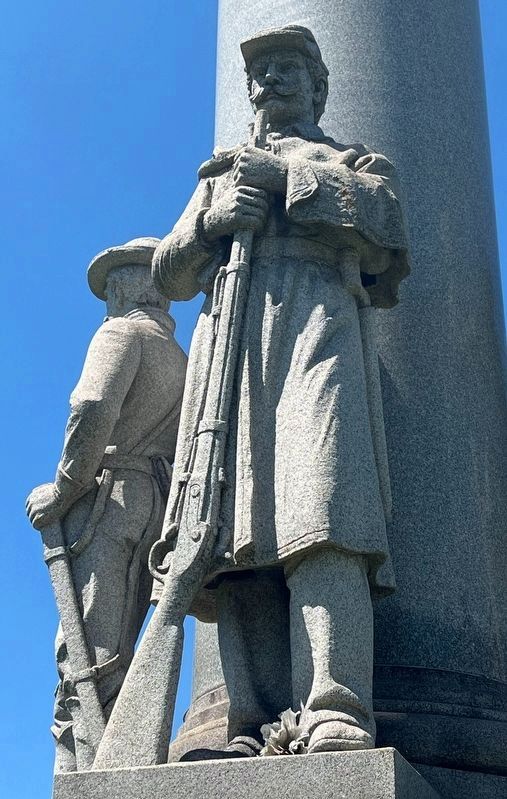
Photographed by Sean Flynn, April 30, 2024
6. Close-up of soldier statue
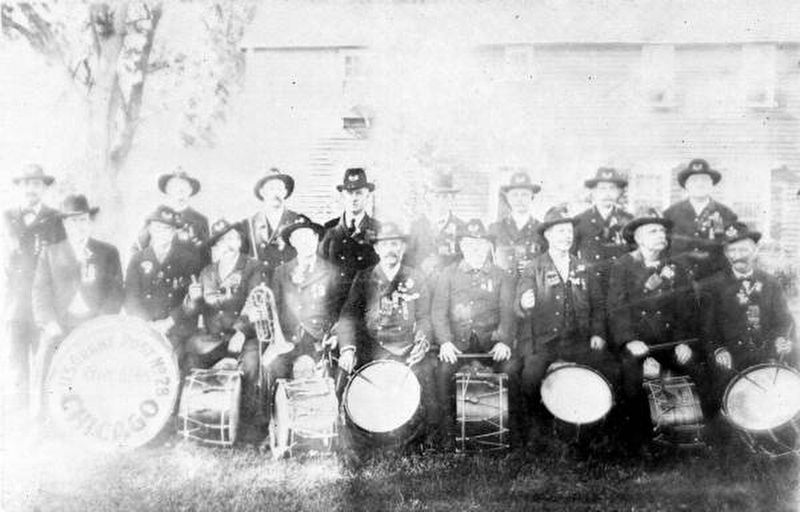
Courtesy of State Archives of Florida, Florida Memory, circa 1910
7. U.S. Grant Post 28
Caption from the State Archives of Florida: "G.A.R. members, of the U.S. Grant Post number 28 from Chicago, in Saint Cloud, Florida"
Credits. This page was last revised on September 4, 2025. It was originally submitted on April 30, 2024, by Sean P. Flynn of Oak Park, Illinois. This page has been viewed 461 times since then and 65 times this year. Photos: 1, 2, 3, 4, 5, 6, 7. submitted on April 30, 2024, by Sean P. Flynn of Oak Park, Illinois.
