Old Colorado City in Colorado Springs in El Paso County, Colorado — The American Mountains (Southwest)
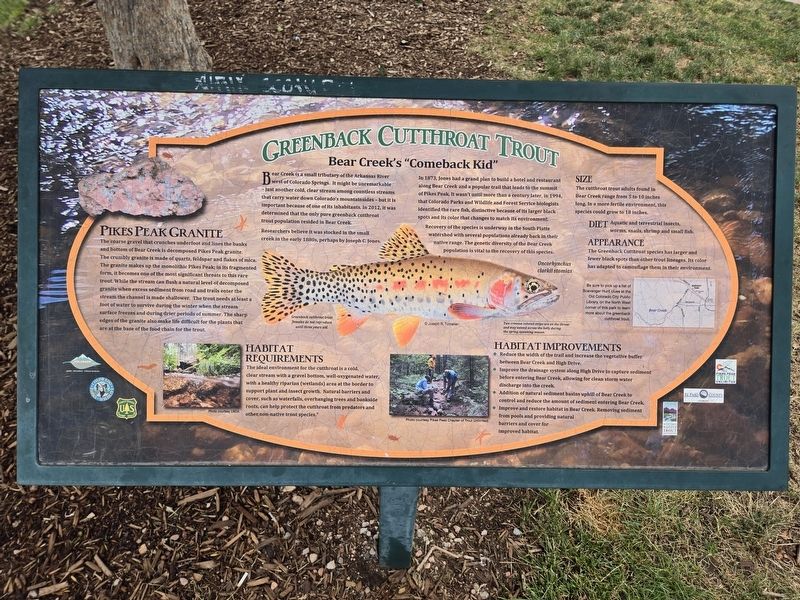
Greenback Cutthroat Trout
Bear Creek's "Comeback Kid"
Photographed by Mark Parker, July 2, 2024
1. Greenback Cutthroat Trout Marker
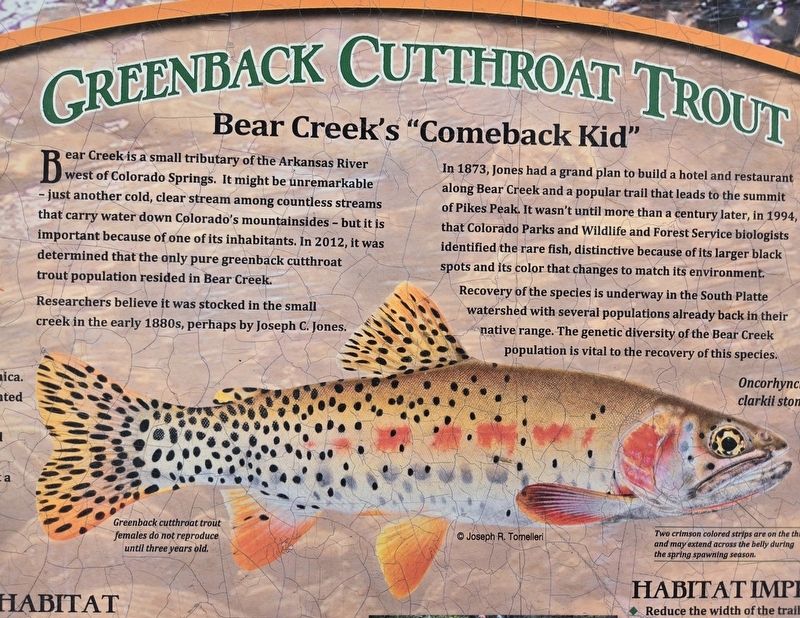
In 1873, Jones had a grand plan to build a hotel and restaurant along Bear Creek and a popular trail that leads to the summit of Pikes Peak. It wasn't until more than a century later, in 1994, that Colorado Parks and Wildlife and Forest Service biologists identified the rare fish, distinctive because of its larger black spots and its color that changes to match its environment. Recovery of the species is underway in the South Platte watershed with several populations already back in their native, range. The genetic diversity of the Bear Creek population is vital to the recovery of this species.
(Left side) Pike's Peak Granite
The coarse gravel
this page online
(Lower left) Habitat
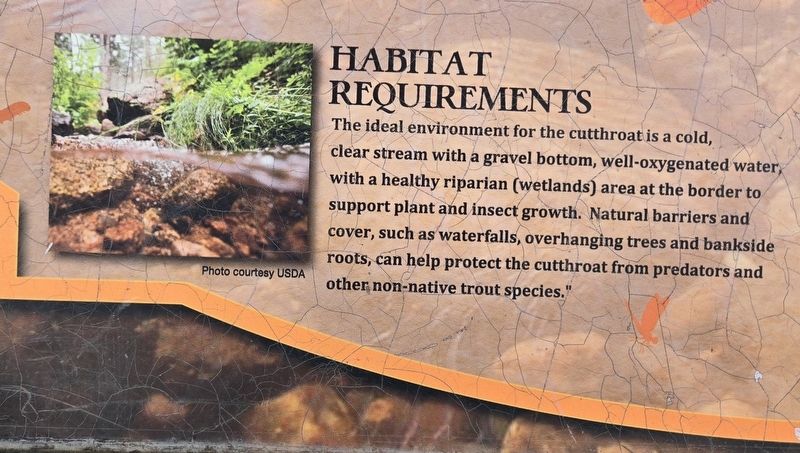
The ideal environment for the cutthroat is a cold, clear stream with a gravel bottom, well-oxygenated water, with a healthy riparian (wetlands) area at the border to support plant and insect growth. Natural barriers and cover, such as waterfalls, overhanging trees and bankside roots, can help protect the cutthroat from predators and other non-native trout species."
(upper right) Size
The
Photographed by Mark Parker, July 2, 2024
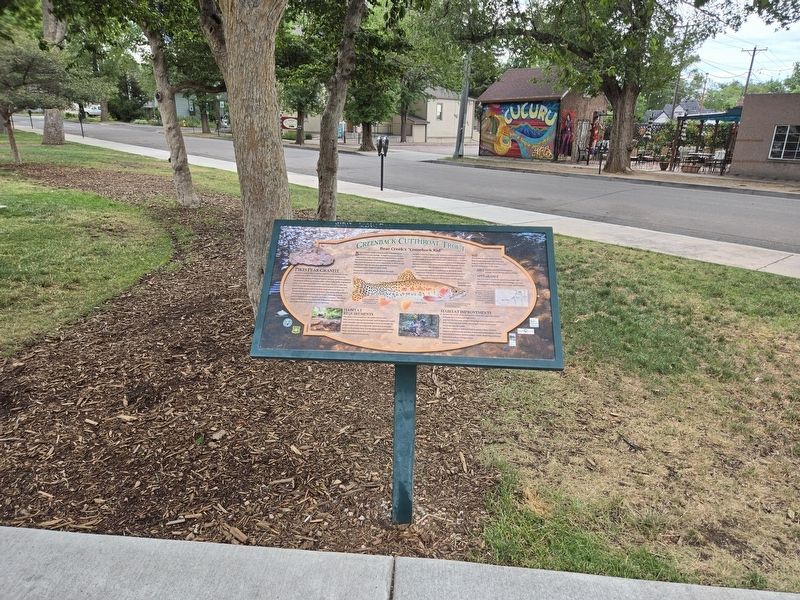
2. Greenback Cutthroat Trout Marker
Looking from sidewalk toward North 24th Street
Diet
Aquatic and terrestrial insects, worms, snails, shrimp and small fish
Appearance
The Greenback Cutthroat species has larger and fewer black spots than other trout lineages. Its color has adapted to camouflage them in their environment
(Lower right) Habitat Improvements
•Reduce the width of the trail and increase the vegetative buffer between Bear Creek and High Drive. •Improve the drainage system along High Drive to capture sediment before entering Bear Creek, allowing for clean storm water discharge into the creek. •Addition of natural sediment basins uphill of Bear Creek to controland reduce the amount of sediment entering Bear Creek. •Improve and restore habitat in Bear Creek. •Removing sediment from pools and providing natural barriers and cover for improved habitat.
(Center left) Greenback cutthroat trout females do not reproduce until three years old.
(Center right) Two crimson colored strips are on the throat and may extend across the belly during the spring spawning
Photographed by Mark Parker, July 2, 2024
3. Greenback Cutthroat Trout Marker
Main text of the marker upper center, plus specific information on the trout
(Center upper right) Oncorhynchus clarkii stomias
(center) Copyright: Joseph R. Tomeleri
(photo caption bottom center) Photo courtesy Pike's Peak chapter of Trout Unlimited
(Photo center right middle) Be sure to pick up a list of Scavenger Hunt. Clues at the Old Colorado City Public Library on the North West corner of this park to learn more about the greenback cutthroat trout.
Topics. This historical marker is listed in these topic lists: Animals • Environment. A significant historical year for this entry is 1873.
Location. 38° 50.79′ N, 104° 51.668′ W. Marker is in Colorado Springs, Colorado, in El Paso County. It is in Old Colorado City. It can be reached from the intersection of West Colorado Avenue and North 24th Street. Located in Bancroft Park in Old Colorado Historic City District. Touch for map. Marker is at or near this postal address: 2332 W Colorado Avenue, Colorado Springs CO 80904, United States of America. Touch for directions.

Regionally, this marker is in the Front Range and in Pikes Peak Region. It is also in the American Mountain West. Globally, it is in North America, the Rocky Mountains,

Photographed by Mark Parker, July 2, 2024
4. Pikes Peak Granite (left center)
A synopsis of the Granite sediment to the habitat of the greenback cutthroat trout
Other nearby markers. At least 8 other markers are within walking distance of this marker: Old Colorado City (a few steps from this marker); Colorado City (within shouting distance of this marker); Old Colorado City History (within shouting distance of this marker); a different marker also named Old Colorado City (within shouting distance of this marker); Cabin on the Move (within shouting distance of this marker); Birth of a Town (within shouting distance of this marker); Log House (within shouting distance of this marker); Carnegie Library (about 400 feet away, measured in a direct line). Touch for a list and map of all markers in Colorado Springs.
More about this marker. Location of the marker is in the South corner of the park. It is along the sidewalk between the public restrooms and the mine cart
Photographed by Mark Parker, July 2, 2024
5. Habitat requirements (lower left)
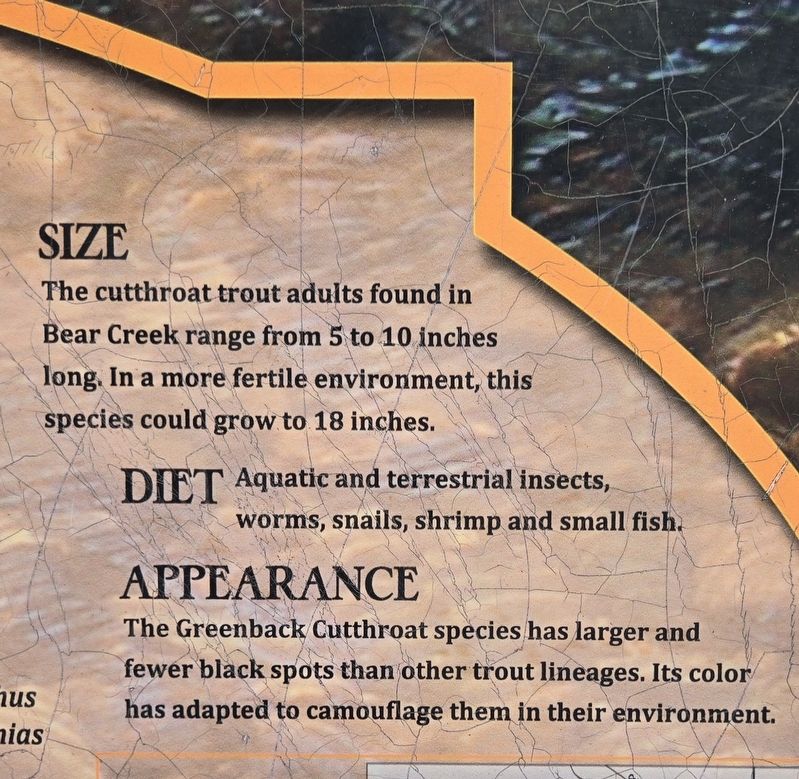
Photographed by Mark Parker, July 2, 2024
6. Greenback Cutthroat Trout size, diet, and appearance (upper right)
Credits. This page was last revised on July 9, 2024. It was originally submitted on July 8, 2024, by Mark Parker of Hickory, North Carolina. This page has been viewed 299 times since then and 40 times this year. Photos: 1, 2, 3, 4, 5, 6. submitted on July 8, 2024, by Mark Parker of Hickory, North Carolina. • Andrew Ruppenstein was the editor who published this page.
