Manitou Springs in El Paso County, Colorado — The American Mountains (Southwest)
Spa Building
Manitou Bathhouse
Photographed by Mark Parker, July 2, 2024
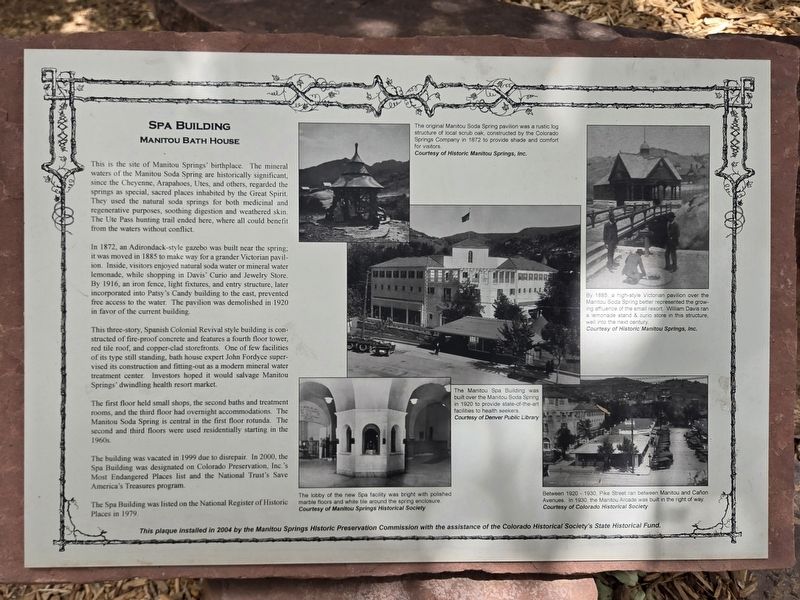
1. Spa Building Marker
This is the site of Manitou Springs' birthplace. The mineral waters of the Manitou Soda Spring are historically significant, since the Cheyenne, Arapahoes, Utes, and others, regarded the springs as special, sacred places inhabited by the Great Spirit. They used the natural soda springs for both medicinal and regenerative purposes, soothing digestion and weathered skin. The Ute Pass hunting trail ended here, where all could benefit from the waters without conflict.
In 1872, an Adirondack-style gazebo was built near the spring it was moved in 1885 to make way for a grander Victorian pavilion. Inside, visitors enjoyed natural soda water or mineral water lemonade, while shopping in Davis' Curio and Jewelry Store By 1916, an iron fence, light fixtures, and entry structure, later incorporated into Patsy's Candy building to the east, prevented free access to the water. The pavilion was demolished in 1920 in favor of the current building.
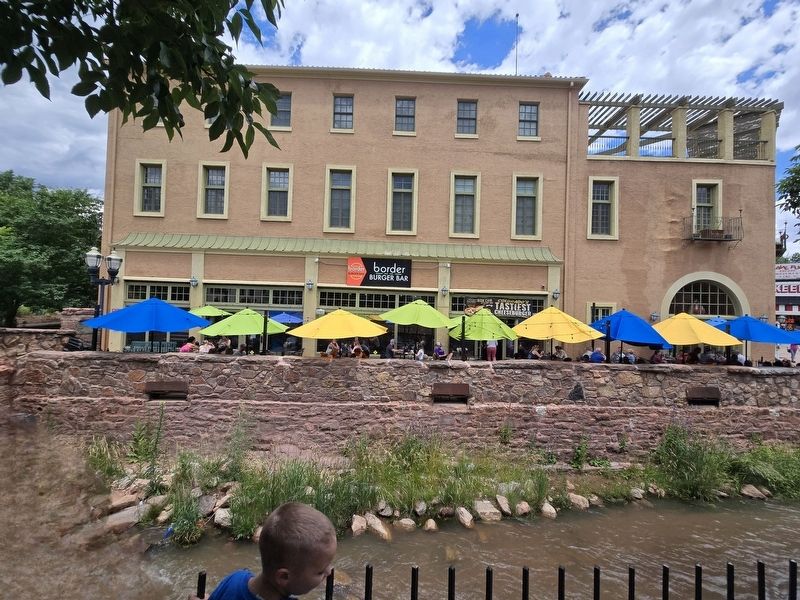
This three-story, Spanish Colonial Revival style building is constructed of fireproof concrete and features a fourth floor tower, red tile roof, and copper-clad storefronts. One of few
this page online
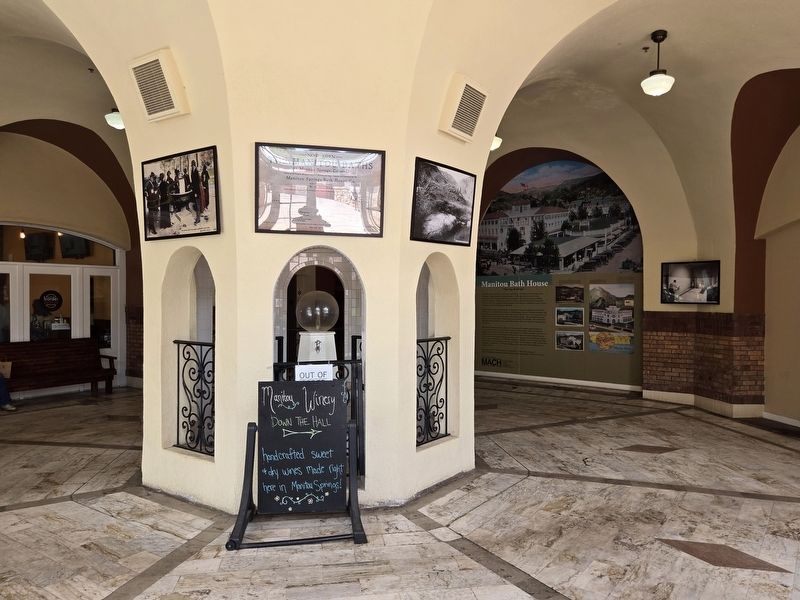
The first floor held small shops, the second baths and treatment rooms, and the third floor had overnight accommodations. The Manitou Soda Spring is central in the first floor rotunda. The second and third floors were used residentially starting in the 1960s.
The building was vacated in 1999 due to disrepair. In 2000, the Spa Building was designated on Colorado Preservation, Inc in Most Endangered Places list and the National Trust's Save America's Treasures program.
The Spa Building was listed on the National Register of Historic Places in 1979.
Erected 2004 by Manitou Springs Historic Preservation Commission, Colorado Historical Society's State Historic Fund.
Topics and series. This historical marker is listed in these topic lists: Architecture • Indigenous Peoples and Communities • Industry & Commerce • Notable Buildings. In addition, it is included in the National Register of Historic Places (NRHP)
Photographed by Mark Parker, July 2, 2024
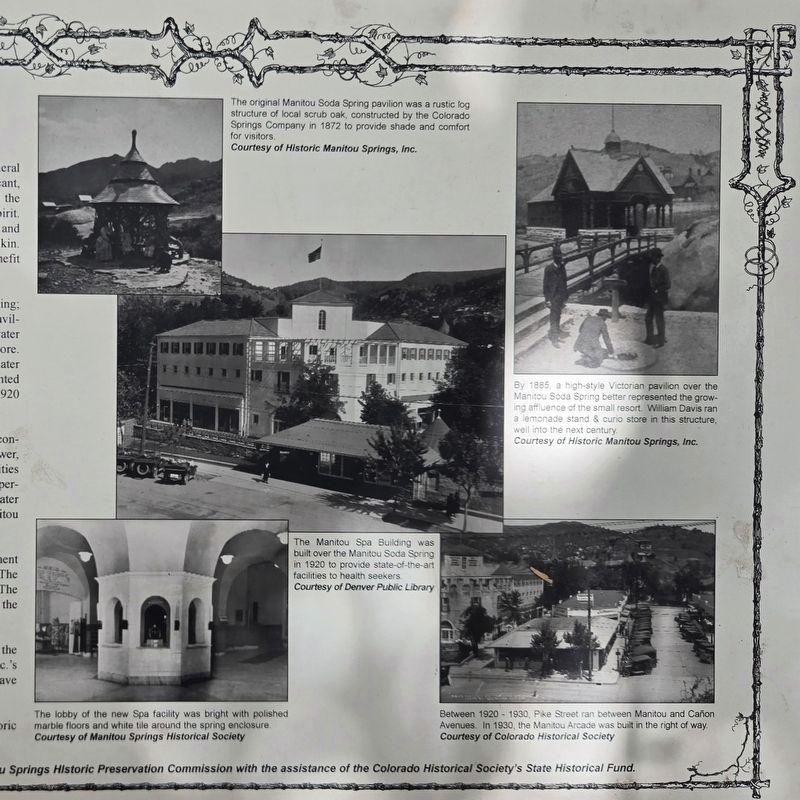
2. Historic Photos of the Spa Building
(top left)
The original Manitou Soda Spring pavilion was a rustic log structure of local scrub oak, constructed by the Colorado Springs Company in 1872 to provide shade and comfort for visitors Courtesy of Historic Manitou Springs, Inc.
(top right)
By 1885 a high-style Victorian pavilion over the Manitou Soda Spring better represented the growing affluence of the small resort. William Davis ran a lemonade stand & curio store in this structure well into the next century. Courtesy of Historic Manitou Springs, Inc.
(center)
The Manitou Spa Building was built over the Manitou Soda Spring in 1920 to provide state-of-the-art facilities to health seekers. Courtesy of Denver Public Library
(bottom left)
The lobby of the new Spa facility was bright with polished marble floors and white tile around the spring enclosure. Courtesy of Manitou Springs Historical Society
(bottom right)
Between 1920-1930, Pike Street ran between Manitou and Cañon Avenues. In 1930, the Manitou Arcade was built in the right of way. Courtesy of Colorado Historical Society
The original Manitou Soda Spring pavilion was a rustic log structure of local scrub oak, constructed by the Colorado Springs Company in 1872 to provide shade and comfort for visitors Courtesy of Historic Manitou Springs, Inc.
(top right)
By 1885 a high-style Victorian pavilion over the Manitou Soda Spring better represented the growing affluence of the small resort. William Davis ran a lemonade stand & curio store in this structure well into the next century. Courtesy of Historic Manitou Springs, Inc.
(center)
The Manitou Spa Building was built over the Manitou Soda Spring in 1920 to provide state-of-the-art facilities to health seekers. Courtesy of Denver Public Library
(bottom left)
The lobby of the new Spa facility was bright with polished marble floors and white tile around the spring enclosure. Courtesy of Manitou Springs Historical Society
(bottom right)
Between 1920-1930, Pike Street ran between Manitou and Cañon Avenues. In 1930, the Manitou Arcade was built in the right of way. Courtesy of Colorado Historical Society
Location. 38° 51.546′ N, 104° 55.109′ W. Marker is in Manitou Springs, Colorado, in El Paso County. It can be reached from Manitou Avenue (Business U.S. 24) 0.1 miles west of Navajo Avenue, on the right when traveling west. Touch for map. Marker is at or near this postal address: 946 Manitou Ave, Manitou Springs CO 80829, United States of America. Touch for directions.

Regionally, this marker is in the Front Range and in Pikes Peak Region. It is also in the American Mountain West. Globally, it is in North America, the Rocky Mountains, the Western Hemisphere, the Western World, and the Anglosphere. Historically, it finds itself in what was once the Comanchería.
Other nearby markers. At least 8 other markers are within walking distance of this marker: A Town Built on Mineral Water Resources (a few steps from this marker); Ute Pass Trail (within shouting distance of this marker); Sacred Waters (within shouting distance of this marker); A Benefactor's Legacy (within shouting distance of this marker); Visionary Philanthropist (within shouting distance of this marker);
Photographed by Mark Parker, July 2, 2024
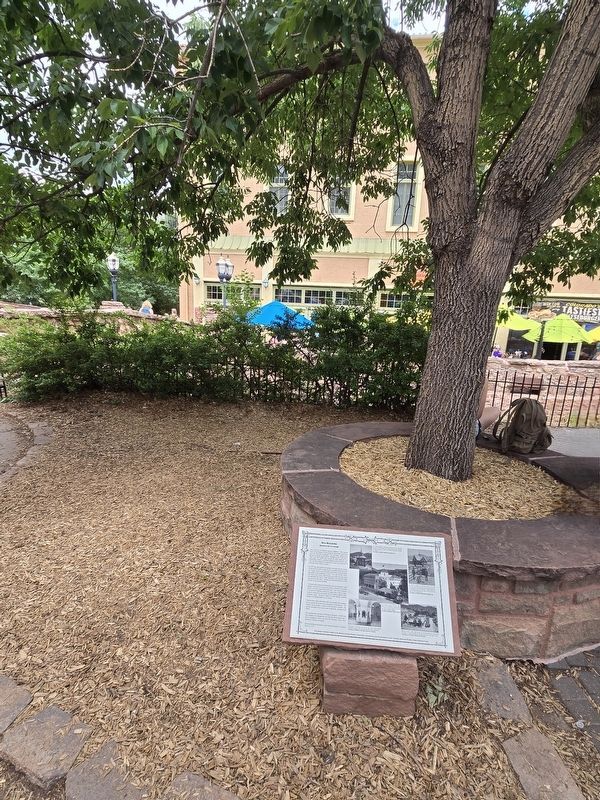
3. Wide view of Spa Building Marker
Spa Building in the background across the stream
More about this marker. The marker is in a small grove of trees along the sidewalk. The Spa Building referred to is across the stream.
Photographed by Mark Parker, July 2, 2024
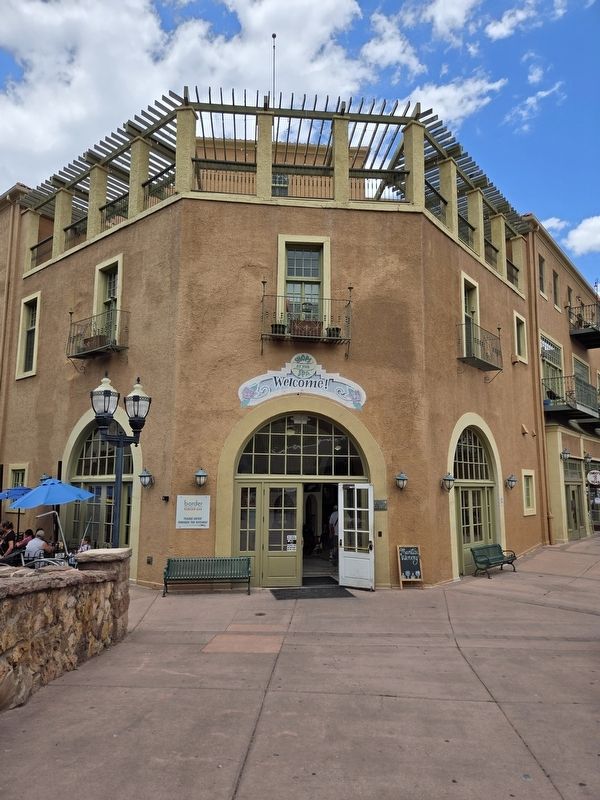
4. Spa Building entrance
Photographed by Mark Parker, July 2, 2024
5. Spa Building
Photographed by Mark Parker, July 2, 2024
6. Spa Building Lobby with Soda Spring Enclosure
Credits. This page was last revised on July 9, 2024. It was originally submitted on July 9, 2024, by Mark Parker of Hickory, North Carolina. This page has been viewed 547 times since then and 93 times this year. Photos: 1, 2, 3, 4, 5, 6. submitted on July 9, 2024, by Mark Parker of Hickory, North Carolina. • J. Makali Bruton was the editor who published this page.
