Woodstock in Oxford County, Ontario — Central Canada (North America)
Thomas “Carbide” Willson
1860-1915
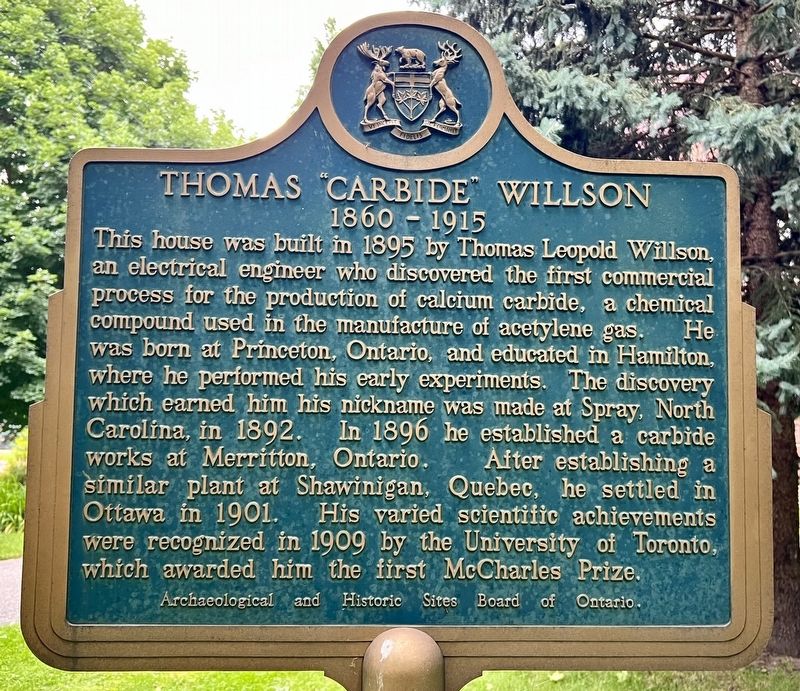
Photographed by Tim Boyd, June 28, 2024
1. Thomas “Carbide” Willson Marker
This house was built in 1895 by Thomas Leopold Willson, an electrical engineer who discovered the first commercial process for the production of calcium carbide, a chemical compound used in the manufacture of acetylene gas, was born at Princeton, Ontario, and educated in Hamilton, where he performed his early experiments. The discovery which earned him his nickname was made at Spray, North Carolina, in 1892. In 1896 he established a carbide works at Merritton, Ontario. After establishing a similar plant at Shawinigan, Quebec, he settled in Ottawa, in 1901. His varied scientific achievements were recognized in 1909 by the University of Toronto, which awarded him the first McCharles Prize.
Erected by Archaeological and Historic Sites Board of Ontario.
Topics and series. This historical marker is listed in these topic lists: Industry & Commerce • Science & Medicine. In addition, it is included in the Canada, Ontario Heritage Trust series list. A significant historical year for this entry is 1895.
Location. 43° 8.198′ N, 80° 45.828′ W. Marker is in Woodstock, Ontario, in Oxford County. It is at the intersection
this page online

Regionally, this marker is in the Southwest Ontario Area and in Southwestern Ontario. It is also in Central Canada. Globally, it is in North America, the Western Hemisphere, the Western World, and the Anglosphere. Historically, it finds itself in what was once a British colony, the Viceroyalty of New France, the Haudenosaunee (Iroquois) Confederacy, and Rupert’s Land.
Other nearby markers. At least 8 other markers are within walking distance of this marker: Lt. Colonel Joseph Whiteside Boyle, D.S.O. (approx. half a kilometer away); The Woodstock Armoury (approx. half a kilometer away); The Oxford County Court House (approx. 0.6 kilometers away); Sir Francis Hincks 1807-1885 (approx. 0.6 kilometers away); Woodstock Carnegie Library (approx. 0.7 kilometers away); Old Town Hall/ L’ancien Hôtel de Ville (approx. 0.9 kilometers away); Capt. Andrew Drew, R.N., 1792-1878 (approx. 1.4 kilometers away); St. Paul’s Church 1834
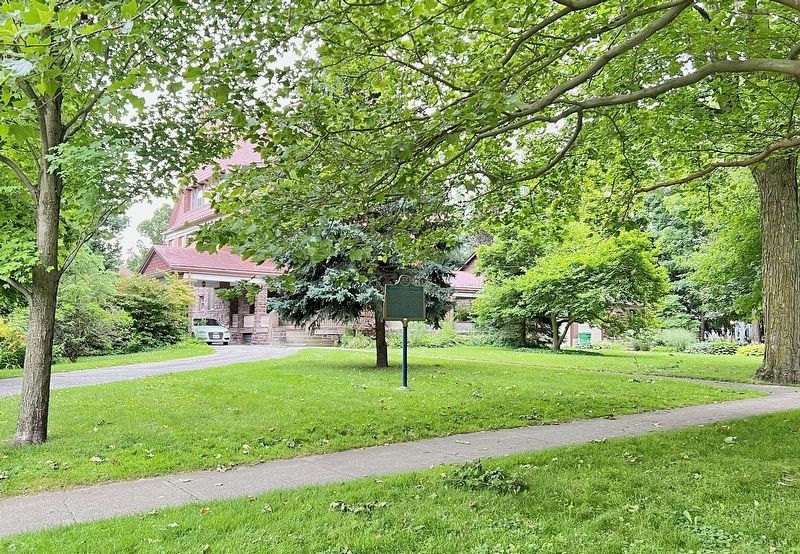
Photographed by Tim Boyd, June 28, 2024
2. Thomas “Carbide” Willson Marker
Also see . . . Thomas “Carbide” Wilson: Prolific Inventor and Father of Carbide.
At the time of their discovery, only six other people had seen calcium carbide. It was largely thought to be a scientific novelty- something rare but largely useless. With Wilson and Turner’s discovery, it now appeared that calcium carbide could be produced cheaply and quickly in large quantities. But, scientists wondered, what purpose would it have?(Submitted on July 9, 2024, by Tim Boyd of Hamilton, Ontario.)
Metal welders began using acetylene to work with metal, but it was largely acetylene’s ability to produce a bright light that made it important for its first users. When it burned, the flame it produced was 12.5 times brighter than the flame of its rival, coal gas.
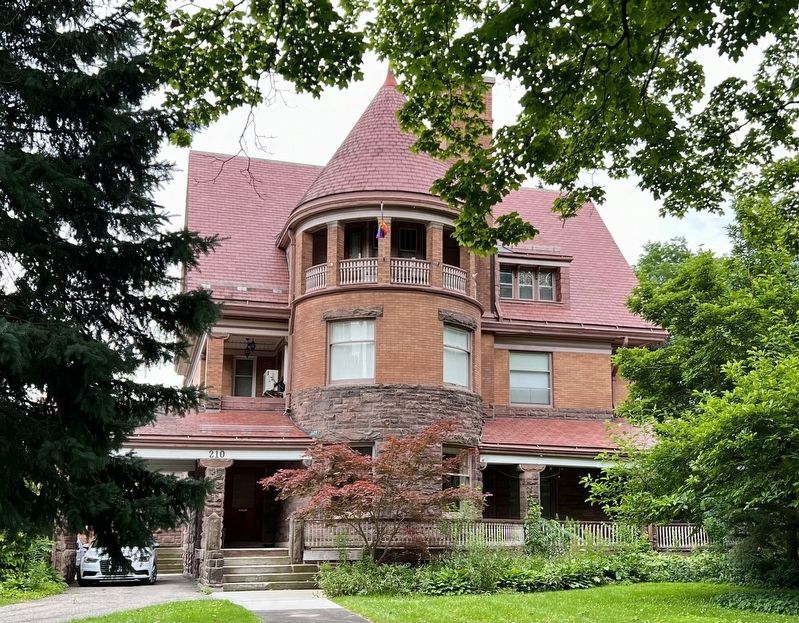
Photographed by Tim Boyd, June 28, 2024
3. Thomas Willson house, built 1895
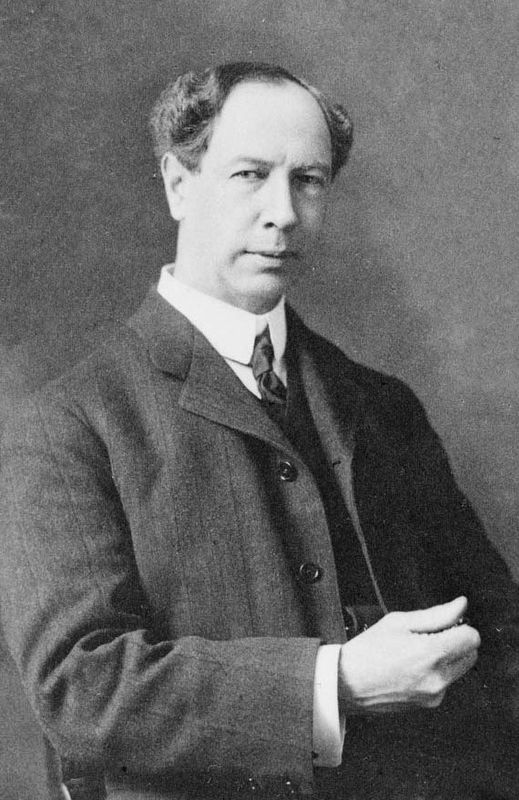
circa 1914
4. Thomas “Carbide” Willson, ca 1914
Source: Library and Archives Canada (public domain)
Credits. This page was last revised on March 26, 2025. It was originally submitted on July 9, 2024, by Tim Boyd of Hamilton, Ontario. This page has been viewed 376 times since then and 45 times this year. Photos: 1, 2, 3, 4. submitted on July 9, 2024, by Tim Boyd of Hamilton, Ontario. • Andrew Ruppenstein was the editor who published this page.
