Walsingham in Norfolk County, Ontario — Central Canada (North America)
First Forestry Station
- 1908 -

Photographed by Tim Boyd, July 8, 2024
1. First Forestry Station Marker
Erected by the Ontario Archaeological and Historic Sites Board.
Erected by Ontario Archaeological and Historic Sites Board.
Topics and series. This historical marker is listed in these topic lists: Agriculture • Education • Horticulture & Forestry. In addition, it is included in the Canada, Ontario Heritage Trust series list. A significant historical year for this entry is 1908.
Location. 42° 41.83′ N, 80° 26.688′ W. Marker is in Walsingham, Ontario, in Norfolk County. It is on Regional Road 24 half a kilometer west of Forestry
this page online

Regionally, this marker is in the Southwest Ontario Area and in Southwestern Ontario. It is also in Central Canada. Globally, it is in North America, on the Great Lakes, in the Western Hemisphere, in the Western World, and in the Anglosphere. Historically, it finds itself in what was once a British colony, the Viceroyalty of New France, the Haudenosaunee (Iroquois) Confederacy, and Rupert’s Land.
Other nearby markers. At least 8 other markers are within 10 kilometers of this marker, measured as the crow flies: The Story of my Life (within shouting distance of this marker); Port Rowan History (approx. 8.3 kilometers away); Our Oldest Heritage (approx. 8.3 kilometers away); Bird Studies Canada (approx. 8.3 kilometers away); Long Point Bay (approx. 8.3 kilometers away); Long Point (approx. 8.3 kilometers away); Long Point Biosphere

Photographed by Tim Boyd, July 8, 2024
2. First Forestry Station Marker
Also see . . . St. Williams Conservation Reserve. Website homepage:
The St. Williams Forestry Station, established in 1908, was the first reforestation project in Canada. It was established to convert blow sands back into woodlots and to grow and ship seedlings all over southwestern Ontario. There were 14 full time employees at the Station by 1917 and annual production of seedlings increased in to the millions. Seasonal employment during the depression was a major plus for the area.(Submitted on July 13, 2024, by Tim Boyd of Hamilton, Ontario.)
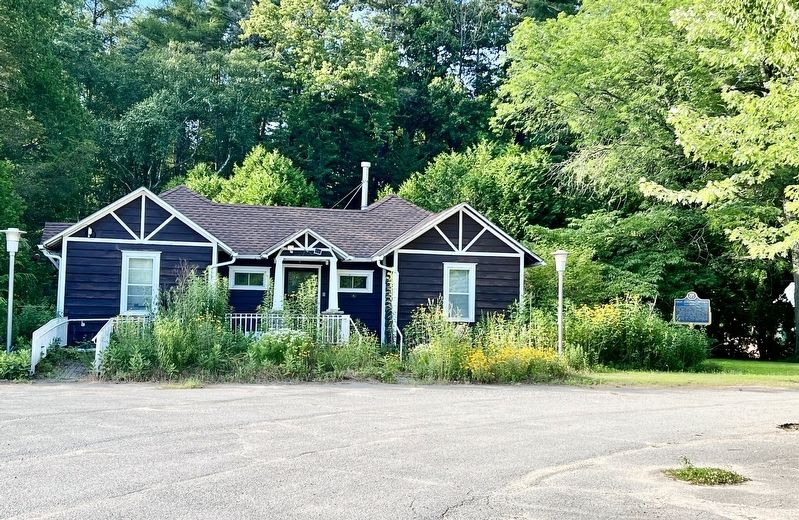
Photographed by Tim Boyd, July 8, 2024
3. First Forestry Station Marker

4. St. Williams Forestry Station, 1919
(Public domain)
Credits. This page was last revised on September 13, 2025. It was originally submitted on July 13, 2024, by Tim Boyd of Hamilton, Ontario. This page has been viewed 213 times since then and 48 times this year. Photos: 1, 2, 3, 4. submitted on July 13, 2024, by Tim Boyd of Hamilton, Ontario. • Andrew Ruppenstein was the editor who published this page.
