
Midtown in Springfield in Greene County, Missouri — The American Midwest (Upper Plains)
Benton Avenue A.M.E. Church
Photographed by Duane and Tracy Marsteller, March 21, 2019
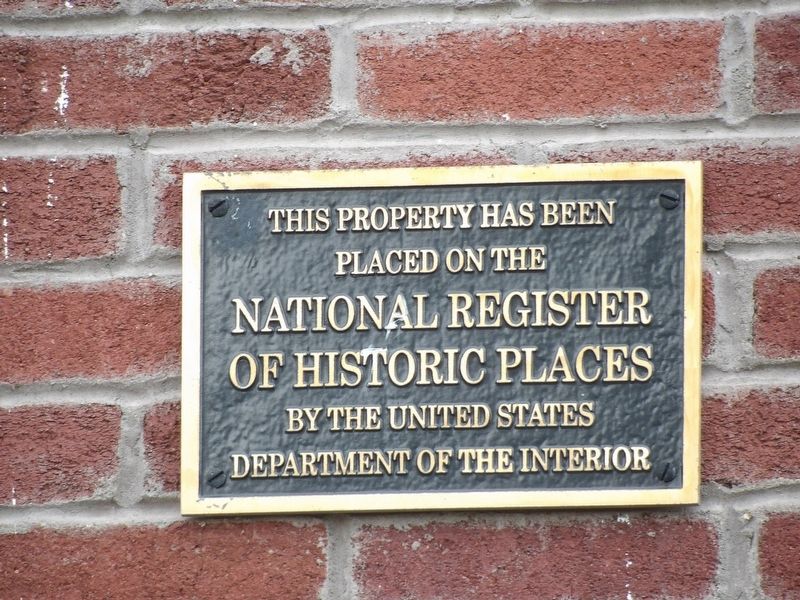
1. Benton Avenue A.M.E. Church Marker
Topics and series. This historical marker is listed in these topic lists: African Americans • Architecture • Civil Rights • Religion & Religious Structures. In addition, it is included in the National Register of Historic Places (NRHP) series list. A significant historical year for this entry is 1926.
Location. 37° 13.028′ N, 93° 17.246′ W. Marker is in Springfield, Missouri, in Greene County. It is in Midtown. It is at the intersection of North Benton Avenue and East Central Street, on the right when traveling north on North Benton Avenue. Touch for map. Marker is at or near this postal address: 830 N Benton Ave, Springfield MO 65802, United States of America. Touch for directions.

Regionally, this marker is in the American Ozarks, in the Lewis & Clark Corridor, and in the Corn Belt. Globally, it is in North America, the Western Hemisphere, the Western World, and the Anglosphere. Historically, it finds itself in what was once the territory of the Mississippian Culture, the
this page online
Other nearby markers. At least 8 other markers are within walking distance of this marker: Stone Chapel (about 300 feet away, measured in a direct line); Historic Washington Avenue Baptist Church (about 500 feet away); Civil War Entrenchments (about 700 feet away); Fairbanks Hall (about 700 feet away); Alberta's Hotel (approx. 0.2 miles away); Graham’s Rib Station and Modern Motel Court (approx. 0.2 miles away); Tau Eta Gamma (local) (approx. 0.2 miles away); a different marker also named Fairbanks Hall (approx. 0.2 miles away). Touch for a list and map of all markers in Springfield.
Regarding Benton Avenue A.M.E. Church. Excerpts from the National Register nomination:
On February 25, 1873, Alexander Burns, son of a Springfield policeman, acquired from Charles E. and Kate S. Harwood a lot at the southeast corner of Center Street (now Central) and Benton Avenue. This lot was later selected as the site for a new church building for the African Methodist Episcopal congregation. … [I]t is accepted through oral history that the first A.M.E. Church building was a one-room frame structurebuilt no later than 1877. …Photographed by Duane and Tracy Marsteller, June 29, 20242. Benton Avenue A.M.E. Church MarkerFeatured marker is right of the entrance.
By the early 1920's, the congregation of the A.M.E. Church had outgrown its earlier building and needed a larger church home. On March 27, 1922, under the pastorage of Rev. F.F. Moten, the old wood frame building was moved to the far east corner of the lot; and the congregation broke ground for a new brick church for the congregation by that time called Benton Avenue A.M.E. Church. …
Construction of the new building proceeded quickly and the cornerstone was laid at the northwest corner during a crowded ceremony on August 27, 1922. … The full basement of the church was completed by January, 1923, and the first floor was surfaced to serve as a roof. At this time, the congregation began holding worship services in the basement. … The new brick Benton Avenue A.M.E. Church building was completed in 1926 under the pastorage of Rev. C.B. Crawford. …
Following the integration of Springfield Public Schools in 1955, Rev. Oliver L. Brown was transferred to Benton Avenue A.M.E. from Topeka, Kansas, in 1959. As the lead plaintiff in the landmark case Oliver Brown et al. vs. the Board of Education of Topeka, Rev. Brown must have provided great inspiration to the Benton Avenue A.M.E. congregation and the entire Springfield African-American population as they crossed the previous boundaries of segregation.

The church closed in 2014. It is now owned by Drury University, which plans to renovate and repurpose the building into classrooms and exhibit space.
Also see . . . Benton Avenue A.M.E. Church (PDF). National Register nomination for the church, which was listed in 2001. (Prepared by Richard Lee Burton, Historic Springfield, Inc.; via National Archives) (Submitted on July 14, 2024, by Duane and Tracy Marsteller of Murfreesboro, Tennessee.)
Credits. This page was last revised on July 15, 2024. It was originally submitted on July 14, 2024, by Duane and Tracy Marsteller of Murfreesboro, Tennessee. This page has been viewed 367 times since then and 55 times this year. Photos: 1, 2. submitted on July 14, 2024, by Duane and Tracy Marsteller of Murfreesboro, Tennessee.
