Richmond in Ray County, Missouri — The American Midwest (Upper Plains)
Richmond Pioneer Cemetery
Photographed by Duane and Tracy Marsteller, June 30, 2024
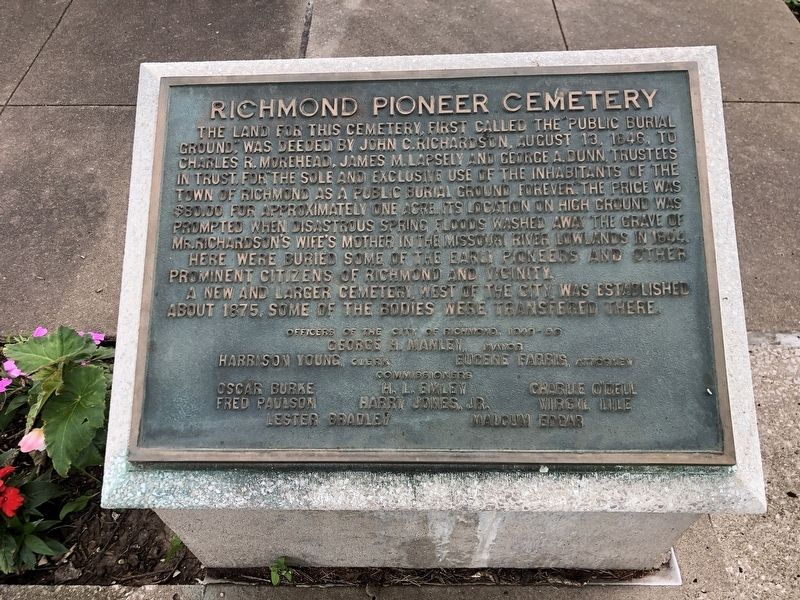
1. Richmond Pioneer Cemetery, First Marker
Here were buried some of the early pioneers and other prominent citizens of Richmond and vicinity.
A new and larger cemetery, west of the city, was established about 1875. Some of the bodies were transferred there.
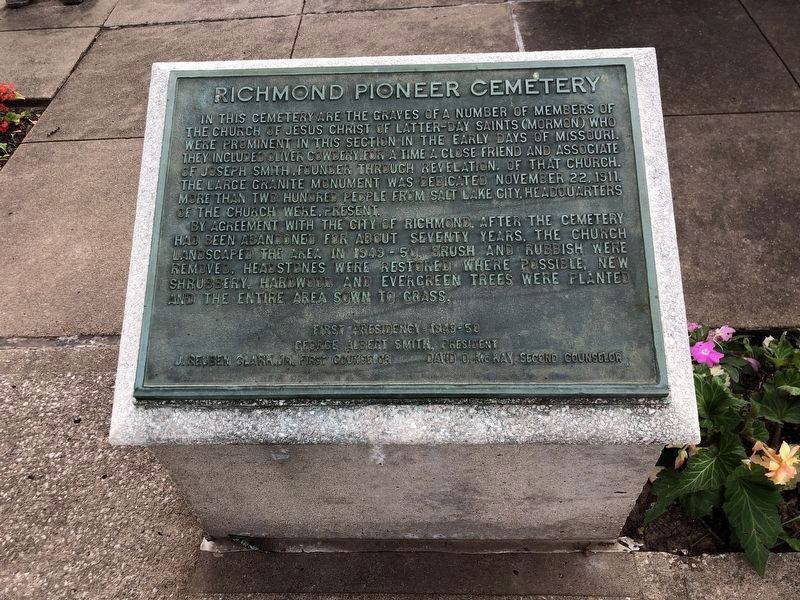
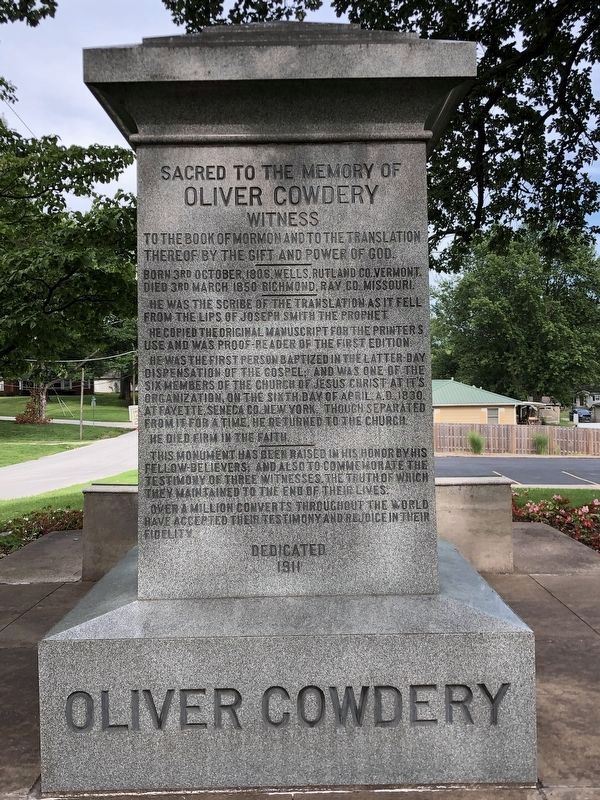
In this cemetery are the graves of a number of members of the Church of Jesus Christ of Latter-Day Saints (Mormon) who were preeminent in this section in the early days of Missouri. They included Oliver Cowdery, for a time a close friend and associate of Joseph Smith, founder through revelation, of that church. The large granite monument was dedicated November 22, 1911. More than
this page online
By agreement with the City of Richmond, after the cemetery had been abandoned for about seventy years, the church landscaped the area in 1949-50. Brush and rubbish were removed, headstones were restored where possible, new shrubbery, hardwood and evergreen trees were planted and the entire area sown to grass.
[Names at bottom omitted]
Topics. This historical marker is listed in these topic lists: Cemeteries & Burial Sites • Religion & Religious Structures. A significant historical date for this entry is August 13, 1846.
Location. 39° 17.111′ N, 93° 58.58′ W. Marker is in Richmond, Missouri, in Ray County. It is at the intersection of Crispin Street and North Thornton Street, on the left when traveling west on Crispin Street. Touch for map. Marker is at or near this postal address: 103 Crispin St, Richmond MO 64085, United States of America. Touch for directions.

Regionally, this marker is in the Missouri River Corridor and in Greater Kansas City. It is also in the American Midwest, in the Lewis & Clark Corridor, and in the Corn Belt. Globally,
Photographed by Duane and Tracy Marsteller, June 30, 2024
2. Richmond Pioneer Cemetery, Second Marker
Other nearby markers. At least 8 other markers are within walking distance of this marker: The Whitmer Lot (a few steps from this marker); Broken Headstones (within shouting distance of this marker); World War II and Korean War Memorial (approx. 0.4 miles away); The Bushwhacker in Missouri (approx. 0.4 miles away); World War Memorial (approx. 0.4 miles away); Vietnam War Memorial (approx. half a mile away); Richmond (approx. half a mile away); Colonel Alexander W. Doniphan (approx. half a mile away). Touch for a list and map of all markers in Richmond.
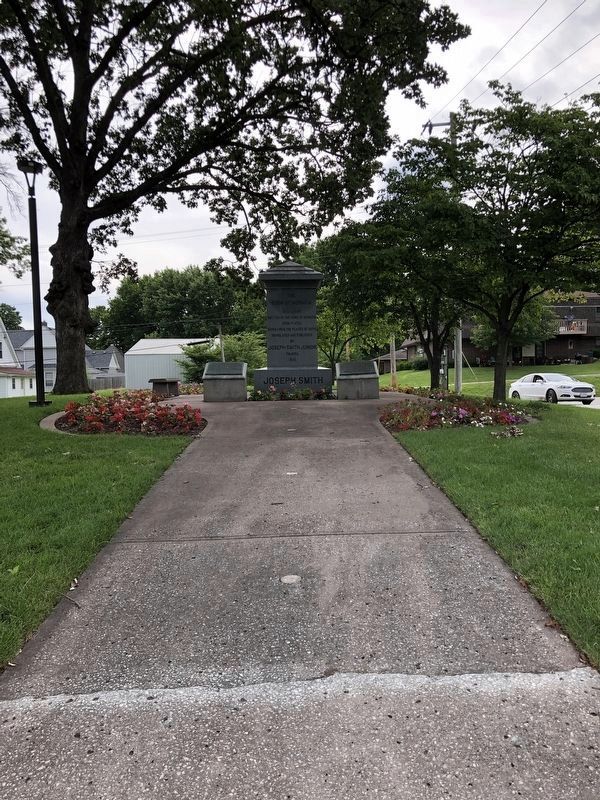
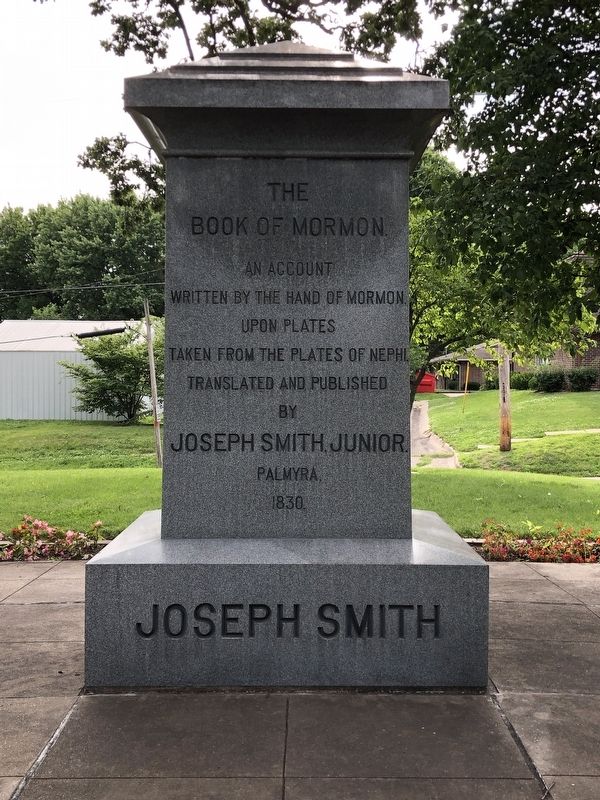
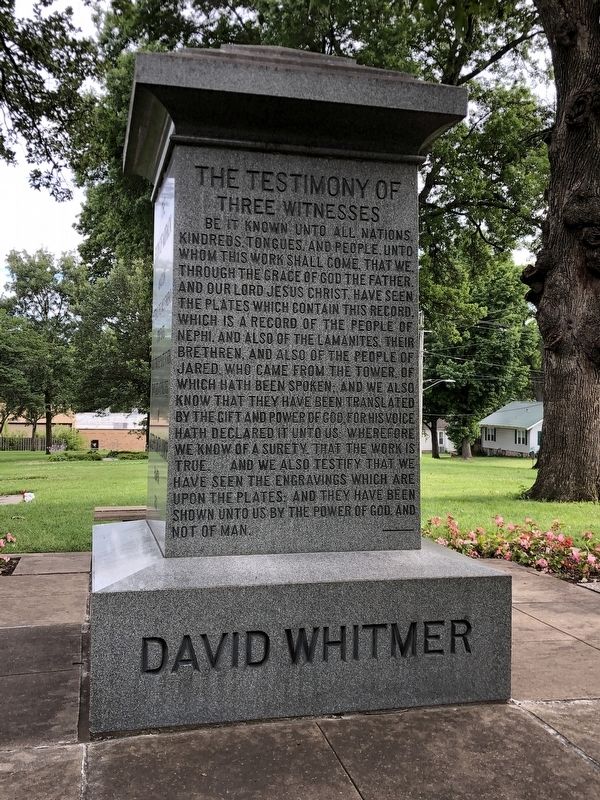
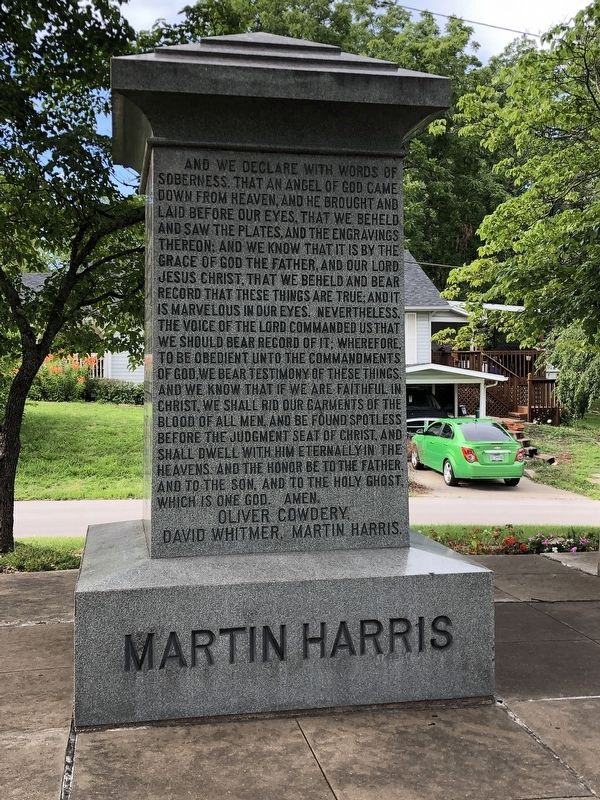
More about this marker. The plaques flank the Three Witnesses Monument, erected by The Church of Jesus Christ of Latter-day Saints member Junius F. Wells in 1911 and dedicated to Oliver Cowdery, Martin Harris and David Whitmer. They wrote in an 1829 statement that an angel had shown them the golden plates from which church founder Joseph Smith had
Photographed by Duane and Tracy Marsteller, June 30, 2024
3. Richmond Pioneer Cemetery Markers
The Three Witnesses Monument is between the plaques.
Photographed by Duane and Tracy Marsteller, June 30, 2024
4. Three Witnesses Monument (Side A)
Photographed by Duane and Tracy Marsteller, June 30, 2024
5. Three Witnesses Monument (Side B)
Photographed by Duane and Tracy Marsteller, June 30, 2024
6. Three Witnesses Monument (Side C)
Photographed by Duane and Tracy Marsteller, June 30, 2024
7. Three Witnesses Monument (Side D)
Credits. This page was last revised on July 25, 2024. It was originally submitted on July 24, 2024, by Duane and Tracy Marsteller of Murfreesboro, Tennessee. This page has been viewed 510 times since then and 81 times this year. Photos: 1. submitted on July 25, 2024, by Duane and Tracy Marsteller of Murfreesboro, Tennessee. 2, 3. submitted on July 24, 2024, by Duane and Tracy Marsteller of Murfreesboro, Tennessee. 4, 5, 6, 7. submitted on July 25, 2024, by Duane and Tracy Marsteller of Murfreesboro, Tennessee.
