SWAN (Southwest Area) in Grand Rapids in Kent County, Michigan — The American Midwest (Great Lakes)
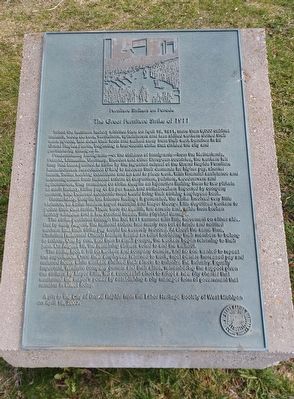
The Great Furniture Strike of 1911
Photographed by Joel Seewald, April 5, 2024
1. The Great Furniture Strike of 1911 Marker
When the furniture factory whistles blew on April 19, 1911, more than 6,000 cabinet workers, wood carvers, varnishers, upholsterers and less skilled workers doffed their work aprons, laid down their tools and walked away from their work benches in 59 Grand Rapids plants, beginning a four-month strike that divided the city and permanently changed it.
Predominantly immigrants—or the children of immigrants—from the Netherlands, Poland, Lithuania, Germany, Sweden and other European countries, the workers felt they had been pushed to strike by the repeated refusal of the Grand Rapids Furniture Manufacturers Association (FMA) to address their demands for higher pay, shorter hours, better working conditions and an end to piece work. With financial assistance and encouragement from national unions of carpenters, painters, woodcarvers and upholsterers, they remained on strike despite an injunction limiting them to two pickets at each factory, strike pay of $5 per week and strikebreakers imported by company owners, who believed economic need would bring their striking employees back.
Remarkably, despite the intense feelings
this page online
The strike persisted through the hot 1911 summer with little movement on either side. But by early August, the national unions had nearly run out of funds and notified workers that their strike pay would be severely reduced. At about the same time, Christian Reformed Church leaders issued an edict forbidding their members to belong to unions. One by one, and then in small groups, the workers began returning to their jobs. On August 19, the remaining strikers voted to end the walkout.
The strike took a toll on workers and company owners, and no one wanted to repeat the experience. Once their employees returned to work, most owners increased pay and reduced hours while workers shelved their efforts to unionize the industry. Equally important, furniture company owners and their allies, remembering the support given the strikers by Mayor Ellis, led a successful
Photographed by Joel Seewald, April 5, 2024
2. The Great Furniture Strike of 1911 Marker
A gift to the City of Grand Rapids from the Labor Heritage Society of West Michigan on April 19, 2007.
Image caption: Furniture Strikers on Parade
Erected 2007.
Topics. This historical marker is listed in these topic lists: Industry & Commerce • Labor Unions. A significant historical date for this entry is April 19, 1911.
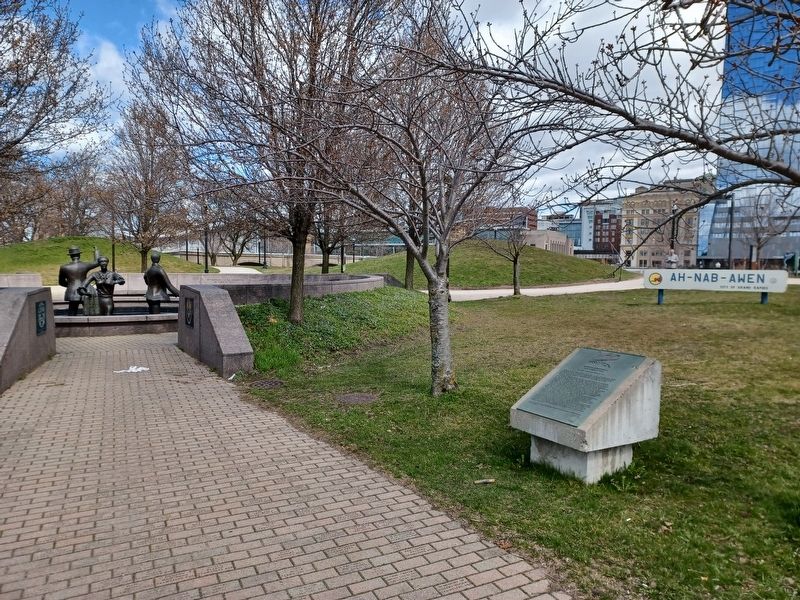
Location. 42° 58.006′ N, 85° 40.616′ W. Marker is in Grand Rapids, Michigan, in Kent County. It is in the SWAN (Southwest Area). It is at the intersection of Front Avenue Northwest and Pearl Street Northwest, on the right when traveling north on Front Avenue Northwest. Marker is near the Spirit of Solidarity monument at the southwest corner of Ah-Nab-Awen Park. Touch for map. Marker is at or near this postal address: 220 Front Ave NW, Grand Rapids MI 49504, United States of America. Touch for directions.

Regionally, this marker is in West Michigan. It is also in the American Midwest. Globally, it is in North America, the Western Hemisphere, the Western World, and the Anglosphere. Historically, it finds itself in what was once the Northwest Territory.
Other nearby markers. At least 8 other markers are within walking distance of this marker: Treaty of Chicago (1821) / Treaty of Zhaagaagong (1821) (within shouting distance of this marker); Pearl Street Bridge (within shouting distance of this marker); Grand Legacy (about 300 feet away, measured in a direct line); Furniture Industry (about 300 feet away); a different marker also named Grand Legacy (about 400 feet away); Betty Ford (about 400 feet away); Gerald R. Ford (about 500 feet away); Combined Sewer Overflow Elimination Project (about 500 feet away). Touch for a list and map of all markers in Grand Rapids.
Credits. This page was last revised on August 1, 2024. It was originally submitted on August 1, 2024, by Joel Seewald of Madison Heights, Michigan. This page has been viewed 215 times since then and 33 times this year. Photos: 1, 2. submitted on August 1, 2024, by Joel Seewald of Madison Heights, Michigan.
