Near San Antonio in Socorro County, New Mexico — The American Mountains (Southwest)
Fort Craig
Photographed by James Hulse, July 23, 2024
1. Fort Craig Marker
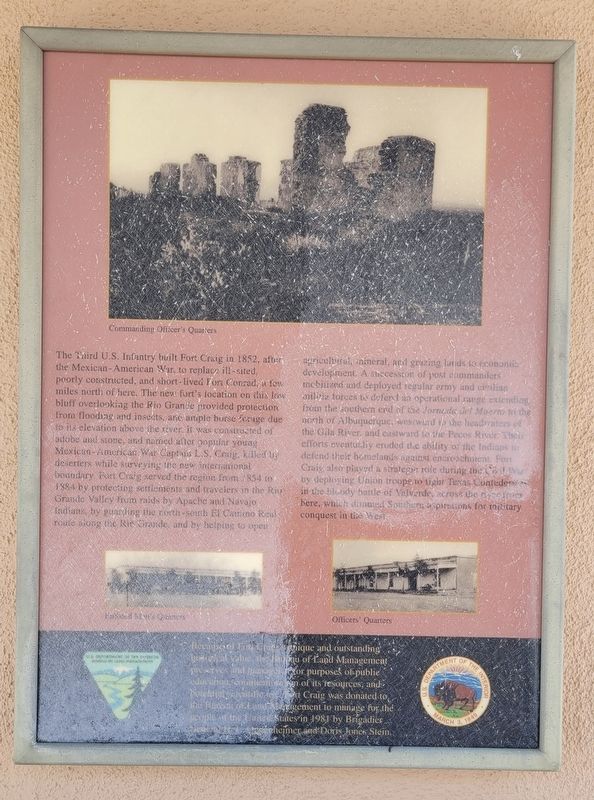
The Third U.S. Infantry built Fort Craig in 1852, after the Mexican-American War, to replace ill-sited, poorly constructed, and short-lived Fort Conrad, a few miles north of here. The new fort's location on this low bluff overlooking the Rio Grande provided protection from flooding and insects, and ample horse forage due to its elevation above the river. It was constructed of adobe and stone, and named after popular young Mexican-American War Captain L.S. Craig, killed by deserters while surveying the new international boundary. Fort Craig served the region from 1854 to 1884 by protecting settlements and travelers in the Rio Grande Valley from raids by Apache and Navajo Indians, by guarding the north-south El Camino Real route along the Rio Grande, and by helping to open agricultural, mineral, and grazing lands to econontic development. A succession of post commanders mobilized and deployed regular army and civiling militia forces to defend an operational range extending from the southern end of the Jornada del Muerto to the north of Albuquerque, westward to the headwaters of the Gila River, and eastward to the Pecos
this page online
Erected by Bureau of Land Management, U.S. Department of the Interior.
Topics. This historical marker is listed in these topic lists: Forts and Castles • Wars, US Indian. A significant historical year for this entry is 1852.
Location. 33° 38.104′ N, 107° 0.925′ W. Marker is near San Antonio, New Mexico, in Socorro County. It is on Fort Craig Road 4½ miles south of Old US Hwy 85 (New Mexico Highway 1). The marker is located at the Fort Craig Historic Site at beginning of the visitor trail. Touch for map. Marker is at or near this postal address: 457 Fort Craig Road, San Antonio NM 87832, United States of America. Touch for directions.

Regionally, this marker is in Southwest New Mexico and in the Rio Grande Valley. It is also in the American Southwest.
Photographed by James Hulse, July 23, 2024
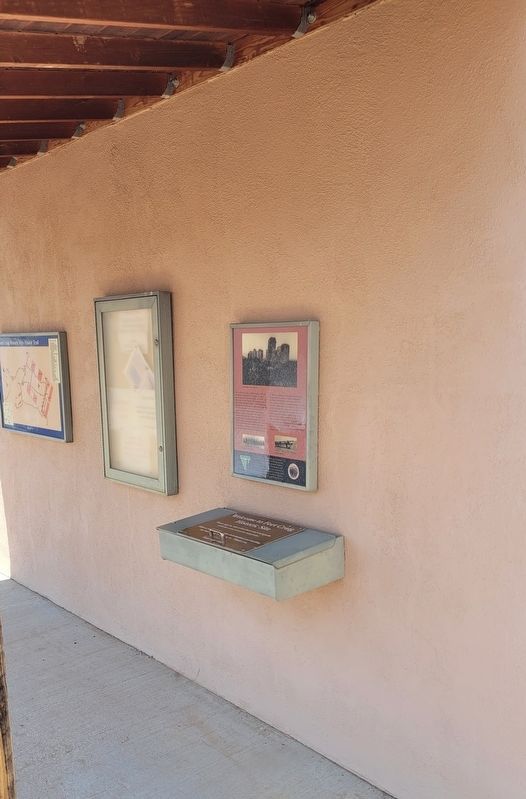
2. Fort Craig Marker
Other nearby markers. At least 8 other markers are within walking distance of this marker: El Camino Real (here, next to this marker); Battle of Valverde (here, next to this marker); Prehistoric Peoples (within shouting distance of this marker); a different marker also named Fort Craig (within shouting distance of this marker); Early Spanish Exploration (within shouting distance of this marker); The Establishment of Fort Craig (within shouting distance of this marker); Store Houses (about 400 feet away, measured in a direct line); Commanding Officer's Quarters (about 400 feet away). Touch for a list and map of all markers in San Antonio.
More about this marker. At Fort Craig Historic Site, an ADA accessible, self-guided interpretive trail is open seven days a week, from 8:00 a.m. to one-hour before sunset. The visitor’s center is open Thursday through Monday from 8:00 a.m. to 5:00 p.m.
Also see . . . Fort Craig Historic Site.
Photographed by James Hulse, July 23, 2024
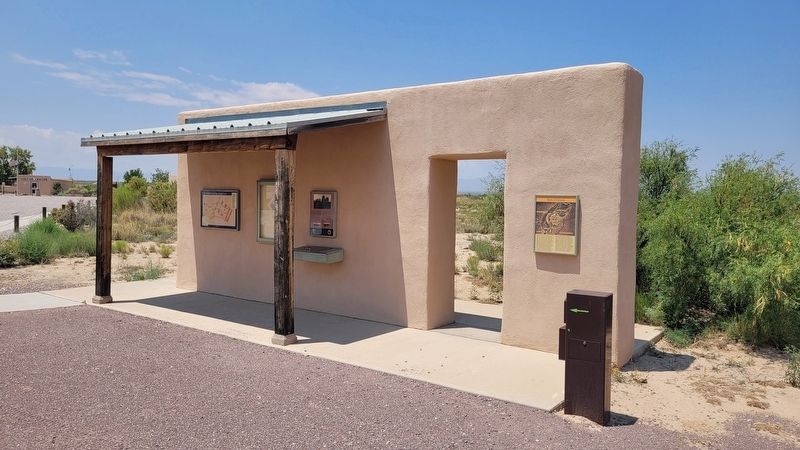
3. The view of the Fort Craig Marker at the beginning of the fort trail
Fort Craig, established in 1854, was one of the largest and most important frontier forts in the West. Set in the rugged beauty of Socorro County, N.M., it was one of the eight forts situated along the primary north-south road in the Rio Grande Valley. Fort Craig played a crucial role in Indian campaigns and the Civil War.(Submitted on August 5, 2024, by James Hulse of Medina, Texas.)
Credits. This page was last revised on August 11, 2026. It was originally submitted on August 4, 2024, by James Hulse of Medina, Texas. This page has been viewed 204 times since then and 23 times this year. Photos: 1, 2, 3. submitted on August 6, 2024, by James Hulse of Medina, Texas.
