Kent Township near Pearl City in Stephenson County, Illinois — The American Midwest (Great Lakes)
Lincoln and the Black Hawk War
—
Looking for Lincoln
—
Photographed by Duane and Tracy Marsteller, July 7, 2024
1. Lincoln and the Black Hawk War Marker
Inscription.
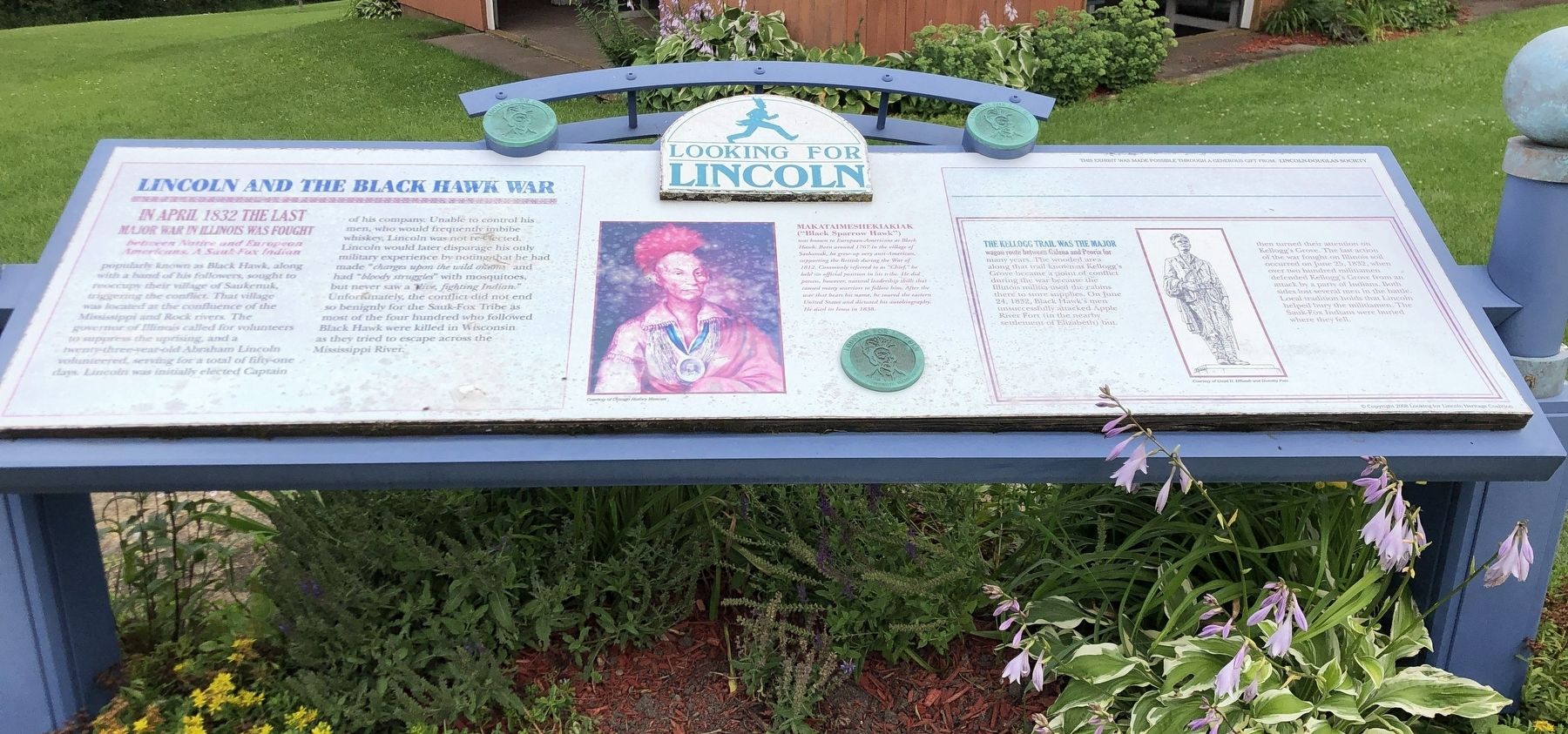
Lincoln and the Black Hawk War. . In April 1832 the last major war in Illinois was fought between Native and European Americans. A Sauk-Fox Indian popularly known as Black Hawk, along with a band of his followers, sought to reoccupy their village of Saukenuk, triggering the conflict. That village was located at the confluence of the Mississippi and Rock rivers. The governor of Illinois called for volunteers to suppress the uprising, and a twenty-three-year-old Abraham Lincoln volunteered, serving for a total of fifty-one days. Lincoln was initially elected Captain of his company. Unable to control his men, who would frequently imbibe whiskey, Lincoln was not re-elected. Lincoln would later disparage his only military experience by noting that he had made “charges upon the wild onions” and had “bloody struggles” with mosquitoes, but never saw a “live, fighting Indian.” Unfortunately, the conflict did not end so benignly for the Sauk-Fox Tribe as most of the four hundred who followed Black Hawk were killed in Wisconsin as they tried to escape across the Mississippi River. , Makataimeshekiakiak (“Black Sparrow Hawk”) was known to European-Americans as Black Hawk. Born around 1767 in the village of Saukenuk, he grew up very anti-American, supporting the British during the War of 18 12. Commonly referred to as “Chief”,he held no official position in his tribe. He did possess, however, natural leadership skills that caused many warriors to follow him. After the war that bears his name, he toured the eastern United States and dictated his autobiography. He died in Iowa in 1838. , The Kellogg Trail was the major wagon route between Galena and Peoria for many years. The wooded area along that trail known as Kellogg's Grove became a point of conflict during the war because the Illinois militia used the cabins there to store supplies. On June 24, 1832, Black Hawk's men unsuccessfully attacked Apple River Fort (in the nearby settlement of Elizabeth) but then turned their attention on Kellogg's Grove. The last action of the war fought on Illinois soil occurred on June 25, 1832, when over two hundred militiamen defended Kellogg's Grove from an attack by a party of Indians. Both sides lost several men in the battle. Local tradition holds that Lincoln helped bury the militiamen. The Sauk-Fox Indians were buried where they fell.
In April 1832 the last major war in Illinois was fought between Native and European Americans. A Sauk-Fox Indian popularly known as Black Hawk, along with a band of his followers, sought to reoccupy their village of Saukenuk, triggering the conflict. That village was located at the confluence of the Mississippi and Rock rivers. The governor of Illinois called for volunteers to suppress the uprising, and a twenty-three-year-old Abraham Lincoln volunteered, serving for a total of fifty-one days. Lincoln was initially elected Captain of his company. Unable to control his men, who would frequently imbibe whiskey, Lincoln was not re-elected. Lincoln would later disparage his only military experience by noting that he had made “charges upon the wild onions” and had “bloody struggles” with mosquitoes, but never saw a “live, fighting Indian.” Unfortunately, the conflict did not end so benignly for the Sauk-Fox Tribe as most of the four hundred who followed Black Hawk were killed in Wisconsin as they tried to escape across the Mississippi River.
Makataimeshekiakiak (“Black Sparrow Hawk”) was known to European-Americans as Black
Click or scan to see this page online
Hawk. Born around 1767 in the village of Saukenuk, he grew up very anti-American, supporting the British during the War of 1812. Commonly referred to as “Chief”,he held no official position in his tribe. He did possess, however, natural leadership skills that caused many warriors to follow him. After the war that bears his name, he toured the eastern United States and dictated his autobiography. He died in Iowa in 1838.
The Kellogg Trail was the major wagon route between Galena and Peoria for many years. The wooded area along that trail known as Kellogg's Grove became a point of conflict during the war because the Illinois militia used the cabins there to store supplies. On June 24, 1832, Black Hawk's men unsuccessfully attacked Apple River Fort (in the nearby settlement of Elizabeth) but then turned their attention on Kellogg's Grove. The last action of the war fought on Illinois soil occurred on June 25, 1832, when over two hundred militiamen defended Kellogg's Grove from an attack by a party of Indians. Both sides lost several men in the battle. Local tradition holds that Lincoln helped bury the militiamen. The Sauk-Fox Indians
Photographed by Duane and Tracy Marsteller, July 7, 2024
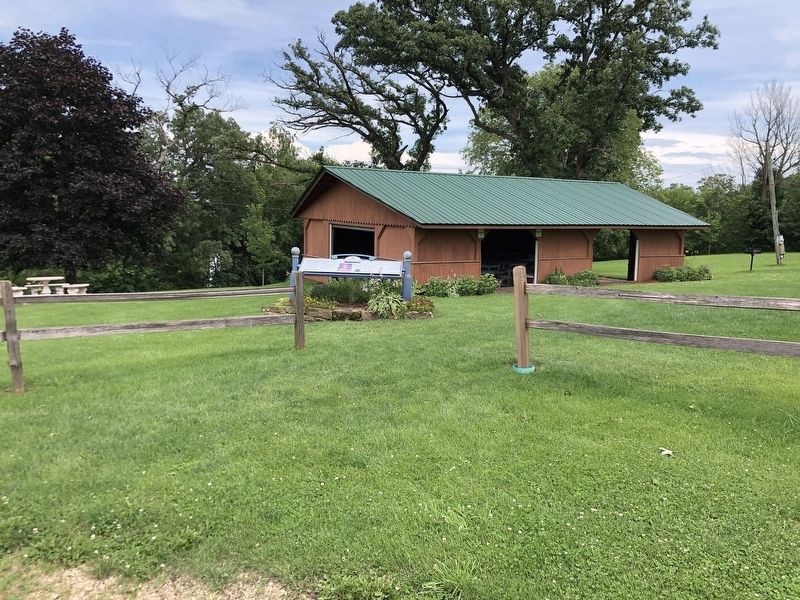
Location. 42° 17.812′ N, 89° 52.947′ W. Marker is near Pearl City, Illinois, in Stephenson County. It is in Kent Township. It is at the intersection of West Blackhawk Road and North Monument Road, on the right when traveling east on West Blackhawk Road. Marker is in Black Hawk Battlefield Park. Touch for map. Marker is at or near this postal address: 14109 W Blackhawk Rd, Pearl City IL 61062, United States of America. Touch for directions.
Regionally, this marker is in the American Midwest and in the Corn Belt. Globally, it is in North America, the Western Hemisphere, the Western World, and the Anglosphere. Historically, it finds itself in what was once the territory of the Mississippian Culture and also the Northwest Territory.
Credits. This page was last revised on August 5, 2024. It was originally submitted on August 5, 2024, by Duane and Tracy Marsteller of Murfreesboro, Tennessee. This page has been viewed 466 times since then and 75 times this year. Photos:1, 2. submitted on August 5, 2024, by Duane and Tracy Marsteller of Murfreesboro, Tennessee.