Sentrum in Oslo, Norway — Northern Europe (a Nordic Country in Scandinavia)
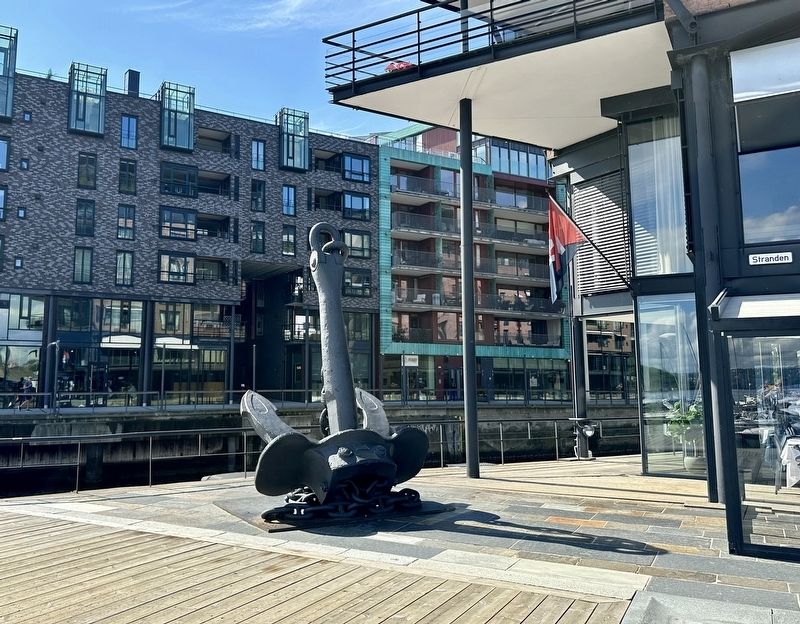
Blüchers Anker
⎯⎯⎯
Blüchers Anchor
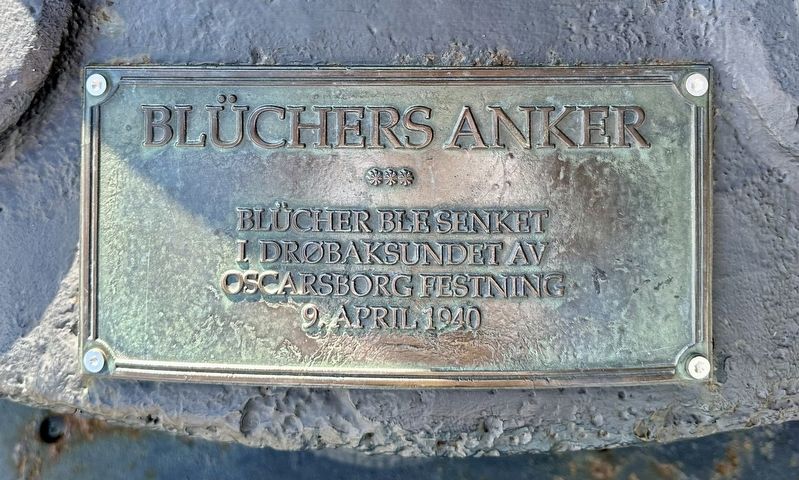
Photographed by Andrew Ruppenstein, July 11, 2024
1. Blüchers Anker / Blüchers Anchor Marker

i Drøbaksundet av
Oscarsborg Festning
9.april 1940
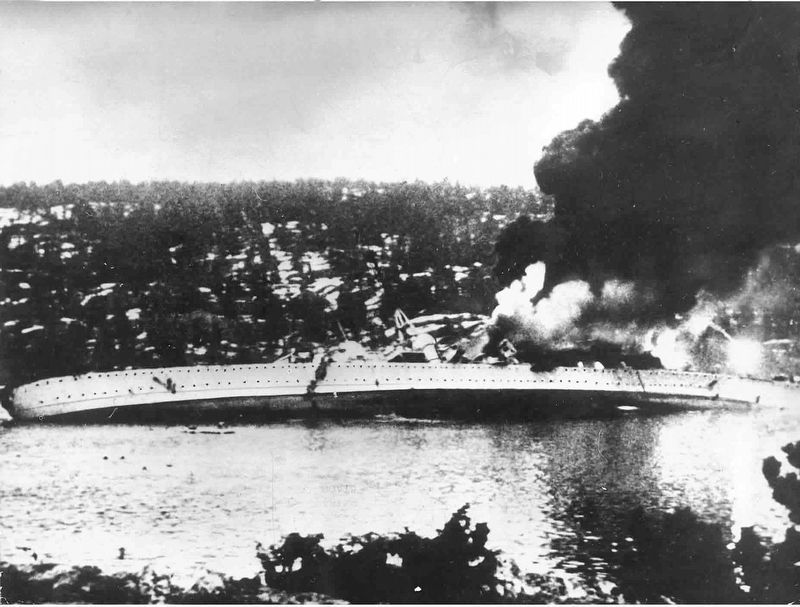
The Blücher was sunk in the Drøbak Sound off of Oscarsborg Fortress on April 9, 1940.
Topics. This memorial is listed in these topic lists: War, World II • Waterways & Vessels. A significant historical date for this entry is April 9, 1940.
Location. 59° 54.503′ N, 10° 43.455′ E. Memorial is in Oslo. It is in Sentrum. It is on Stranden, on the left when traveling east. Touch for map. Memorial is at or near this postal address: Stranden 0252, Oslo 0252, Norway. Touch for directions.

Regionally, it is in the North Atlantic Region, on the Atlantic Arc, in Europe, in Atlantic Europe, in Scandinavia, in the Nordic Countries, in the Schengen Area, and in the Western World.
Other nearby markers. At least 8 other markers are within walking distance of this marker: Skipssabotasje / Ship Sabotage (about 120 meters away, measured in a direct line); Pelle Group Memorial (approx. 0.3 kilometers away); Akers Mekaniske Verksted / Akers Mechanical Workshop (approx. 0.3 kilometers away); Arbeider Bolig / Workers Housing (approx. 0.4 kilometers away); Mosse Jørgenson (approx. half a kilometer away); Vestbane Stasjonen / Western Rail Station (approx. half a kilometer
this page online
Also see . . . Battle of Drøbak Sound (Wikipedia).
The Battle of Drøbak Sound took place in Drøbak Sound, the northernmost part of the outer Oslofjord in southern Norway, on 9 April 1940. It marked the end of the "Phoney War" and the beginning of World War II in Western Europe.
A German fleet led by the cruiser Blücher was dispatched up the Oslofjord to begin the German invasion of Norway, with the objective of seizing the Norwegian capital of Oslo and capturing King Haakon VII and his government. The fleet was engaged in the fjord by Oscarsborg Fortress, an aging coastal installation near Drøbak, that had been relegated to training coastal artillery servicemen, leading the Germans to disregard its defensive value. However, unbeknownst to German military intelligence, the fortress' most powerful weapon was a torpedo battery, which would be used to great effect against the German invaders.
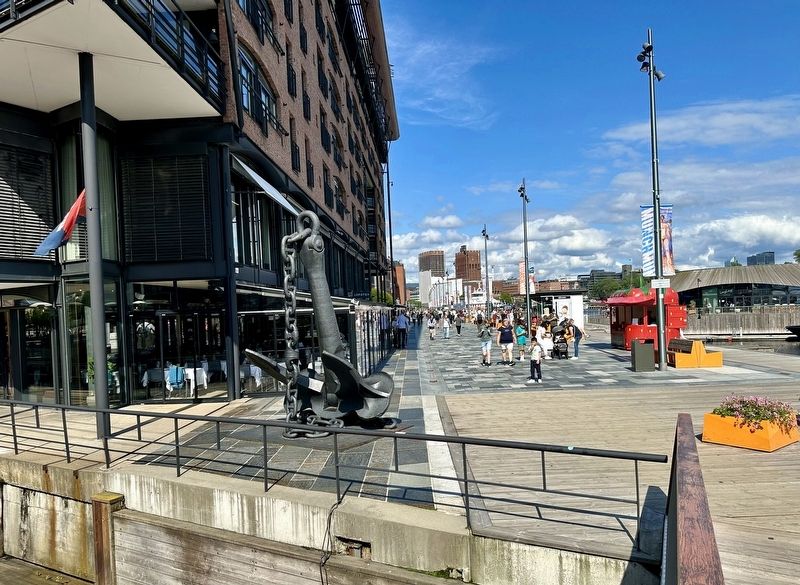
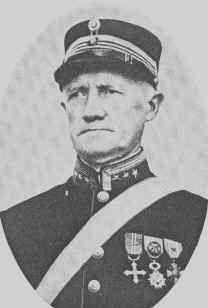
The fortress' armaments worked flawlessly despite their age, sinking the Blücher in the sound and forcing the German fleet to fall back. The loss of the German flagship, whichcarried most of the troops and Gestapo agents intended to occupy Oslo, delayed the German occupation long enough for King Haakon VII and his government to escape from the capital. (Submitted on August 7, 2024.)Photographed by Andrew Ruppenstein, July 11, 20242. Blüchers Anker / Blüchers Anchor Marker - wide viewThe marker is (sort of) visible here, attached to the anchor.Photographed by Andrew Ruppenstein, July 11, 20243. Blüchers Anker / Blüchers Anchorcourtesy Riksarkivet via Wikimedia Commons, April 9, 19404. Blücher sinkingThe German cruiser Blücher listing heavily to port after being hit by cannon fire and torpedoes from the Norwegian coastal fortress Oscarsborg. She sank a short time later.via Wikimedia Commons, circa 19465. Portrait of Norwegian coastal artillery commander Colonel Birger Kristian EriksenAt 04:21 on 9 April, Eriksen gave the Main Battery guns the order to fire at the lead ship of the unknown flotilla forcing its way towards Oslo. Upon giving the command, Eriksen was questioned. He responded with his now famous response; "Either I will be decorated or I will be court martialled. Fire!"
Credits. This page was last revised on August 7, 2024. It was originally submitted on August 7, 2024, by Andrew Ruppenstein of Lamorinda, California. This page has been viewed 512 times since then and 113 times this year. Photos: 1, 2, 3, 4, 5. submitted on August 7, 2024, by Andrew Ruppenstein of Lamorinda, California.