Miracle Mile in Los Angeles in Los Angeles County, California — The American West (Pacific Coastal)
Imagining Ice Age L.A.
La Brea Tar Pits
Photographed by Craig Baker, May 6, 2024
1. Imagining Ice Age L.A. Marker
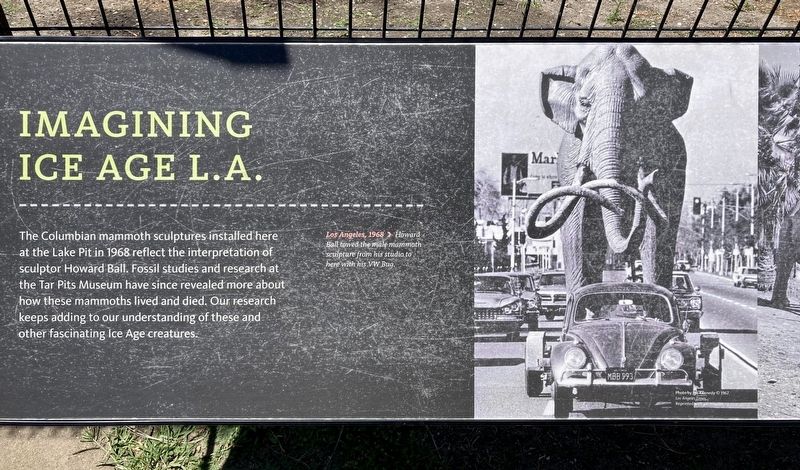
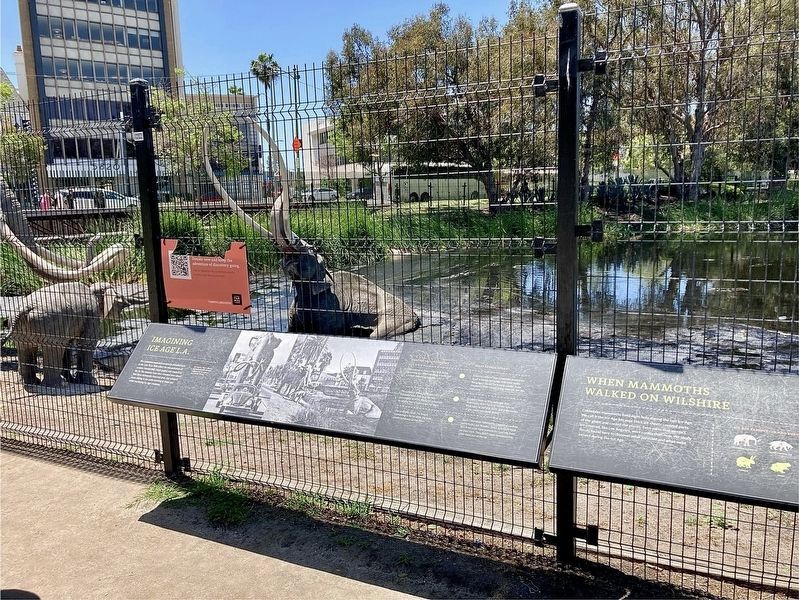
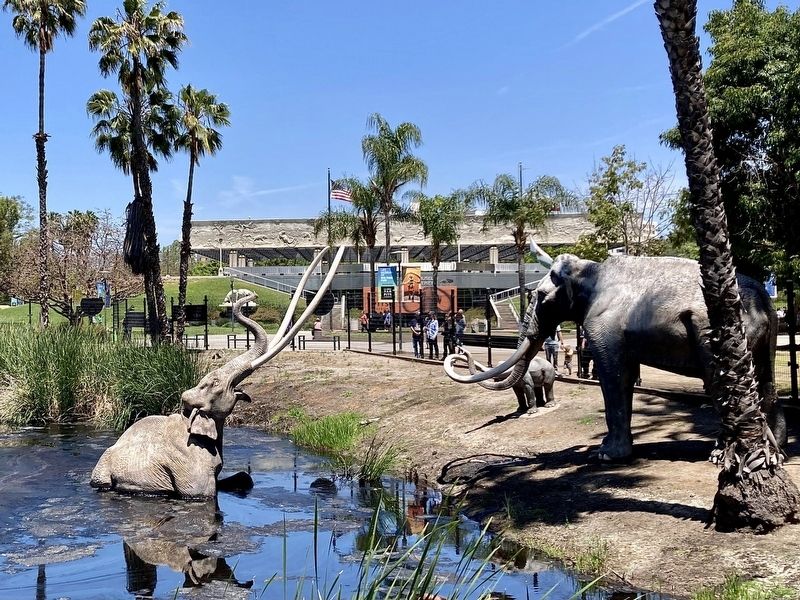
The Columbian mammoth sculptures installed here at the Lake Pit in 1968 reflect the interpretation of sculptor Howard Ball. Fossil studies and research at the Tar Pits Museum have since revealed more about how these mammoths lived and died. Our research keeps adding to our understanding of these and other fascinating Ice Age creatures.
photo caption:
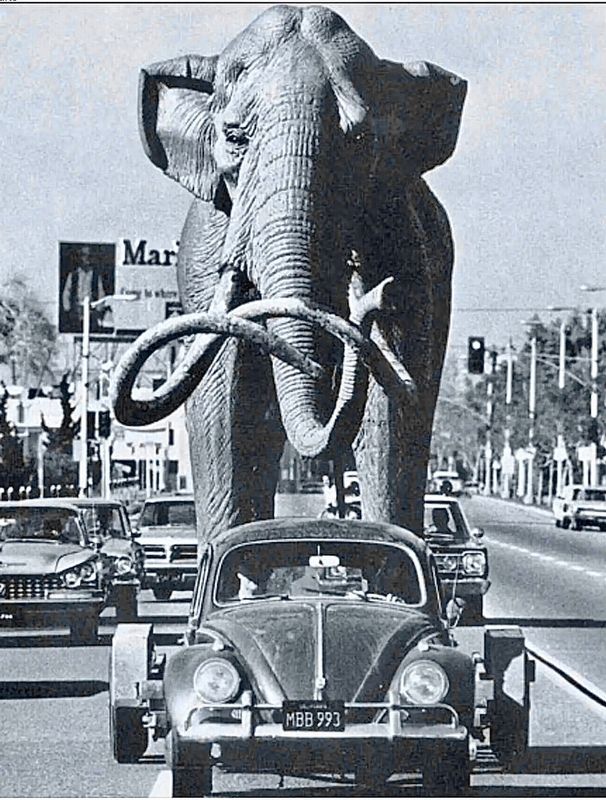
Los Angeles, 1968: Howard Ball towed the male mammoth sculpture from his studio to here with his VW Bug.
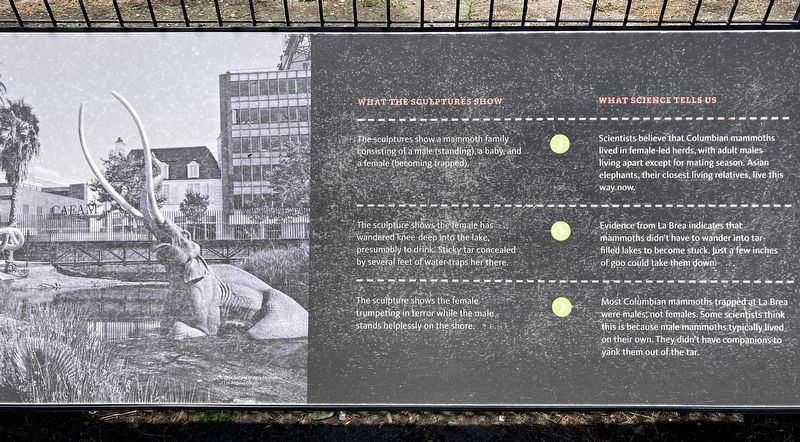
What the Sculptures Show — — What Science Tells Us
The sculptures show a mammoth family consisting of a male (standing), a baby, and a female (becoming trapped). — —
Scientists believe that Columbian mammoths lived in female-led herds, with adult males living apart except for mating season. Asian elephants, their closest living relatives, live this way now.
The sculpture shows the female has wandered knee-deep into the lake, presumably to drink. Sticky tar concealed by several feet of water traps her there. — —
Evidence from La Brea indicates that mammoths didn't have to wander into tar-filled lakes to become
this page online
The sculpture shows the female trumpeting in terror while the male stands helplessly on the shore. — —
Most Columbian mammoths trapped at La Brea were males, not females. Some scientists think this is because male mammoths typically lived on their own. They didn't have companions to yank them out of the tar.
Topics. This historical marker is listed in these topic lists: Paleontology • Parks & Recreational Areas. A significant historical year for this entry is 1968.
Location. 34° 3.779′ N, 118° 21.328′ W. Marker is in Los Angeles, California, in Los Angeles County. It is in Miracle Mile. It is at the intersection of Wilshire Boulevard and Curson Avenue, on the right when traveling west on Wilshire Boulevard. Touch for map. Marker is at or near this postal address: 5801 Wilshire Blvd, Los Angeles CA 90036, United States of America. Touch for directions.

Regionally, this marker is in the Transverse Ranges. It is also on the American Pacific Coast. Globally, it is in North America, on the Ring of Fire, on the Pacific Rim, in the Western Hemisphere, in the
Photographed by Craig Baker, May 6, 2024
2. Imagining Ice Age L.A. Marker
Other nearby markers. At least 8 other markers are within walking distance of this marker: When Mammoths Walked on Wilshire (here, next to this marker); Hancock Park (a few steps from this marker); La Brea Tar Pits (a few steps from this marker); Rancho La Brea (within shouting distance of this marker); Different Types of Fossils (about 300 feet away, measured in a direct line); Chester Stock Ph.D. (about 500 feet away); Pits 3, 4, 61/67 (about 600 feet away); Tar seeps form Ice Age time capsules (about 600 feet away). Touch for a list and map of all markers in Los Angeles.
3. Marker Detail
Photographed by Craig Baker, May 6, 2024
4. Imagining Ice Age L.A. Marker
Photographed by Craig Baker, May 6, 2024
5. La Brea Tar Pits
Credits. This page was last revised on August 26, 2026. It was originally submitted on August 8, 2024, by Craig Baker of Sylmar, California. This page has been viewed 219 times since then and 22 times this year. Photos: 1, 2, 3, 4. submitted on August 8, 2024, by Craig Baker of Sylmar, California. 5. submitted on May 7, 2024, by Craig Baker of Sylmar, California.
