Marion in Williamson County, Illinois — The American Midwest (Great Lakes)
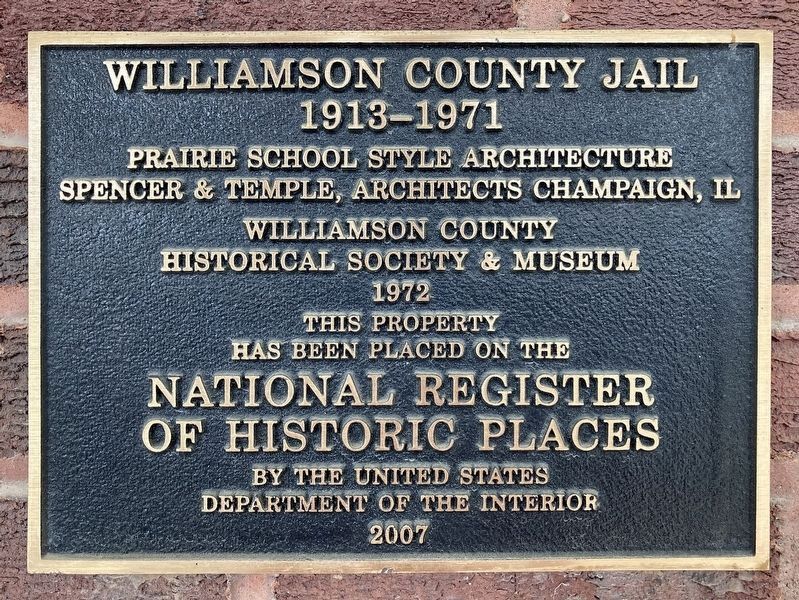
Williamson County Jail
1913-1971
Photographed by Craig Baker, April 26, 2025
1. Williamson County Jail Marker
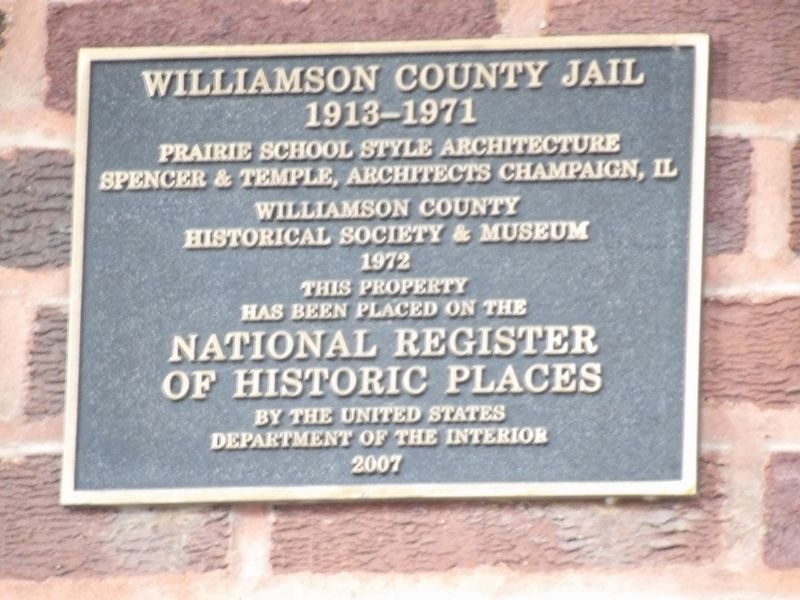
Prairie School style architecture,
Spencer & Temple, architects, Champaign, IL.
Williamson County Historical Society & Museum - 1972
This property has been placed on the National Register of Historic Places by the United States Department of the Interior - 2007
Topics and series. This historical marker is listed in these topic lists: Architecture • Education • Law Enforcement. In addition, it is included in the National Register of Historic Places (NRHP) series list. A significant historical year for this entry is 1913.
Location. 37° 43.819′ N, 88° 55.694′ W. Marker is in Marion, Illinois, in Williamson County. It is at the intersection of South Van Buren Street and West Paradise Alley, on the left when traveling south on South Van Buren Street. Touch for map. Marker is at or near this postal address: 105 S Van Buren St, Marion IL 62959, United States of America. Touch for directions.

Regionally, this marker is in Southern Illinois — Little Egypt. It is also in the American Midwest and in the Corn Belt. Globally, it is in North America, the Western Hemisphere, the Western World, and
this page online
Other nearby markers. At least 8 other markers are within walking distance of this marker: I Shall Stand For This Union (about 300 feet away, measured in a direct line); John A. Logan Speech (about 300 feet away); Bob Butler Biography (about 300 feet away); Marion History (about 300 feet away); Marion Tornado Memorial (about 300 feet away); The Willis Allen House (approx. ¼ mile away); Stotlar - De Mattei House (approx. 0.6 miles away); Dedicated to All Veteran in all Wars (approx. 0.8 miles away). Touch for a list and map of all markers in Marion.
Regarding Williamson County Jail. Excerpts from the National Register nomination:
The building served Williamson County as a jail for almost sixty years. During its operation as a jail, it housed prisoners involved in significant events in Williamson County's history and the history of Illinois. …
One of the historical events in the county was the bloody massacre of non-union strike-breakers at one of the county mines. The Lester Strip Minenear Herrin was the site of a mob action by members of the United Mine Workers of American (UMWA). During the 1922 UMWA strike, the owner of the mine W.J. Lester brought in from Chicago some men who were non-union to work his mine. A mob of union workers went to the mine and rounded up the strikebreakers and after torturing them they murdered them by gunshot and cutting their throats. What became known as the Herrin Massacre left twenty-three dead. … Because of the lawlessness and the extreme violence of the miner riots that prevailed in the county following the Civil War, the county received international attention, and received the name "Bloody Williamson." …Photographed by Duane and Tracy Marsteller, March 30, 20192. Williamson County Jail Marker
Shortly after the last of the [miner] trials, Williamson County again became the center of attention. A group of citizens in the county formed the Marion Law Enforcement League. … The Law Enforcement League's purpose was to [root] out gambling and bootlegging in the county. On May 20,1923, the Ku Klux Klan first made its presence felt throughout the county in a series of visits and contributions to protestant churches. The Klan soon joined, and included many members of, the MarionLaw Enforcement League. …Photographed by Duane and Tracy Marsteller, March 30, 20193. Williamson County Jail Marker
Many of Williamson County's elected officials found themselves in the anti-Klan camp with bootleggers and roadhouse proprietors. The majority of Williamson County church leaders threw their support behind [Klan leader S. Glenn] Young, and many openly supported the Ku Klux Klan. The conflicts between the two groups became increasingly violent. Over the next two and a half years, troops of the Illinois National Guard were called five times to assist in restoring civil government and to protect the lives, rights, and property of the citizens. The conflict became known as the Klan War, and for a time the Ku Klux Klan, under S. Glenn Young's leadership, controlled Williamson County. … The Klan officially expelled S. Glenn Young from its ranks on September 13, 1924, but this had little effect on his supporters. The conflict finally came to a violent end when Young and deputy sheriff Ora Thomas, reputed leader of the anti-Klan faction The Knights of the Flaming Circle, killed each other in a shootout …
Almost as soon as the Klan War was at an end, a new war started in Williamson County. In 1926 Williamson County entereda period of gang warfare between the Charlie Birger gang and the rival Shelton brothers gang. … The Shelton Brothers and Charlie Birger were bootleggers who had once worked together. What precipitated the split is not known; speculation from many sources was that a bad business arrangement turned into something personal. What is known is that for almost two years Birger and the Sheltons traded murder-for-murder throughout Williamson and Franklin Counties.Photographed by Craig Baker, April 26, 20254. Williamson County Jail Building
Also see . . .
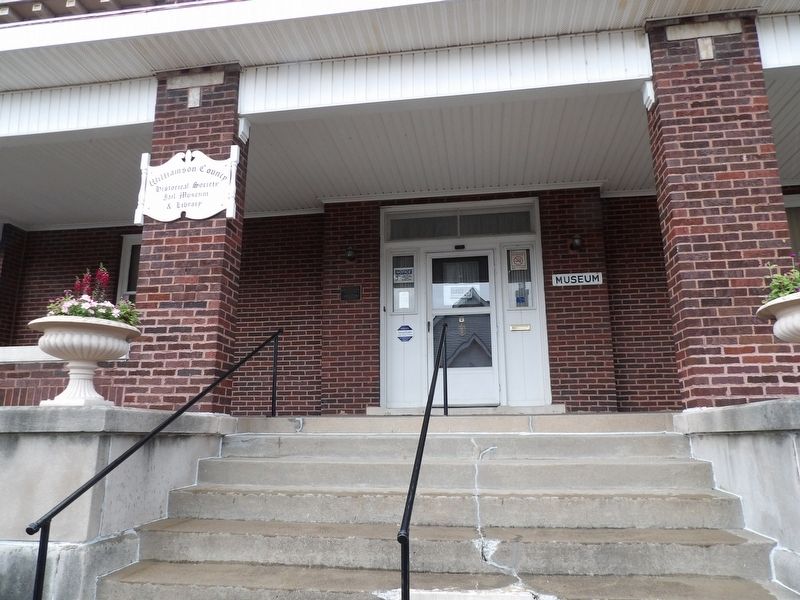
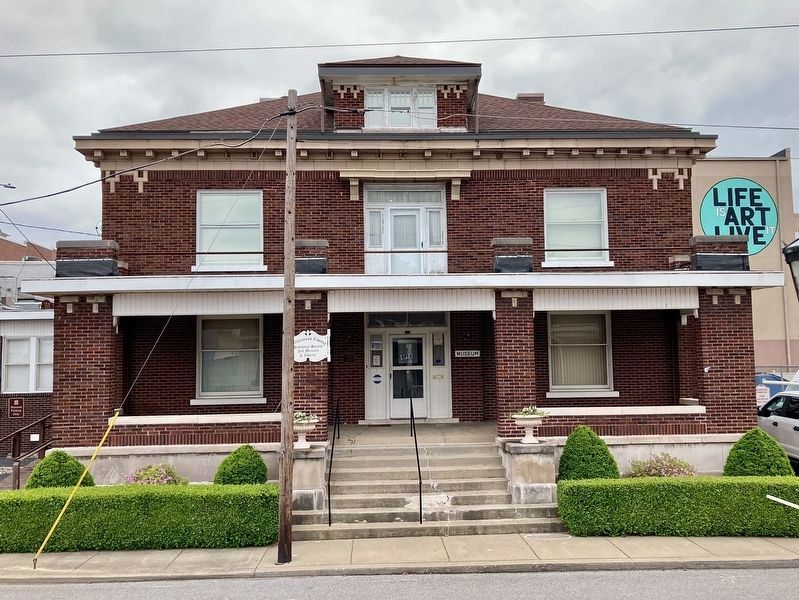
1. Williamson County Jail (PDF). National Register nomination for the versatile building, which also served as the sheriff's residence and sleeping quarters for sequestered jurors. (Prepared by Clarence De Mattei and Bob Jackson, with Christina White contributing; via National Archives) (Submitted on August 10, 2024, by Duane and Tracy Marsteller of Murfreesboro, Tennessee.)
2. Williamson County was a dangerous place in the 1920s. Torn by violence between miners and strikebreakers, as well as between a briefly-resurgent Ku Klux Klan against Catholics and immigrants, the county was the setting for Paul Angle’s 1952 book Bloody Williamson, which
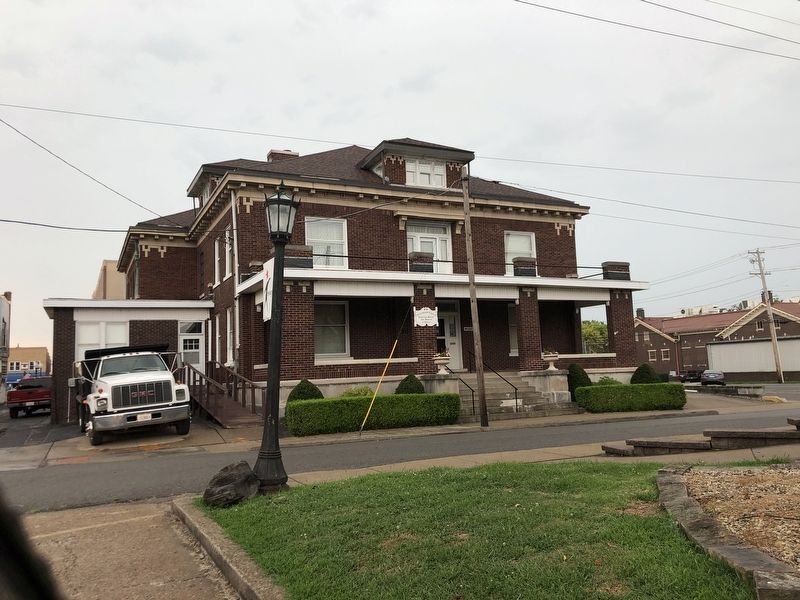
Photographed by Duane and Tracy Marsteller, July 8, 2024
5. Former Williamson County Jail
Credits. This page was last revised on April 27, 2025. It was originally submitted on August 10, 2024, by Duane and Tracy Marsteller of Murfreesboro, Tennessee. This page has been viewed 269 times since then and 36 times this year. Photos: 1. submitted on April 27, 2025, by Craig Baker of Sylmar, California. 2, 3. submitted on August 10, 2024, by Duane and Tracy Marsteller of Murfreesboro, Tennessee. 4. submitted on April 27, 2025, by Craig Baker of Sylmar, California. 5. submitted on August 10, 2024, by Duane and Tracy Marsteller of Murfreesboro, Tennessee.
