Savannah in Chatham County, Georgia — The American South (South Atlantic)
Fort Pulaski Prison
Photographed by Brandon D Cross
1. Fort Pulaski Prison Marker
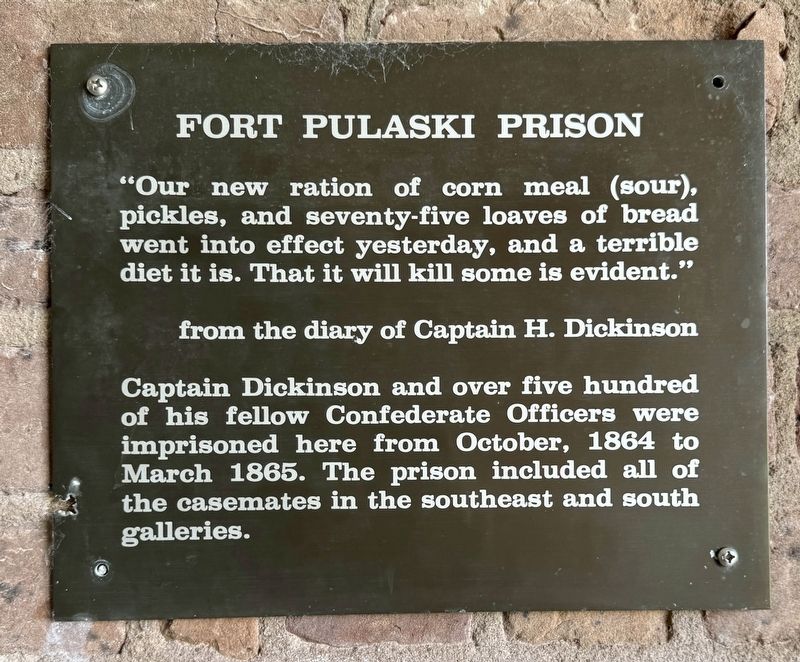
"Our new ration of corn meal (sour), pickles, and seventy-five loaves of bread went into effect yesterday, and a terrible diet it is. That it will kill some is evident."
from the diary of Captain H. Dickinson
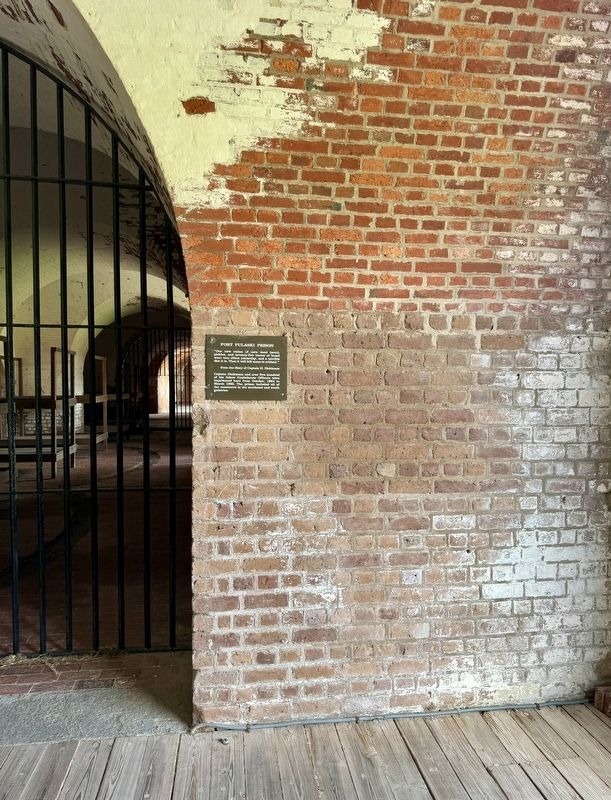
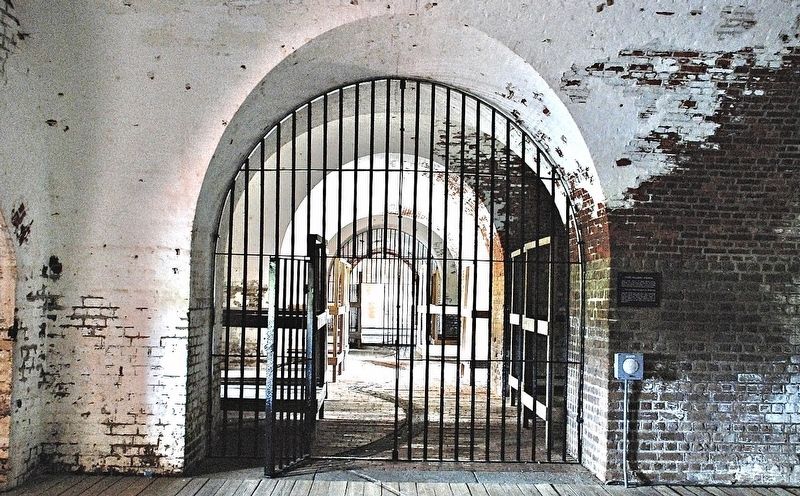
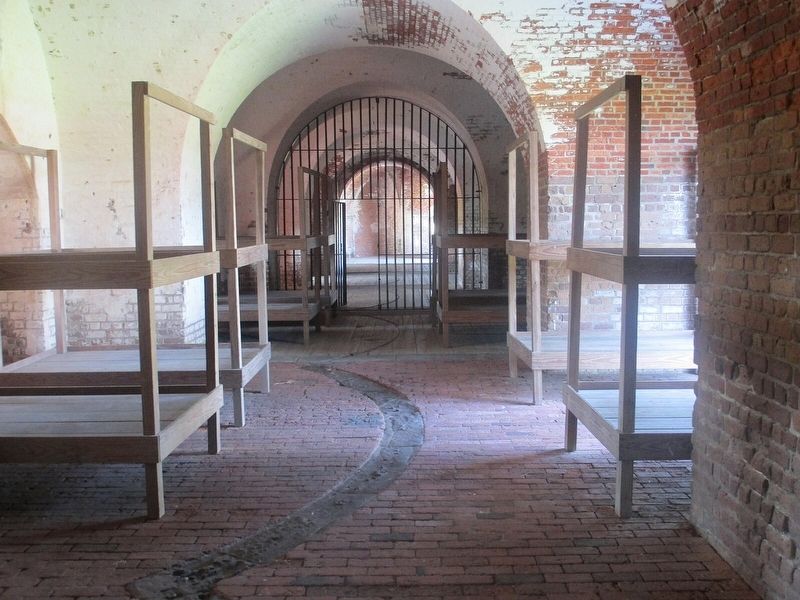
Captain Dickinson and over five hundred of his fellow Confederate Officers were imprisoned here from October, 1864 to March 1865. The prison included all of the casemates in the southeast and south galleries.
Erected by National Park Service.
Topics. This memorial is listed in these topic lists: Forts and Castles • War, US Civil.
Location. 32° 1.612′ N, 80° 53.418′ W. Memorial is in Savannah, Georgia, in Chatham County. It is on Fort Pulaski Road 0.2 miles east of Cockspur Island Road, on the right when traveling east. The marker is located within Fort Pulaski National Monument. Touch for map. Memorial is at or near this postal address: 101 Fort Pulaski Road, Savannah GA 31410, United States of America. Touch for directions.

Regionally, this memorial is on the Coastal Plain, on the Georgia Coast and the Golden Isles, and on the Sea Islands. It
this page online
Other nearby markers. At least 8 other markers are within walking distance of this marker: Store House (within shouting distance of this marker); Fort at Play (within shouting distance of this marker); Through the Thick Brick Wall (within shouting distance of this marker); Parrott Rifle (within shouting distance of this marker); Southwest Bastion (within shouting distance of this marker); Southwest Magazine (within shouting distance of this marker); Federal Siege Batteries (within shouting distance of this marker); A Devastating Bombardment (within shouting distance of this marker).
Another marker is no longer nearby. The Breached Wall (was within shouting distance of this marker but has been confirmed
Photographed by Brandon D Cross
2. Fort Pulaski Prison Marker
Also see . . .
1. Prisoner of War Experience. (Submitted on August 10, 2024, by Brandon D Cross of Flagler Beach, Florida.)
2. The Immortal Six Hundred. (Submitted on August 10, 2024, by Brandon D Cross of Flagler Beach, Florida.)
Photographed by National Park Service
3. Fort Pulaski Prison Marker
Photographed by National Park Service
4. Fort Pulaski Prison interior
Photographed by Brandon D Cross
5. Confederate Prisoners of War
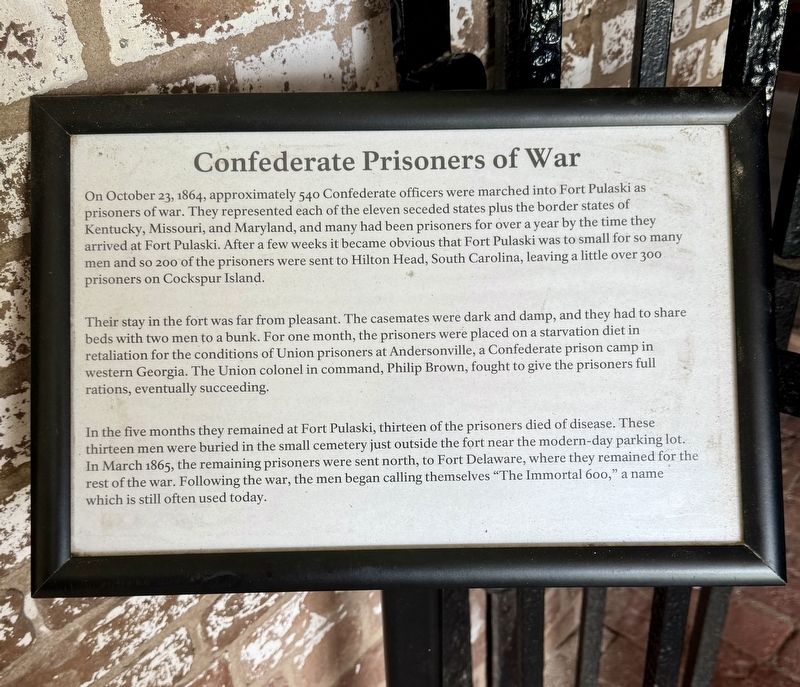
On October 23, 1864, approximately 540 Confederate officers were marched into Fort Pulaski as prisoners of war. They represented each of the eleven seceded states plus the border states of Kentucky, Missouri, and Maryland, and many had been prisoners for over a year by the time they arrived at Fort Pulaski. After a few weeks it became obvious that Fort Pulaski was to small for so many men and so 200 of the prisoners were sent to Hilton Head, South Carolina, leaving a little over 300 prisoners on Cockspur Island.
Their stay in the fort was far from pleasant. The casemates were dark and damp, and they had to share beds with two men to a bunk. For one month, the prisoners were placed on a starvation diet in retaliation for the conditions of Union prisoners at Andersonville, a Confederate prison camp in western Georgia. The Union colonel in command, Philip Brown, fought to give the prisoners full rations, eventually succeeding.
In the five months they remained at Fort Pulaski, thirteen of the prisoners died of disease. These thirteen men were buried in the small cemetery just outside the fort near the modern-day parking lot. In March 1865, the remaining prisoners were sent north, to Fort Delaware, where they remained for the rest of the war. Following the war, the men began calling themselves "The Immortal 600," a name which is still often used today.
Their stay in the fort was far from pleasant. The casemates were dark and damp, and they had to share beds with two men to a bunk. For one month, the prisoners were placed on a starvation diet in retaliation for the conditions of Union prisoners at Andersonville, a Confederate prison camp in western Georgia. The Union colonel in command, Philip Brown, fought to give the prisoners full rations, eventually succeeding.
In the five months they remained at Fort Pulaski, thirteen of the prisoners died of disease. These thirteen men were buried in the small cemetery just outside the fort near the modern-day parking lot. In March 1865, the remaining prisoners were sent north, to Fort Delaware, where they remained for the rest of the war. Following the war, the men began calling themselves "The Immortal 600," a name which is still often used today.
Photographed by National Park Service
6. Thirteen Confederate Officers
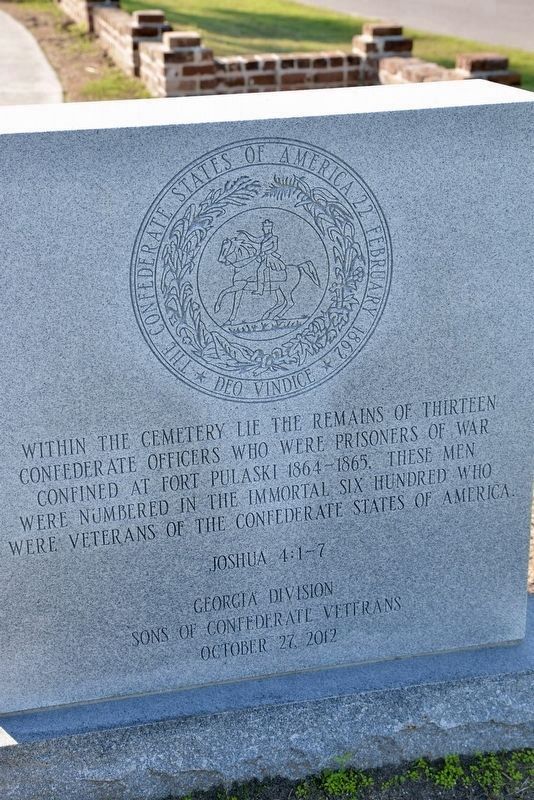
Within the cemetery lie the remains of thirteen confederate officers who were prisoners of war
confined at Fort Pulaski 1864-1865. These men
were numbered in the Immortal Six Hundred who
Were veterans of the Confederate States of America.
Joshua 4:1-7
Georgia Division
Sons of Confederate Veterans
October 27, 2012
Georgia Division
Sons of Confederate Veterans
October 27, 2012
Credits. This page was last revised on August 10, 2024. It was originally submitted on August 10, 2024, by Brandon D Cross of Flagler Beach, Florida. This page has been viewed 339 times since then and 42 times this year. Photos: 1, 2, 3, 4, 5, 6. submitted on August 10, 2024, by Brandon D Cross of Flagler Beach, Florida. • Bernard Fisher was the editor who published this page.
