Memphis in Shelby County, Tennessee — The American South (East South Central)
The Central Plaza
Photographed by Jason Voigt, August 1, 2024
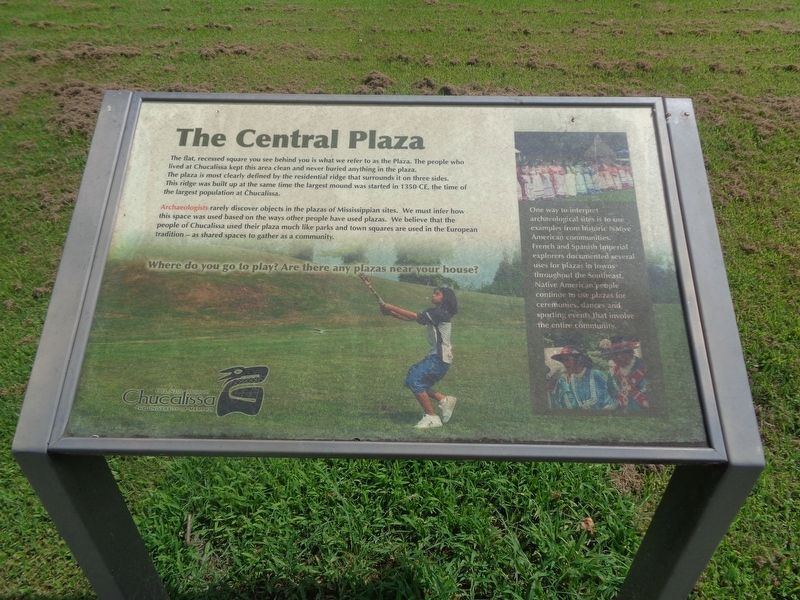
1. The Central Plaza Marker
Archaeologists rarely discover objects in the plazas of Mississippian sites. We must infer how this space was used based on the ways other people have used plazas. We believe that the people of Chucalissa used their plaza much like parks and town squares are used in the European tradition - as shared spaces to gather as a community.
(aside:)
One way to interpret archaeological sites is to use examples from historic Native American communities. French and Spanish Imperial explorers documented several uses for plazas in towns throughout the Southeast. Native American people continue to use plazas for ceremonies, dances and sporting events that involve the entire community.
Erected by C.H. Nash Museum, Chucalissa, the
this page online
Topics. This historical marker is listed in these topic lists: Anthropology & Archaeology • Exploration. A significant historical year for this entry is 1350.
Location. 35° 3.761′ N, 90° 7.831′ W. Marker is in Memphis, Tennessee, in Shelby County. It can be reached from Indian Village Drive. Marker is on the grounds of Chucalissa site, on a walking path in the reconstructed area. Touch for map. Marker is at or near this postal address: 1987 Indian Village Dr, Memphis TN 38109, United States of America. Touch for directions.

Regionally, this marker is in West Tennessee. It is also in the American South, specifically in the Deep South, in the Upper South, in the Mississippi Delta, and in the Great River Road Region. Globally, it is in North America, the Western Hemisphere, the Western World, and the Anglosphere. Historically, it finds itself in what was once the territory of the Mississippian Culture, one of the Confederate States of America, and the Antebellum South.
Other nearby markers. At least 8 other markers are within walking distance of this marker: Plant Use in the Southeast (within
Photographed by Jason Voigt, August 1, 2024
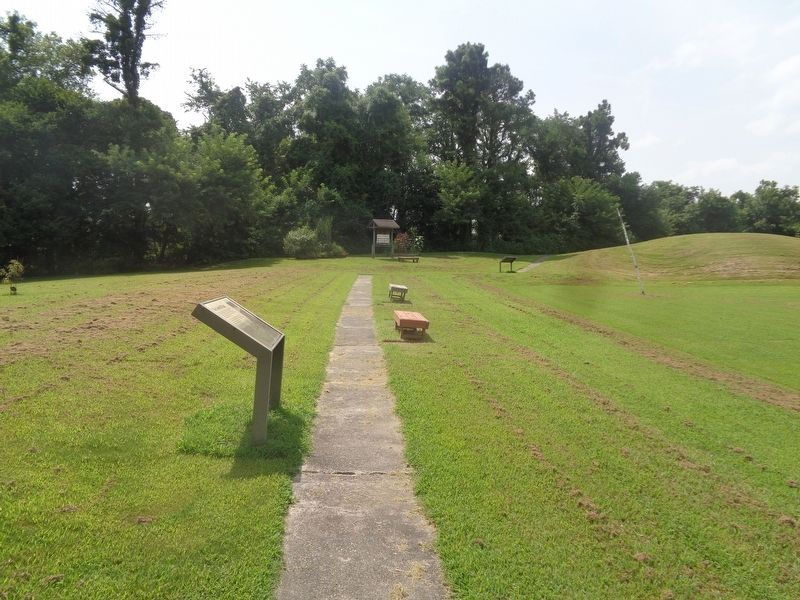
2. The Central Plaza Marker
Wide view of marker
Also see . . . C.H. Nash Museum Chucalissa (University of Memphis). (Submitted on August 14, 2024, by Jason Voigt of Glen Carbon, Illinois.)
Photographed by Jason Voigt, August 1, 2024
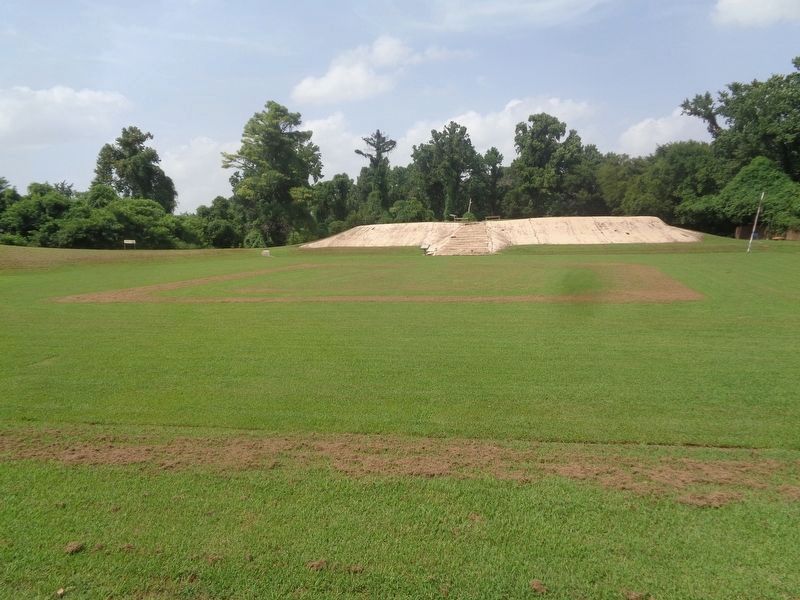
3. The Central Plaza
Credits. This page was last revised on August 14, 2024. It was originally submitted on August 14, 2024, by Jason Voigt of Glen Carbon, Illinois. This page has been viewed 220 times since then and 33 times this year. Photos: 1, 2, 3. submitted on August 14, 2024, by Jason Voigt of Glen Carbon, Illinois.
