Near Front Royal in Warren County, Virginia — The American South (Mid-Atlantic)
Fairview
Kenly’s Last Stand
| — | Battle of Front Royal - May 23, 1862 | — |
Photographed by Craig Swain, September 29, 2007
1. Fairview Marker
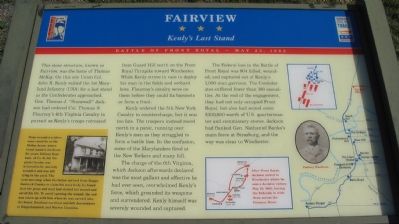
This stone structure, known as Fairview, was the home of Thomas McKay. On this site Union Col. John R. Kenly rallied the 1st Maryland Infantry (USA) for a last stand as the Confederates approached. Gen. Thomas J. "Stonewall" Jackson had ordered Col. Thomas S. Flournoy's 6th Virginia Cavalry in pursuit as Kenly's troops retreated from Guard Hill north on the Front Royal Turnpike toward Winchester. While Kenly strove in vain to deploy his men in the fields and orchard here, Flournoy's cavalry were on them before they could fix bayonets or form a front.
Kenly ordered the 5th New York Cavalry to countercharge, but it was too late. The troopers instead raced north in a panic, running over Kenly's men as they struggled to form a battle line. In the confusion, some of the Marylanders fired at New Yorkers and many fell.
The charge of the 6th Virginia, which Jackson afterwards declared was the most gallant and effective he had ever seen, overwhelmed Kenly's force, which grounded its weapons and surrendered. Kenly himself was severely wounded and captured.
The Federal loss in the Battle of Front Royal was 904 killed, wounded, and captured
this page online
[Sidebar:]
Many wounded soldiers were cared for at the McKay house, where blood stained the floors for years. Dabney Eastham, of Co. B, 6th Virginia Cavalry, was believed to be mortally wounded and was left lying in the yard. The next morning, when his father arrived from Rappahannock County to claim his son's body, he found that the grass and mud had clotted his wound and saved his life. To avoid opening the wound, the sod was taken up with him when he was carried into the house. Eastham survived and left descendants in Rappahannock and Warren Counties.
Erected by Virginia Civil War Trails.
Topics and series. This historical marker is listed in this topic list: War, US Civil. In addition, it is included in the Virginia Civil War Trails series list.
Location. This marker has been replaced by another marker nearby.
Photographed by Bill Coughlin, April 26, 2007
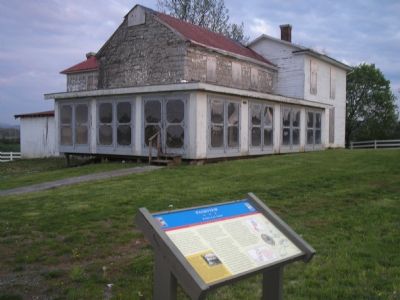
2. Fairview marker - Battle of Front Royal
This is the final marker in the Battle of Front Royal Driving Tour.
Battle of Front Royal Driving Tour by HMDb markers:
Click for more information.
Battle of Front Royal Driving Tour by HMDb markers:
Click for more information.

Regionally, this marker was in the Washington Metropolitan Area and in the Shenandoah Valley. It was also in the American South, specifically in the Upper South, and in the Mid-Atlantic. Globally, it was in North America, the Western Hemisphere, the Western World, and the Anglosphere. Historically, it found itself in what was once the territory of the Mississippian Culture, one of the original Thirteen Colonies, one of the Confederate States of America, and the Antebellum South.
Other nearby markers. At least 8 other markers are within 4 miles of this location, measured as the crow flies: A different marker also named
Photographed by Craig Swain, September 29, 2007
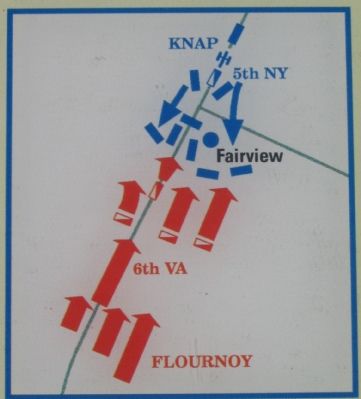
3. Action at Fairview Map
The Winchester Pike (Modern US 340/522) runs north to south on this map. The charge of Flournoy's Cavalry was straight up the pike against the disorganized Federals around Fairview (McKay House).
Another marker is no longer nearby. Guard Hill (was approx. 3.3 miles away but has been replaced with another marker now near it).
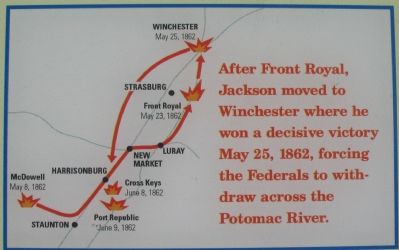
More about this marker. The marker displays a set of maps that detail the action described here. On the far right is an overview map of the Battle of Front Royal. An upper right map illustrates the action fought at Fairview. On the lower center is a map showing the strategic setting of the 1862 Valley Campaign, "After Front Royal, Jackson moved to Winchester where he won a decisive victory May 25, 1862, forcing the Federals to withdraw across the Potomac River." The map area also has a portrait of Dabney Eastham. The sidebar on the lower left has a photograph
Photographed by Craig Swain, September 29, 2007
4. Strategic Map of the Valley Campaign
Front Royal opened the door for Jackson's march north against Banks. Note the sequence of the battles - McDowell, Front Royal, Winchester, Cross Keys, and then Port Republic. Jackson marched his command down and then back up the valley to counter several threats converging on the important Shenandoah Valley. The campaign can be traced through the Civil War Trails Marker series.
Regarding Fairview. This marker is one of several from a driving tour of the Front Royal Battlefield. The markers are listed in sequence on the Battle of Front Royal Virtual Tour by Markers link below.
Related marker. Click here for another marker that is related to this marker. This marker has been replaced by another at this location.
Also see . . . Battle of Front Royal. National Parks Service website entry (Submitted on October 14, 2007, by Craig Swain of Leesburg, Virginia.)
Additional keywords. Battle of Front Royal
Photographed by Craig Swain, September 29, 2007
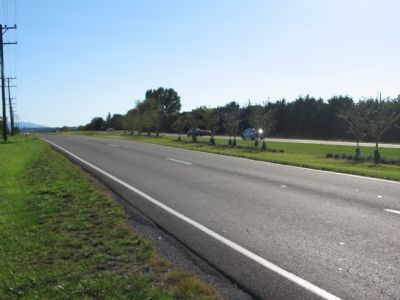
5. Winchester Pike
Looking south towards Front Royal, Flournoy's cavalry charged towards the Federals reforming at this point.
Photographed by Craig Swain, September 29, 2007
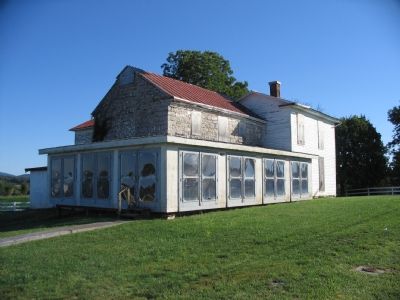
6. The McKay House
The stone portion of the house dates to the Civil War period, with additions made post-war.
Photographed by Craig Swain, September 29, 2007
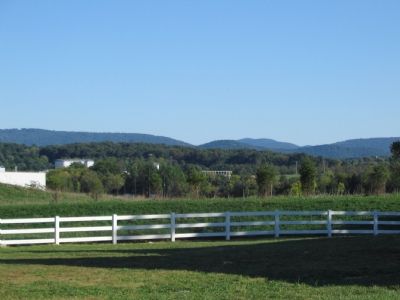
7. Counter Charge of the 5th New York
In the fields behind the house, the 5th New York attempted to check Flournoy's cavalry, but were repulsed. In the distant background is the "notch" in the Blue Ridge formed by Manassas and Chester Gaps.
Credits. This page was last revised on August 15, 2025. It was originally submitted on October 14, 2007, by Craig Swain of Leesburg, Virginia. This page has been viewed 3,551 times since then and 90 times this year. Last updated on May 9, 2025, by Mark P. Brock-Cancellieri of Baltimore, Maryland. Photos: 1. submitted on October 14, 2007, by Craig Swain of Leesburg, Virginia. 2. submitted on November 18, 2007, by Bill Coughlin of Woodland Park, New Jersey. 3, 4, 5, 6, 7. submitted on October 14, 2007, by Craig Swain of Leesburg, Virginia. • Bernard Fisher was the editor who published this page.
