Bahnhofstrasse in Zürich, Switzerland — Central Europe (the Alps)
Mathilde Escher (1808-1875)
Photographed by Andrew Ruppenstein, August 18, 2024
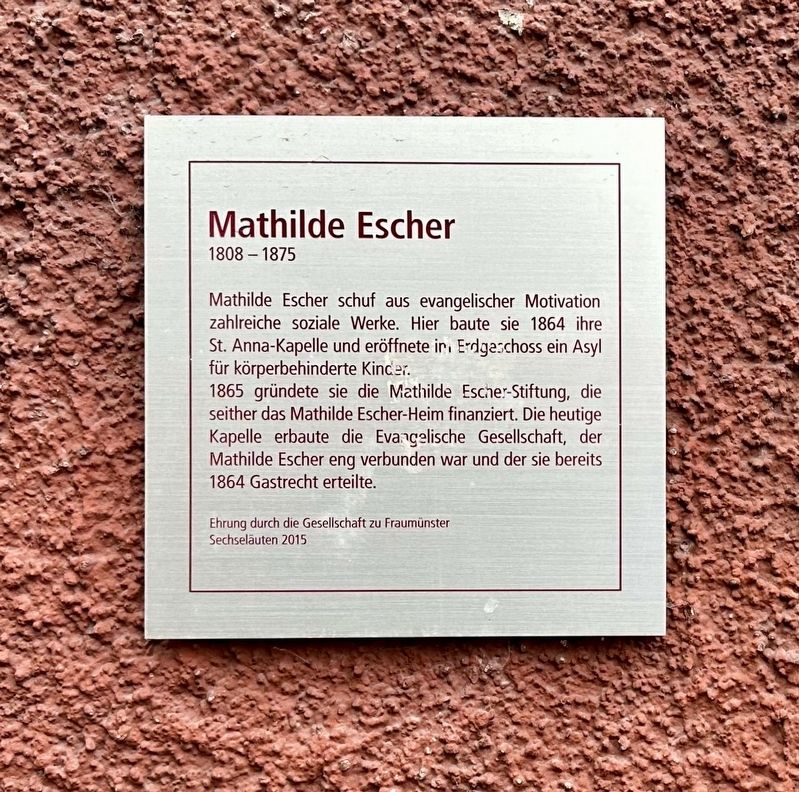
1. Mathilde Escher Marker

1865 gründete sie die Mathilde Escher-Stiftung, die seither das Mathilde Escher-Heim finanziert. Die heutige Kapelle erbaute die Evangelische Gesellschaft, der Mathilde Escher eng verbunden war und der sie bereits 1864 Gastrecht erteilte.
Ehrung durch die Gesellschaft zu Fraumünster
Sechseläuten 2015
(English translation:)
Mathilde Escher created numerous social works out of evangelical motivation. Here she built her St. Anna Chapel in 1864 and opened a shelter for physically disabled children on the ground floor.
In 1865 she founded the Mathilde Escher Foundation, which has financed the Mathilde Escher Home ever since. The current chapel was built by the Evangelical Society, with which Mathilde Escher was closely associated and which she had already granted guest rights in 1864.
Honored by the Society of Fraumünster
Sechseläuten 2015
Erected 2015 by Gesellschaft zu Fraumünster.
Topics. This historical marker is listed in these topic lists: Charity & Public Work • Religion & Religious Structures • Women. A significant historical year for this entry is 1864.
Location. 47° 22.372′ N,
this page online

Regionally, it is in Europe, Central Europe, the Schengen Area, Western Europe, and the Western World. Historically, it finds itself in what was once the Roman Empire and specifically also the Holy Roman Empire.
Other nearby markers. At least 8 other markers are within walking distance of this marker: St. Anna-Kapelle / St. Anna Chapel (here, next to this marker); Kezinstürli (about 180 meters away, measured in a direct line); Zur Trülle (about 180 meters away); Erzberg (about 180 meters away); St. Laurenz (about 180 meters away); Zur Hoffnung (about 180 meters away); Turteltäubli (about 180 meters away); Lux Guyer (1894-1955) (about 210 meters away). Touch for a list and map of all markers in Zürich.
Also see . . .
1. Mathilde Escher (Wikipedia, in German).
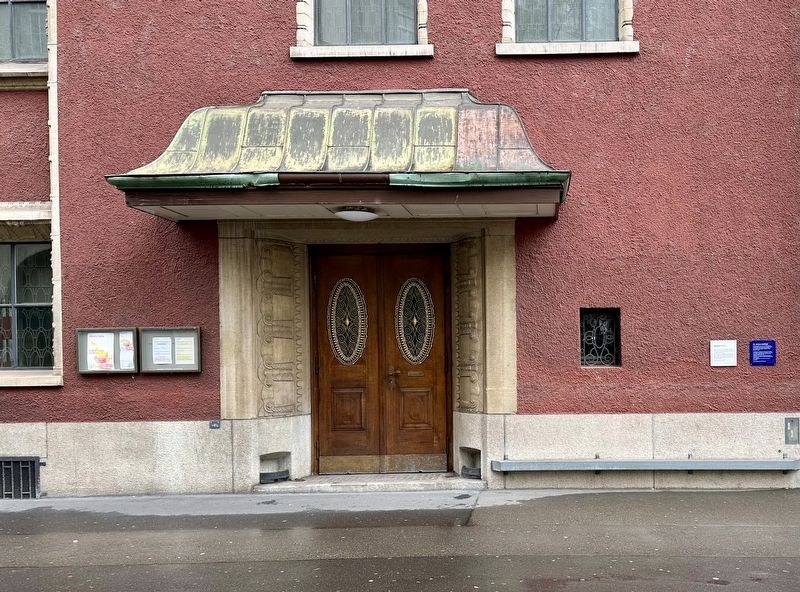
Excerpt (in translation): Mathilde Escher grew up in Zurich. Her parents' open house contributed to the girl's confident demeanor and sharp mind. As a young woman, she traveled to Carlsbad, Prague and Vienna, where she(Submitted on August 29, 2024.)visited the writer Karoline Pichler. In 1830, she was treated for 14 months at the Morlay orthopedic institution near Ligny for the "increasing crookedness" of her body.Photographed by Andrew Ruppenstein, August 18, 20242. Mathilde Escher (1808-1875) Marker - wide viewThe marker is visible here on the far right, mounted to the exterior of the St. Anna Chapel
On her trip to England and Scotland in 1834, Mathilde Escher encountered the Anglican Church, the Independent Church and Elizabeth Fry of the Quakers for the first time. On her trip through continental Europe, her exposure to new ideas helped her develop her philosophy of life and the "moral care of prisoners". Deeply impressed, Mathilde Escher decided to found the "Association for the Moral Care of Convicts" with like-minded people in Zurich. This was an unusual step out of domestic confines for a woman at the time.
In 1842, the “Amalienverein”, a poor society, was founded. Mathilde Escher helped to establish the first soup kitchen. She also cared for her own parents until their deaths.
2. Geschichte (Mathilde Escher Stiftung, in German). A brief history of the foundation which she founded
Excerpt (in translation): Many decades have passed since we were founded in 1865. What remains is our vision of a world that includes people with disabilities.(Submitted on August 29, 2024.)
Photographed by Andrew Ruppenstein, August 18, 2024
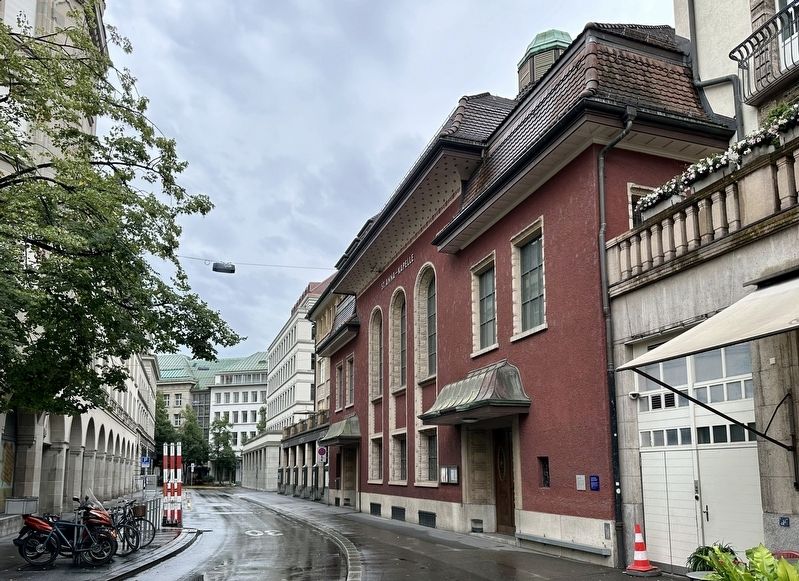
3. Mathilde Escher (1808-1875) Marker - wider view
Credits. This page was last revised on August 29, 2024. It was originally submitted on August 29, 2024, by Andrew Ruppenstein of Lamorinda, California. This page has been viewed 110 times since then and 16 times this year. Photos: 1, 2, 3. submitted on August 29, 2024, by Andrew Ruppenstein of Lamorinda, California.
