Pike's Landing in College in Fairbanks North Star Borough, Alaska — Northwest (North America)
Pipeline
Photographed by William Fischer, Jr., August 18, 2024
1. Pipeline Marker
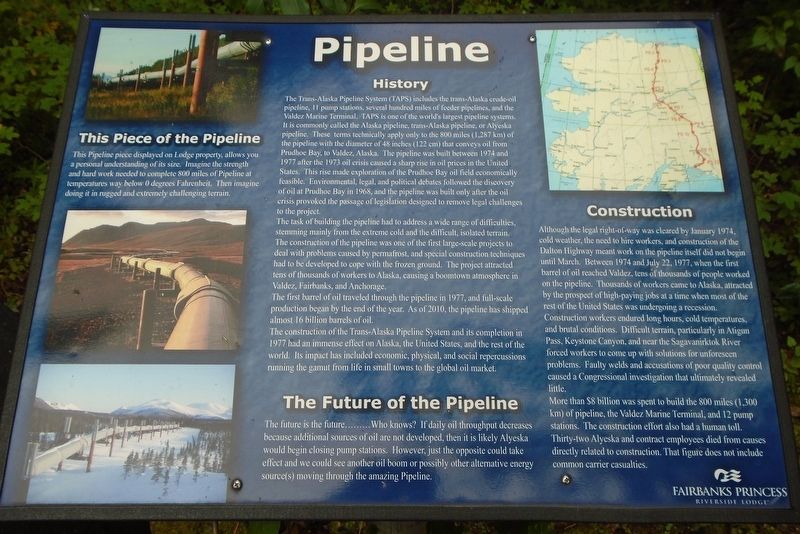
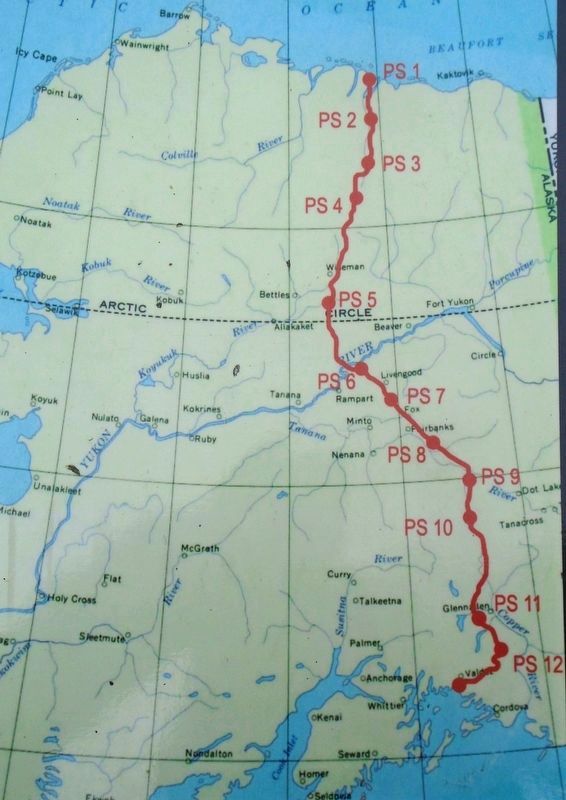
The Trans-Alaska Pipeline System (TAPS) includes the trans-Alaska crude-oil pipeline, 11 pump stations, several hundred miles of feeder pipelines, and the Valdez Marine Terminal. TAPS is one of the world's largest pipeline systems. It is commonly called the Alaska pipeline, trans-Alaska pipeline, or Alyeska pipeline. These terms technically apply only to the 800 miles (1,287 km) of the pipeline with the diameter of 48 inches (122 cm) that conveys oil from Prudhoe Bay, to Valdez, Alaska. The pipeline was built between 1974 and 1977 after the 1973 oil crisis caused a sharp rise in oil prices in the United States. This rise made exploration of the Prudhoe Bay oil field economically feasible. Environmental, legal, and political debates followed the discovery of oil at Prudhoe Bay in 1968, and the pipeline was built only after the oil crisis provoked the passage of legislation designed to remove legal challenges to the project.
The task of building the pipeline had to address a wide range of difficulties, stemming mainly from the extreme cold and the difficult, isolated terrain. The construction of the pipeline
this page online
The first barrel of oil traveled through the pipeline in 1977, and full-scale production began by the end of the year. As of 2010, the pipeline has shipped almost 16 billion barrels of oil.
The construction of the Trans-Alaska Pipeline System and its completion in 1977 had an immense effect on Alaska, the United States, and the rest of the world. Its impact has included economic, physical, and social repercussions running the gamut from life in small towns to the global oil market.
Although the legal right-of-way was cleared by January 1974, cold weather, the need to hire workers, and construction of the Dalton Highway meant work on the pipeline itself did not begin until March. Between 1974 and July 22, 1977, when the first barrel of oil reached Valdez, tens of thousands of people worked on the pipeline. Thousands of
Photographed by William Fischer, Jr., August 18, 2024
2. Pipeline Piece and Marker
Construction workers endured long hours, cold temperatures, and brutal conditions. Difficult terrain, particularly in Atigun Pass, Keystone Canyon, and near the Sagavanirktok River forced workers to come up with solutions for unforeseen problems. Faulty welds and accusations of poor quality control caused a Congressional investigation that ultimately revealed little.
More than $8 billion was spent to build the 800 miles (1,300 km) of pipeline, the Valdez Marine Terminal, and 12 pump stations. The construction effort also had a human toll. Thirty-two Alyeska and contract employees died from causes directly related to construction. That figure does not include common carrier casualties.
The future is the future........ Who knows? If daily oil throughput decreases because additional sources of oil are not developed, then it is likely Alyeska would begin closing pump stations. However, just the opposite could take effect and we could see another oil boom or
Photographed by William Fischer, Jr., August 18, 2024
3. Pipeline Piece and Marker
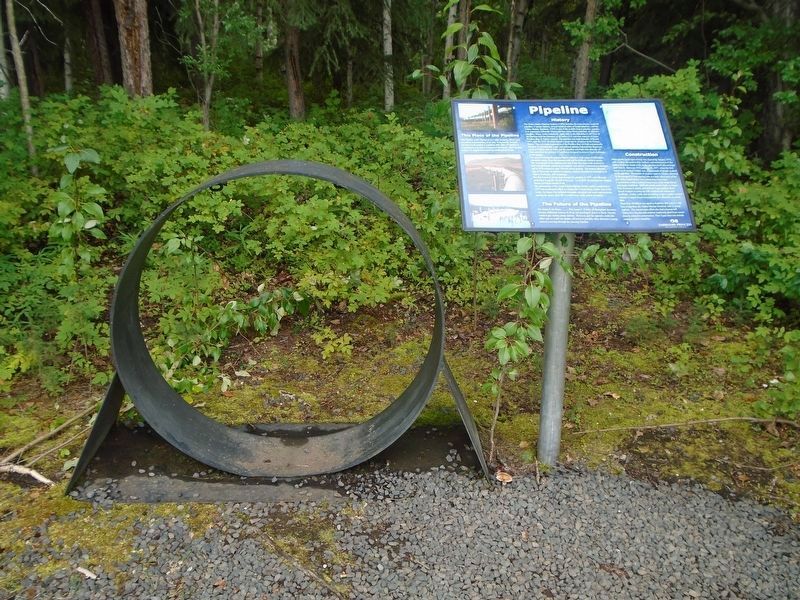
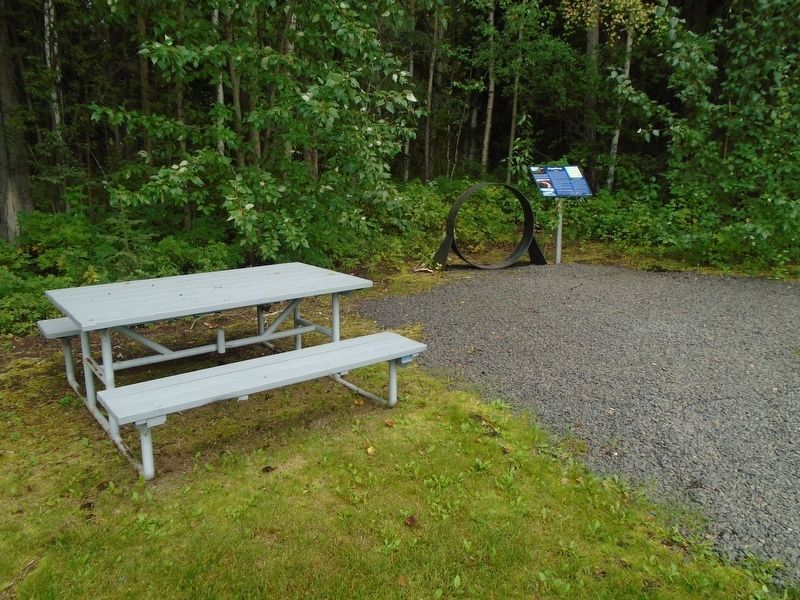
This Pipeline piece displayed on Lodge property, allows you a personal understanding of its size. Imagine the strength and hard work needed to complete 800 miles of Pipeline at temperatures way below 0 degrees Fahrenheit. Then imagine doing it in rugged and extremely challenging terrain.
Erected by Fairbanks Princess Riverside Lodge.
Topics. This historical marker is listed in these topic lists: Environment • Industry & Commerce. A significant historical month for this entry is January 1974.
Location. 64° 50.013′ N, 147° 50.735′ W. Marker is in College, Alaska, in Fairbanks North Star Borough. It is in Pike's Landing. It can be reached from Pikes Landing Road. Marker and pipeline piece are along the walking trail on the Fairbanks Princess Riverside Lodge grounds. Touch for map. Marker is at or near this postal address: 4477 Pikes Landing Road, Fairbanks AK 99709, United States of America. Touch for directions.

Regionally, this marker is in the Alaska Railroad Corridor, in the Athabascan Region, and in Interior Alaska.
Photographed by William Fischer, Jr., August 18, 2024
4. Pipeline Map on Marker
Other nearby markers. At least 8 other markers are within walking distance of this marker: Reindeer & Caribou (a few steps from this marker); Alaska vs the "Lower 48" (within shouting distance of this marker); Bear Cache & Alaskan Cabins (about 300 feet away, measured in a direct line); Historic Fairbanks (about 300 feet away); Welcome to Fairbanks (about 400 feet away); Sluice Box (about 400 feet away); Felix, Joy, & Dandy Pedro (about 500 feet away); William Salmon & August Conradt (about 500 feet away). Touch for a list and map of all markers in College.
Credits. This page was last revised on September 24, 2024. It was originally submitted on September 24, 2024, by William Fischer, Jr. of Reynoldsburg, Ohio. This page has been viewed 223 times since then and 42 times this year. Photos: 1, 2, 3, 4. submitted on September 24, 2024, by William Fischer, Jr. of Reynoldsburg, Ohio.
